A calorimeter's unlogged heat, a redshifted photon, and a spinning frame's shifting energy all get filed under one collapsing headline. An exact operator settles the first case — and proves it has no jurisdiction over the other two.
Research paperRevolutionary Life 75, Series D, No. 8 ·
this page is the paper's summary — the full text is the PDF.
Download the paper (PDF)
The book only balances against a machine that is still running, never against a rumor of what physics is owed.
Abstract
For a channel Lambda mapping a fine quantum description to a coarser one, this article derives an exact operator D_Lambda, defined as H_f minus the Heisenberg dual of Lambda applied to H_c, and its reading Delta E_Lambda(rho) = Tr(rho D_Lambda), both in energy units. Two checks are run, not assumed: passive relabeling leaves D_Lambda identically zero, and tracing out a bath returns exactly its energy plus the interaction term, verified for a resonant two-level exchange and a driven rotating frame, where a companion term absorbs what a dropped frame-inertial correction would otherwise misreport as missing energy. The construction is not extended to gravity: a timelike Killing vector, not a coarse-graining channel, is what conserved energy requires in curved spacetime; gravitational energy has no local tensorial density, only coordinate-dependent pseudotensors; the ADM and Bondi masses differ by exactly the radiated flux between them; and cosmological redshift signals an absent time-translation symmetry, never a failure of local conservation. No simulation was run; the numerical case is an exact analytic evaluation, and the operator's channel-dependence is reported as a real limit.
ADVERTISEMENT
The Entry a Relabeling Cannot Write
A calorimeter’s water bath cools by more than its own logged heat loss can explain, and a technician re-reads the columns before writing “unaccounted” in the margin. A photon that left a galaxy nine billion years ago arrives measurably redder, carrying less energy per photon than it started with, and no absorber, screen, or intervening medium claims the difference. A physicist working through the equations of motion in her own laboratory’s rotating frame finds a term in the tracked energy that was not there in the lab-frame calculation, appearing and disappearing on a clock nothing else in the room keeps. Three settings, three centuries of physics between the oldest and the newest of them, and one recycled headline ready to explain all of it at once: energy conservation has failed.
It has not failed in any of the three cases, and the reason is different each time. The calorimeter’s defect is a bookkeeping gap with an address: the missing joules are sitting in a bath, an interaction term, or a set of quantum correlations that the calorimeter’s own accounting never asked about. The rotating apparatus’s defect is not physics at all; it is the cost of forgetting that a description carried into a moving frame owes an extra term to its own bookkeeping, the same way a classical description picks up a fictitious centrifugal term the instant it moves into a rotating frame. The photon’s defect belongs to neither story. It is the observational signature of a symmetry the universe’s own geometry does not have, and no bookkeeping trick recovers a conserved quantity from a symmetry that was never there.
What follows builds one exact, checkable operator for the first case — a ledger, in the ordinary sense of a device that assigns a number to what one account leaves out of another — and derives, rather than assumes, why the second case needs a related but distinct correction term, and why the third case cannot be reached by either construction no matter how the formalism is stretched. The operator is elementary once written down. The discipline is in showing exactly where its jurisdiction ends.
ADVERTISEMENT
An Operator Built From What a Description Refuses to Track
Start with the setting the open-quantum-systems literature calls a fine description: a Hilbert space Hf=HS⊗HB↗ holding a system S↗ and everything else, B↗, that a working physicist has decided not to track in detail — a resonant bath, an environment, a set of nuclear spins, whatever “everything else” means for the apparatus at hand. The fine Hamiltonian is
three Hermitian terms, each in units of energy: the system’s own generator, the bath’s own generator, and an interaction coupling the two. A fine state is a density operator ρ↗ on Hf↗ — trace one, positive semidefinite, dimensionless as a probability object.
A coarse description reports less. It is built from a completely positive, trace-preserving map Λ↗, a quantum channel sending fine states to coarse states, together with a coarse Hilbert space Hc↗ and a Hermitian coarse Hamiltonian Hc↗ on it. The simplest case is the partial trace over the bath, Λ(ρ)=TrB[ρ]↗ with Hc=HS↗; nothing below depends on that particular choice, and a passive relabeling built from no discarding at all, treated next, is a channel too.
Every channel has a dual. Define Λ†:B(Hc)→B(Hf)↗ by the pairing that must hold for every fine state and every coarse observable Oc↗,
Λ†↗ is positive because Λ↗ is completely positive and every Λ(ρ)↗ with ρ≥0↗ is itself a valid state; it is unital, Λ†(Ic)=If↗, because Λ↗ preserves trace for every input. This duality is the same construction Stinespring used to show that any completely positive map admits a dilation to a larger, unitary description [9], and it lets a coarse Hamiltonian be pulled back onto the fine space without the fine space’s own structure ever being disturbed.
ADVERTISEMENT
That pullback is the object this article is built around:
DΛ↗ is Hermitian on Hf↗ — a positive, unital map applied to a self-adjoint input stays self-adjoint — and it carries units of energy, since both terms do. Its state-dependent reading,
is a real number in units of energy for every fine state ρ↗: how much the coarse description, evaluated through Hc↗ pulled back along Λ↗, disagrees with the fine description’s own Hf↗, for that specific state. Because expectation values determine a Hermitian operator uniquely — two Hermitian operators with the same trace against every density matrix are the same operator — the strongest statement follows at once: ΔEΛ(ρ)=0↗ for every fine state ρ↗ if and only if DΛ=0↗ as an operator identity, that is, if and only if Λ†(Hc)=Hf↗ exactly. Energy is preserved for every possible input under that one algebraic condition, never as a statistical tendency and never approximately.
Figure 1. Every term in this account has to carry the same unit before it is allowed to carry an opinion.
That “if and only if” is the whole of the construction’s ambition and the whole of its restraint. It does not propose that Hf↗ or Hc↗ is wrong, does not touch the total energy of any closed system, and does not by itself explain where a nonzero reading comes from; it only names, precisely and checkably, how large the disagreement is between two fully specified descriptions. Whether that disagreement is real, benign, or a mistake in bookkeeping is the question the rest of this article works through.
A Relabeling Cannot Manufacture a Deficit
Before asking what a genuine coarse-graining exposes, the construction has to survive the case where nothing at all is discarded. Take Hc=Hf↗ — no reduction in the space of states — and let the “coarse” description be nothing more than the same physics seen through a fixed, time-independent relabeling: a rotated spin basis, a renamed pair of levels, a change of which linear combination of states a lab calls “up.” Model this as Λ(ρ):=WρW†↗ for a fixed unitary W↗, and, because nothing has been thrown away, define the coarse Hamiltonian self-consistently as the same physical generator carried through that same relabeling, Hc:=WHfW†↗.
The dual of conjugation by W↗ is conjugation by W†↗: from the defining pairing, Tr[WρW†Oc]=Tr[ρW†OcW]↗ holds for every ρ↗, so Λ†(Oc)=W†OcW↗. Substituting,
using only W†W=I↗. So DΛ=Hf−Hf=0↗, identically, as an operator, for every unitary W↗ and every Hf↗. This is not a limit, an approximation, or a property of some special state; it is an algebraic identity that holds before any state is chosen at all.
That identity is the construction’s first load-bearing check, and it is exactly the failure this approach would need to survive to be worth building in the first place: a relabeling — a change of coordinates, a change of basis, a renaming of which combination of amplitudes gets called “the excited state” — must never, by itself, generate a nonzero ledger reading. If some proposed accounting scheme returned a nonzero defect purely from renaming states, without discarding a single degree of freedom, it would be reporting an artifact of notation as if it were physics, and the diagnosis this article exists to enable would be worthless from the first page. Requiring DΛ↗ to vanish identically under passive relabeling, and confirming that it does, is the covariance check every candidate in this literature has to survive before its behavior under a genuine coarse-graining is worth trusting at all.
The Textbook Case the Construction Has to Reproduce First
Passive relabeling is one degenerate case; the other is simpler still. Let Λ↗ be the identity channel, Hc=Hf↗, Hc=Hf↗: no relabeling, no discarding, the coarse description simply is the fine one. Then trivially DΛ=0↗. Nothing in the paragraphs above required that; it follows on inspection. But the triviality is the point, because this is the operator-language shadow of the oldest and most secure fact the subject has. A system evolving under its own Hamiltonian, with nothing coarse-grained away and nothing relabeled, conserves that Hamiltonian’s own expectation value exactly, because the Hamiltonian generates its own time evolution and commutes with itself. Emmy Noether’s 1918 theorem is the general statement standing behind that fact: whenever an action is invariant under a continuous symmetry — time translation among them — a corresponding quantity is conserved along the resulting dynamics, energy for time translation, momentum for spatial translation [2]. The ledger built here does not derive that theorem, extend it, or need to; it assumes it, at this one degenerate limit, as the floor every other case in this article is measured against.
The interesting content sits one step above that floor: what a channel that is symmetric under a conservation-relevant group action, without being the identity, is and is not entitled to conserve. Cirstoiu, Korzekwa, and Jennings addressed exactly that question for quantum channels invariant under a group G↗ associated with a Noether charge, asking how far a G↗-symmetric but non-unitary channel can still deviate from conserving the associated quantity [1]. Their answer bounds that deviation, over the whole convex set of symmetric channels, by how far a given channel sits from being a closed, unitary evolution — its “unitarity” — a genuinely deeper and more general result than anything derived here. This article’s own contribution sits one step down in ambition and one step up in concreteness: not a bound over an entire family of channels, but one exact, state-dependent number for one fully named channel and one fully named pair of Hamiltonians, checkable rather than merely bounded. The adjoint identity behind DΛ↗ is elementary; the discipline is in never letting that number answer a question its construction did not license, a discipline the remaining sections exist to enforce.
What Tracing Out a Bath Actually Exposes
Return to the genuine coarse-graining set aside earlier: Λ(ρ)=TrB[ρ]↗, Hc=HS↗, Hc=HS↗. The dual embeds a system observable back into the full space without touching the bath, Λ†(HS)=HS⊗IB↗, so
an exact operator identity, not an approximation valid in some limit: the ledger for a system-only description of a system-plus-bath is precisely the bath’s own energy plus the coupling energy between the two, nothing more and nothing less. ΔEΛ(ρ)=Tr[ρ(IS⊗HB+HSB)]↗ for any joint state ρ↗.
Two limits inside this one formula answer different questions about how confidently the ledger can be interpreted. First, an uncorrelated, non-interacting bath: set HSB=0↗ and let ρ=ρS⊗∣b⟩⟨b∣↗ for any system state ρS↗ and any bath eigenstate ∣b⟩↗ with HB∣b⟩=Eb∣b⟩↗. Then ΔEΛ(ρ)=Eb↗ for every choice of ρS↗ whatsoever — a pure constant, entirely independent of what the system is doing, unambiguously assignable to a named, located pile of energy sitting in a part of the world the coarse description agreed in advance not to look at. Nothing is missing in any troubling sense here; the coarse observer is simply declining to keep a receipt for energy that was never claimed to be theirs.
Second, an entangled joint state with HSB=0↗: now Tr[ρHSB]↗ need not vanish, and, more importantly, it need not be assignable to “the system’s energy” or “the bath’s energy” separately at all. It is a property of the correlations in the joint state itself, a genuine interaction and correlation energy that a bipartite split has no vocabulary to divide further. Quantum thermodynamics has had to confront exactly this ambiguity in defining work, heat, and internal energy for open systems with non-negligible system-bath correlations, and the resolution adopted there is the one adopted here: report the total defect exactly, and do not pretend to resolve an assignment the formalism does not support [13]. ΔEΛ(ρ)↗ answers “how much” without overreaching into “belonging to which part,” and that restraint is a feature of the construction, not a gap in it.
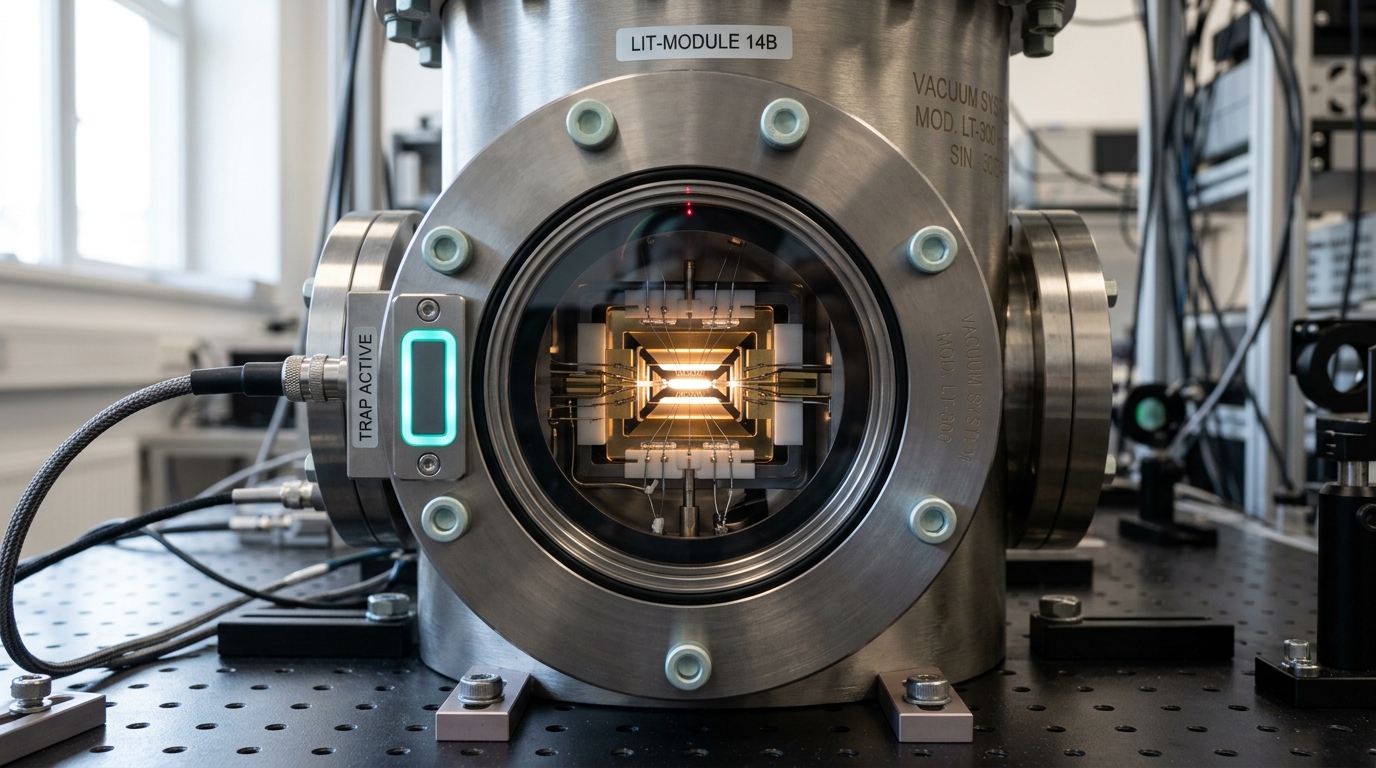
Figure 2. Whatever is inside this chamber has not vanished. It has only stopped being asked.
A Swap That Never Leaves the Building
A single exactly solvable case makes the ledger’s behavior concrete, and it is worth being explicit that what follows is an analytic evaluation of a stated model, not a simulation and not a measurement. Let S↗ and B↗ each be a two-level system — a spin, in the sense this literature uses the word for any two-state quantum degree of freedom — with bare Hamiltonians HS=(ℏω/2)σzS↗ and HB=(ℏω/2)σzB↗ tuned to the same frequency ω↗, coupled by an excitation-conserving exchange term,
Because HSB↗ conserves total excitation number, the dynamics starting from a single excitation stays confined to the two-dimensional subspace spanned by ∣e,g⟩↗ (system excited, bath in its ground state) and ∣g,e⟩↗ (the reverse). On resonance, both basis states carry the same bare energy, +ℏω/2−ℏω/2=0↗, so Hf↗ restricted to this subspace is proportional to the swap operator between the two, and the Schrödinger equation solves in closed form. Starting from ∣ψ(0)⟩=∣e,g⟩↗,
the standard two-level exchange solution, exact for all t↗ under this Hamiltonian. From it, ⟨HS⟩(t)=(ℏω/2)[cos2(gt)−sin2(gt)]=(ℏω/2)cos(2gt)↗, while ⟨Hf⟩↗ is exactly time-independent — a general fact for any state evolving under its own generator, not special to this one — and equal here to ⟨e,g∣Hf∣e,g⟩=ℏω/2−ℏω/2+0=0↗, since HSB↗ is purely off-diagonal in this basis. The ledger reading follows immediately:
ΔEΛ(t)=⟨Hf⟩−⟨HS⟩(t)=−2ℏωcos(2gt).↗Figure 3. An excitation can leave the chip that held it without leaving the building that holds the chip.
At t=0↗ this equals −ℏω/2↗, exactly the bath’s own ground-state energy, matching the uncorrelated-bath limit derived above. At the swap time t∗=π/(2g)↗, the state is ∣g,e⟩↗ up to an overall phase — the excitation has moved entirely into the bath — and ΔEΛ(t∗)=+ℏω/2↗, exactly the bath’s excited-state energy with ⟨HSB⟩=0↗ at that instant, matching the closed form by direct substitution rather than by coincidence. A system-only observer watching only ⟨HS⟩(t)↗ across this half-period would see the tracked energy swing by a full ℏω↗ with no term in HS↗ alone to explain it; the ledger accounts for every joule of that swing at every instant, without approximation.
Putting numbers to the swing keeps it honest rather than decorative. Take ω/2π=5GHz↗ and g/2π=10MHz↗, both squarely inside the range of qubit and resonator frequencies and coupling strengths reported across circuit quantum electrodynamics architectures, which span a few gigahertz in frequency and from a fraction of a megahertz up to several hundred megahertz in coupling depending on the regime [12]. The swap time is t∗=π/(2g)=1/(4×10MHz)=25.0ns↗, and the ledger’s swing at that instant is ℏω/2≈1.66×10−24J≈10.3μeV↗ — an exact analytic evaluation under the stated resonance and coupling assumptions, reported here as illustrative of the ledger’s scale, not as a claim that this exact swing has been measured in any specific run.
The Term a Moving Frame Is Not Allowed to Drop
A third regime sits between the first two and needs its own treatment rather than being folded into either. Nothing here is discarded — Hc=Hf↗ still — but the relabeling itself now carries explicit time dependence, because the “coarse” observer describes the same system from a frame in motion relative to the frame that defines Hf↗: a rotating platform, a driven interaction picture, a magnet ramping in time. Let U(t)↗ be the corresponding time-dependent unitary and ∣ψ′(t)⟩:=U(t)∣ψ(t)⟩↗, with ∣ψ(t)⟩↗ solving iℏd∣ψ⟩/dt=Hf∣ψ⟩↗. Differentiating the product and using U†U=I↗ gives
so the operator that actually generates ∣ψ′(t)⟩↗’s evolution is Hc(t):=UHfU†+iℏU˙U†↗, not the bare conjugate UHfU†↗ alone. The extra piece, iℏU˙U†↗, is Hermitian — differentiating UU†=I↗ gives U˙U†=−UU˙†↗, so (iℏU˙U†)†=−iℏUU˙†=iℏU˙U†↗ — and it carries units of energy, ℏ↗ times a rate. Call its expectation value the frame’s inertial term, Δframe(t):=iℏ⟨U˙(t)U(t)†⟩↗.
A single case makes the term concrete and ties it to a result nearly a century old. Let Hf=(ℏω0/2)σz↗, a spin precessing about a static field at its Larmor frequency, and let U(t)=exp(iωrtσz/2)↗ describe a frame rotating about the same axis at rate ωr↗. Since U(t)↗ is built entirely from σz↗, it commutes with Hf↗, so UHfU†=Hf↗ exactly and the bare conjugate is unchanged by the relabeling. But U˙U†=iωrσz/2↗ exactly, giving
the detuned Hamiltonian that governs spin precession in a frame rotating with an applied field — the identical construction I. I. Rabi used to analyze spin behavior in a gyrating magnetic field in 1937 [14]. Two checks confirm the recovery is exact rather than incidental: at ωr=0↗, the non-rotating case, Δframe≡0↗ and Hc=Hf↗, the already-verified baseline; at ωr=ω0↗, exact corotation, Hc=0↗ and the spin’s energy in this frame vanishes identically, which is the ordinary resonance condition, not a puzzle, because Δframe=−ℏω0⟨σz⟩/2↗ exactly cancels the lab-frame value for a state that starts, and stays, aligned with the field.
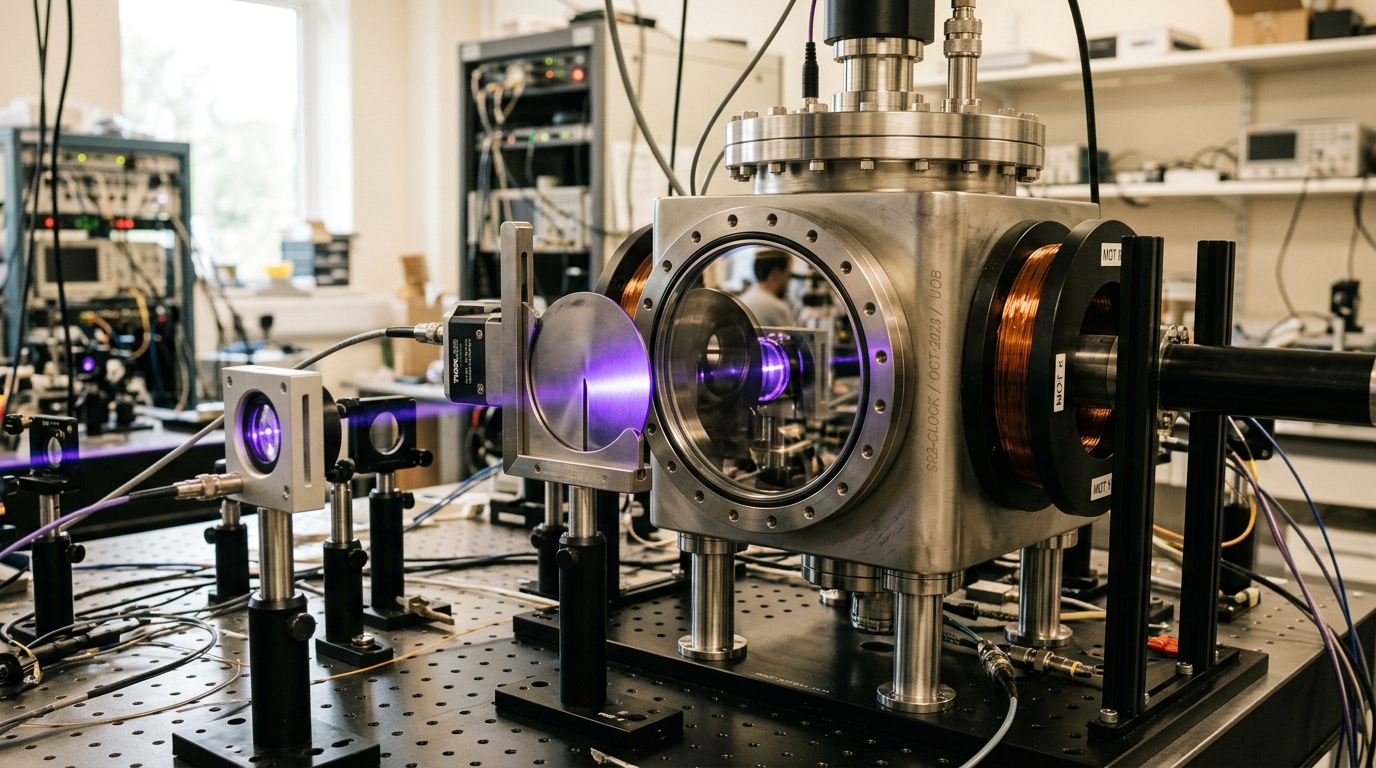
Figure 4. What this coil reports depends on which way the measurement itself is already turning.
The crank-magnet error this section exists to name lives exactly at the boundary between these two Hamiltonians: an observer who correctly computes UHfU†↗ — a legitimate operator identity, unchanged from the passive-relabeling case above — and then uses that operator, rather than Hc(t)↗, to predict or track the rotating frame’s own dynamics will find a discrepancy with no term in their own equations to explain it, on a clock the lab frame does not keep. The discrepancy is not missing energy. It is a dropped term whose physical origin is whatever classical control is enacting U(t)↗ in the first place — the field ramp, the driven rotation — already doing ordinary, accountable work on the description, not on the system’s conserved energy.
Two Ledgers Gravity Actually Keeps, and Why Mine Is Not a Third
Nothing above touches curved spacetime, and this section exists to keep it that way explicitly rather than by omission, because a construction with the words “ledger” and “missing energy” in its own title is exactly the kind of object this subject’s cranks reach for first. State the settled physics plainly before anything else: the local conservation law of general relativity, ∇μTμν=0↗, is a differential identity following from the Einstein field equations via the contracted Bianchi identity, and it holds in every spacetime — flat, curved, static, or violently dynamical — without exception. Nothing that follows questions it, qualifies it, or needs it to be anything other than exactly true everywhere.
What general relativity does not generally hand over is a local, coordinate-independent tensorial density for the energy carried by the gravitational field itself. Only pseudotensors serve that role, and a pseudotensor’s value at a point depends on the coordinate system used to compute it, a fact treated carefully in modern reviews of quasi-local energy-momentum [7]. A genuinely coordinate-independent, globally conserved energy exists only under a much stronger condition: the spacetime must admit a timelike Killing vector field ξμ↗, an actual continuous isometry of the full geometry, not a convenient choice of coordinates. Komar’s construction turns that Killing vector into a covariant surface-integral charge conserved along the resulting flow [5], and the general statement tying conserved quantities to Killing vectors is standard material in the field’s own textbooks [15].
Two well-defined, well-separated quantities follow from weaker, asymptotic versions of the same requirement. At spatial infinity of an asymptotically flat spacetime, the Arnowitt-Deser-Misner construction defines a total mass-energy from a surface integral that needs only asymptotic flatness, not an exact Killing symmetry everywhere [3], and Witten’s spinor argument proved this ADM mass cannot be negative for physically reasonable matter, ruling out an unbounded extraction of energy from the gravitational field itself [6]. At null infinity, a related but distinct quantity, the Bondi mass, is defined from data on outgoing light rays, and Bondi, van der Burg, and Metzner’s original construction showed it is non-increasing along retarded time, decreasing by precisely the flux of energy radiated away as gravitational waves [4]. The ADM and Bondi masses of the same spacetime agree before any radiation has left and differ afterward by exactly the radiated flux — a computed, physically real outgoing quantity, never an unexplained gap between two competing bookkeepers.
Figure 5. Two honest ways of totaling a system's energy can disagree by exactly the part that has already left.
Cosmology removes the Killing vector altogether rather than merely complicating it. The Friedmann-Lemaître-Robertson-Walker spacetime describing the large-scale universe has no timelike Killing vector in comoving coordinates: its metric depends explicitly on time through the scale factor, and no coordinate change removes that dependence globally. There is consequently no analog of the ADM or Bondi construction supplying a global conserved energy for, say, the universe’s total photon population. A single photon’s cosmological redshift is the precise observational face of that absence: its frequency, and with it its energy, decreases as the universe expands, and this is exactly what an absent time-translation symmetry predicts, not a violation of ∇μTμν=0↗, which continues to hold for the photon fluid throughout, and not evidence that anything is unaccounted for. Francis, Barnes, James, and Lewis addressed this exact confusion directly, showing that objections to treating cosmological redshift as a consequence of “expanding space” typically smuggle in physical properties for that expansion which general relativity does not assign it [8].
Figure 6. This bench measures a shrinking frequency for an entirely ordinary reason, one that a whole expanding universe does not share.
The resemblance between this picture and the ledger built above is real, and so is the point where it stops. Mapped: both settings share one logical shape, that a globally conserved charge requires the generator of the relevant symmetry to be exactly present in the description doing the accounting, and that reporting a nonzero “defect” in its absence is meaningful only once that absence is named precisely — a missing bath Hamiltonian in one case, a missing timelike Killing vector in the other. Unmapped, and this is the load-bearing distinction: Λ↗ is a choice. A laboratory observer decides to stop tracking a bath, and a different observer, tracking more of it, gets a smaller or zero defect for the identical physical situation, exactly as the uncorrelated-bath limit above showed. The absence of a timelike Killing vector in an FLRW spacetime is not a choice available to any observer; it is a geometric fact about the manifold that no relabeling, no decision about which degrees of freedom to track, and no more generous coarse-graining channel can restore. Nothing in this article’s formalism plays the role of a “finer channel” that would recover a photon’s redshifted energy the way tracing further into a bath recovers a qubit’s swapped excitation, and claiming otherwise would be exactly the overreach this construction was built to refuse. The two pictures share a family resemblance in their grammar and nothing more: no shared Hilbert space, no shared mechanism, and no attempt here to unify them into one formalism.
What the Ledger Can Certify, and What It Cannot
Two checks were named early as the conditions under which this construction would have to be judged a failure: a nonzero reading under pure passive relabeling, and a reading that does not equal the energy actually missing from a stated, retained description. Neither happened. The relabeling section proved the first as an algebraic identity, true before any state or Hamiltonian is specified. The bath and swap sections proved the second by direct computation in a fully solved model, matching the ledger’s closed form against the bath-plus-interaction energy at every instant of an exact time evolution, not merely at two endpoints. The rotating-frame section extended the same discipline to a case the open-systems literature usually leaves informal, showing that a time-dependent relabeling carries its own extra term and that dropping it, not any failure of conservation, is what produces the appearance of a discrepancy.
The honest limitation is not in any of those checks; it is in what the construction was never built to promise. ΔEΛ(ρ)↗ is a number attached to one named channel and one named coarse Hamiltonian, not an observer-independent fact about “the” missing energy. A different, equally legitimate choice of Λ↗ — a different split of which few collective degrees of freedom count as “the system,” or a different unitary dilation of the same open dynamics, since Stinespring’s theorem guarantees a dilation exists but not that it is unique [9] — will generally return a different nonzero reading for the identical experiment, and nothing in the operator itself adjudicates which choice is the physically motivated one. Markovian open-system models built from a Lindblad generator inherit exactly this dependence: the same reduced dynamics can arise from more than one microscopic dilation, each licensing its own bath-side ledger, a point already implicit in the generator’s own original derivation [10, 11]. Anyone using this ledger to decide between two rival coarse-grainings needs an independent physical argument for which channel is the right one; the arithmetic alone does not supply it.
What changes, if this discipline is used rather than the slogan it replaces, is not new physics but a sorting procedure applied before the word “missing” is allowed onto the page. A reported defect is either exactly zero because nothing was discarded, as a relabeling always gives; a computable, boundedly interpretable number attributable to a named bath and interaction, as tracing out a spin gives; a dropped inertial term a moving frame’s own control system is already paying for, as a rotating platform gives; or a question this ledger was never built to answer, because the missing symmetry belongs to a spacetime this operator has no coordinates for. The calorimeter’s unlogged heat is the second case. The rotating apparatus’s shifting reading is the third. The redshifted photon is the fourth. The clearest sign that a claim of vanished energy deserves scrutiny, in any of the three settings this article opened with, is that its author cannot say which of the four they mean.
Share this Article
Pass along these insights to your network across your favorite platforms.