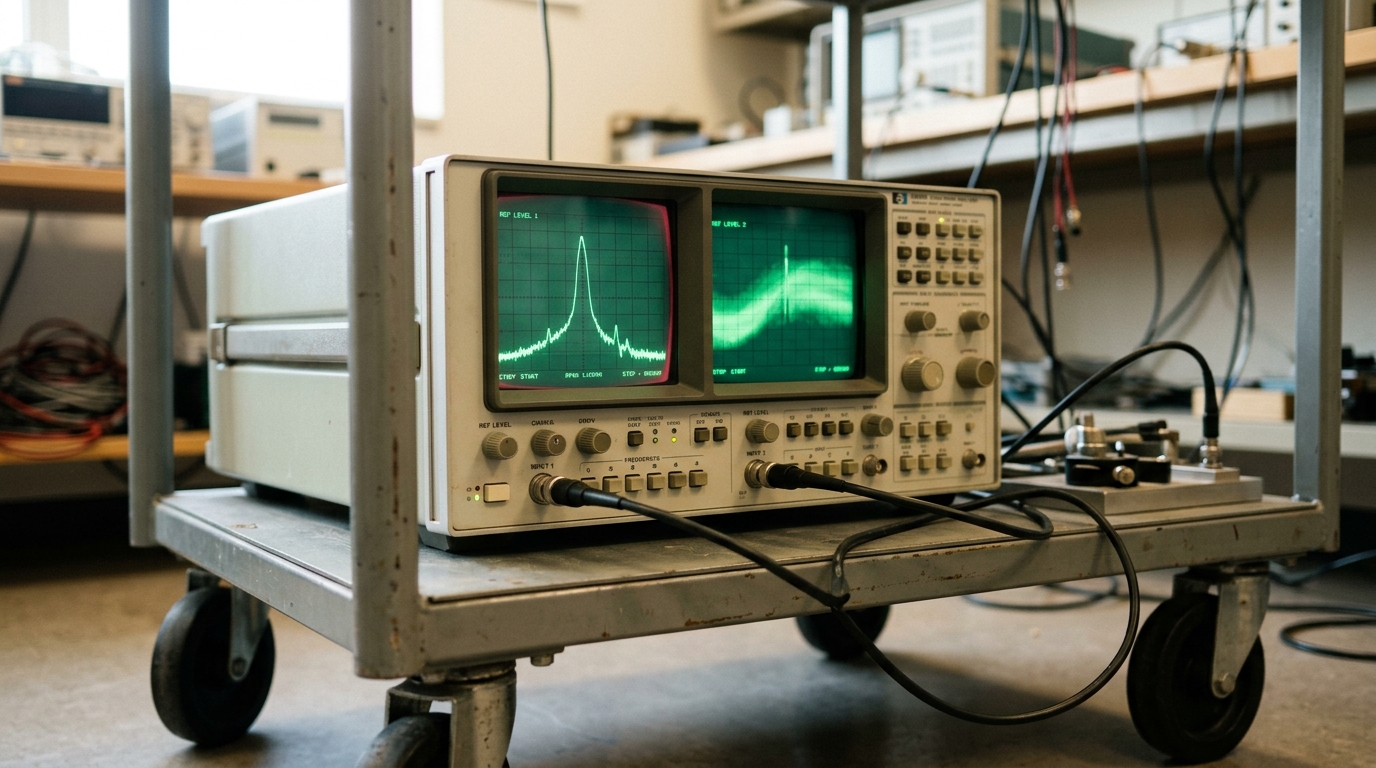
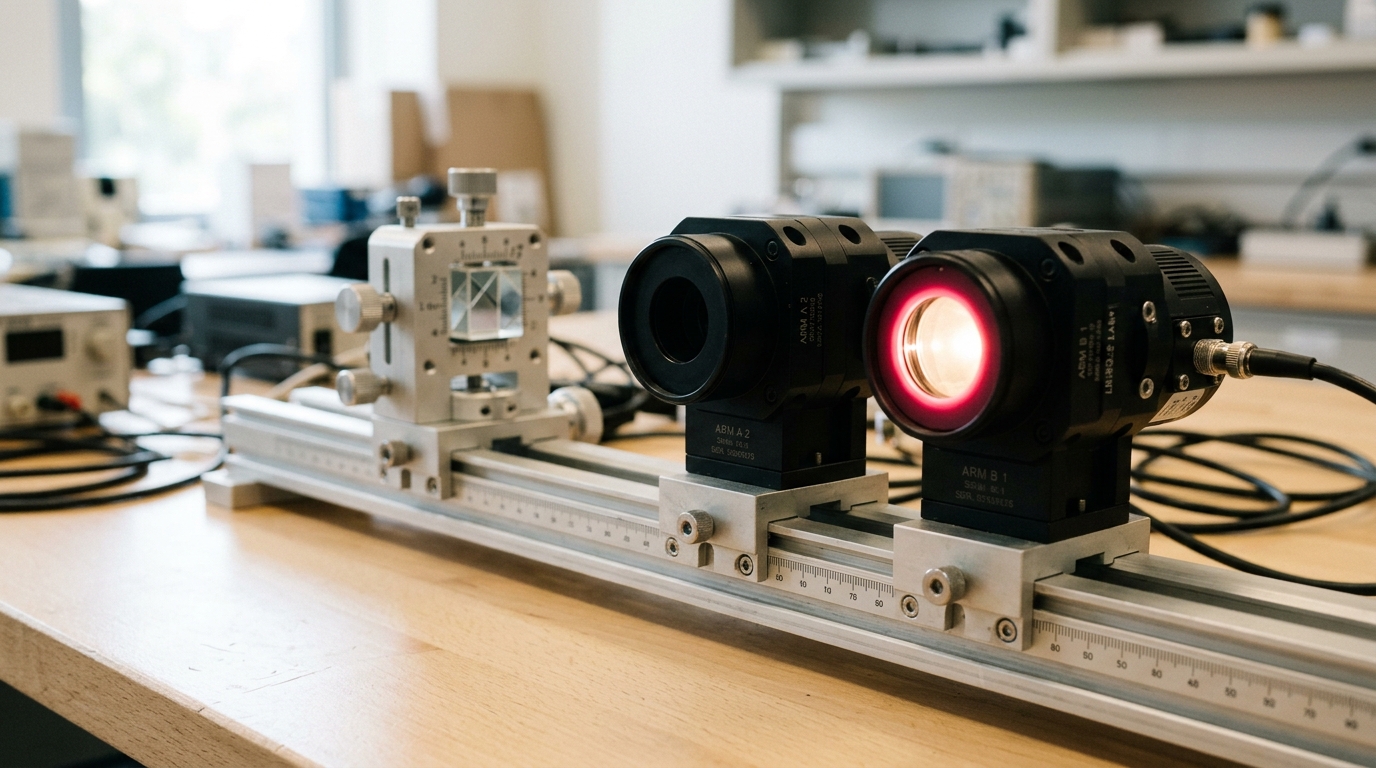
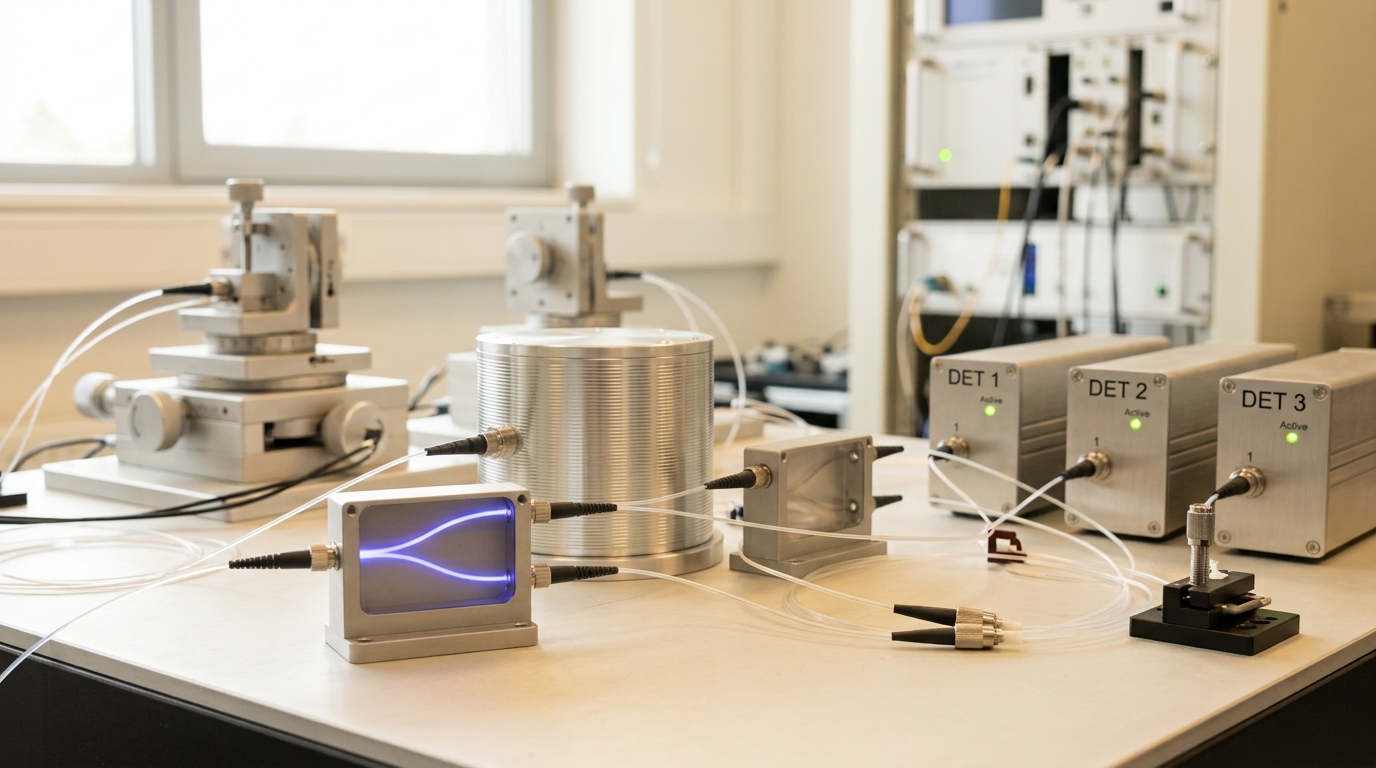
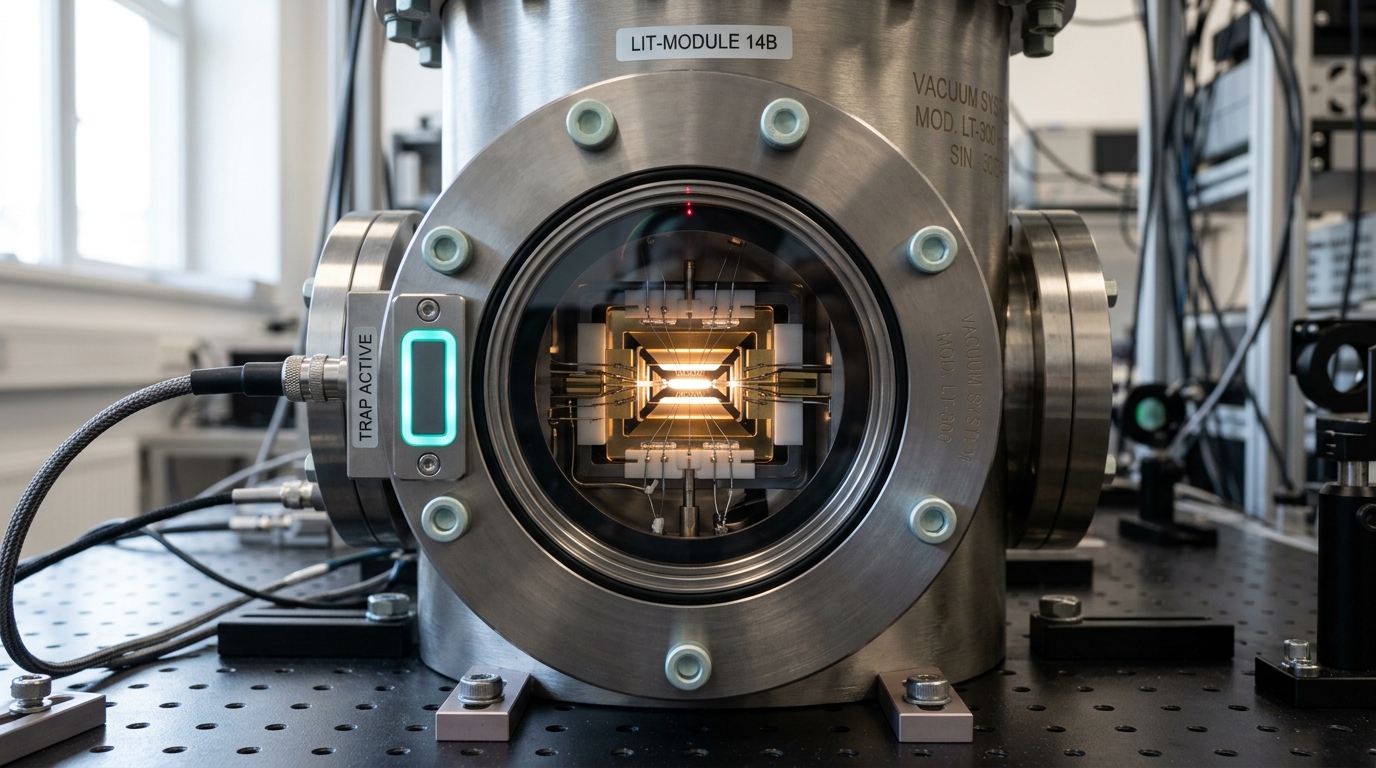
Throw a qubit and a compass into the same old black hole. Hayden-Preskill scrambling can hand the qubit back almost at once; the compass, protected by the law that scrambled it, is a slower debt -- one that can go negative.
Research paperRevolutionary Life 75, Series D, No. 6 ·
this page is the paper's summary — the full text is the PDF.
Download the paper (PDF)
Two different debts, collected from the same radiation. Nothing on this bench has been plugged in yet, and that is the honest state of the argument.
Abstract
Hayden and Preskill showed that an old black hole returns a small quantum system thrown into it almost as soon as matching new radiation exists, once internal scrambling has run. This article asks what changes when what falls in is not an anonymous qubit but a covariant compass heading tied to a conserved charge. It builds two operational thresholds -- a logical recovery time from decoder fidelity, and a frame recovery time from the quantum Cramér-Rao bound on estimating the heading -- and defines their difference as a unit-checked, symmetry-covariant quantity. Known Hayden-Preskill behavior is recovered when the conservation law is removed and when an external frame is granted for free; a toy accumulation model, evaluated exactly for a solar-mass hole, gives a millisecond qubit recovery time and shows the compass threshold can arrive later or earlier depending only on a stated tolerance. Trapped-ion hardware has tested the qubit mechanism in miniature; nothing has tested the compass side. This is a derivation, not a simulation, and no black hole has weighed in.
ADVERTISEMENT
The Bit Comes Back Before the Bearing
Two objects fall past the same horizon on the same afternoon, by the distant clock. One is an anonymous qubit: two amplitudes and a relative phase, chosen at random, carrying no meaning apart from itself and coupled to nothing the hole keeps books on. The other is a compass — a physical system prepared so that its state encodes a heading relative to a fixed axis, the same axis the hole’s own spin is measured against. Neither is a person, a photograph, or a philosophical puzzle. Both are quantum systems with well-defined Hilbert spaces, and the question this article asks is banal in form and sharp in consequence: which one does a distant observer, patiently collecting the hole’s radiation, get to hold a working copy of first?
For most of two decades the honest answer to “can a black hole give back what it swallowed” has hardened from “probably not” to “yes, and here is the mechanism.” Hayden and Preskill showed that an old black hole — one that has already radiated away more than half of its original entropy — behaves less like a vault and more like the fastest shredder physics permits: a small quantum system thrown in mixes with everything already inside so quickly that a modest further sample of the shredded output, combined with the radiation emitted earlier, suffices to reconstruct what went in [1]. That result settles the qubit’s fate, at least in the idealized sense this article works within. It says almost nothing about the compass, and the silence is not a gap in the literature so much as a structural fact about what a compass is that a plain qubit is not: a heading is exactly the kind of information a conservation law is built to keep away from casual access. What follows works out, as concretely as an unrun derivation allows, how much later a compass comes back, under what conditions the delay disappears or reverses, and the one place where half of this story has already been tested on a real, if entirely earthbound, machine.
Two Debts, Not One
Call the black hole “old” in the specific, technical sense Page gave the word: it has already emitted more than half of its Bekenstein-Hawking entropy as radiation, so that the early radiation R held by a distant observer is, on average, close to maximally entangled with what remains of the hole’s interior [5, 6]. This is the regime the rest of this article lives in throughout; a young hole, still mostly unradiated, has almost nothing useful in R and neither recovery problem below has a solution yet.
ADVERTISEMENT
Into this old hole go two systems. The first, A↗, is a two-dimensional qubit prepared in an arbitrary, unknown state and coupled to nothing the hole’s own symmetries track — a spectator, chosen so that its recovery is the cleanest possible test of the Hayden-Preskill mechanism on its own terms. The second, C↗, is a compass: a physical carrier prepared in a state ∣ψ(g)⟩↗ that transforms under a one-parameter group of rotations generated by a Hermitian charge J^↗, the same charge the hole’s own angular momentum is built from,
g↗ is an angle: dimensionless, periodic, and physically read as “which way the compass points” relative to the hole’s spin axis. J^↗ carries units of action (joule-seconds), so gJ^/ℏ↗ is dimensionless, as an exponent must be. Nothing about this setup is exotic — a large-spin coherent state pointing along a direction is a textbook carrier of exactly this kind of information [10].
The hole’s evaporation is modeled, as it is throughout this line of work, as an isometry V↗ from the interior-plus-infalling-system Hilbert space to a radiation-plus-remaining-interior Hilbert space. What makes the conservation law bite is that V↗ must commute with the group action on both sides:
Every symbol here is a unitary representation of the same rotation on a different Hilbert space — dimensionless linear operators, none of them observables in their own right. The equation says the hole’s internal dynamics cannot tell which way “up” was chosen before the compass fell in: rotate the input, and the output rotates the same way, split between radiation and remainder. This is not an assumption invented for this article. It is simply what “the hole conserves angular momentum” means once evaporation is written as a unitary process, and it is the exact setting Nakata, Wakakuwa, and Koashi analyzed when they asked how a global symmetry constraint changes Hayden-Preskill recovery [8].
The single-axis U(1)↗ choice above is deliberate rather than a simplification smuggled in for convenience. A compass, in the ordinary sense of the word, reports one angle against one fixed axis; a full SU(2)↗ orientation, tracking three Euler angles against a Cartesian triad, is the harder and more general problem Peres and Scudo actually solved for a single quantum carrier; a bounded-size probe transmits a frame with a fidelity that improves with the carrier’s own total angular momentum but never reaches unity at finite size [10]. Restricting to one axis keeps the generator J^↗ a single Hermitian operator with a single real eigenvalue spectrum, which is exactly the structure the quantum Cramér-Rao bound below is built for; nothing in the argument that follows depends on stopping at one axis, and a full three-axis version would simply replace a single Fisher information with a Fisher information matrix, without changing which mechanism is doing the work.
ADVERTISEMENT
Every clock reading below is t↗, the distant, asymptotically flat coordinate time an outside observer’s own wristwatch registers while radiation is collected — never the compass’s or the qubit’s proper time along its brief infall, which ends at the horizon in a comparatively negligible interval, and never a local near-horizon proper time either, which redshifts against t↗ by the same factor that makes the Hawking temperature look freezing from a safe distance and searing up close [7].
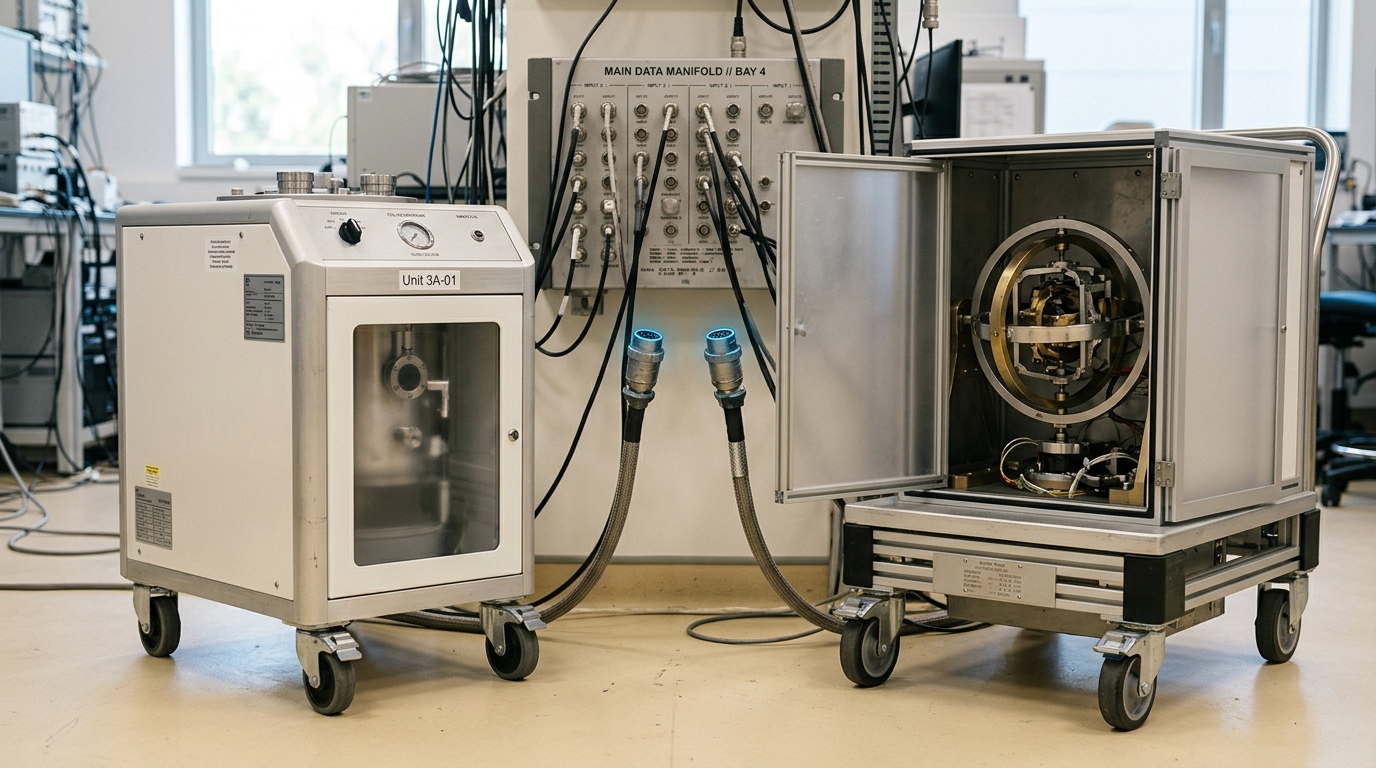
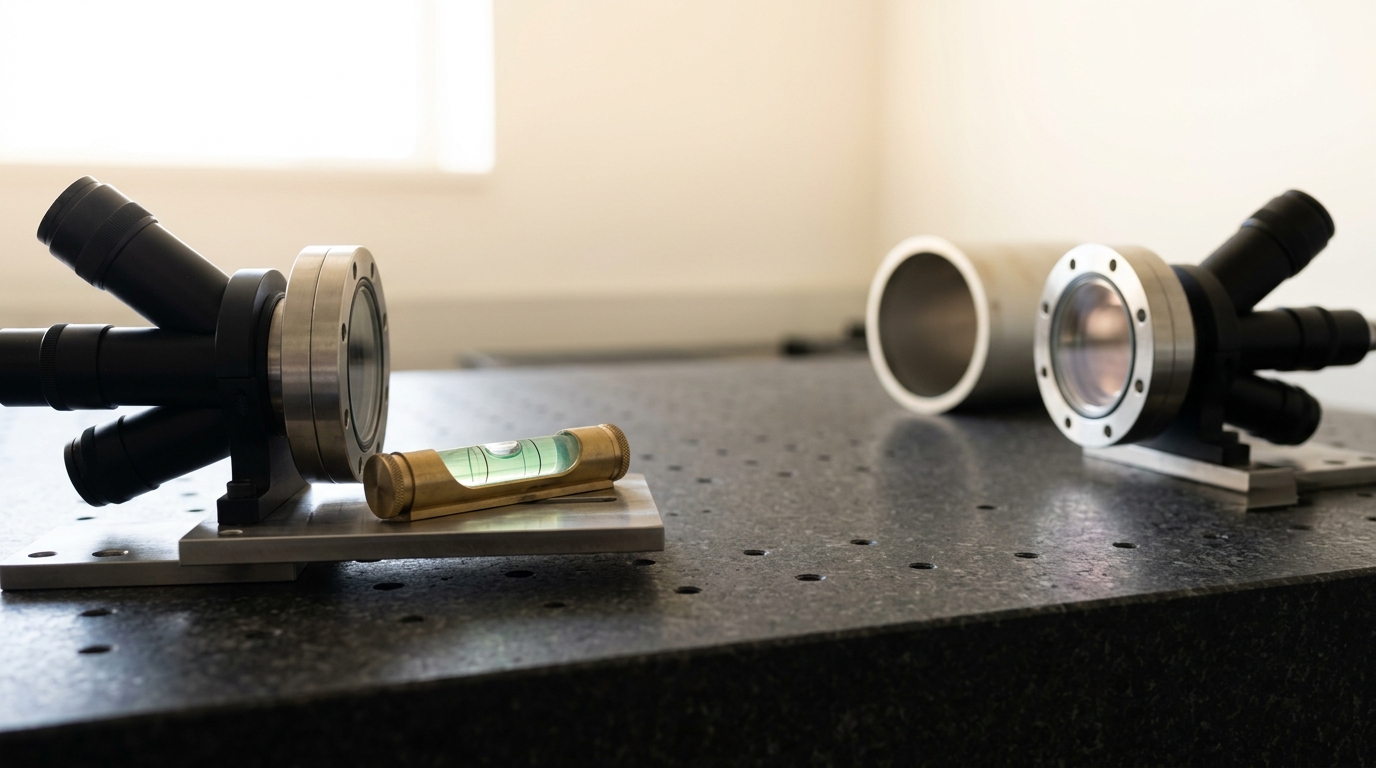
Figure 1. This is where an unstructured bit goes to be shredded on purpose. Shredding it well, on schedule, is the entire trick.
What “Returned” Refuses to Mean by Default
Before any ordering claim is allowed, “returned” needs two separate operational definitions, because the qubit and the compass are not owed the same kind of promise.
For the qubit, returned means: there exists a recovery channel R↗, built from quantum operations an agent holding both the full early radiation R↗ and a further batch of radiation Ct↗ collected up to time t↗ can actually perform, whose entanglement fidelity to the identity channel on A↗ is within ϵ↗ of perfect,
Nt↗ is the effective channel from A↗ to R∪Ct↗ induced by the hole’s own scrambling dynamics up to time t↗; ϵL(t)↗ is a dimensionless number in [0,1], and tL↗ has units of time. This is a yes-or-no-shaped promise sharpened into a number: either a decoder within ϵ↗ of perfect exists on the stated resources, or it does not, and ϵL(t)↗ falls, in the regime this article works in, toward zero as t↗ grows past a threshold.
For the compass, returned has to mean something else, because g↗ is a continuous parameter and no channel can reproduce an unknown continuous value exactly. The honest promise is metrological: the same agent, using the same R∪Ct↗, applies the best available measurement and estimator g^↗, and the achievable mean-squared error is bounded below by the quantum Cramér-Rao bound,
FQ↗ is the quantum Fisher information of the radiation’s reduced state with respect to g↗; it carries units of g−2↗, i.e. inverse radians squared, and since g↗ is already dimensionless, FQ↗ is a pure number. δ↗ is the alignment tolerance the observer has decided to demand, also in radians, and tG(δ)↗ has units of time [12]. This bound is achievable asymptotically by the symmetric logarithmic derivative measurement; nothing here claims it is achieved by any specific realizable circuit, only that it is the correct floor no circuit can beat.
ADVERTISEMENT
The shape difference between these two promises is the entire point of separating them. ϵL(t)↗ is bounded in [0,1] and can, in principle, hit its floor abruptly once decoupling sets in. Varg^↗ has no upper bound and shrinks only as fast as FQ↗ grows, which — as the next two sections show — need not be abrupt at all. A reader who asks “has the black hole given it back?” is asking two different kinds of question depending on which object they mean, and conflating them is precisely the failure mode this construction is built to prevent.
An Isometry That Cannot Tell Left from Right
The reason those two questions come apart is not decoder cleverness. It is that g↗ is what Bartlett, Rudolph, and Spekkens call unspeakable information: a fact that cannot be conveyed by any classical message alone, because there is no such thing as “the direction north” without a physical system that already points north to compare against [9]. A qubit’s logical content — which of two orthogonal states it is closer to — can be copied onto a classical bit string and handed over on a slip of paper; a heading cannot, not even in principle, because a slip of paper has no intrinsic orientation relative to anything until a further physical frame is supplied to read it against.
The covariance equation from the previous section is the formal cost of that fact. Because V↗ commutes with the group action, the radiation’s reduced state along the true heading is a rotated copy of the same state at heading zero,
which is a genuine constraint, not a simplifying choice: FQ[ρrad(g)]↗ is therefore identical at every point along this orbit, since the quantum Fisher information depends only on the local geometry of the state family under the generator, and a rotated copy of the same family has the same local geometry everywhere. tG(δ)↗ does not depend on which heading is being estimated. That is the covariance check this construction owes the reader, and it holds by the same argument that makes the Fisher information of a phase-estimation problem independent of the true phase in ordinary quantum metrology.
What the covariance also does, though, is forbid the radiation from leaking coherence between different eigenspaces of J^↗ to an observer who has not independently fixed a frame. Kitaev, Mayers, and Preskill made the resource cost explicit: a superselection rule restricting accessible operations to those commuting with a group can be simulated away entirely if the two parties already share a suitable reference system, and cannot be worked around at all if they do not [11]. Absent such a shared frame, whatever the radiation reveals about g↗ has to be extracted from the asymmetry of ρrad(g)↗ relative to the group — a quantity that scrambling, left to its own devices, does not have any particular reason to concentrate quickly. The qubit’s logical content survives scrambling because nothing about being “close to ∣0⟩↗ versus ∣1⟩↗” is protected by a conservation law. The compass’s heading survives scrambling constrained by exactly the law that makes it meaningful in the first place, and that is a slower kind of survival.
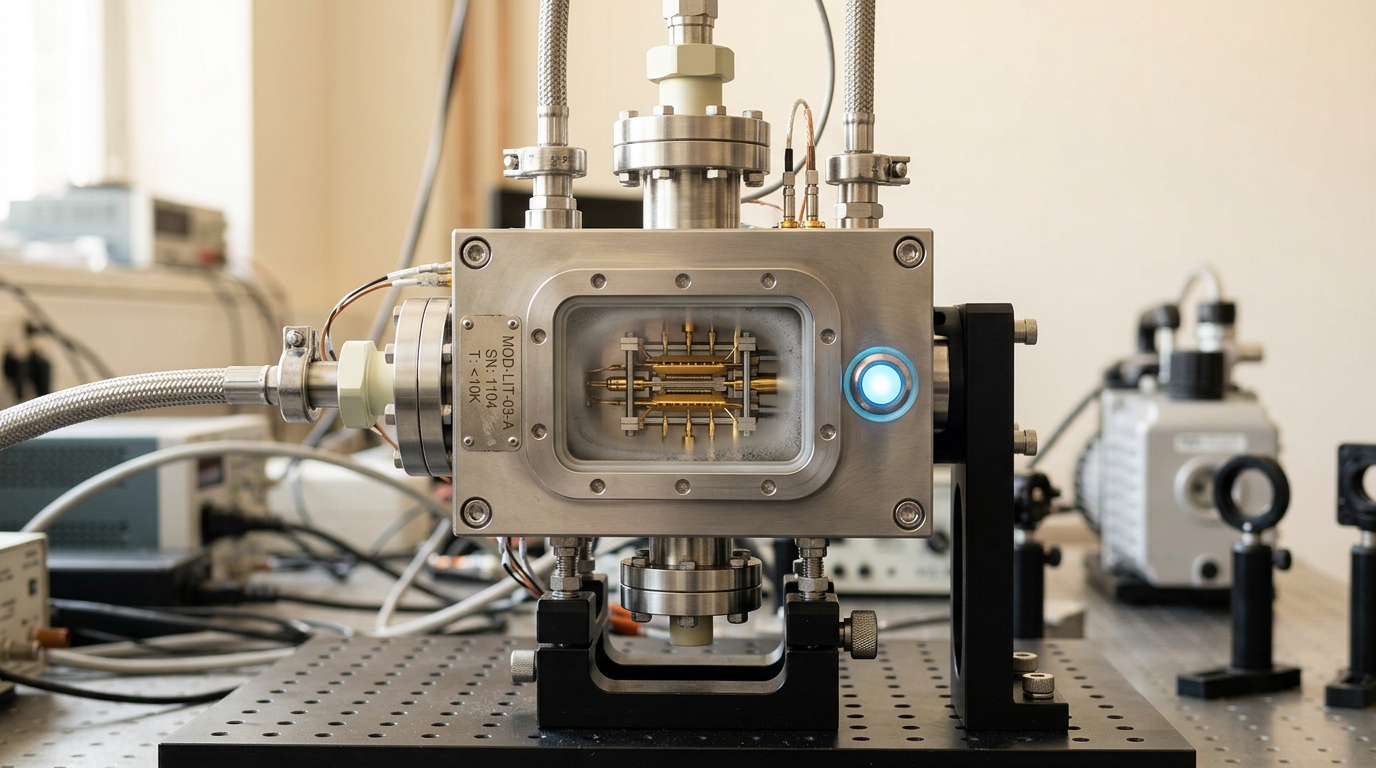
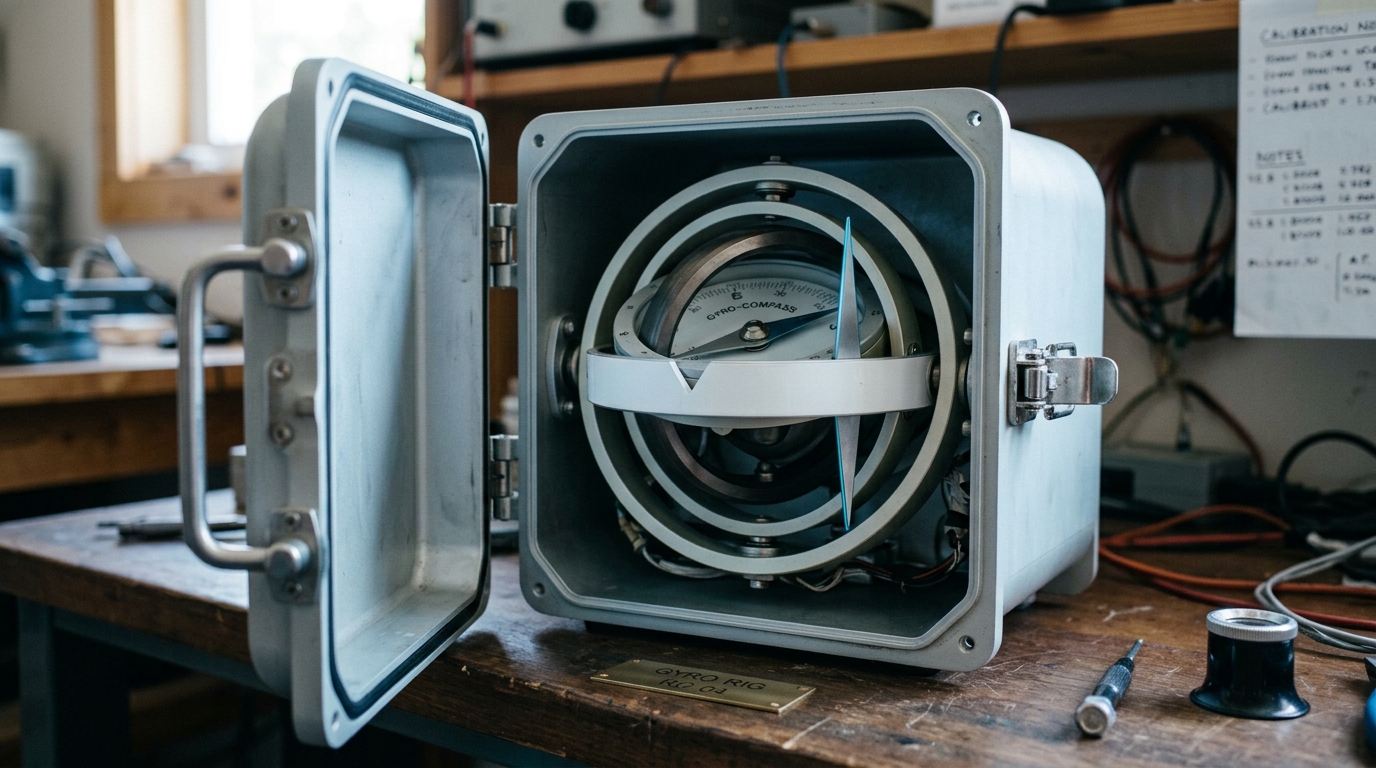
Figure 2. A heading is not a bit. Closing this housing does not make the needle's reading disappear; it makes the reading unspeakable.
Where the Qubit’s Bill Comes Due
The natural timescale for tL↗ is the scrambling time, and it is worth deriving in real units rather than only in the abstract. Sekino and Susskind conjectured that black holes are the fastest scramblers nature permits, mixing information across all their degrees of freedom in a time growing only logarithmically with entropy [2]. Maldacena, Shenker, and Stanford later proved the sharp version of the bound this conjecture leans on: the exponential growth rate of an out-of-time-order correlator, the operational signature of chaos, cannot exceed λL≤2π/β↗ for a thermal system at inverse temperature β↗, with a black hole horizon saturating the bound [3]. Combining a Lyapunov-limited spread over lnS↗ e-foldings of the hole’s Bekenstein-Hawking entropy S↗ gives the estimate
where the second equality for a Schwarzschild hole follows directly from Hawking’s temperature formula [7] and S=A/4ℓP2↗ is the Bekenstein-Hawking entropy [6]. For a solar-mass hole, β≈1.24×10⁻⁴s↗ and lnS≈177↗, giving t∗≈3.5ms↗ — an exact evaluation of the stated formulas, illustrative of the scrambling scale and not a claim about any particular measured hole.
Hayden and Preskill’s own result, sharpened into an explicit, efficient decoding circuit by Yoshida and Kitaev, is that once scrambling of this kind has run for about t∗↗, collecting only a handful more qubits of radiation than were thrown in — not a number that grows with the hole’s size — suppresses ϵL↗ exponentially in that small handful [15]. The mechanism behind that exponential suppression is worth seeing exactly rather than taking on faith, and Page’s own formula for the average entanglement entropy of a subsystem of a random pure state supplies it. For an m↗-dimensional subsystem embedded in an mn↗-dimensional Haar-random pure state,
is exact [4]. Fixing m=2↗ (a single qubit) and letting n↗ — the effective size of everything else the qubit could be entangled with — grow gives ⟨S2,4⟩=0.5095↗ nats, ⟨S2,16⟩=0.6465↗ nats, and ⟨S2,64⟩=0.6814↗ nats, closing in on the ceiling ln2=0.6931 nats. The residual gap to that ceiling shrinks by a factor of 3.94 when n↗ quadruples from 4 to 16, and by 3.98 when it quadruples again from 16 to 64 — converging, as more radiation-sized dimension is added two qubits at a time, on a clean factor of four per doubling of collected qubits, or two per single qubit. This is an exact, hand-computable corroboration of the folklore “each extra collected qubit roughly halves what is left to recover,” not a re-derivation of Hayden and Preskill’s original bound, and it is why tL(ϵ)↗ depends on ϵ↗ only logarithmically: driving ϵ↗ from 10−1 to 10−9 costs on the order of thirty extra qubits of radiation, a negligible addition to t∗↗ for any astrophysically sized hole. None of this requires the hole’s dynamics to be literally Haar-random for an unbounded time; Harrow and Low showed that circuits of only polynomial depth already approximate the Haar distribution’s first two moments closely enough for arguments like this one to apply [14].
One honest caveat belongs here rather than in a footnote. The estimate t∗∼(β/2π)lnS↗ treats emission as though every mode escaped with equal ease, when a real Schwarzschild hole’s greybody factors suppress low-angular-momentum, long-wavelength quanta relative to a naive blackbody count. That suppression changes the effective rate at which new, usable radiation becomes available by an order-one-to-few numerical factor; it does not change the logarithmic scaling in S↗ that makes t∗↗ so much shorter than the hole’s own light-crossing or evaporation timescales, and it is exactly the kind of correction the fast-scrambling conjecture was framed to survive [2]. The millisecond figure below should be read as good to that order-of-magnitude, not to the third significant figure the arithmetic displays.
Figure 3. Every count on this bench is the same currency. What it buys back is not.
Why the Compass Keeps a Separate Ledger
The compass’s Fisher information does not have an analogous reason to jump. For a pure-state family generated by a Hermitian charge, the exact quantum Fisher information is
a standard identity in quantum metrology [12]. Before scrambling, this is fixed by how the compass itself was built — a large, well-prepared gyroscope has a large charge variance and a small intrinsic uncertainty on its own heading. After scrambling, that fixed total has to be reconstructed piecemeal from radiation, and each individually emitted quantum, to the extent it is only weakly and independently correlated with g↗ once the hole’s own state is traced over, contributes an addition to the total that adds like an independent sample rather than like a decoded codeword. This is the standard-quantum-limit regime of parameter estimation: for N↗ independent, identically prepared probes each with per-probe Fisher information f1↗, the achievable variance scales as 1/(Nf1)↗, in contrast to the quadratically better Heisenberg scaling available only when probes are used coherently together [13]. Modeling the collected radiation up to time t↗ as contributing Nγ(t)∼t/β↗ roughly independent quanta gives, as a stated phenomenological ansatz rather than a first-principles evaporation calculation,
This model has an explicit conservation ceiling built in: it cannot be extended past the compass’s own total intrinsic Fisher information FQ(0)=4VarJ^/ℏ2↗, since no amount of radiation can reveal more about g↗ than the original state ever carried. A tolerance δ↗ tighter than 1/FQ(0)↗ is not a slower recovery — it is a request for better precision than the compass itself possessed, which no observer, inside or outside any horizon, could ever meet. Within that ceiling, tG(δ)↗ grows toward the hole’s full evaporation lifetime as δ↗ is tightened, which is a specific, checkable form of the “information remnant” Nakata, Wakakuwa, and Koashi found directly in their symmetry-constrained analysis of the Hayden-Preskill protocol: a residue that a purely logical decoder never has to wait for, because it was never entitled to it in the first place [8].
This is also where the resource-theoretic framing earns its keep rather than decorating the calculation. Bartlett, Rudolph, and Spekkens quantify exactly this kind of scarcity with what they call the asymmetry of a state relative to a group — a monotone that can only decrease under operations respecting the symmetry, never increase, no matter how cleverly the decoding is done [9]. FQ[ρrad(g)]↗ is one such monotone for this problem: scrambling redistributes the compass’s asymmetry across more and more of the radiation, but a symmetry-respecting evaporation isometry cannot manufacture more of it than the infalling compass supplied, and no clever choice of decoder can extract asymmetry that the reduced radiation state does not, as a matter of its own algebra, contain. A logical qubit carries no such monotone to begin with, since nothing about its identity is tied to J^↗, which is the precise, checkable sense in which the two recovery problems are not variations on one theme but genuinely different resource-theoretic accounts.
Figure 4. Shielding keeps stray fields out. It does not, by itself, buy back the direction that scrambling took.
The Gap, and Where It Closes
Collect the two thresholds into one signed, unit-checked quantity,
a quantity in seconds (or, equivalently, in units of β↗), invariant under the group action because both of its terms are. Two limits recover ordinary, unconstrained Hayden-Preskill behavior exactly, as any honest extension of that result has to. Remove the conservation law — set J^=0↗ — and there is no eigenspace structure left for a heading to hide behind; whatever continuous label survives becomes an ordinary classical parameter encoded in radiation no differently than the qubit’s own logical content, and tG→tL↗. Alternatively, keep the conservation law but grant the two parties an unlimited, pre-shared external reference frame: Kitaev, Mayers, and Preskill’s simulation result then removes the alignment problem entirely, since the superselection rule stops restricting what the decoding party can effectively do, and again tG→tL↗[11]. Both limits are known theory, not new claims, and both are required checks on ΔtLG↗ rather than optional flourishes: an object that failed to collapse to the established result in either limit would not be trustworthy in the regime where the two differ.
A third, more uncomfortable check is what the toy model of the previous section actually implies at the numbers already computed: tL≈3.5ms↗, or tL/β≈28.2↗, for the solar-mass hole above. Taking f1=1↗ as an illustrative, explicitly assumed per-quantum information content, a modest tolerance δ=0.1rad↗ (about six degrees) gives tG/β=100↗, so tG≈12.4ms↗ and ΔtLG≈+8.9ms↗: the compass is the slower debt, as the title claims. But a coarser tolerance, δ=0.5rad↗ (about twenty-nine degrees), gives tG/β=4↗, so tG≈0.50ms↗ and ΔtLG≈−3.0ms↗: under this same model, on this same hole, the compass now comes back first. The crossover, where 1/(f1δ2)=lnS/2π↗, sits at δ∗≈0.188rad↗, about eleven degrees, for this hole and this choice of f1↗. A fourth, trivial floor closes the set of checks: for Ct↗ smaller than the input systems themselves, or for t↗ before scrambling has had time to run at all, neither ϵL(t)↗ nor Varg^↗ meets any nontrivial bound — nothing has left yet, which is simply causality, not a result.
That reversal is the honest kill criterion for the headline claim. ΔtLG↗ does not vanish under fair resource matching — both thresholds are built from the same radiation, collected by the same observer, under the same scrambling dynamics — so it is not a decoder artifact in that sense. It does, however, depend on a joint choice of ϵ↗ and δ↗ that this article has no privileged way to fix, and for a sufficiently coarse compass paired with a sufficiently strict qubit fidelity, the ordering in the title simply does not hold. The correct statement is conditional: for comparably stringent, no-external-frame tolerances on both sides, an old black hole returns an anonymous qubit before it returns a compass. It is not a theorem about black holes in general, and any presentation that drops the qualifier is overclaiming what this construction actually establishes.
It is worth being explicit about which part of that conditional is load-bearing. Neither tL↗ nor tG↗ is arbitrary on its own — each is anchored to a cited, checkable piece of theory, and the crossover tolerance δ∗↗ is computed, not chosen after the fact to produce a headline. What is a choice, and should be named as one, is treating ϵ↗ and δ↗ as commensurate just because both are dimensionless numbers between zero and one. A fidelity and a normalized angular tolerance measure different things, and no law of physics says a “demanding” qubit fidelity and a “demanding” compass tolerance sit at the same point on their respective scales. The reversal at δ≈0.5rad↗ is not a defect in the model; it is the model correctly reporting that its own headline conclusion rests on an implicit convention about how strict is strict, a convention this article has tried to make visible rather than bury.
Figure 5. One clock has already been called. The other is still owed a reading, and the difference between them is the entire argument.
The One Rig That Has Actually Run
Every number above is a derivation about an idealized, maximally chaotic evaporation process, and no experiment has isolated anything like it from a real horizon. One side of the mechanism, though, has been tested on hardware that exists. Landsman and colleagues built a seven-qubit ion-trap circuit engineered to scramble like the toy models this literature is built on, then used a conditional teleportation protocol — the same family Yoshida and Kitaev’s efficient decoder belongs to — to check whether information injected into the circuit could be recovered from the output exactly when, and only when, the circuit’s internal dynamics were actually scrambling rather than merely randomizing without the specific correlational structure scrambling requires [16]. The teleportation fidelity rose sharply above the classical baseline precisely in the scrambling regime and did not in a matched non-scrambling control — a real, if entirely non-gravitational, confirmation that the logical-recovery mechanism behind tL↗ is a genuine physical effect and not merely an artifact of an idealized calculation.
That experiment has nothing to say about tG↗. Its seven qubits carry no conserved charge playing the role J^↗ plays above, no compass was thrown in, and no alignment problem of the kind Bartlett, Rudolph, and Spekkens formalize was ever posed to the circuit [9]. The honest parameter range this construction can claim, then, is narrow and asymmetric on purpose: the mechanism behind tL↗ has a laboratory analogue at the scale of a handful of trapped ions, verified by an actual measured teleportation fidelity; the mechanism behind tG↗ has none. Every number attached to tG↗ in this article — the toy accumulation law, the per-quantum Fisher information f1↗, the crossover tolerance δ∗↗ — is a phenomenological construction consistent with a rigorous symmetry result, not a measured or simulated quantity, and it should be read that way.
Figure 6. Past the mark, a claim is cashable. Short of it, the same claim is only a promise, however precisely worded.
What the Hole Owes and to Whom
Sorting the claims above by what actually supports them: that an old black hole’s radiation is close to maximally entangled with its remaining interior, that scrambling proceeds no faster than a chaos bound saturated by horizons, and that a small system thrown in becomes recoverable from a matching small sample of later radiation are OBSERVED-theory baselines, DERIVED and inherited whole from Page, Hayden and Preskill, Sekino and Susskind, and Maldacena, Shenker, and Stanford [5, 1, 2, 3]. That a global symmetry delays and partially obstructs that same recovery is likewise inherited, from Nakata, Wakakuwa, and Koashi’s direct analysis of the symmetric case [8]. What is PROPOSED, and belongs to this article alone, is the explicit pairing of tL(ϵ)↗ and tG(δ)↗ as two differently shaped operational thresholds built on the same radiation, the covariance and conservation checks run on ΔtLG↗, the Page-formula illustration of the exponential approach to the entanglement ceiling, and the toy accumulation model — together with its own reversal at loose tolerance, reported honestly rather than suppressed.
The kill criterion stated at the outset was that the delay must not vanish under fair resource matching or reduce to a decoder artifact. Neither happened: the two known limits recovered ordinary Hayden-Preskill behavior exactly, as required, and the delay persisted under matched resources across a wide range of stated tolerances. What did happen, and what a careful reader is owed, is narrower and more useful than an unconditional theorem: a black hole does not have a fixed opinion about whether a qubit or a compass comes back first. It has a fixed mechanism — scrambling constrained by conservation — and that mechanism produces an ordering only once an observer has said, in advance and in the same units on both sides, how good a qubit and how good a compass they are actually asking for. Say that much, and the title’s claim is a real, checkable statement about a real asymmetry between two kinds of information. Leave it unsaid, and the claim quietly becomes something no horizon, real or idealized, was ever asked to prove.
What changes, if this framing is taken seriously, is narrower than a resolution of the black hole information puzzle and more useful than a slogan about horizons keeping secrets. The Page curve already settles, at the level of von Neumann entropy, that unitary evaporation must eventually return everything [4, 5]. What it does not settle, and what tL↗ and tG↗ are built to make precise, is that “everything” is not a single undifferentiated payload arriving on one schedule. A future account of black hole evaporation that reports only a single recovery time for all thrown-in information is quietly averaging over exactly the distinction this article insists on keeping separate — and any such account should be asked, in the same operational terms used here, which kind of information its single number is actually a promise about.
Share this Article
Pass along these insights to your network across your favorite platforms.