A cost this cohort’s capex coverage mostly leaves out
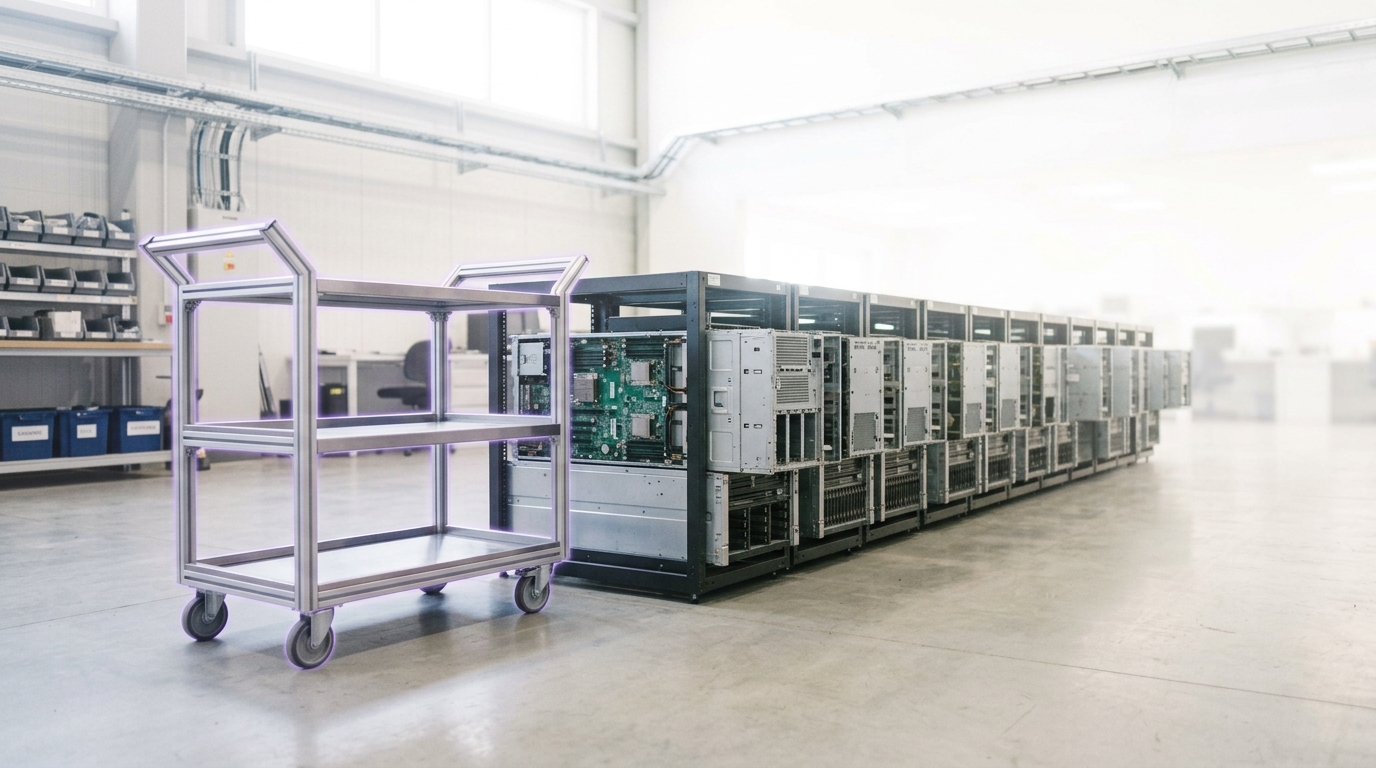
This cohort’s market and infrastructure briefings document hundreds of billions of dollars in hyperscaler AI capital expenditure in detail — what gets bought, from whom, at what scale. Almost none of that coverage, in this cohort or in the wider financial press it draws from, asks the obvious follow-up question: what happens to that hardware when it gets retired, and what does that retirement actually cost. This briefing is about that gap specifically.
Why the refresh cycle itself is the root of the problem
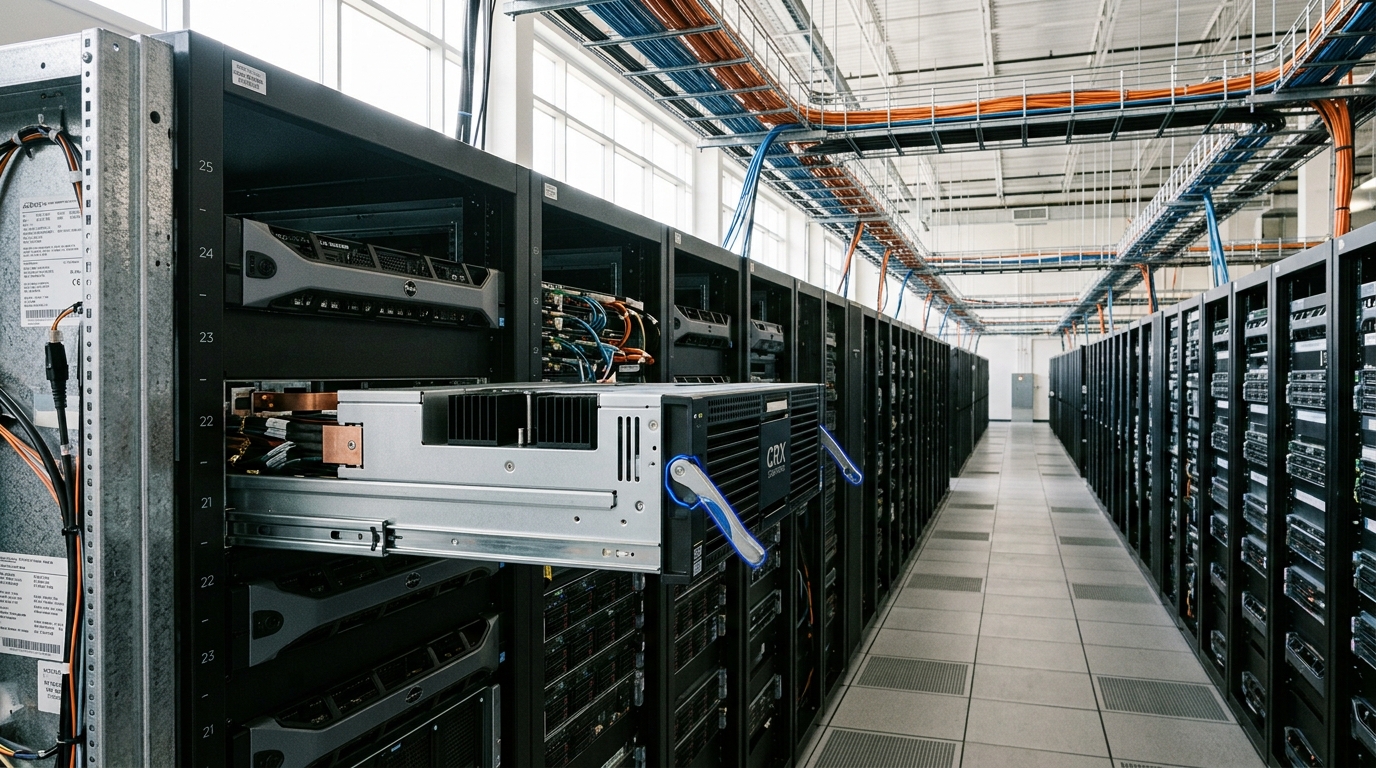
AI accelerator hardware is being replaced on an 18-to-36-month refresh cycle, sharply compressed from the 5-to-7-year horizon that shaped traditional enterprise IT procurement [1]. Tech companies replace AI hardware roughly every two years specifically to avoid costly breakdowns or obsolescence — meaning hardware deployed in 2023 was already reaching end-of-life within this briefing’s own research window, and the pace of retirements is only accelerating alongside the capex growth this cohort’s markets track documents elsewhere [1].
The specific financial cost of doing this badly
The most concrete, underpriced figure in this space: high-value AI accelerators can lose 40% or more of their recoverable worth within 60 days of a retirement decision, and an enterprise that delays 90 days after authorizing an H100-class retirement typically recovers substantially less value than one that engages a certified ITAD (IT Asset Disposition) partner at the point of retirement authorization [3]. That is a direct, quantified cost of treating decommissioning as an afterthought rather than a planned part of the hardware lifecycle — a cost this briefing argues belongs in the same capital-planning conversation this cohort’s capex coverage already takes seriously for acquisition spend.
The material-recovery side of the story
The environmental framing is not purely a cost problem — it is also a genuine recovery opportunity. GPU accelerators and the servers housing them contain gold, silver, palladium, and rare earth elements, materials that are costly and environmentally intensive to mine from virgin sources, and that certified downstream recovery processing can reclaim rather than lose to landfill [2]. The global data center decommissioning services market reached roughly $12.95 billion in 2026, projected to grow to roughly $19.94 billion by 2032 at a 7.37% annual rate — itself now a meaningful sub-industry this cohort’s other equipment and materials coverage does not currently track, despite sitting downstream of the exact same hardware this cohort’s accelerator track covers on the way in [3].
Why “62 million metric tons” is the scale context this deserves
Global e-waste generation overall reached roughly 62 million metric tons per the UN Global E- waste Monitor, a figure set to grow further as AI-driven hardware refresh cycles compound on top of already-existing consumer and enterprise electronics waste streams [4]. AI accelerators are a small fraction of that total tonnage today, but their refresh cycle is dramatically faster than the electronics categories that make up most of that baseline — meaning their share of the e-waste stream is growing disproportionately to their share of total device count, a distinction easy to miss in a single aggregate tonnage figure.
Why this belongs in the same conversation as capex, not a separate sustainability sidebar
This cohort’s editorial position throughout its markets and infrastructure tracks treats capital-expenditure figures as central to understanding the industry’s trajectory. The recycling and decommissioning question this briefing raises is not a separate, secondary sustainability story — it is a direct extension of the same capital-allocation logic. A hyperscaler spending in the hundreds of billions on AI accelerators that depreciate to a fraction of their value within 60-90 days of retirement is making a capital-planning decision every bit as consequential as the original acquisition, and this briefing’s argument is simply that the industry’s public financial narrative should account for the back end of that cycle with the same rigor it already applies to the front end of it, every single time.