The Corner of the Equivalence Principle No Experiment Has Touched
Sort quantum free-fall tests into a five-part basis and four slots fill with real numbers. Paper No. 9 shows the fifth, free fall for an entangled two-species state, has never been measured — and cannot be, by any experiment done on separate systems.
Research paperThe Quantum–Relativity Papers, No. 9 ·
this page is the paper's summary — the full text (18 pages) is the PDF.
Download the paper (PDF)
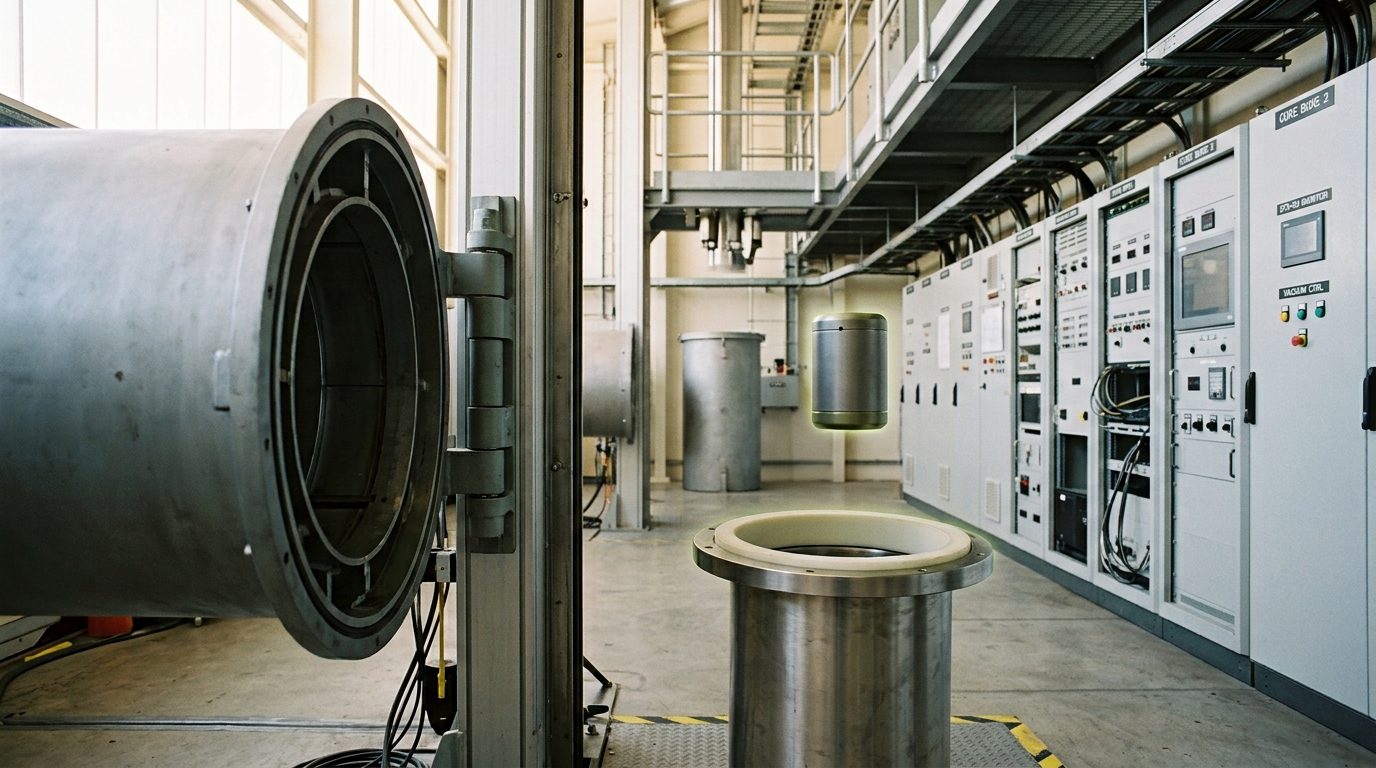
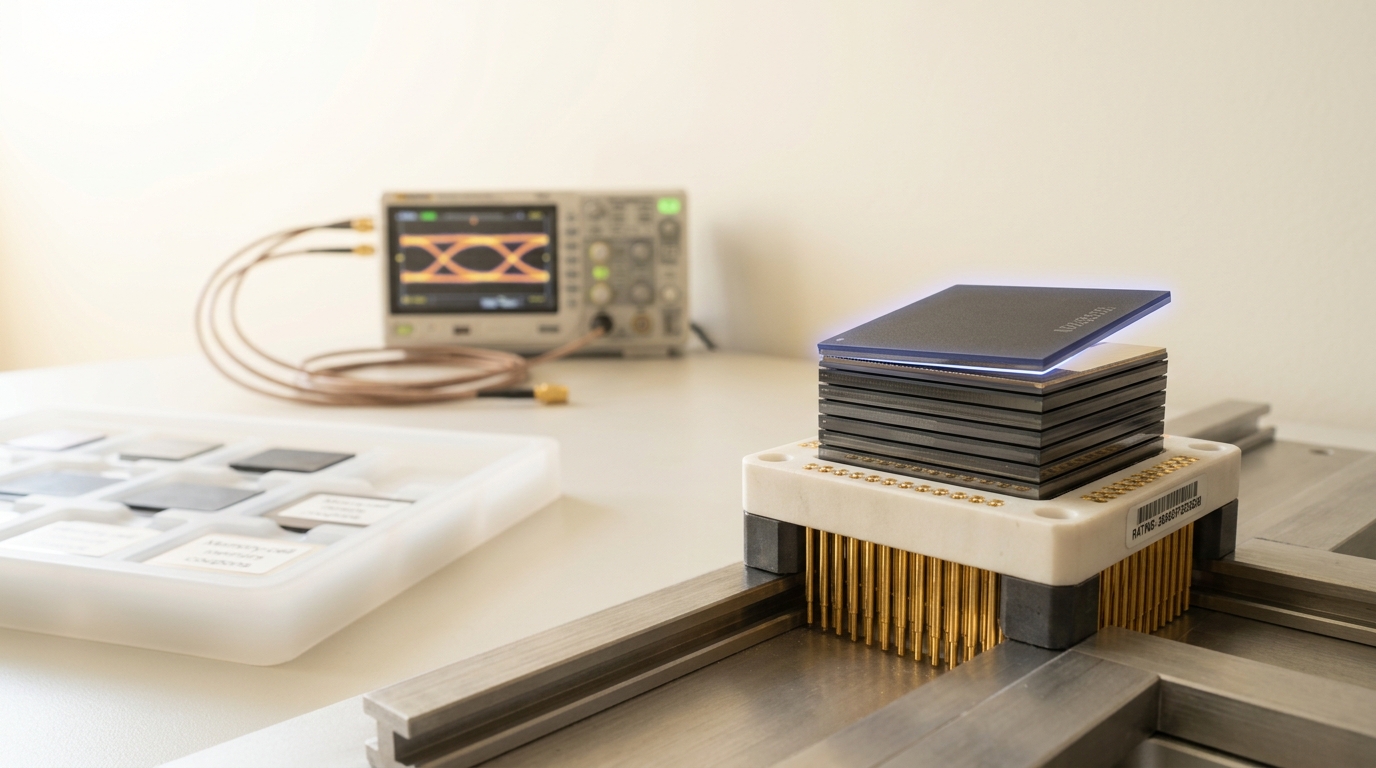
Every number in this audit comes out of an apparatus that looks like this: something dropped, or held, and read out to a precision the classical Eötvös experiment could not have imagined, culminating in MICROSCOPE's η(Ti,Pt) bound at the 10⁻¹⁵ level [@touboul-et-al-2022].Image prompt and art direction by Brecht Corbeel; generation pending.
Abstract
A new paper decomposes quantum tests of the weak equivalence principle into a five-part operator basis, then audits the published record against it: MICROSCOPE's classical bound, dual-species atom-interferometer drops, an internal-superposition test, and clock and antimatter measurements each fill one slot. One component, universality of free fall for a genuinely entangled two-species state, has no published bound at all, and the paper proves no experiment performed on separable states — however cleverly combined — can ever supply one. It closes with a design envelope for the interferometer that could, built from demonstrated entangled-atom hardware.
ADVERTISEMENT
Four slots fill with real numbers. A fifth stands empty, and the paper proves it has to
Every weak-equivalence-principle experiment ever run, from a torsion balance to a satellite to a chamber where laser-cooled atoms fall for half a second, answers a version of one question: do two different things fall at the same rate. A new roughly 100-reference paper, “The Corner of the Equivalence Principle No Experiment Has Touched,” ninth release in The Quantum–Relativity Papers, starts from the observation that once the falling things are quantum systems rather than point masses, “the same rate” stops being one question and becomes five, because a quantum system can differ from itself along axes a classical body never had — its internal energy state, coherences between those states, superpositions of its own position, and, for two systems prepared together, entanglement between them. The paper’s contribution is to write down that five-part basis precisely, prove the five pieces are logically independent of one another, and then do the unglamorous work of checking the literature against it, experiment by experiment. Four of the five slots turn out to have real, cited numbers already sitting in them. The fifth does not, and the paper’s second contribution is a proof that no experiment performed on separate, unentangled systems — however many species, however cleverly combined — could ever fill it.
This article is the paper’s landing page, not the paper itself, and it walks through the five-part basis, the audit that empties one of its columns, and the interferometer design that could close it, in that order.
From two balls off a tower to fifteen decimal places in orbit
Galileo’s demonstration, whether or not it happened at Pisa the way the legend has it, made a claim simple enough to falsify with two objects and a stopwatch: drop anything, and it falls at the same rate as anything else, mass cancelling out of the problem entirely. Loránd Eötvös turned the claim into a number in the early twentieth century, using a torsion balance to compare the gravitational and inertial mass of different materials to a precision of roughly one part in 109, hanging two different substances from a fibre and looking for the tiny twist that would appear if the Earth’s pull and the Earth’s rotation disagreed, even slightly, about which way each material’s weight should point. Every advance since has been the same experiment in substance, run with better hardware, the tested materials and the achieved precision changing while the underlying question — do two different kinds of matter fall the same way — stays exactly as Galileo posed it. Thibault Damour’s theoretical survey of the principle frames why anyone keeps pushing that precision further: in essentially every modern theory that unifies gravity with the other forces, the coupling constants Newton and Einstein treated as fixed become dynamical fields, and dilaton-like couplings of that kind generically predict equivalence-principle violations at some small but potentially reachable level, so a null result is never merely a null result — it is a bound on how strongly, if at all, those extra fields couple to ordinary matter [13]. Clifford Will’s long-running review of the experimental confrontation between general relativity and observation catalogs just how thoroughly the classical version of the test has been passed, across the Eötvös-type bound, tests of local Lorentz invariance, and the post-Newtonian tests of light bending, time delay and orbital precession that constrain the same broad class of theories from a different direction [12].
The modern endpoint of that Eötvös lineage is the MICROSCOPE satellite, which compared the free fall of titanium and platinum test masses in Earth orbit, isolated from the seismic and thermal noise that limits ground-based torsion balances. Its final published result, released in 2022, reports an Eötvös parameter of η(Ti,Pt) = [-1.5 ± 2.3 (stat) ± 1.5 (syst)] × 10⁻¹⁵, a bound roughly a million times tighter than Eötvös’s own and consistent with no violation at all [3]. That number is, in the paper’s language, a bound on η_cl — the classical, state-independent component of any equivalence-principle violation, the one that applies equally regardless of what internal state, coherence, or entanglement structure the test bodies happen to carry, because MICROSCOPE’s titanium and platinum blocks carry none of those quantum properties at all. It is also, not coincidentally, the tightest number in the entire audit this paper runs, and the fact that it constrains only one of five components rather than all five is the paper’s opening move.
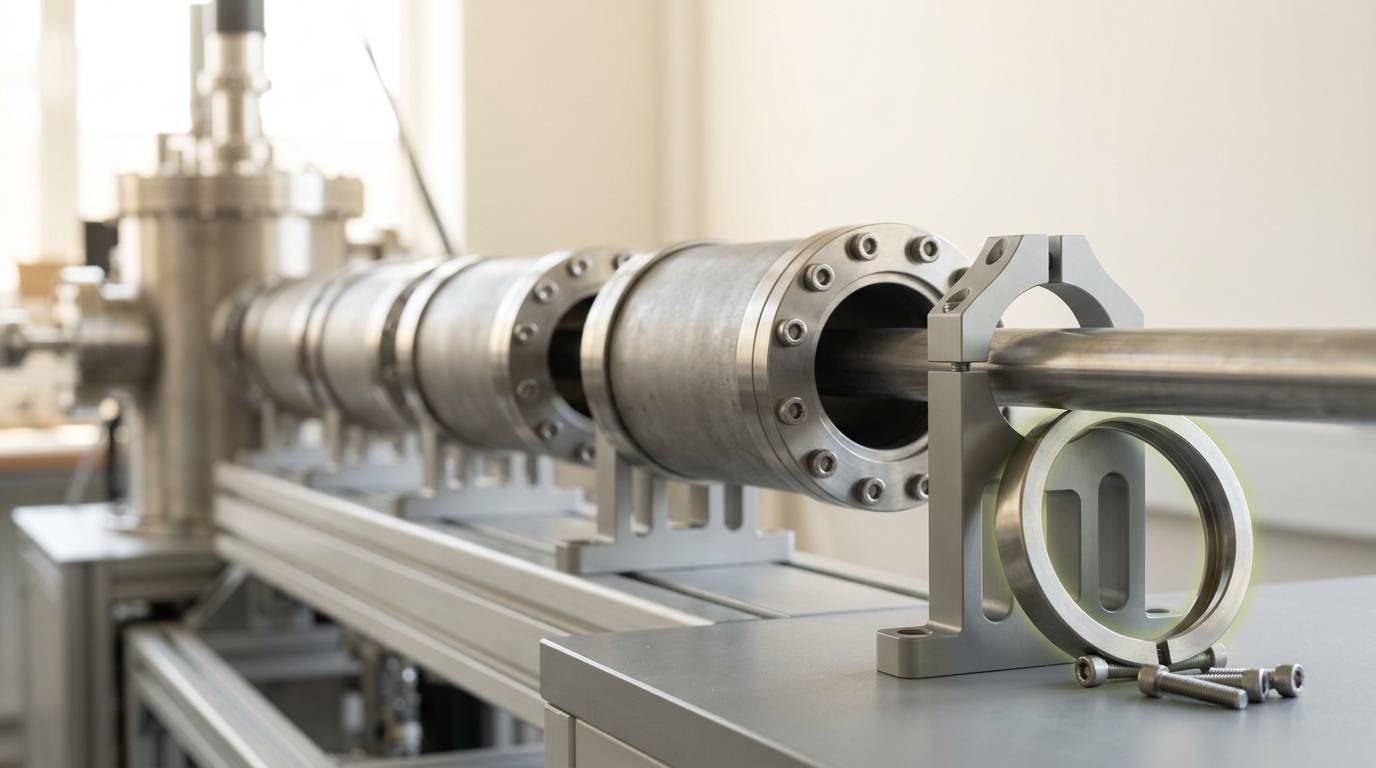
Figure 1. Two species means two separate internal ladders of energy levels, which is exactly the room a quantum system has to disagree with itself that a point mass never had — Zych and Brukner's operator-level equivalence requirement is stated over the rest, inertial, and gravitational internal-energy operators, not their averages [@zych-brukner-2018].Image prompt and art direction by Brecht Corbeel; generation pending.
Five ways a quantum system can fall differently, and only one of them is classical
Magdalena Zych and Časlav Brukner’s 2018 paper supplies the anchor the new work builds directly on top of: a classical body’s equivalence principle, they argue, says nothing at all about whether the quantum version holds, because a quantum system’s mass is not one number but an operator, and equivalence has to be stated as equivalence between its rest, inertial, and gravitational internal-energy operators rather than between their average values [1]. Model that operator, call it M^, as M^=m(1+H^int/mc2), where H^int is the system’s internal Hamiltonian, and let the gravitational mass be mg=mi(1+η^) for some violation operator η^ acting on the internal, and for two-body tests the joint, Hilbert space. Expand that operator and, the paper argues, exactly five structurally distinct pieces fall out:
η^=ηcl+η^diag+η^coh+η^sup+η^ent
ηcl is an ordinary number, the same for every state — MICROSCOPE’s slot. η^diag is diagonal in the internal energy basis: it can make a clock in one internal state fall differently from the same species in another, which is what a clock-redshift test or a test comparing atoms prepared in different hyperfine states actually probes. η^coh is off-diagonal in that same basis — it couples the coherences between internal states to free fall, so it only shows up in an experiment that keeps a system in superposition of two internal states long enough for gravity to act on the superposition itself, rather than on each state separately. η^sup depends on the system’s external, spatial quantum state beyond the leading order any classical trajectory would need, the component that a spatial superposition test — an atom interferometer’s two arms treated as a single quantum object rather than two separate classical paths — is built to see. And η^ent is the one component with no single-system analogue at all: it is defined only on a joint state of two systems, and it is nonzero precisely when the expectation value of the joint operator on an entangled state fails to equal the sum of what each system would show alone, ⟨η^AB⟩=⟨η^A⟩+⟨η^B⟩. Notice what has to be true for that inequality to even make sense: there has to be a joint operator in the first place, something that acts on the combined two-body Hilbert space and cannot be written as a sum of two one-body pieces, and an entangled state to evaluate it on. Drop two atoms side by side, however precisely synchronized, and if they were never entangled there is no joint operator for η^ent to be nonzero, because the state itself factors and every measurable quantity on it reduces to single-system expectation values by construction. That is the structural reason this component sits apart from the other four, and it is why the paper’s independence claim matters rather than being a formality: the paper proves these five pieces are pairwise independent — for any two of them, a model exists with one nonzero and the other exactly zero — which is what licenses treating the audit that follows as five separate questions rather than one question asked five ways.
Every published bound, sorted into five slots, and one comes back empty
Run the actual experimental record against that basis and a pattern appears fast. Dennis Schlippert and colleagues’ 2014 dual-species atom interferometer, dropping laser-cooled rubidium and potassium together, reported an Eötvös ratio of (0.3 ± 5.4) × 10⁻⁷ between the two species [5], and the same collaboration’s improved 2020 apparatus tightened that to η(Rb,K) = (−1.9 ± 3.2) × 10⁻⁷ [6]. Because rubidium and potassium differ in composition rather than internal quantum state, these bound a combination of ηcl and η^diag, not the coherence or entanglement pieces. Peter Asenbaum and colleagues pushed a single-species version of the same idea further, interfering two isotopes of rubidium in a ten-metre atomic fountain to reach η = [1.6 ± 1.8 (stat) ± 3.4 (sys)] × 10⁻¹² — three orders of magnitude past the dual-species result and, at the time, the tightest quantum free-fall bound on record [4]. Guglielmo Rosi and colleagues took the internal-state question head-on: rather than comparing two species, they held single rubidium atoms in coherent superpositions of two internal hyperfine states through the interferometer sequence, constraining the equivalence principle’s genuinely quantum, coherence-dependent piece to an Eötvös-ratio uncertainty in the low 10⁻⁹ range, roughly a hundredfold improvement over earlier internal-state tests [7] — this is the one bound in the record that reaches into η^coh rather than stopping at η^diag. Chris Overstreet and colleagues’ gravitational Aharonov-Bohm measurement, using a kilogram-scale source mass to imprint a phase on a single atom’s spatially superposed wavefunction, sits adjacent to η^sup, probing how the atom’s own extended quantum state couples to the field rather than treating the interferometer arms as two independent classical trajectories [10]. Pacôme Delva and colleagues’ redshift measurement using the eccentric orbits of two Galileo satellites, comparing onboard atomic clocks against ground clocks to a fractional deviation of (0.19 ± 2.48) × 10⁻⁵ from general relativity’s prediction, adds a η^diag-adjacent bound from a completely different platform [11]. And at the far end of the record, the ALPHA collaboration’s 2023 measurement of antihydrogen’s free fall, reporting a gravitational acceleration ratio of ḡ/g = 0.75 ± 0.13 (stat, sys) ± 0.16 (sim) — consistent with ordinary gravity within its stated errors, though not yet precise enough to rule out an appreciable deviation — extends the classical, ηcl-type test to antimatter for the first time, a different kind of coverage than a tighter number on ordinary matter would give [9].
ADVERTISEMENT
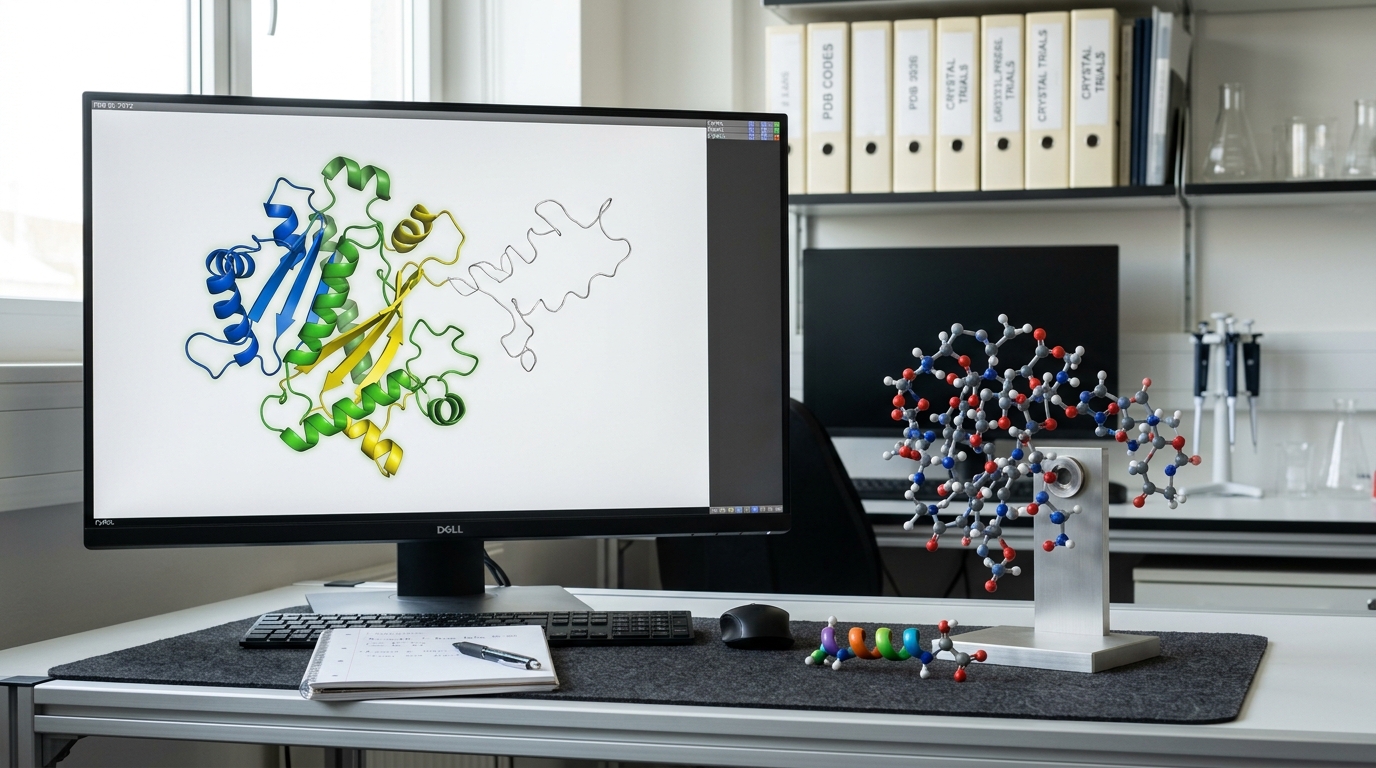
Figure 2. Lay the published record against the five-component basis and four positions fill with real bounds — classical, diagonal, coherent, spatial — while the fifth, the entangled component, has no shield closed around it at all; that empty position is the paper's finding, not a placeholder for one still being written up.Image prompt and art direction by Brecht Corbeel; generation pending.
Lay all of it out in one table, rows for experiments and columns for the five components, and four columns get real entries: ηcl constrained at the 10−15 level by MICROSCOPE, η^diag constrained by every dual-species and clock test in the list, η^coh constrained at the low-10−9 level by Rosi and colleagues’ internal-superposition test, η^sup constrained by Overstreet and colleagues’ gravitational Aharonov-Bohm result. The fifth column, η^ent, has nothing in it — not a weak bound, not a preliminary number, nothing. The paper’s proposition on this point is not merely that the entangled component happens to be unmeasured; it proves, within its operator model, that any experiment performed on separable states of two species — meaning any product of single-system states, internal superpositions included — produces outcome statistics that are provably independent of η^ent, because that operator only ever enters through the joint phase of a genuinely nonproduct state. Run every experiment in the table again, in every combination anyone has thought to try, and the entangled column still comes back empty, not from a lack of effort but because separable-state statistics cannot see it by construction.
An interferometer built to test a state that two atoms have to share, not just compare
Remi Geiger and Michael Trupke’s 2018 proposal is the one piece of the literature the paper found addressing this gap directly, and its own framing states plainly what’s different about it: rather than dropping two atomic species independently and comparing their trajectories afterward, entangle them first, through a shared optical cavity that makes it impossible in principle to tell which atom emitted the photon that heralds the entangling event, and only then measure a joint differential phase between the two linked interferometers [8]. Their proposed implementation uses two rubidium isotopes, rubidium-85 and rubidium-87, entangled through a vacuum-stimulated rapid adiabatic passage protocol inside a high-finesse cavity, and states a target sensitivity below 10⁻⁷ on the resulting Eötvös parameter [8] — a number that, read next to Asenbaum and colleagues’ 10⁻¹² on unentangled isotope pairs, marks out a five-order-of-magnitude gap between what entangled-state tests have so far been designed to reach and what the best classical-analogue technique already achieves on ordinary separable free fall.
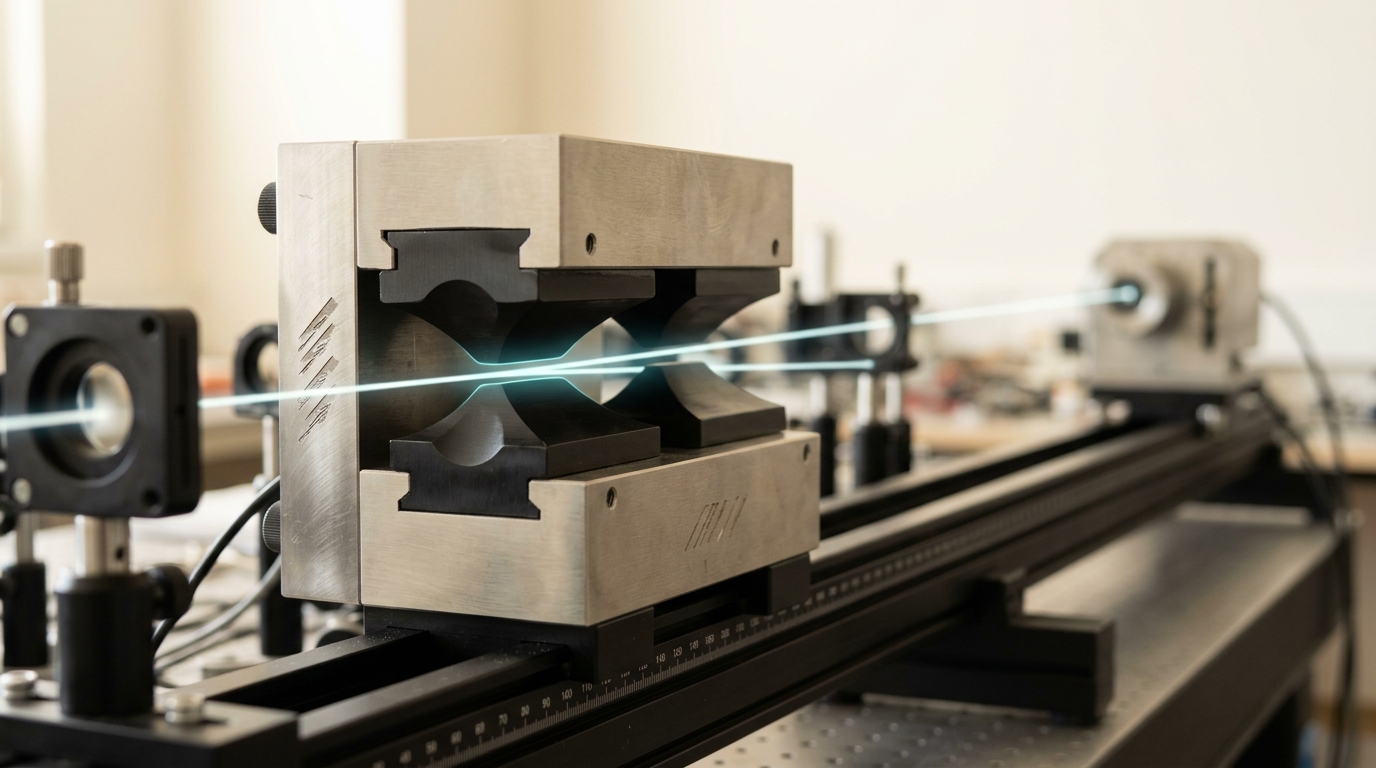
Figure 3. Geiger and Trupke's proposal links two atoms through exactly this kind of shared photon path — a cavity that makes it impossible to say which atom the detected photon came from, which is what entangles the pair rather than merely correlating two separate measurements afterward [@geiger-trupke-2018].Image prompt and art direction by Brecht Corbeel; generation pending.
The gap is honest and the paper does not paper over it. Geiger and Trupke’s own target sits closer to Schlippert and colleagues’ first-generation dual-species bound than to the state of the art, and closing that distance is exactly the design problem the new paper’s experiment section works through: what a dual-species interferometer sharing a genuinely entangled joint state, rather than two merely correlated classical readouts, would need in launch number, interrogation time and interferometer contrast to approach the sensitivities modern separable-state instruments already reach, and which systematics — differential AC Stark shifts between the two species, and gradient-induced dephasing across the shared state — set the floor before it gets there. A differential AC Stark shift arises because the two species do not, in general, respond identically to the same trapping or probe light, so any residual intensity imbalance between the two interferometer arms imprints a phase that mimics a real violation unless it is measured and subtracted; a gradient across the shared state does the analogous thing to the entangling step itself, dephasing the joint coherence before the interferometer sequence finishes if the two atoms sit at different heights in the Earth’s field for long enough. Both are stated in the paper with their demonstrated magnitudes from the dual-species literature this piece has already cited, not as new measurements. None of that turns the projected sensitivity into a measured one; it is a structured extrapolation from Geiger and Trupke’s demonstrated protocol and Asenbaum and colleagues’ demonstrated single-species performance, not a new result on its own, and the paper is explicit that only a built instrument settles which floor actually binds. What the design envelope does supply is a milestone ladder — a first entangled measurement no better than Geiger and Trupke’s own 10⁻⁷ target, a second generation approaching Schlippert-class 10⁻⁷-to-10⁻⁹ territory, and a stated, falsifiable condition under which the whole programme should be abandoned: if differential systematics refuse to average down with atom number the way single-species shot noise does, entangling the two species buys coherence at a price no realistic integration time recovers.
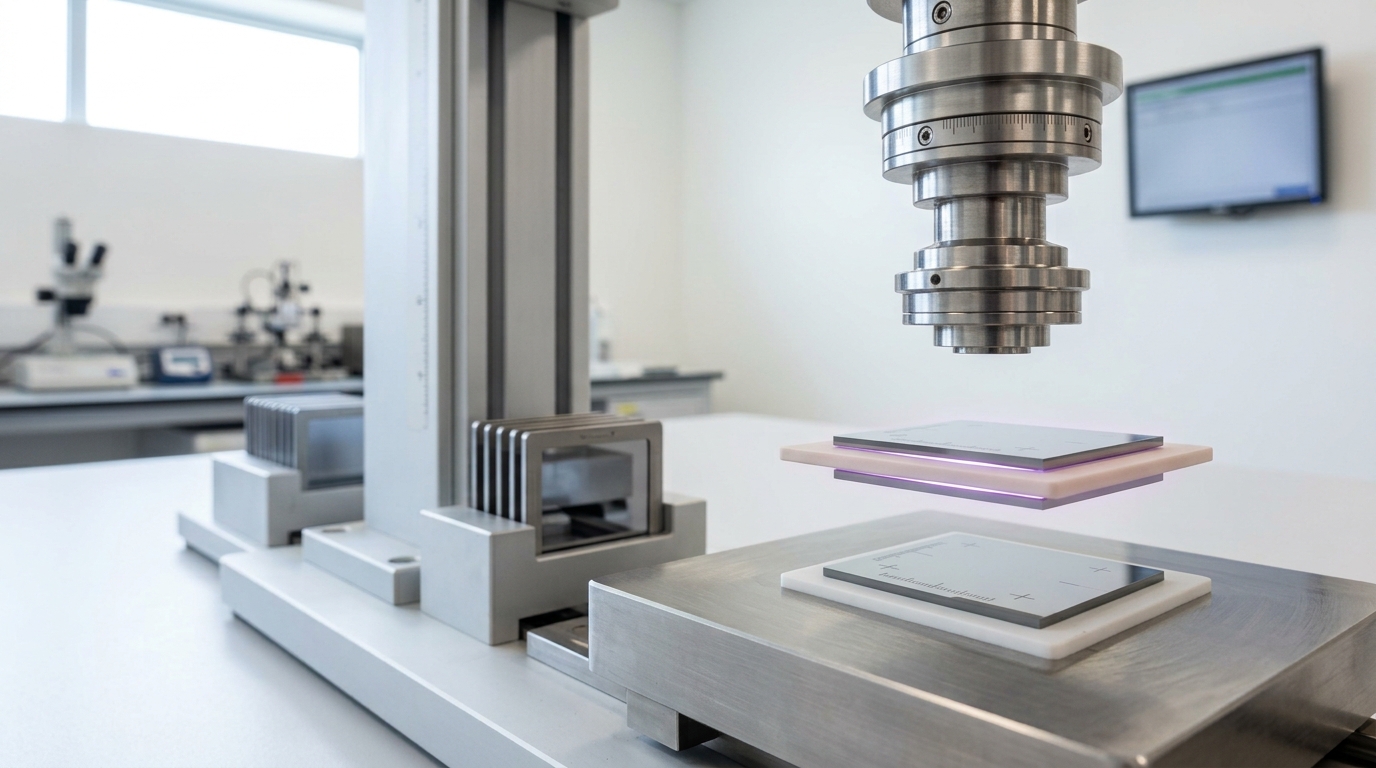
Figure 4. What makes the fifth component untestable by any experiment run on separate systems is exactly what this release bar stands in for — a genuinely shared state has to be prepared jointly, before either half falls, not stitched together afterward from two independent drops.Image prompt and art direction by Brecht Corbeel; generation pending.
What finding a nonzero answer there, and only there, would mean
Flaminia Giacomini and Brukner’s extension of the quantum equivalence principle to reference frames associated with quantum systems — including, in their framework, reference frames in superpositions of spacetimes — makes a specific promise relevant here: superpositions of massive bodies can obey the equivalence principle without invoking gravity-induced state reduction to explain why they do not collapse on their own [2]. That is a structured, not a proven, extension of Zych and Brukner’s original operator framework, and it matters to the entangled component specifically because it is one of several theory families that predict where, if anywhere, a nonzero η^ent should show up. A violation confined to the entangled component alone — every other η^ consistent with zero, η^ent not — would be invisible to every experiment run to date, by the independence proof above, and would point specifically at theories in which gravity treats a genuinely joint quantum state differently from any classical or product-state stand-in for it: semiclassical models where spacetime sources from an expectation value rather than an operator, and gravitational-decoherence proposals that single out entangled or superposed configurations for extra physics no separable-state test could ever have caught. That mapping is graded speculative in the paper itself — a statement of which theory classes would predict what, not a claim that any of them is right — and it is exactly the kind of question the paper’s companion piece on the debate between gravitationally induced entanglement and semiclassical gravity (No. 3 in this series) takes up from the other direction. Read together, the two papers make the same point from opposite ends: whether gravity ultimately needs to be quantized at all, and whether entangled matter falls the way the sum of its parts would predict, are not two separate open questions. On the operator picture this paper builds, they are close to the same question, and until an instrument like the one above is built, no experiment anyone has run has asked it.