A different industry wearing a similar name
“Chipmaker” in this cohort’s other ninety-plus articles almost always means a company building classical, transistor-based silicon. Quantum computing has its own chipmakers, building hardware that is not a faster version of classical chips, but a different computing paradigm running on different physics entirely — superposition and entanglement rather than binary transistor states. This briefing covers three leading approaches and the companies building them, verified against 2026 reporting rather than the field’s often-breathless longer-term claims.
IonQ: trapped-ion, and a genuine 2026 hardware milestone
IonQ builds trapped-ion quantum computers, a modality reported to lead on gate fidelity among its category. In 2026, IonQ secured its first 256-qubit system sale and received its first ion- trap chip samples back from fabrication, moving from component-level testing toward integrated, system-level testing of the full machine [1]. Separately, IonQ’s Tempo system reached 64 algorithmic qubits in Q1 2026 using all-to-all trapped-ion connectivity, with revenue and backlog both reported growing sharply [4].

Rigetti: superconducting, and a different fidelity story
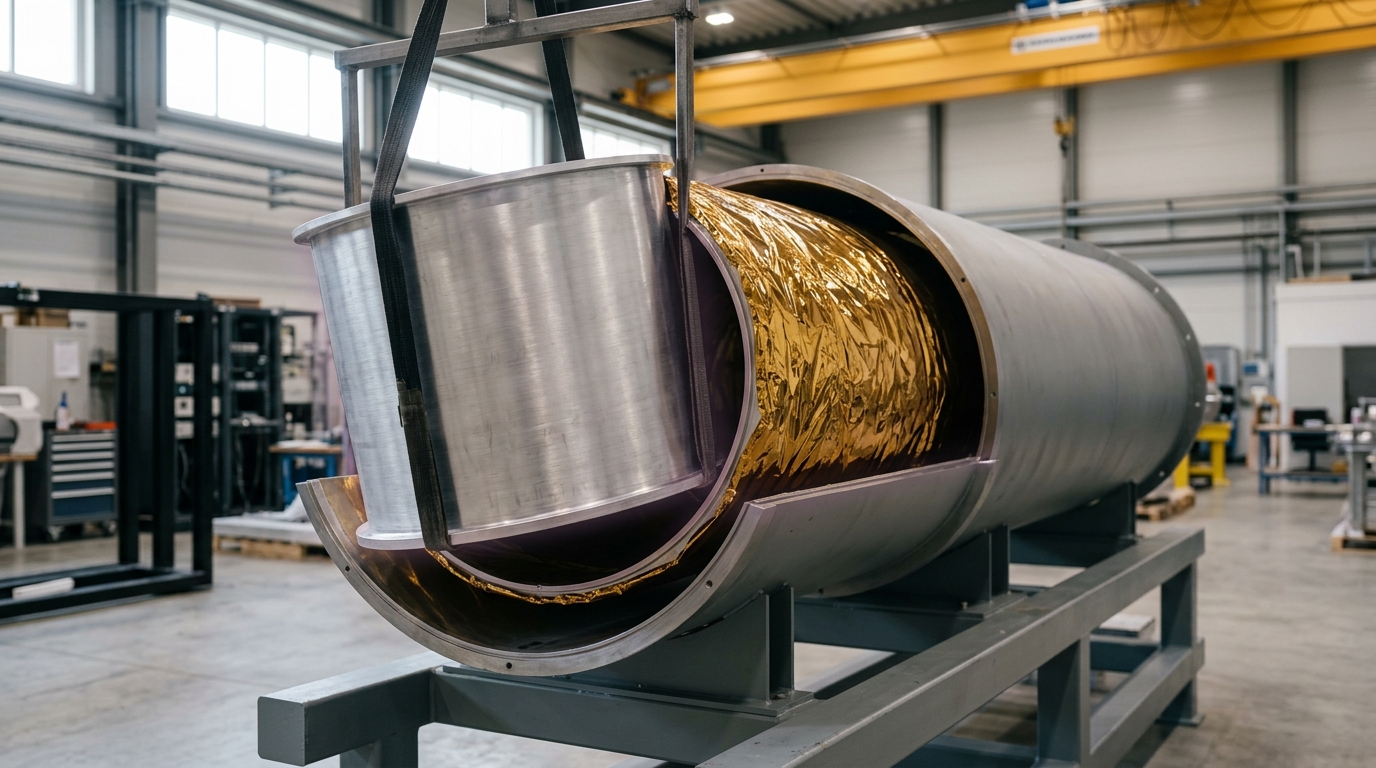
Rigetti builds superconducting quantum processors — the same broad hardware family Google and IBM’s quantum efforts also use. Rigetti’s Cepheus-1, a 108-qubit system reaching general availability in early 2026, is reported achieving 99.5% fidelity, alongside a CHIPS Act funding letter of intent and revenue reported nearly tripling year over year [1]. Superconducting qubits require dilution-refrigerator-level cooling to function, a hardware constraint with no equivalent anywhere in this cohort’s classical-chip coverage.
PsiQuantum: photonic qubits, and a bet on manufacturability
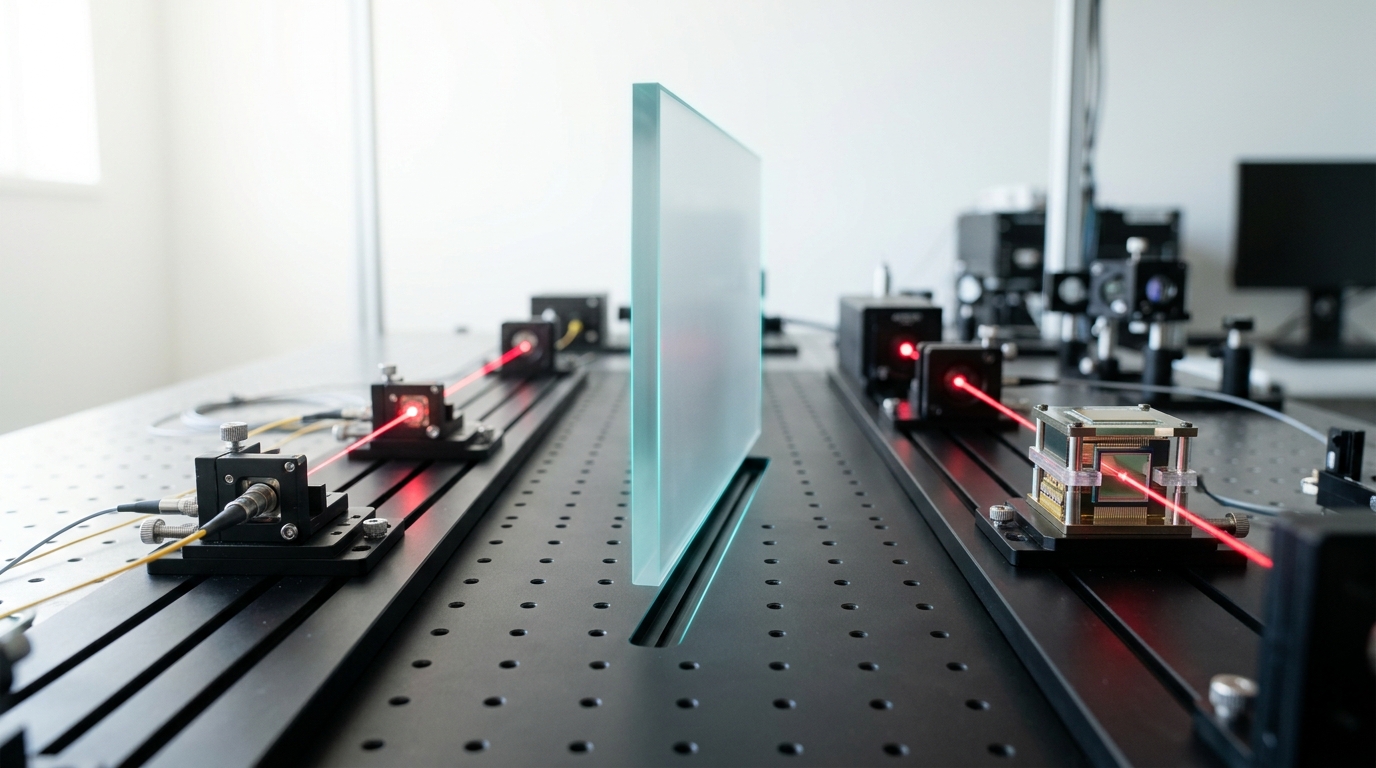
PsiQuantum takes a third approach entirely — photonic qubits, built using techniques closer to conventional semiconductor photonics manufacturing than either trapped-ion or superconducting approaches. PsiQuantum secured an expanded $125 million agreement with DARPA’s Quantum Benchmarking Initiative in 2026, and published fidelity milestones for its Omega chipset: 99.98% single-qubit preparation and 99.22% two-qubit fusion, with new compute centers breaking ground in Brisbane and Chicago during 2026 [1]. PsiQuantum’s explicit bet is that photonic qubits’ compatibility with existing semiconductor fabrication processes gives it a manufacturability advantage the other two approaches do not share [2].
Why these three numbers are not comparable to each other
A reader tempted to rank these three companies by qubit count alone is making a category error this briefing wants to head off explicitly: trapped-ion, superconducting, and photonic qubits have different noise characteristics, different connectivity properties, and different error-correction overhead, meaning a “64-qubit” trapped-ion system and a “108-qubit” superconducting system are not directly comparable computational resources [3]. This is a meaningfully different situation from this cohort’s classical-accelerator coverage, where FLOPS and memory bandwidth figures, while imperfect, at least measure the same underlying quantity across competitors.
Why this briefing insists quantum and AI silicon are complements, not rivals
It would be a mistake to read quantum computing’s 2026 progress as a competing bet against the AI- accelerator buildout covered throughout this cohort — the two solve different problem classes entirely. Classical AI accelerators, from Nvidia’s GPUs to the custom ASICs covered in this cohort’s accelerator track, excel at the dense linear algebra underlying neural network training and inference. Quantum hardware targets a narrower, still largely experimental class of problems — certain optimization, simulation, and cryptographic problems — where quantum algorithms offer a theoretical advantage classical hardware cannot match regardless of how much classical compute is thrown at them. Capital, talent, and fabrication capacity do compete for the same broader pool of resources this cohort’s equipment and materials track documents, but the end markets and technical approaches do not overlap in the way “quantum versus AI chips” headlines sometimes imply.
Where this leaves the industry in 2026
None of the three companies covered here report commercial quantum advantage over classical computing for a broad, economically significant workload as of 2026 — the milestones documented are genuine hardware progress, not proof of commercial-scale utility yet. That places quantum computing hardware roughly where this cohort’s photonic-computing and neuromorphic-computing companion briefings place their respective technologies: real, funded, technically advancing, and still years from the kind of broad deployment this cohort’s classical-silicon tracks already document at gigawatt scale.
The capital-market signal worth watching separately from the hardware milestones
This cohort’s markets track applies a consistent discipline to reading a company’s stock performance apart from its underlying technical progress, and that discipline applies here too: strong reported revenue growth and expanding backlog at IonQ and Rigetti reflect real commercial traction, but a still-small, still-early-stage market’s growth rate can look dramatic in percentage terms while remaining tiny in absolute dollar terms relative to the classical semiconductor industry this cohort spends most of its pages covering. Readers should weight quantum-computing stock narratives against that scale difference explicitly, rather than assuming rapid percentage growth implies the sector has reached anything close to the revenue scale of the AI-accelerator market it is sometimes, inaccurately, framed as rivaling.
What would change this briefing’s conclusion
The clearest signal that would move quantum hardware out of its current “adjacent, early-stage” category would be a documented instance of quantum advantage on an economically meaningful workload — not a research benchmark, but a real customer replacing a classical compute workflow with a quantum one because it is cheaper or better, not merely because it is novel. As of 2026, this briefing’s sources do not report that threshold has been crossed by IonQ, Rigetti, or PsiQuantum, or by any other quantum hardware company reviewed for this piece.