Closing the loop on this cohort’s power track
This cohort’s Track G has covered power-boundedness, nuclear power’s actual timeline, transformer lead times, the grid interconnection queue, liquid cooling, fiber supply, and the turbine and transformer makers profiting from all of it. This final piece in the track draws the argument together: electricity access now functions as a direct semiconductor-industry input, not a downstream utility concern that happens to affect the industry indirectly.

Why this is a category shift, not just an intensity increase
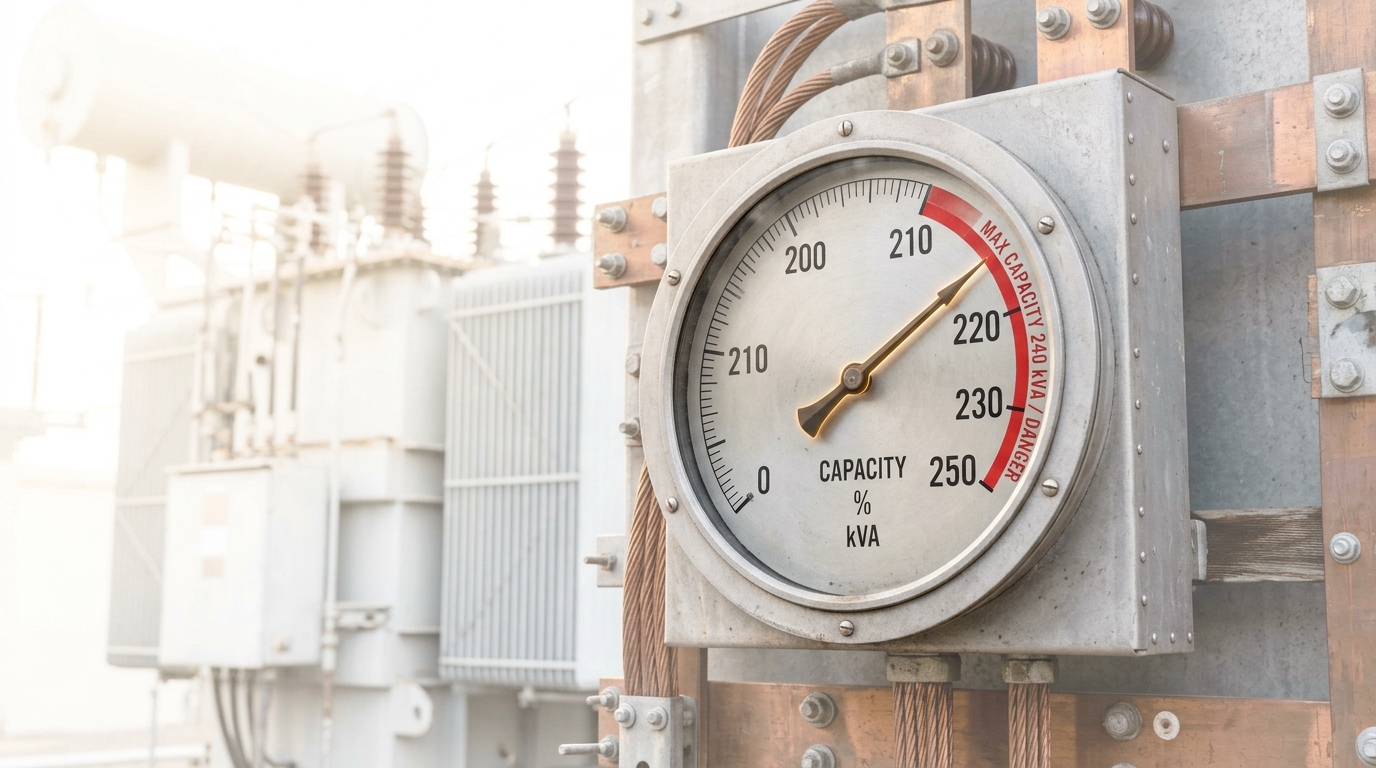
Historically, when analysts discussed “semiconductor industry inputs,” the list was wafers, specialty gases, lithography capacity, and skilled labor — the inputs this cohort’s equipment and materials track covers extensively. Electricity was assumed to be available wherever a fab or datacenter was sited, a background utility rather than a competitive constraint. This cohort’s power-infrastructure briefings establish that assumption no longer holds: 2026 AI deployment is explicitly described as “power-bound, not GPU-bound” [1], meaning power availability now determines deployment outcomes as directly as any input traditionally counted in that category.
Tracing the chain this cohort has built, end to end
Put together, this cohort’s power track traces a complete causal chain: hyperscaler capital expenditure of roughly $725 billion in 2026 [3] creates demand for new AI datacenter capacity, which requires grid interconnection approval facing a queue exceeding 2,100 gigawatts nationally, which requires physical equipment — transformers averaging 128 weeks, generators averaging 144 weeks — from a small set of manufacturers now sold out years in advance [4], which together produce the 30-50% capacity slippage this briefing opens with [2]. Every link in that chain is documented individually elsewhere in this cohort; this briefing is the version that shows the whole chain at once.
Why every accelerator deal in this cohort should be read against this constraint
A reader who has followed this cohort’s accelerator and hyperscaler-deal briefings — AMD’s 6GW OpenAI agreement, Broadcom’s 10GW OpenAI agreement, and the rest — now has the tool to evaluate each one properly: not “does the chip supply exist,” a question this cohort’s foundry and memory tracks answer in detail, but “does the power infrastructure exist on the same timeline the deal implies.” Increasingly, per this entire track’s evidence, the second question is the harder one to answer affirmatively, and the more reliable predictor of whether an announced deployment date actually holds.
The synthesis this track leaves the reader with
Semiconductor industry analysis has spent decades developing sophisticated tools for forecasting wafer capacity, process yields, and equipment lead times. This cohort’s power track argues that same analytical rigor now needs to extend to grid capacity, transformer manufacturing backlogs, and interconnection queue data — treated with the same seriousness as a wafer fab’s yield curve, because it has become just as consequential to whether the chips this cohort spends its other ninety-plus articles covering ever actually get turned on.
Why this framing will keep mattering even if today’s specific bottlenecks ease
Even if transformer lead times shorten and interconnection queues clear over the next several years, the underlying category shift this briefing describes is likely durable: once an industry’s growth curve has become sensitive to electricity access at this scale, that sensitivity does not simply disappear once the current shortage resolves. Future AI infrastructure planning, at every company covered throughout this cohort, will likely continue treating power access as a first- order input requiring the same dedicated forecasting and long-lead-time procurement discipline this cohort’s foundry and materials tracks already apply to wafers and lithography capacity — a permanent addition to the semiconductor industry’s input list, not a temporary crisis response.
Where this track leaves off
This briefing closes this cohort’s dedicated power, cooling, and optics track. The constraints documented across its eight pieces — power-boundedness, the nuclear timeline myth-check, transformer lead times, the interconnection queue, liquid cooling, fiber supply, the equipment makers profiting from all of it, and this synthesis — together form the physical-infrastructure layer underneath every gigawatt-denominated accelerator deal covered elsewhere in this cohort, and are worth revisiting whenever a new such deal is announced, using the same question every time: not whether the chips exist, but whether the electricity to run them does too, on the timeline the announcement actually implies.