A quiet dependency this cohort keeps surfacing
Several briefings elsewhere in this cohort mention liquid cooling in passing — Nvidia’s photonics push, Ayar Labs’ optical I/O, the co-packaged optics adoption curve. This briefing pulls that thread out on its own, because the dependency deserves to be understood directly rather than as a recurring footnote: co-packaged optics adoption forces liquid cooling adoption, as a matter of physics, not preference.
The physical mechanism
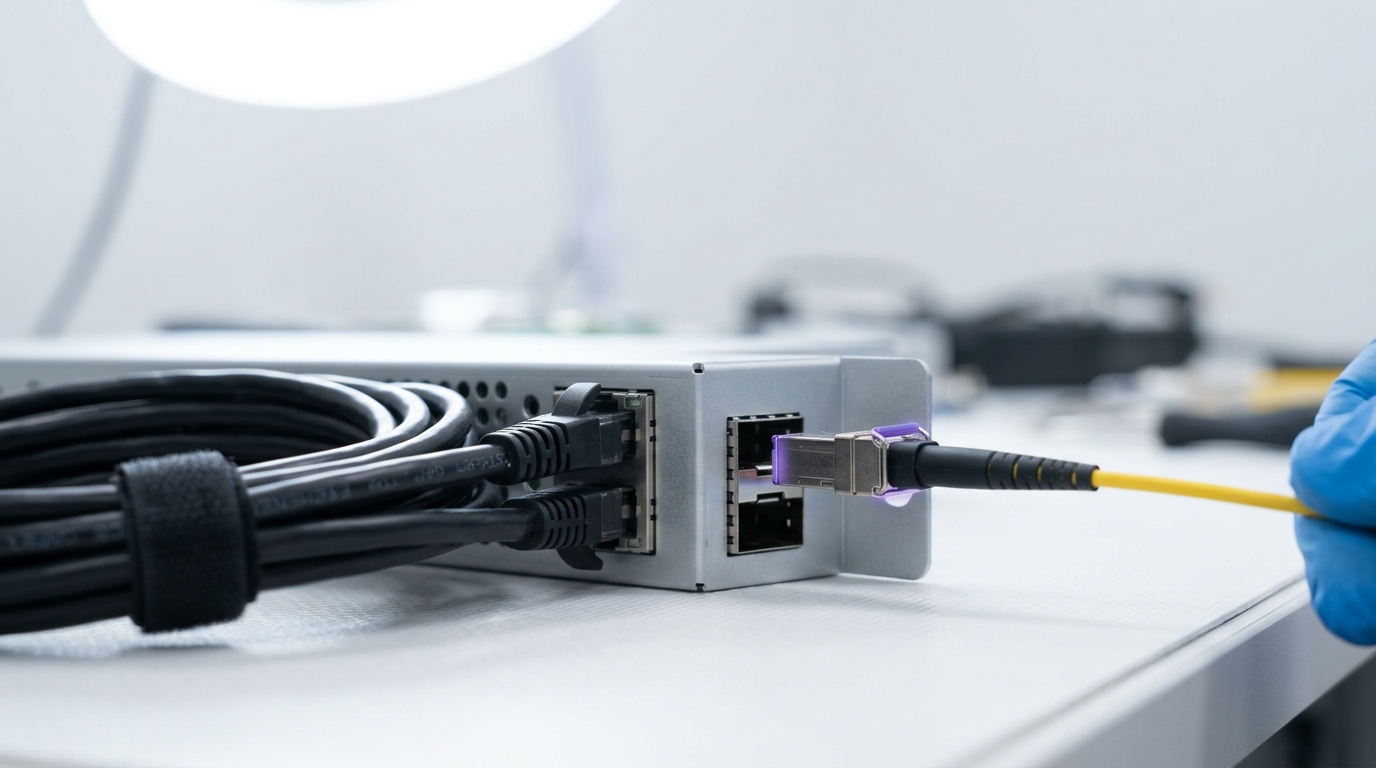
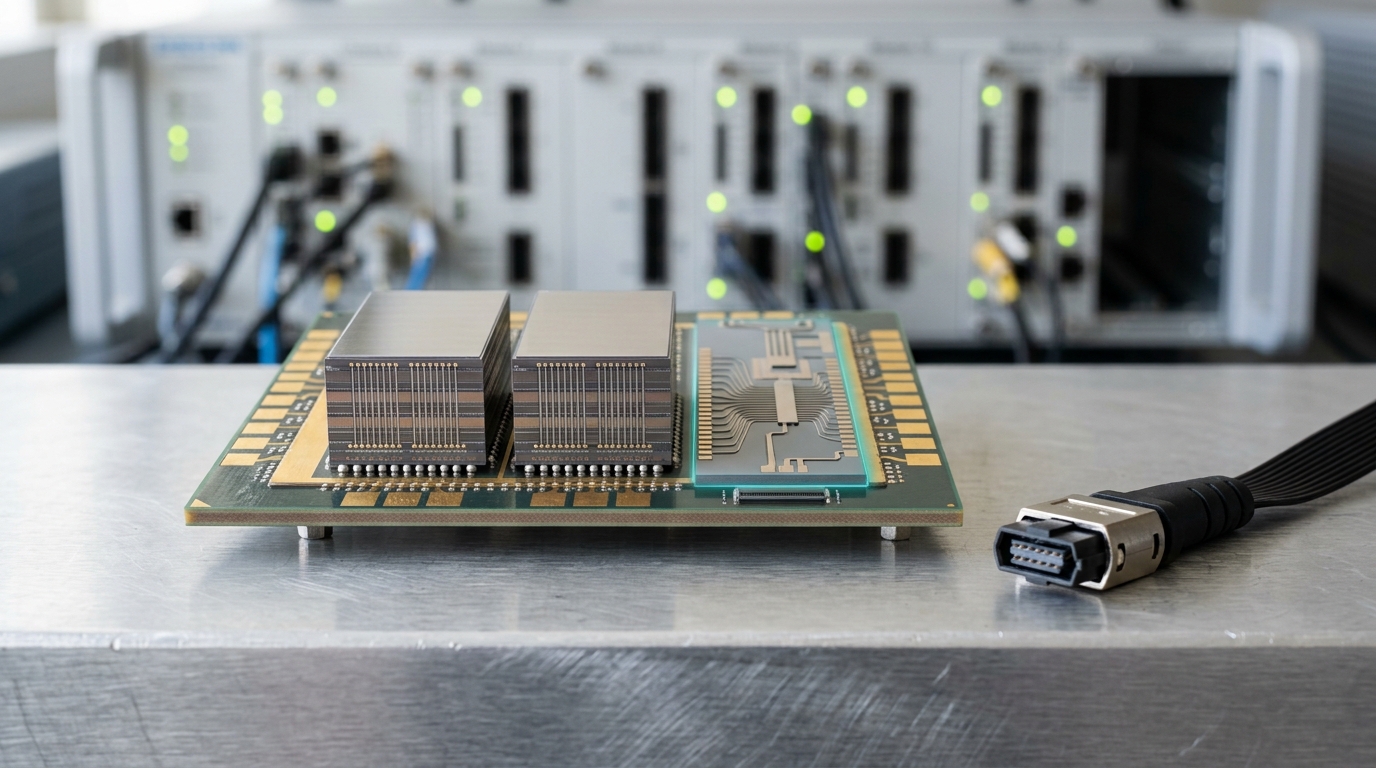
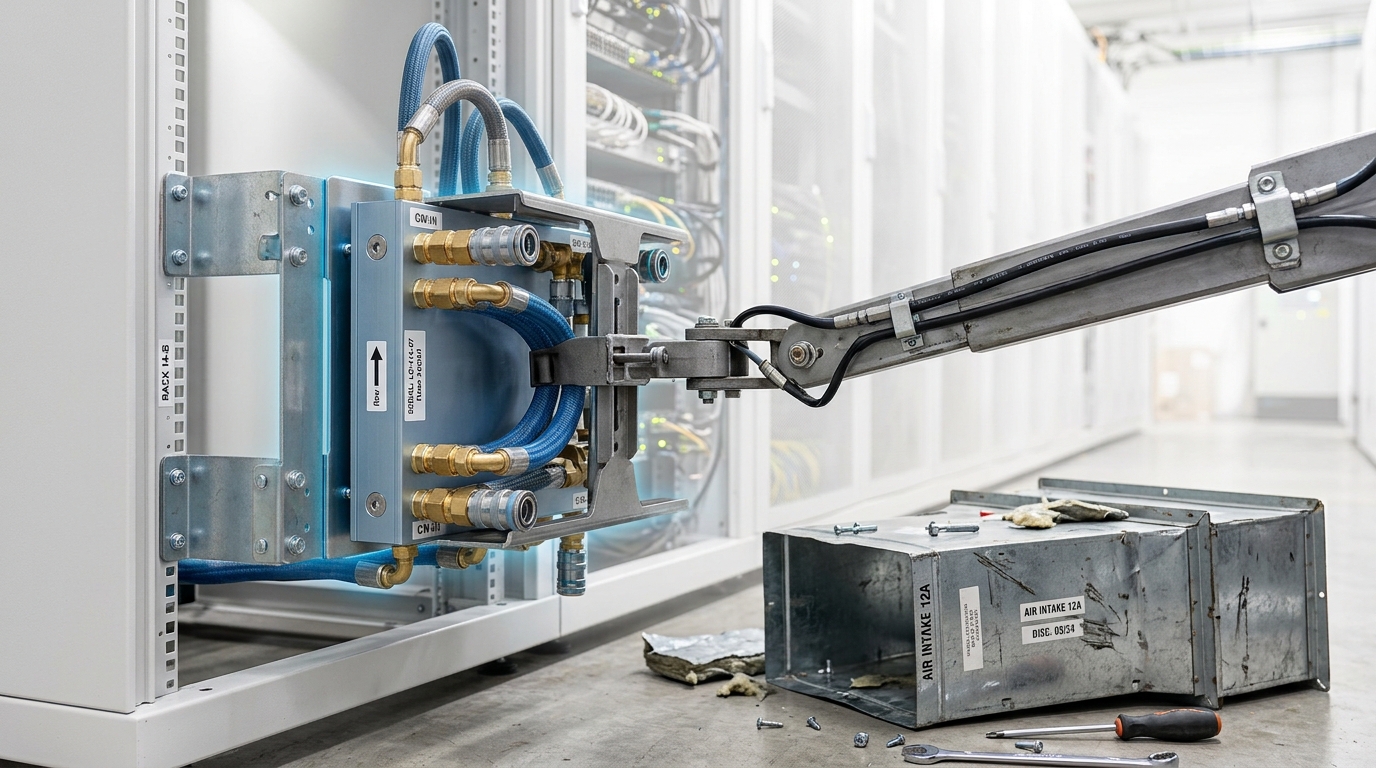
Integrating an optical engine directly onto a switch or compute package — the core of the co-packaged optics approach covered in this cohort’s Nvidia briefing — concentrates heat- generating components into a smaller physical area than a conventional design with separate pluggable optics spread across a faceplate. That concentration raises local heat flux density past what air cooling can reliably remove, requiring embedded microchannel liquid cooling instead [1]. Nvidia’s own developer documentation frames this explicitly as a power-efficiency benefit, not merely a thermal necessity — but the liquid-cooling requirement is the direct physical cost of achieving it [3].
Why this became an entire new product category
The shift has been significant enough to spawn a distinct product category: liquid-cooled optical modules, described in technical coverage as an emerging, fast-developing segment in its own right, growing directly alongside the broader shift toward denser optical integration [2]. That a distinct hardware category exists specifically for this combination — optics plus liquid cooling, engineered together — is strong evidence the pairing has moved well past the experimental stage into a recognized, commercially serious infrastructure requirement.
The retrofit cost this creates industry-wide
A datacenter operator built around traditional air cooling faces a genuine choice when adopting co-packaged optics networking: retrofit existing facilities with liquid-cooling infrastructure, or build new facilities liquid-cooling-native from the start. Neither option is cheap, and the choice directly affects the total cost and timeline of every accelerator deployment covered throughout this cohort’s hyperscaler and startup tracks that assumes next-generation networking technology. Broader industry analysis frames silicon photonics and liquid cooling as co-evolving trends reshaping the entire AI datacenter build pattern simultaneously, not as two independent purchasing decisions [4].
Why this matters for every gigawatt-scale deal in this cohort
Every large accelerator commitment covered in this cohort — AMD’s, Broadcom’s, and the rest — implicitly assumes a cooling infrastructure capable of supporting whatever networking technology those deployments end up using. A reader evaluating the realism of an announced deployment timeline should factor in whether the facility in question is liquid-cooling-ready, not just whether it has sufficient power — a second, closely related infrastructure gate that operates on its own timeline, separate from but coupled to the power-infrastructure constraints this cohort’s companion briefings document in detail.
The retrofit-versus-new-build decision every operator now faces
An existing datacenter built for air cooling faces a materially different cost and timeline for adopting co-packaged optics than a facility designed liquid-cooling-native from the start. Retrofit projects have to work around a running facility’s existing power and structural constraints, often extending the effective timeline well beyond what a greenfield, purpose-built facility would require for the identical cooling capacity. That distinction is a meaningful, underappreciated factor behind why some hyperscalers are prioritizing entirely new datacenter construction over upgrading existing sites, even where an existing site might otherwise have adequate power access already in place.
Why cooling capacity deserves its own line item in any deployment forecast
Readers modeling AI infrastructure deployment timelines, drawing on this cohort’s power and grid briefings, should treat liquid-cooling readiness as an explicit, separate checklist item rather than folding it into a general “construction complete” assumption. A facility can have adequate power and still lack the specific liquid-cooling infrastructure a next-generation networking deployment requires — a distinct gate, on its own timeline, that this briefing argues deserves the same explicit tracking this cohort applies to power and chip supply elsewhere in its broader infrastructure coverage. A short checklist worth keeping alongside any announced AI datacenter timeline: power secured, grid interconnection cleared, transformers and generators on order well in advance, and now, per this briefing, liquid-cooling infrastructure either already installed or explicitly budgeted for. A confident deployment date should be able to answer all four; many public announcements, on the evidence collected across this cohort, answer only the first.