The supplier behind the supplier
Nvidia’s earnings releases get the headlines. SK hynix’s decisions about how much HBM4 capacity to allocate, to whom, and on what schedule, are just as consequential to whether a given accelerator actually reaches a customer’s rack on time — and get a fraction of the coverage. This briefing is about that supplier, and about the specific number that makes it worth an article of its own.
The share that matters
UBS projects SK hynix will hold roughly 70% of HBM4 supply for Nvidia’s next-generation Rubin platform [1]. Only three companies worldwide make HBM at volume — SK hynix, Samsung, and Micron — and HBM as a category is effectively sold out for all of 2026 under multi-year supply agreements [1]. A 70% share inside a three-company, sold-out market is about as close to a single point of dependency as a modern supply chain gets without being an outright monopoly.
SK hynix’s own framing — and why to read it skeptically
SK hynix’s own public investor messaging describes 2026 as a “HBM-led memory supercycle,” a framing the company has every commercial incentive to promote regardless of how accurately it describes underlying supply-demand fundamentals [2]. That does not make the framing wrong — the pricing and shortage data elsewhere in this cohort’s memory-track briefings corroborate real, severe tightness — but a supplier’s own “supercycle” language should be read with the same scrutiny a reader would apply to any company describing its own product as indispensable. SK hynix separately warned the current shortage “may last past 2030,” a claim worth quoting directly and noting the source of [4].
The mechanism behind the shortage
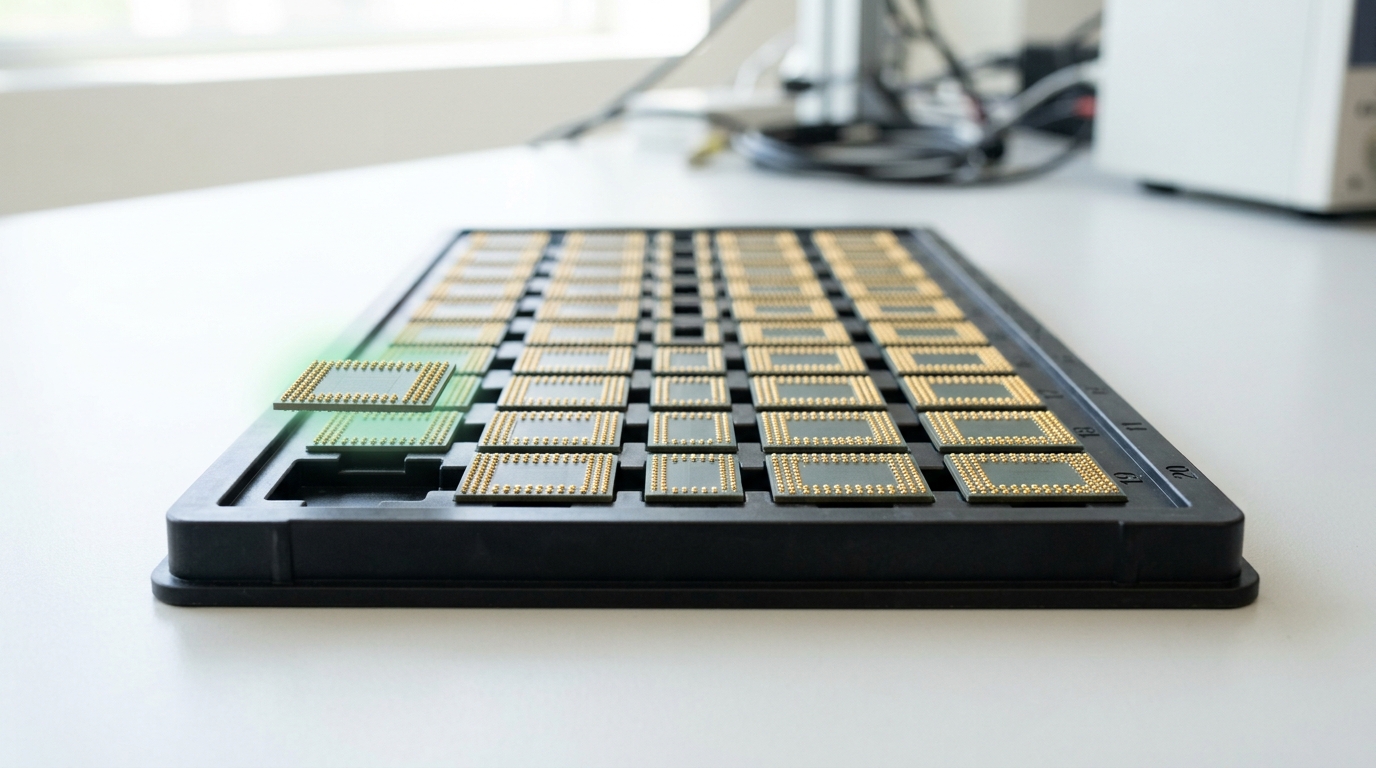
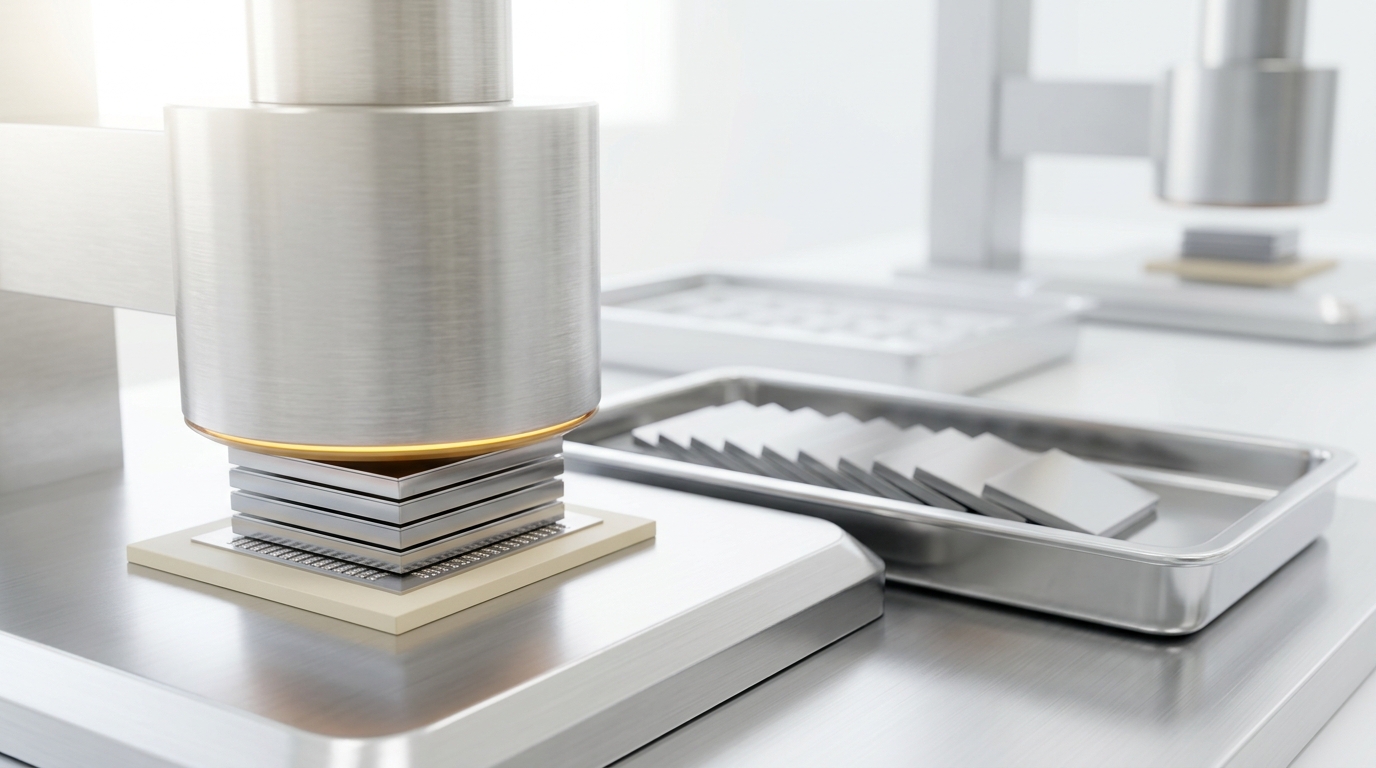
The constraint is not raw silicon wafer capacity. It is back-end stacking: through-silicon via (TSV) throughput, hybrid-bonding line capacity, TC-bonder availability, and known-good-stack-die yield — all steps specific to building a tall, multi-layer HBM stack rather than an ordinary flat DRAM chip [3]. That distinction matters because it means simply building more ordinary DRAM fab capacity does not relieve the HBM shortage; the bottleneck sits in a narrower, more specialized part of the production process that scales more slowly.
| SK hynix HBM position, 2026 | Detail |
|---|---|
| Projected HBM4 share (Rubin platform) | ~70% (UBS estimate) |
| Market structure | 3 volume producers worldwide; HBM sold out for 2026 |
| Constraint type | Back-end stacking (TSV, hybrid bonding, TC bonding), not wafer starts |
| Company’s own shortage-duration claim | “May last past 2030” |
Why this is a genuinely different kind of AI-boom story
Most AI hardware coverage treats Nvidia as the bottleneck and everything else as a supporting cast. SK hynix’s position inverts that framing for one specific, physical component: the memory stack sitting directly on top of the compute die, without which no Blackwell- or Rubin-class accelerator functions at all. A reader trying to forecast AI accelerator availability through 2026 and 2027 arguably gets a sharper signal from SK hynix’s stacking-capacity expansion timeline than from any Nvidia product announcement, because the memory, not the logic, is now the harder-to-scale half of the pairing.
What SK hynix’s own capital decisions reveal
SK hynix’s public statements about a supercycle are self-interested, but the company’s capital expenditure decisions are a separate, more reliable signal, since money committed to physical capacity carries a cost that a marketing claim does not. Money spent expanding hybrid-bonding and thermal-compression bonding capacity specifically — the exact back-end steps this cohort’s companion HBM-supercycle briefing identifies as the true bottleneck — is a far more credible indicator of how seriously SK hynix itself believes the shortage will persist than any public statement about a multi-year supercycle. A company that genuinely expected demand to correct sharply within a year or two would be reluctant to commit years of capital to capacity that could sit underutilized once the correction arrived; heavy, sustained capital commitment to exactly the bottlenecked step is the strongest evidence available that SK hynix’s internal planning matches its public framing.
The risk concentration this creates for Nvidia specifically
A 70% supplier share sitting with one company, for one of two components — logic die and memory stack — that make up a modern AI accelerator, is a concentration risk Nvidia itself has to manage even though Nvidia does not control it directly. Nvidia can diversify its own die supply somewhat across foundry capacity, packaging partners, and design choices; it has far less ability to diversify away from SK hynix’s specific HBM4 lead without accepting either a lower-performance memory configuration or a longer qualification timeline with a smaller supplier. That asymmetry is worth watching for anyone tracking Nvidia’s own supply-chain commentary: language about diversifying memory suppliers, or about qualifying additional HBM4 sources beyond SK hynix, would be a meaningful signal that Nvidia itself views this exact dependency as a risk worth actively managing rather than simply accepting.