A platform, not a chip
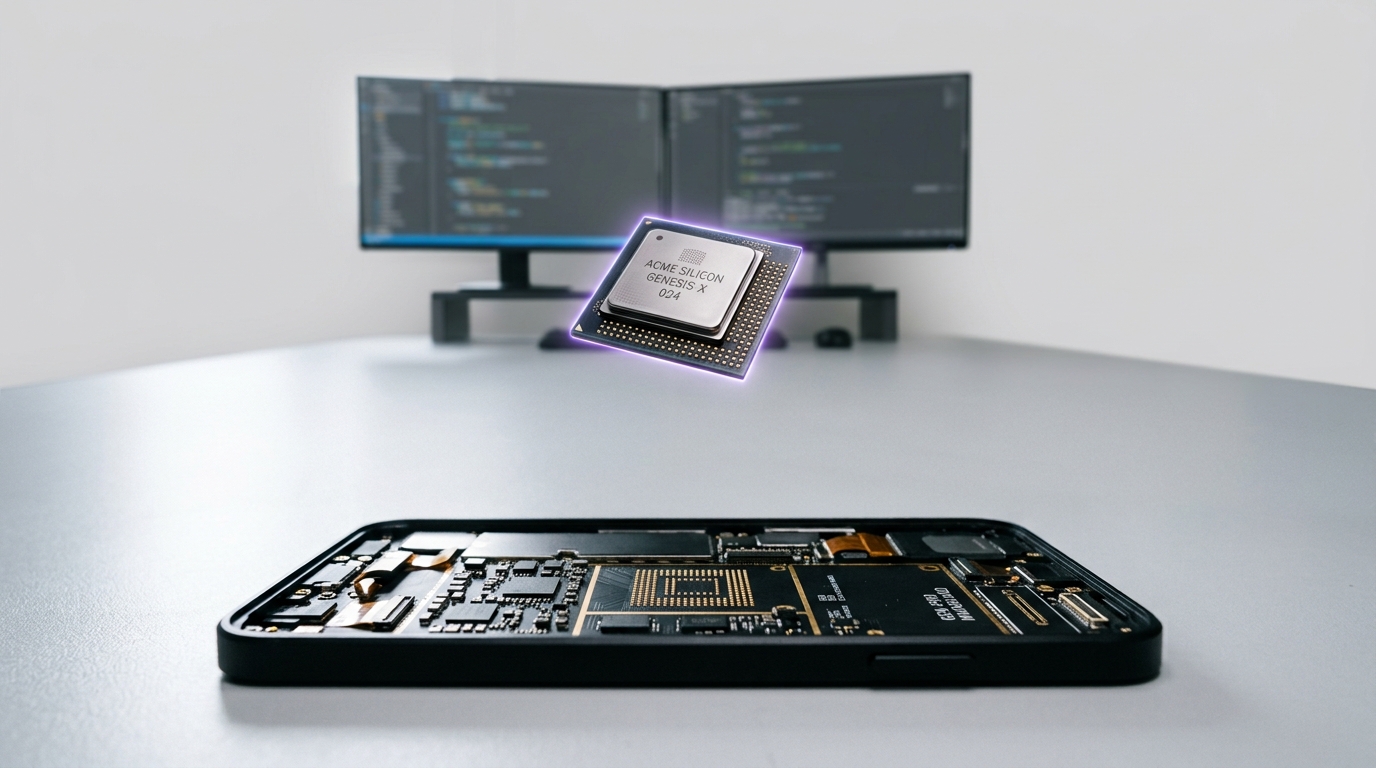
Coverage of Nvidia’s product generations has trained readers to expect a single headline chip name — Hopper, Blackwell — as the unit of comparison. Vera Rubin breaks that pattern structurally: the platform comprises six new chips engineered to function as one coordinated system, rather than one GPU design with supporting components bolted on around it [1]. That framing shift matters for how the platform should be evaluated — not chip by chip against a single Blackwell benchmark, but as a system whose components were co-designed to solve problems no single chip generation could solve alone.
What has shipped, and what hasn’t
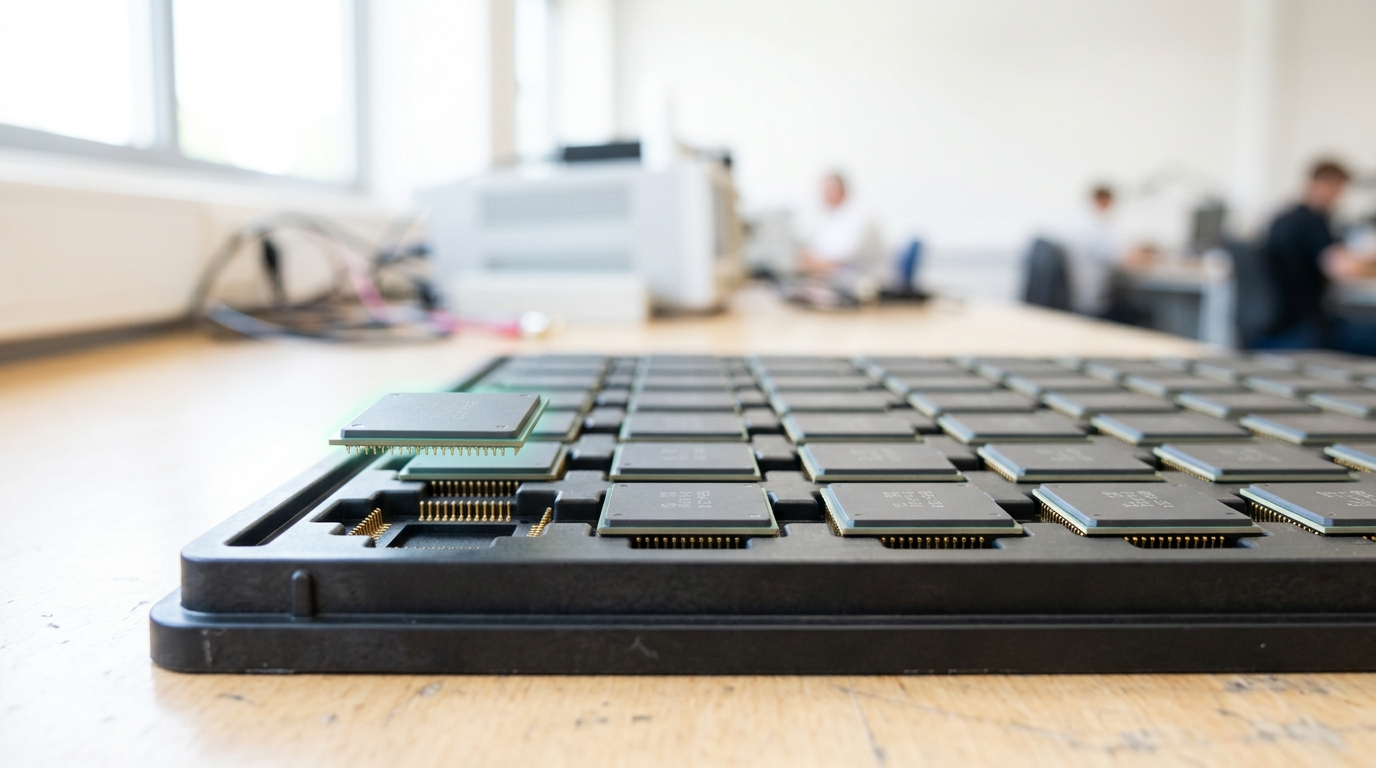
As of this briefing, Nvidia has shipped first Rubin samples to customers, with production shipments targeted for the second half of 2026 [1]. That is an important distinction to hold onto: a sample shipment lets a customer begin qualification and software work; it is not evidence of volume manufacturing readiness, which is a separate milestone still ahead as of this writing. Nvidia’s own reported visibility into $500 billion in combined Blackwell and Rubin revenue through the end of calendar 2026 gives a sense of how much commercial weight is already riding on that production timeline landing on schedule [2].
The claim worth scrutinizing directly
Nvidia states Rubin delivers up to a 10x reduction in inference token cost compared with Blackwell [1]. This is a company’s own performance claim about its own unreleased product, not an independently verified benchmark result, and it should be reported as exactly that. A 10x improvement in a single generation would be an extraordinary result by the historical pace of accelerator generational improvement; whether it holds up under independent, third-party benchmarking once Rubin ships in volume is the single most consequential open question this briefing can identify about the platform.
Why a six-chip platform makes sense given the rest of this cohort
Two of this cohort’s other Nvidia briefings help explain why Rubin’s architecture looks the way it does. The HBM-supercycle briefing establishes that memory, not logic, is now the harder-to- scale half of an accelerator, and SK hynix’s projected ~70% share of Rubin-generation HBM4 supply means the memory subsystem is effectively co-designed with a specific external supplier’s roadmap in mind [4]. Separately, Nvidia’s stated push toward silicon photonics and co-packaged optics for GPU-to-GPU communication — described as effectively mandatory for next- generation AI datacenters — suggests at least one of Rubin’s six chips is dedicated networking silicon built around that same optical-interconnect bet [3]. A six-chip platform, read this way, is less a marketing repackaging than a direct architectural response to the specific bottlenecks — memory bandwidth and interconnect — that this cohort’s other briefings identify as the industry’s real constraints in 2026.
What to watch through the rest of 2026
The single most useful piece of evidence a reader can watch for is whether Nvidia’s H2 2026 production timeline holds without slipping, and whether the first independent, third-party benchmarks of shipping Rubin hardware come anywhere close to the claimed 10x inference-cost improvement. Both are checkable, dated claims rather than vague roadmap language, which makes Rubin an unusually good test case for how much weight a reader should give Nvidia’s own forward-looking performance claims in general.
Why platform-level roadmaps make forecasting harder, not easier
A six-chip platform is harder to forecast confidently than a single-chip generation, precisely because a delay or shortfall in any one of the six components can hold back the entire platform’s production timeline even if the other five are ready on schedule. This cohort’s companion briefing on CoWoS advanced-packaging capacity is directly relevant here: every one of Rubin’s six chips likely requires some form of advanced packaging to integrate with the platform’s shared memory and interconnect subsystems, meaning Rubin’s actual production ramp is exposed to the same packaging-capacity constraint already identified as the binding limit on 2026 AI accelerator supply more broadly. A reader tracking Rubin’s rollout should watch packaging-capacity commentary from TSMC’s own quarterly disclosures as closely as anything Nvidia itself says about the platform, since the slower-moving constraint, not the faster-moving one, usually ends up setting the actual delivery date.
The broader pattern Rubin represents
Rubin’s platform-level framing is also a signal about where the entire accelerator industry is heading: the meaningful unit of competition is increasingly the full system — compute, memory, networking, and power delivery engineered together — rather than any single chip evaluated in isolation. Readers evaluating AMD’s, Broadcom’s, or any custom-ASIC vendor’s next-generation announcements, covered elsewhere in this cohort, should apply the same platform-level lens rather than reducing the comparison to a single spec-sheet number, since that is increasingly not how the leading vendors themselves are building.