The bottleneck that isn’t the chip
Every accelerator-focused briefing in this cohort eventually runs into the same underlying fact: individual chip performance has kept improving, but the connections between chips have become the harder problem to scale. A single GPU’s compute capability matters less than it once did once tens of thousands of GPUs need to act as one coordinated system — and the copper wiring that has carried those connections for decades is running into real physical limits on bandwidth and power efficiency at the distances and data rates modern training clusters require.
Nvidia’s stated position
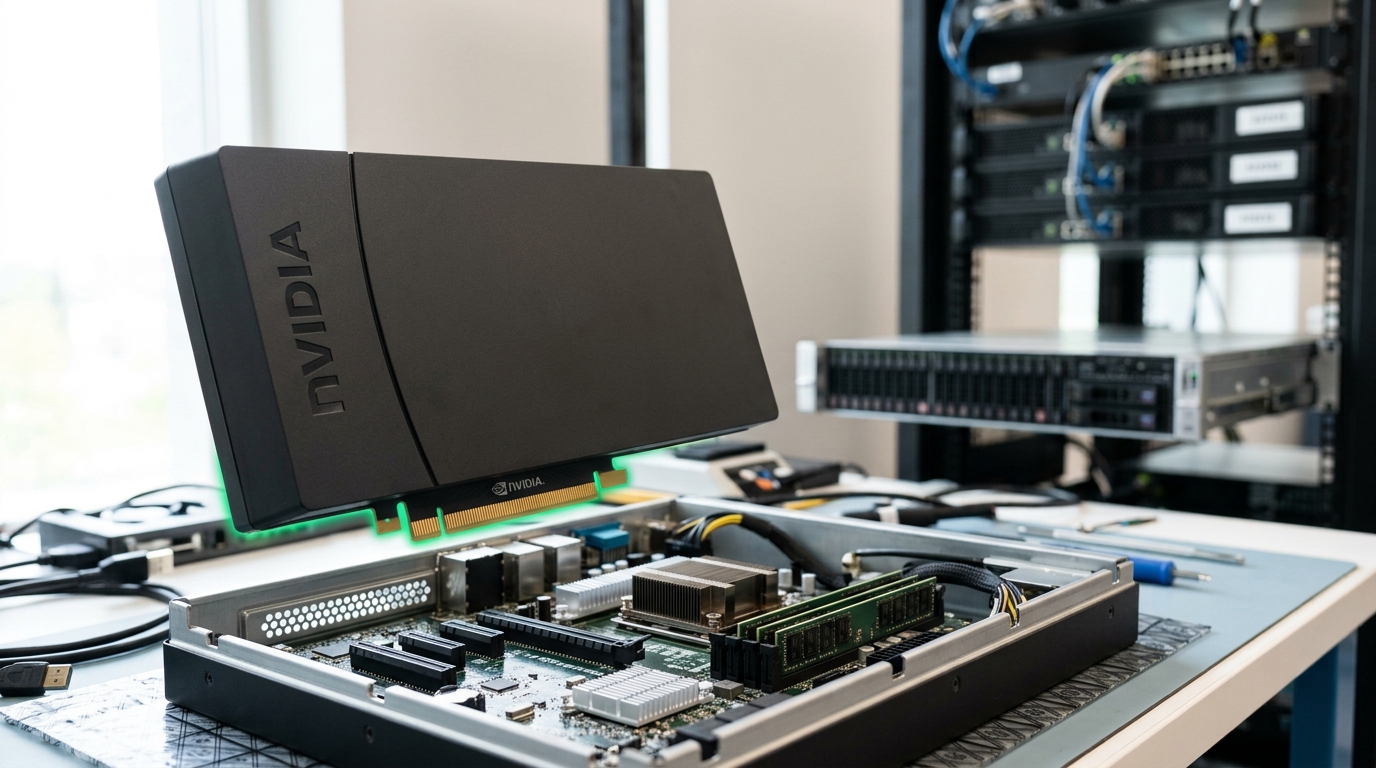
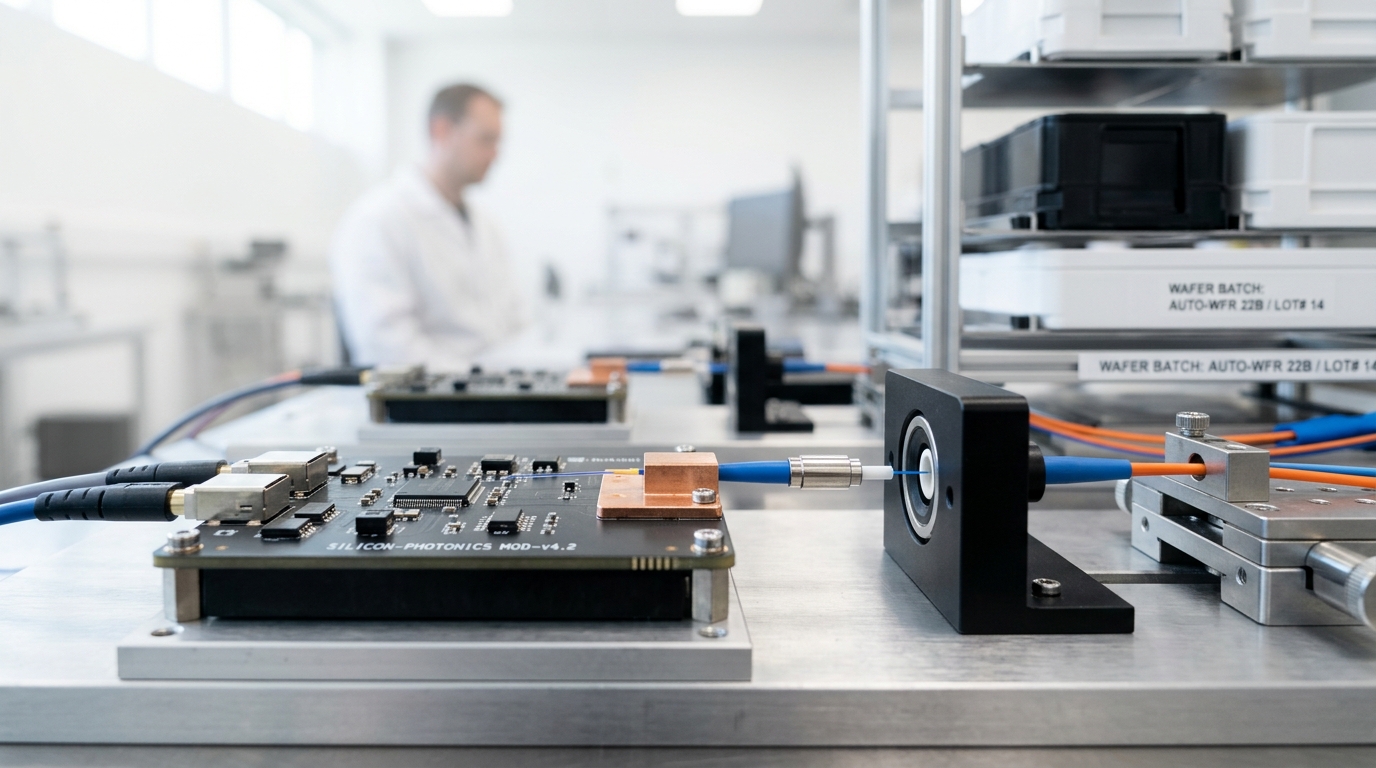
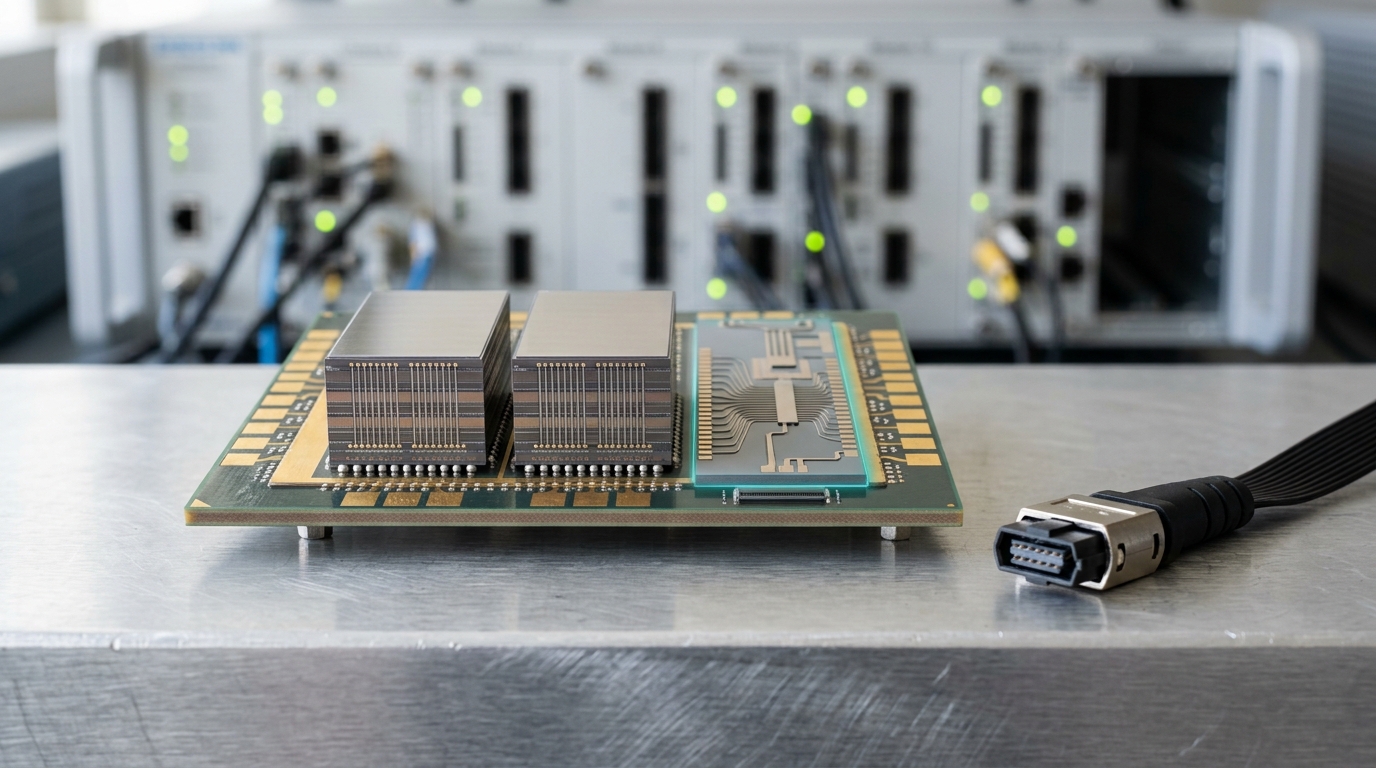
Nvidia’s own developer documentation frames co-packaged optics explicitly as a power-efficiency technology, not merely a bandwidth one — moving the optical engine physically next to the switch silicon reduces the electrical distance a signal has to travel before conversion to light, which is where much of the power loss in a conventional pluggable-optics setup occurs [2]. Industry coverage goes further, describing silicon photonics and co-packaged optics as effectively mandatory for next-generation AI datacenters, not merely a premium option [1]. Nvidia’s own product messaging for its networking line is now built explicitly around “silicon photonics networking for agentic AI” as a named category, not a future roadmap item [3].
The technology forces a second technology
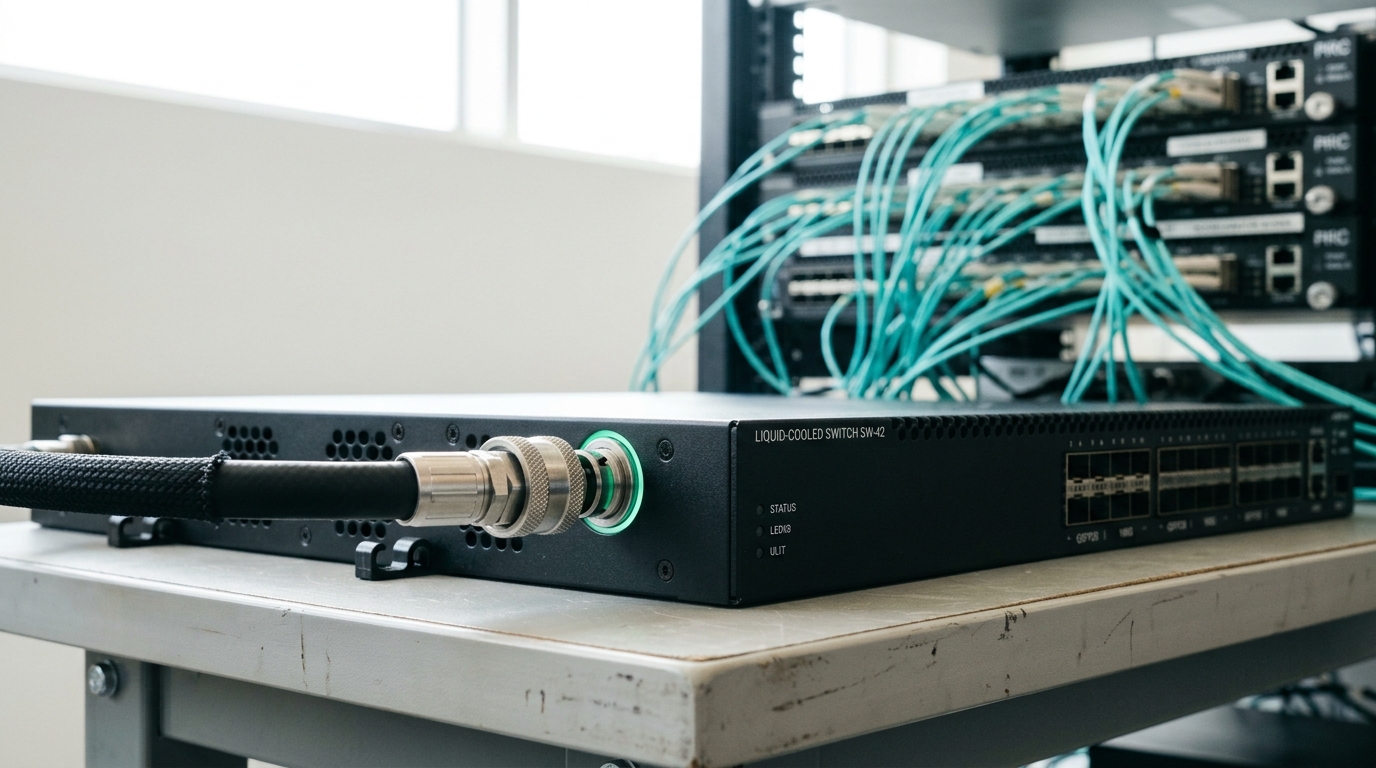
Adopting co-packaged optics is not a standalone decision. Integrating the optical engine directly onto the switch package raises local heat-flux density enough that it requires embedded microchannel liquid cooling — a coupled engineering decision, not two independent purchases [1]. Nvidia’s Quantum-X InfiniBand switches, targeted for early 2026, are liquid-cooled specifically for this reason. A datacenter operator choosing co-packaged optics is therefore also committing to a liquid-cooling retrofit or a liquid-cooling-native build, which raises the effective adoption cost well beyond the optics component alone.
The startup layer Nvidia’s roadmap increasingly touches
A cluster of specialized interconnect startups — Lightmatter, Ayar Labs, Celestial AI, Enfabrica, and Astera Labs among them — raised a combined roughly $2.8 billion, evidence that “AI scaling is an interconnect problem” has become a funded investment thesis in its own right, not merely an engineering observation [4]. Nvidia’s own optical push sits directly adjacent to this landscape; several of these companies’ technologies address exactly the electrical-to-optical conversion problem Nvidia’s co-packaged optics roadmap is built around, making this cluster worth tracking as both potential suppliers and potential competitors to pieces of Nvidia’s own interconnect stack.
The physical supply chain underneath the bet
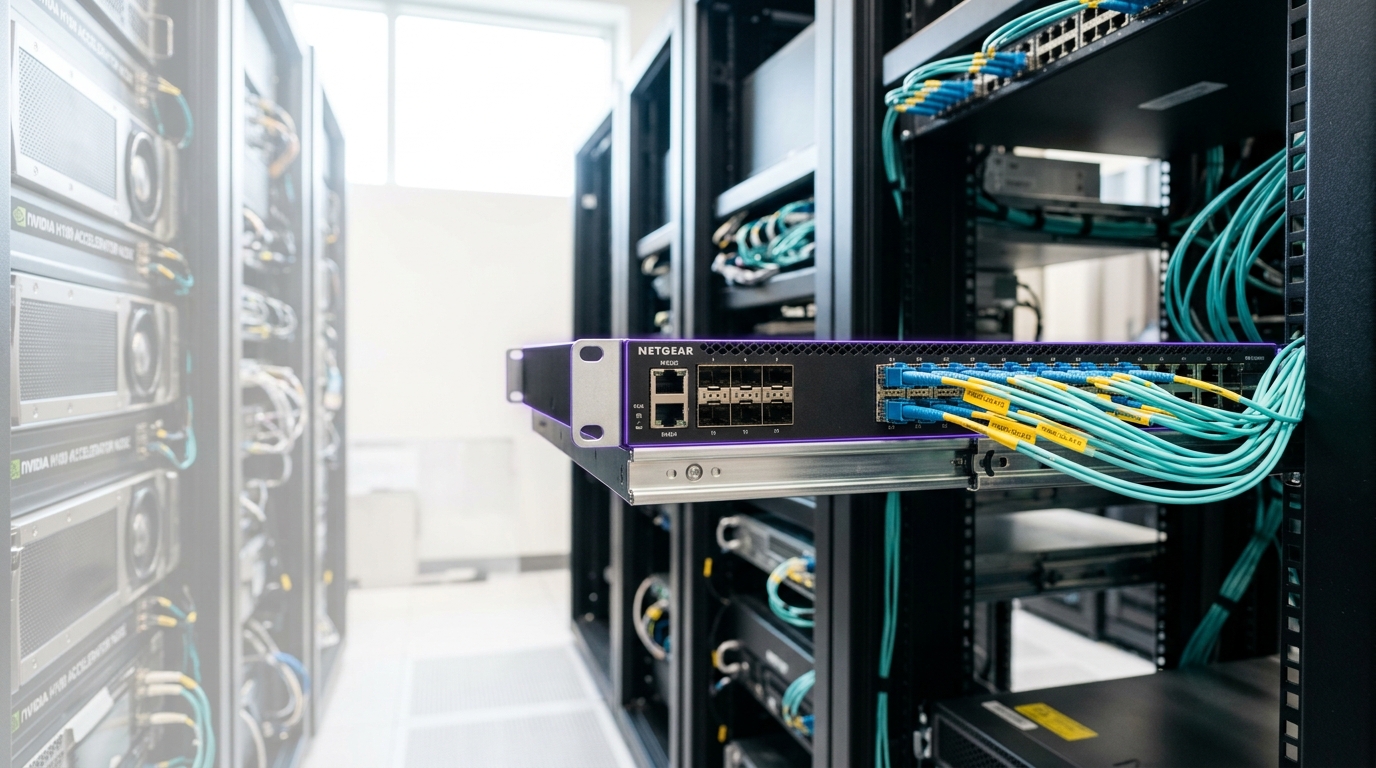
None of this is abstract. AI racks already require 10 to 36 times more fiber than a traditional server rack, and direct-attach copper and active optical cable lead times exceed 20 weeks [5]. Nvidia’s optical interconnect bet is, in this light, as much a bet on the broader optical-component supply chain scaling fast enough as it is a bet on its own engineering execution — a dependency this briefing’s companion piece on the power, cooling, and optics track covers from the datacenter-operator side rather than Nvidia’s own product-design side.
What determines whether the bet pays off
The clearest forward signal to watch is not a benchmark number but an adoption number: how many of the largest hyperscaler deployments specify co-packaged optics networking by default in new 2026-2027 builds, versus continuing with conventional pluggable optics as a lower-risk, better- understood option. A rapid default-adoption shift would confirm Nvidia’s bet was correctly timed; a slower one would suggest the liquid-cooling and supply-chain dependencies traced in this briefing are proving a harder adoption barrier than Nvidia’s own roadmap assumed.
Why this bet is riskier than it looks from Nvidia’s product pages
Nvidia’s own marketing materials naturally present co-packaged optics as a clean technological upgrade. The dependency chain this briefing has traced — optics requiring liquid cooling requiring a facility retrofit or liquid-cooling-native new construction, layered on top of a fiber supply chain already reporting 20-week-plus lead times — means actual adoption speed is gated by datacenter construction and retrofit timelines that Nvidia does not control, not by anything in Nvidia’s own product readiness. A technology can be genuinely superior and still adopt slowly if every deployment requires coordinated changes across cooling infrastructure, facility power design, and a strained optical-component supply chain simultaneously. That gap between technical readiness and deployment readiness is worth keeping separate when evaluating how quickly this bet actually pays off in Nvidia’s own reported data-center revenue.
The competitive stakes if the bet is right
If co-packaged optics does become the default networking layer for frontier-scale AI clusters, as Nvidia’s own messaging assumes, the company’s early, heavily resourced push into both the optics and the accompanying liquid-cooling ecosystem would extend Nvidia’s competitive moat well beyond the GPU itself, into the networking layer that connects GPUs together — a layer where Broadcom, covered elsewhere in this cohort for its own custom-silicon networking business, is Nvidia’s most credible existing competitor. Whether Nvidia’s optics bet ends up reinforcing its GPU dominance or simply becomes table stakes every credible competitor eventually matches is, as of this briefing, still an open question the adoption data over the next several years will answer.