A deal sized in watts, not units
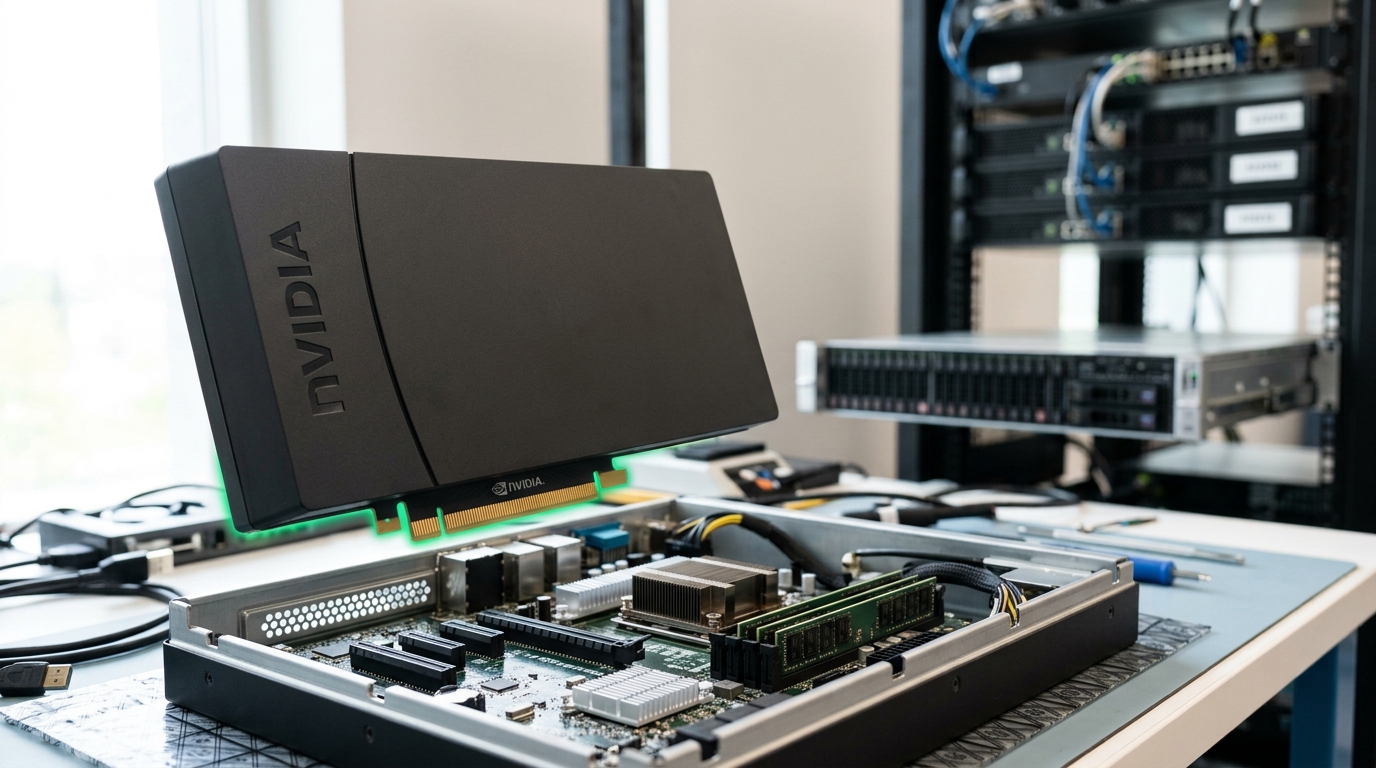
AMD’s supply agreement with OpenAI is described as covering 6 gigawatts of processor power consumption over its multi-year term, anchored by a planned 1 gigawatt data center built specifically around AMD’s MI450 accelerator [1]. That is an unusual way to size an accelerator deal. Most chip supply agreements get reported as a unit count or a total dollar value. Measuring this one in gigawatts is itself informative, and worth pausing on before getting to what the deal means for AMD’s competitive position.
Why gigawatts is the more honest unit
This cohort’s power-infrastructure briefings establish that 2026 AI datacenter buildouts are, in the phrase multiple analysts now use, “power-bound, not GPU-bound” — meaning the limiting factor on how much AI compute a company can actually deploy is grid interconnection and power delivery capacity, not chip availability [3]. Framing the AMD-OpenAI deal in gigawatts rather than chip units reflects that reality directly: a chip count alone doesn’t tell a reader whether the site hosting those chips can actually be powered, but a gigawatt figure does, because it is measured against the same grid-capacity constraint that determines whether the deployment is buildable at all.
The competitive read
AMD’s MI450 deal sits inside a broader accelerator landscape where custom ASIC shipments are growing at roughly 44.6% year-over-year, nearly triple the 16.1% growth rate of merchant GPUs [2]. AMD’s MI-series accelerators occupy an interesting middle position in that landscape: not a fully bespoke, single-customer ASIC design like Broadcom’s or Marvell’s hyperscaler partnerships covered elsewhere in this cohort, but also not Nvidia’s dominant merchant-GPU position. A 6-gigawatt commitment from a customer as significant as OpenAI is strong evidence AMD has established a credible third path — a merchant accelerator vendor winning enormous, dedicated capacity commitments without going fully custom.
Context: how big is 6 gigawatts, really
To size this against the rest of the industry: combined 2026 capital expenditure across Microsoft, Google, Amazon, and Meta reached roughly $725 billion, up 77% from 2025 [4]. A single 6-gigawatt commitment from one customer to one accelerator vendor represents a meaningful fraction of the physical infrastructure that capital is funding industry-wide — gigawatt-scale AI power commitments, once a rarity worth a standalone headline, are becoming a standard unit of measurement across multiple vendors and customers simultaneously.
What determines whether the deal actually delivers
A power-consumption commitment is a target, not a guarantee. This cohort’s power-infrastructure briefings document interconnection queues exceeding 2,100 gigawatts of pending requests nationally, and 30-50% of planned 2026 AI datacenter capacity projected to slip to 2028 due to grid and construction bottlenecks. AMD’s 6-gigawatt figure with OpenAI is therefore best read as a demand commitment and a capacity plan, not as capacity that already exists — the actual delivery timeline depends as much on interconnection queues and construction schedules as on AMD’s own chip production, a dependency this deal shares with essentially every large accelerator commitment covered in this cohort.
What the MI450 has to prove beyond the deal’s scale
The 6-gigawatt figure describes commitment, not competitive quality. For the deal to actually validate AMD’s position against Nvidia’s dominant share, the MI450 units deployed across this buildout need to demonstrate real-world training and inference performance competitive with whatever Nvidia platform OpenAI would otherwise have chosen for the same capacity. A large power commitment paired with underwhelming delivered performance would still represent a meaningful business win for AMD in dollar terms, but it would not be the sharper signal of genuine technical parity that this deal’s scale might otherwise suggest to a casual reader. Distinguishing “AMD won a large contract” from “AMD’s silicon matched Nvidia’s on merit” requires waiting for independent, workload-specific performance data from the actual deployed 1-gigawatt facility once it comes online, not simply reading the headline commitment figure as proof of either claim.
Why OpenAI benefits from a multi-vendor strategy regardless of outcome
Independent of how the MI450 specifically performs, OpenAI’s decision to commit to both AMD and Broadcom simultaneously, as this cohort’s companion briefings document, is a rational supply-chain-diversification strategy on its own terms. Relying on a single accelerator vendor for a buildout of this scale would expose OpenAI to that vendor’s own production constraints, pricing power, and roadmap delays entirely. Splitting commitments across multiple credible vendors — even at some cost in engineering complexity, since different accelerator architectures require separate software optimization work — reduces that single-vendor risk in a way that mirrors the same diversification logic covered in this cohort’s memory-supply-chain briefings, applied here to compute rather than memory.