The second name behind the custom-silicon wave
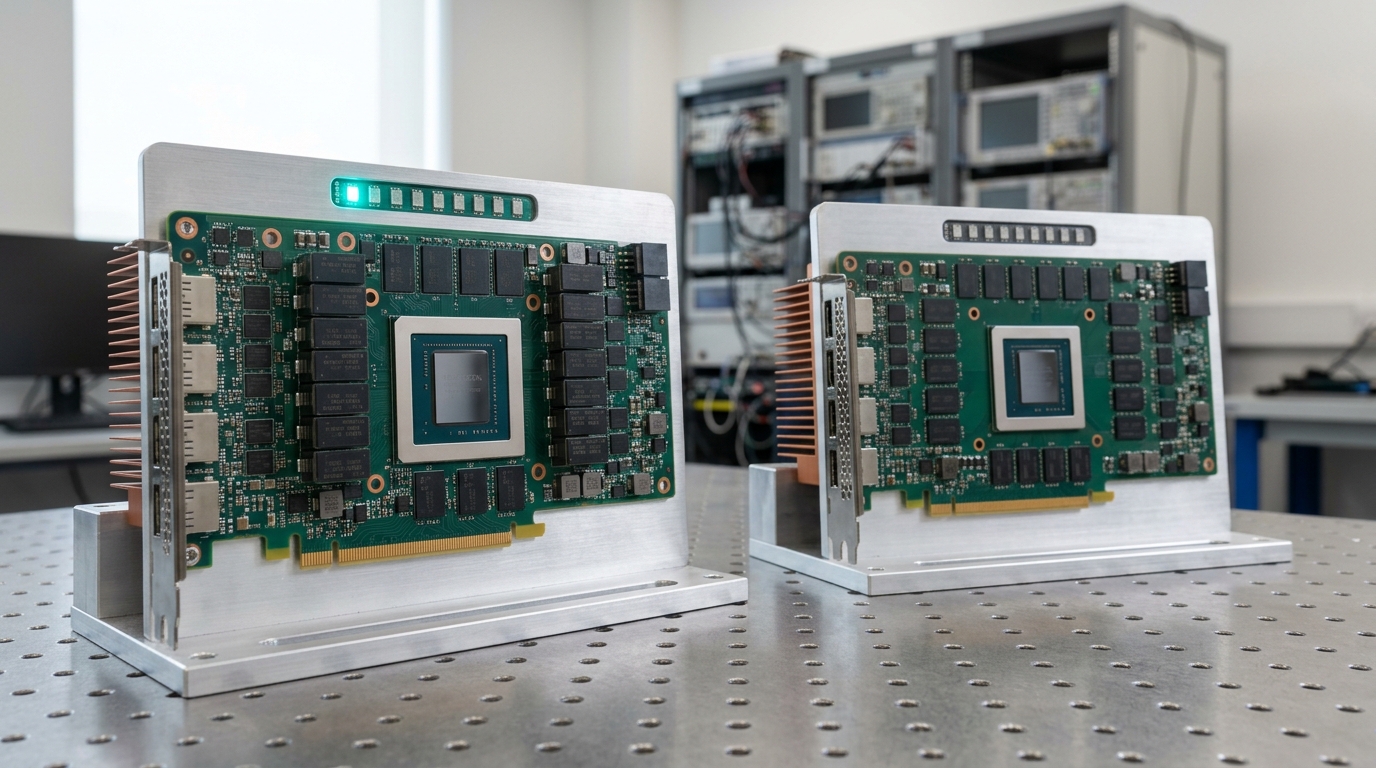
This cohort’s Broadcom briefing covers one half of the duopoly enabling most hyperscaler custom AI silicon. Marvell is the other half. The company has partnered with Amazon on Trainium and Microsoft on Maia [2] — two of the most consequential custom accelerator programs in the industry, neither of which carries Marvell’s name in ordinary consumer-facing coverage.
The pipeline numbers, with appropriate caution
Marvell projects up to $11 billion in AI ASIC revenue for 2026, and reports 18 XPU/XPU- attach sockets already won, with more than 50 further pipeline opportunities representing an estimated $75 billion in lifetime revenue potential [1]. That last figure deserves particular care before being repeated: “pipeline opportunities” and “lifetime revenue potential” describe a company’s own forward sales funnel, not signed, guaranteed contracts. A reader should treat the $75 billion figure as Marvell’s own estimate of addressable opportunity, not as booked revenue — the same distinction this cohort applies to every company’s own forward- looking claims throughout.
Broadcom and Marvell together
Taken together, Broadcom and Marvell are estimated to enable roughly 80% of hyperscaler custom AI silicon [3] — a duopoly at the design-partner layer that receives far less scrutiny than the duopoly-adjacent dynamics of, say, the foundry layer covered elsewhere in this cohort, despite arguably mattering just as much to which hyperscalers can credibly build competitive custom silicon at all.
The Celestial AI acquisition
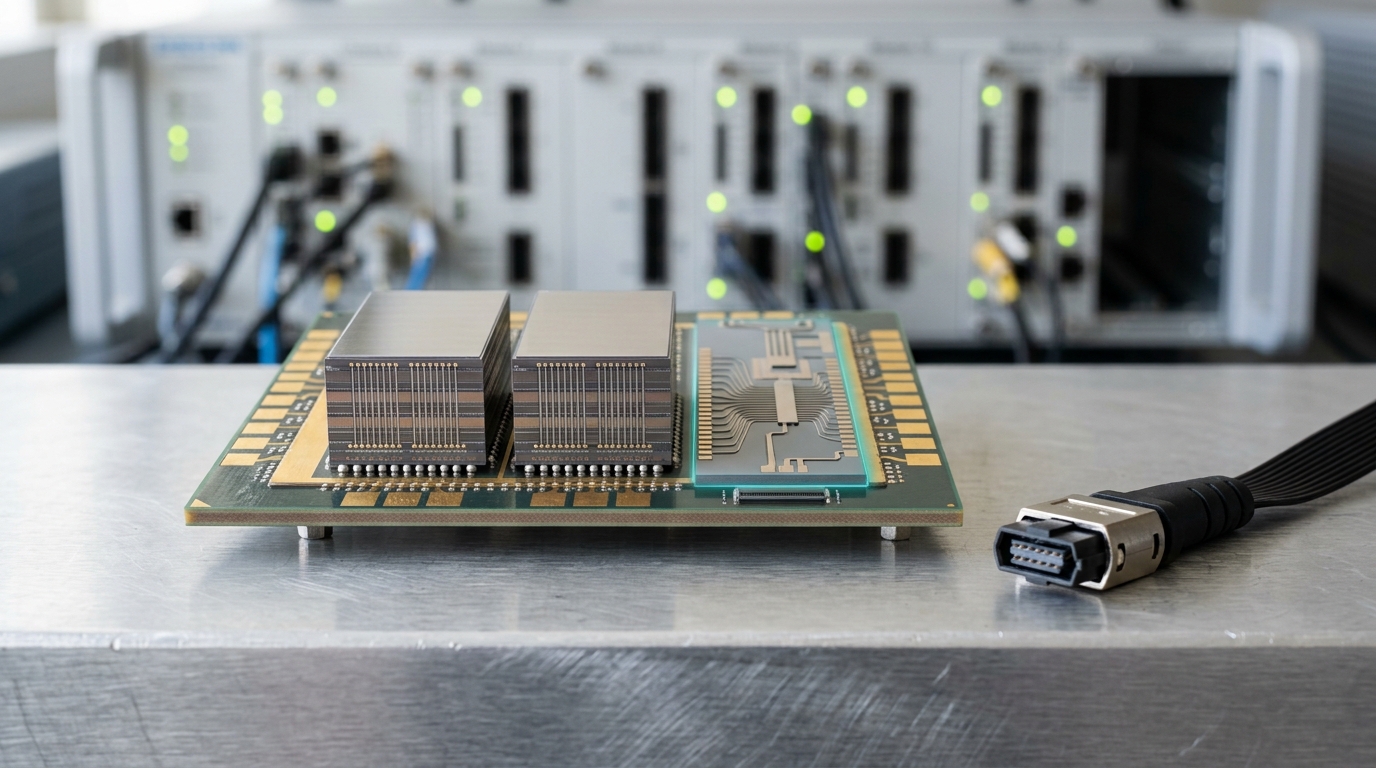
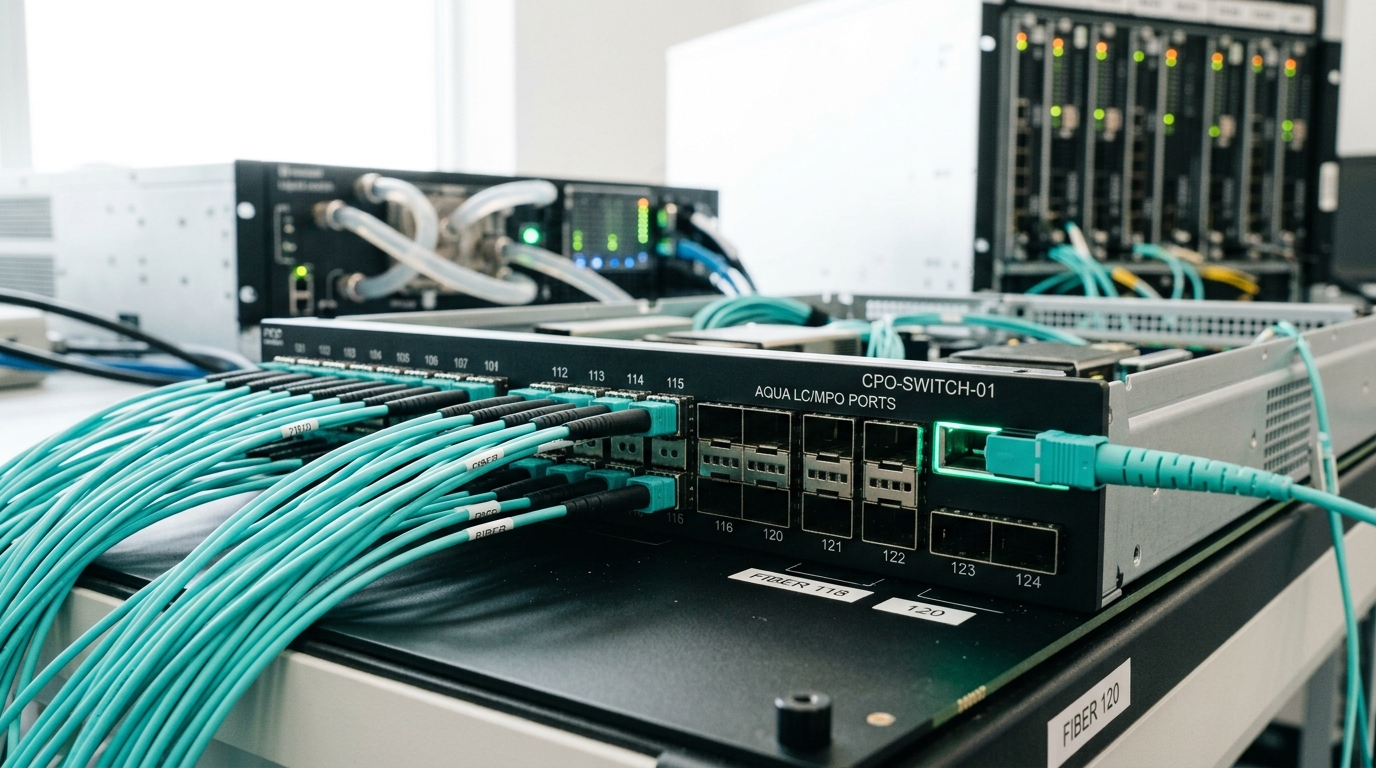
Marvell’s $5.5 billion acquisition of Celestial AI, a photonic-interconnect startup, follows the same pattern this cohort documents across Nvidia’s Groq relationship and AMD’s Untether acquisition: an established accelerator-adjacent company absorbing a specialized startup’s technology directly rather than competing against it as an outside threat [4]. Photonic interconnect specifically addresses the same electrical-to-optical bottleneck this cohort’s Nvidia-photonics briefing covers from Nvidia’s own side — meaning Marvell’s bet and Nvidia’s bet are, in a meaningful sense, converging on the same underlying physical problem from two different corners of the industry.
Why Marvell’s low visibility is itself informative
Marvell’s relative anonymity, despite its central role in two of the largest hyperscalers’ custom- silicon programs, is a structural feature of the design-partner business model rather than an accident of coverage. A design partner’s success is measured by how invisibly its work integrates into a customer’s own branded product — Trainium reads as an Amazon chip, Maia reads as a Microsoft chip, precisely because that is what the business relationship is designed to produce. Readers who want an accurate picture of who actually enables the hyperscaler custom-silicon wave need to look past the branded chip name to the design-partner layer underneath it, where Marvell and Broadcom, not the hyperscalers themselves, are doing much of the underlying semiconductor engineering.
What “18 sockets” actually represents
The 18 XPU/XPU-attach sockets Marvell reports winning are not necessarily 18 fully independent programs of equal size — a “socket” in this context typically refers to a specific chip position within a customer’s system, and a single hyperscaler program can involve multiple sockets across different subsystems: the main compute accelerator, a networking interface chip, and a memory- attach controller might each count as a separate socket win within one overall Amazon or Microsoft program. That distinction matters for correctly interpreting the headline number — 18 sockets does not straightforwardly mean 18 separate hyperscaler relationships, and a reader comparing this figure against Broadcom’s six confirmed major customers should account for the different unit of measurement each company’s own disclosures use.
Why the interconnect bet compounds the core design business
Marvell’s Celestial AI acquisition is not merely a diversification move sitting apart from its core custom-silicon design business — the two are directly complementary. A hyperscaler choosing Marvell as its accelerator design partner increasingly also needs a credible answer to the interconnect and memory-bandwidth bottlenecks this cohort’s broader accelerator briefings document extensively. By owning photonic-interconnect technology directly, Marvell can offer a more complete answer to a customer’s full system design, not just the compute die in isolation — a competitive differentiation strategy that mirrors Nvidia’s own parallel push into co-packaged optics, covered elsewhere in this cohort, suggesting the entire industry is converging on system-level rather than chip-level competition as the more important battleground going forward.