Domestication was directed evolution before anyone had the word for it
Every domesticated organism alive today is the output of a selection algorithm that ran for centuries without anyone naming the variables. That is not a metaphor retrofitted onto agricultural history; it is a description that has been genetically confirmed at the level of individual base-pair changes for maize, and behaviorally and morphologically confirmed at the level of a controlled, ongoing experiment for the silver fox. The honest starting claim of this article is narrower than “domestication is evolution” — that much has been uncontroversial since Darwin used pigeon breeding as his opening argument in 1859. The claim is that the mechanism connecting selection pressure to phenotype in pre-scientific domestication is identical, gene for gene in some documented cases, to the mechanism CRISPR-based crop editing, precision fermentation, and cultivated-meat cell-line engineering now apply on purpose. The loop was always selection-on-variation-with-heredity. What changed is who is running the loop and how many generations it takes to close.
Maize is the cleanest case because two of its domestication genes are cloned, sequenced, and functionally characterized. Teosinte, maize’s wild ancestor, grows as a bushy plant with many long lateral branches, each tipped with a tassel; maize grows as a single dominant stalk with few branches, each tipped with an ear. John Doebley, Adrian Stec, and Long Hubbard identified the gene responsible for that architectural shift in 1997: teosinte branched1 (tb1), a transcriptional regulator homologous to the cycloidea gene in snapdragons, which suppresses the growth of axillary buds and redirects development toward the female inflorescence. The maize allele of tb1 is expressed at roughly twice the level of the teosinte allele — a regulatory change in how much of an unchanged protein gets made, not a change in what the protein does [1]. That distinction matters for everything that follows in this article: the earliest, most consequential edit in the history of plant domestication was not a new gene, it was a volume knob on an old one.
The second gene closes an equally stark phenotypic gap. Teosinte kernels are sealed inside a hard, bony casing called a fruitcase, effectively inedible without processing; maize kernels sit exposed on the cob, “naked” in the technical sense that made them usable as a direct food grain at scale. Huai Wang and colleagues, including Doebley as senior author, cloned the responsible locus in 2005: teosinte glume architecture1 (tga1), a gene in the SBP-domain family of transcriptional regulators. Sequencing a targeted one-kilobase region turned up seven differences between the maize and teosinte alleles — one that changes the protein’s amino acid sequence, six that affect only how much of it gets transcribed — and the region shows the signature of having been under strong selective pressure during domestication. The paper’s own framing is the one this article adopts as a governing principle: modest genetic changes in single genes can produce dramatic changes in phenotype [2]. Teosinte-to-maize is not a story of accumulated small effects across the genome; it is a story of a handful of regulatory switches, thrown by selection that had no idea it was throwing switches.
Dogs make the same argument from the animal side, with a genuinely unresolved dating question this article is not going to paper over. Laurent Frantz and a large international team sequenced 59 ancient canid genomes, including a near-complete genome from a roughly 4,800-year-old Irish specimen, and found a deep genetic split separating modern East Asian and Western Eurasian dog populations — a divergence they date to somewhere between 14,000 and 6,400 years ago, a range that overlaps with or postdates the earliest archaeological dog remains in both regions. Their preferred reading is a dual-origin model: two independent domestication events from two separate wolf populations, with the East Eurasian lineage later expanding westward and substantially displacing the original Paleolithic European dog population [3]. Four years later, Anders Bergström and colleagues sequenced 27 ancient dog genomes running back nearly 11,000 years and reached a different emphasis: by the start of the Holocene, at least five major dog ancestry lineages had already diversified, a finding the authors say is “consistent with” a single origin, though they explicitly leave a multiple-closely-related-wolf-population scenario open, and they place the earliest unambiguous dog morphology in the fossil record at a conservative 14,500 years — while noting that older, disputed specimens exist and that the geographic origin of dogs “remains unknown” [4]. Both papers are recent, both are genomic rather than speculative, and they do not agree. That is the honest state of the field: a dual-origin, two-population reading and a single-origin-consistent, five-lineages-by-11,000-years-ago reading, separated by real disagreement about how to weight ancient nuclear genomes against deep mitochondrial divergence, not by one side ignoring the other’s data.
What both papers agree on, and what matters for this article’s argument, is that dog domestication long precedes any deliberate breeding program and produced its core suite of behavioral and morphological changes — tameness first, a cascade of physical traits following — through selection pressure nobody was tracking in real time. That is precisely the process Dmitry Belyaev set out to compress into a human research career starting in 1959, breeding farmed silver foxes for one trait only: approach behavior toward an experimenter’s hand, tolerance rather than fear or aggression. Lyudmila Trut, who has run the lineage since Belyaev’s death, published the cumulative numbers in 2009: fewer than 10% of the tamest individuals in each generation were selected as parents of the next. By generation 6, only 1.8% of pups (4 of 213) showed dog-like affiliative behavior. By generation 10, that figure was 17.9% (66 of 379). By generation 20 it was 35% (503 of 1,438), and by generation 30 it was 49% (804 of 1,641). By 2005–2006, essentially the entire domesticated line — built from a research population that had by then produced roughly 50,000 offspring from around 10,500 parent foxes — qualified as behaviorally “elite” [5]. Selecting for one behavior compressed a multi-generation transformation into a timeline a single scientist could watch happen, and it did not stop at behavior: floppy ears, curled tails, piebald “star” coat spotting, and shifts in the breeding season’s timing all appeared alongside tameness, at documented but uneven frequencies — star spotting alone reached a frequency of 0.124 in the tame line versus 0.007 in an unselected farm-bred control population [5].
That package of co-occurring traits is what the literature calls “domestication syndrome,” and the honest version of this section has to include the fact that its causal story is now disputed rather than settled. In 2020, Kathryn Lord, Greger Larson, Raymond Coppinger, and Elinor Karlsson published a direct challenge to the standard reading of Belyaev’s own experiment, arguing that both the strength of the Farm-Fox Experiment’s conclusions and the universality of a single domestication syndrome across species have been overstated — partly on the historical grounds that Belyaev’s founding fox population itself already carried farmed-fox ancestry (the authors trace it to eastern Canadian fur farms) rather than being a clean wild baseline, which complicates any claim that tameness selection alone, from a wild starting point, produced the full trait package from scratch. Lord and colleagues argue for a more specific mechanism — adaptations to human-modified environments generally, rather than one universal “syndrome” — over the broader claim that a single neural-crest-linked developmental program explains piebald coats, floppy ears, and tameness together across every domesticated species [6]. This article is not going to adjudicate that dispute; it is naming it, because the same discipline — cite the number, name who published it, flag the argument that is still live — is what the rest of this piece owes every claim about crops, fermentation tanks, and edited genomes that follows. What survives the 2020 critique intact is the part this article needs: selection on one trait, applied without a genetic theory behind it, restructured a population in real, measured generations. That is directed evolution running on nothing but consistent selection and heritable variation. Everything from here forward is the same operation with a molecular tool where the selection used to be blind.
The loop closes: breeding, then transgenes, then edits written directly into the genome
Twentieth-century plant breeding already tightened the loop once, using marker-assisted selection to find and track genes like tb1 and tga1 in breeding populations without waiting to observe the phenotype in a mature plant every generation — a targeting improvement, not a mechanism change, since the underlying process was still cross-pollination and selection among the offspring. Transgenic crops tightened it again in the 1990s by inserting DNA from an unrelated organism directly, most famously the Bacillus thuringiensis toxin gene into Bt corn and cotton — a mechanism change, because the new trait no longer had to exist somewhere in the species’ own breeding-compatible gene pool first. Genome editing tightens it a third time, and differently: CRISPR-Cas9 and related tools let a breeder make a specific, targeted change to a plant’s own existing genome — the equivalent of directly installing the kind of regulatory tweak that took tb1 and tga1 centuries of unconscious selection to fix — without necessarily introducing any foreign DNA into the final product at all.
The clearest commercial proof that this third turn of the loop has actually shipped, not just been demonstrated in a greenhouse, is a tomato. Sanatech LifeScience’s Sicilian Rouge High GABA tomato is CRISPR-edited to accumulate elevated levels of gamma-aminobutyric acid, and a 2023 peer-reviewed review of precision-fermentation and gene-editing tools in the food industry describes its Japanese market release as “the first such product” globally [10]. Sanatech’s own current account, verified today, shows the product’s regulatory footprint expanding rather than staying a one-country novelty: beyond its original Japanese notification, the company reports Health Canada confirmation in May 2026, Singapore Food Agency clearance in November 2025, and Philippine Department of Agriculture approval in May 2024, alongside a newer combined “High GABA” and “High Cis-Lycopene” variety that completed its own Japanese regulatory notification in August 2026 [7]. A single edited tomato variety, in other words, has now been independently evaluated and cleared by food-safety regulators on three continents inside six years of its first release — the closest thing gene-edited agriculture has to a track record rather than a promise.

That track record exists at all only because a regulatory fork opened between major jurisdictions, and the fork is worth stating precisely rather than gesturing at, because the two rulings genuinely conflict in effect even though each is internally coherent in its own legal framework. On 25 July 2018, the Court of Justice of the European Union ruled in Case C-528/16 that organisms obtained by mutagenesis techniques — a category the Court explicitly held includes newer, targeted methods like CRISPR, not only older random chemical or radiation mutagenesis — fall within the scope of the EU’s GMO Directive and are, in principle, subject to its full pre-market risk assessment, traceability, and labeling requirements. The Court carved out an exemption only for mutagenesis techniques that were “conventionally used in a number of applications and have a long safety record” as of the Directive’s adoption, explicitly reasoning that newer techniques let breeders “produce genetically modified varieties at a rate out of all proportion to” older methods and that exempting them would fail to respect the GMO Directive’s precautionary principle [8]. Functionally, that ruling means a CRISPR-edited crop carrying no foreign DNA at all is regulated in the EU exactly like a transgenic crop carrying a bacterial gene.
The United States drew the line in the opposite place. Effective 17 August 2020, USDA’s Animal and Plant Health Inspection Service finalized what is generally called the SECURE rule — “Movement of Certain Genetically Engineered Organisms” — its first comprehensive overhaul of biotechnology regulation since 1987. The rule’s own stated purpose is to provide “a clear, predictable, and efficient regulatory pathway” for organisms APHIS judges unlikely to pose plant pest risk, which in practice exempts a wide category of gene-edited plants — those carrying only edits that could plausibly have been produced through conventional breeding, with no introduced foreign DNA — from the pre-market review process a transgenic crop still has to clear [9]. A gene edit that alters a native gene’s own sequence, of the type that produced tga1’s seven documented variants naturally over millennia, can now reach the American market with essentially the same regulatory burden as a new bred variety; the identical edit reaches the European market as a fully regulated GMO. Both governments are regulating the same molecular category of change. They have reached opposite conclusions about what it is.
Precision fermentation already domesticated microbes at industrial scale, and did it quietly
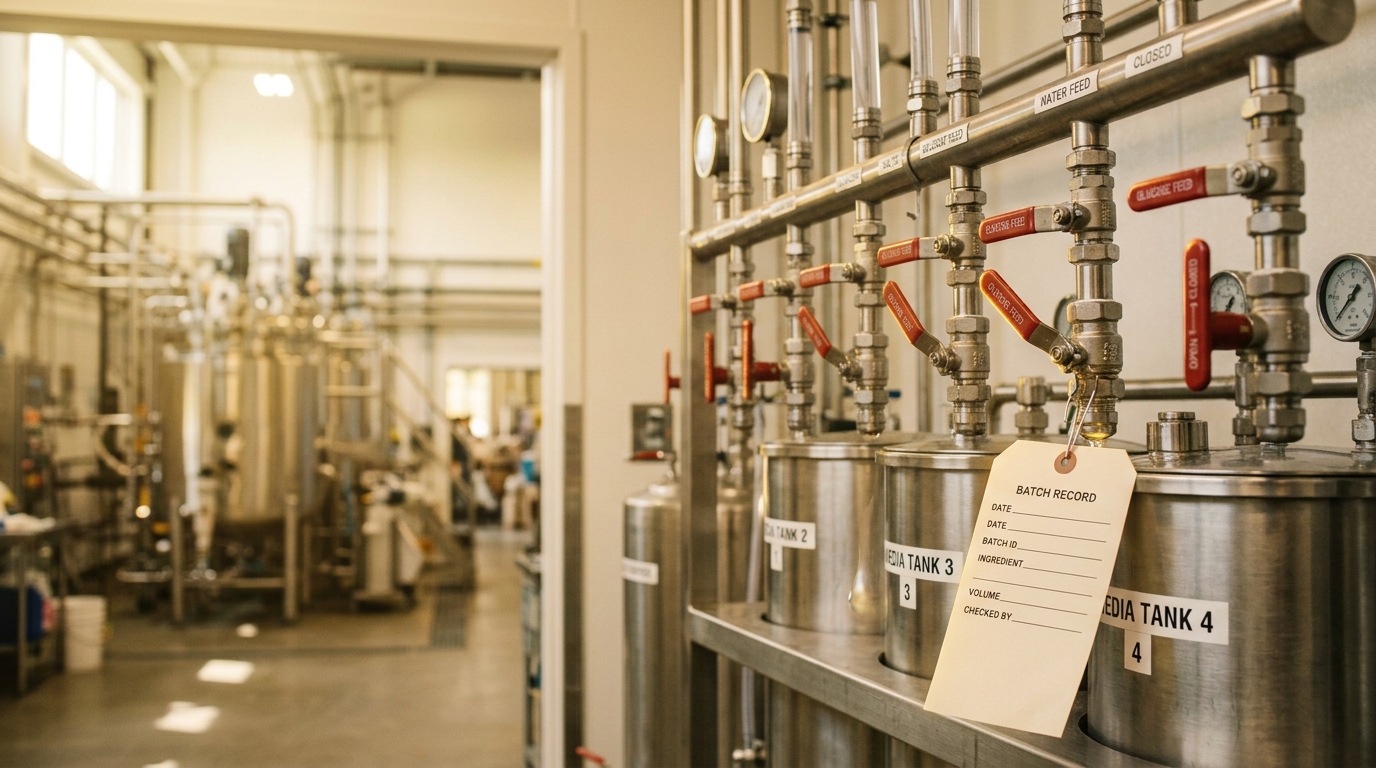
If crop editing is domestication’s loop closing in the field, precision fermentation is the loop closing somewhere most consumers never think to look: inside a fermentation tank, on a microbe bred or engineered to manufacture one specific molecule at industrial volume. The genuinely useful fact for calibrating how novel this is, is that the oldest version of it is older than the internet. Recombinant chymosin — the milk-clotting enzyme traditionally extracted from a calf’s stomach lining to make rennet for cheesemaking — was among the first genetically engineered food-production organisms approved anywhere, and it has since become the industry default rather than a niche substitute: a 2023 peer-reviewed review of enzyme engineering in the food industry states plainly that “80% of the currently used rennet is genetically engineered chymosin” [10]. Four cheese-eaters out of five who have ever eaten cheese made with genetically engineered rennet have almost certainly never heard the term precision fermentation; the technology has been fully domesticated into the food supply for decades, which is exactly the point this section exists to make before turning to the newer cases.
Chymosin is not even the oldest large-scale case. A 2026 peer-reviewed analysis of adoption barriers for microbial proteins traces Quorn — mycoprotein produced by fermenting the filamentous fungus Fusarium venenatum in continuous culture — to a 1985 commercial launch, and describes it today as an “established commercial success” sold in 20 countries [11]. That is a whole-organism fermented food that predates the World Wide Web by roughly six years and has been quietly scaling ever since; “precision fermentation” as a marketing term is recent, but the underlying industrial domestication of a microbe to manufacture human food at scale is not.
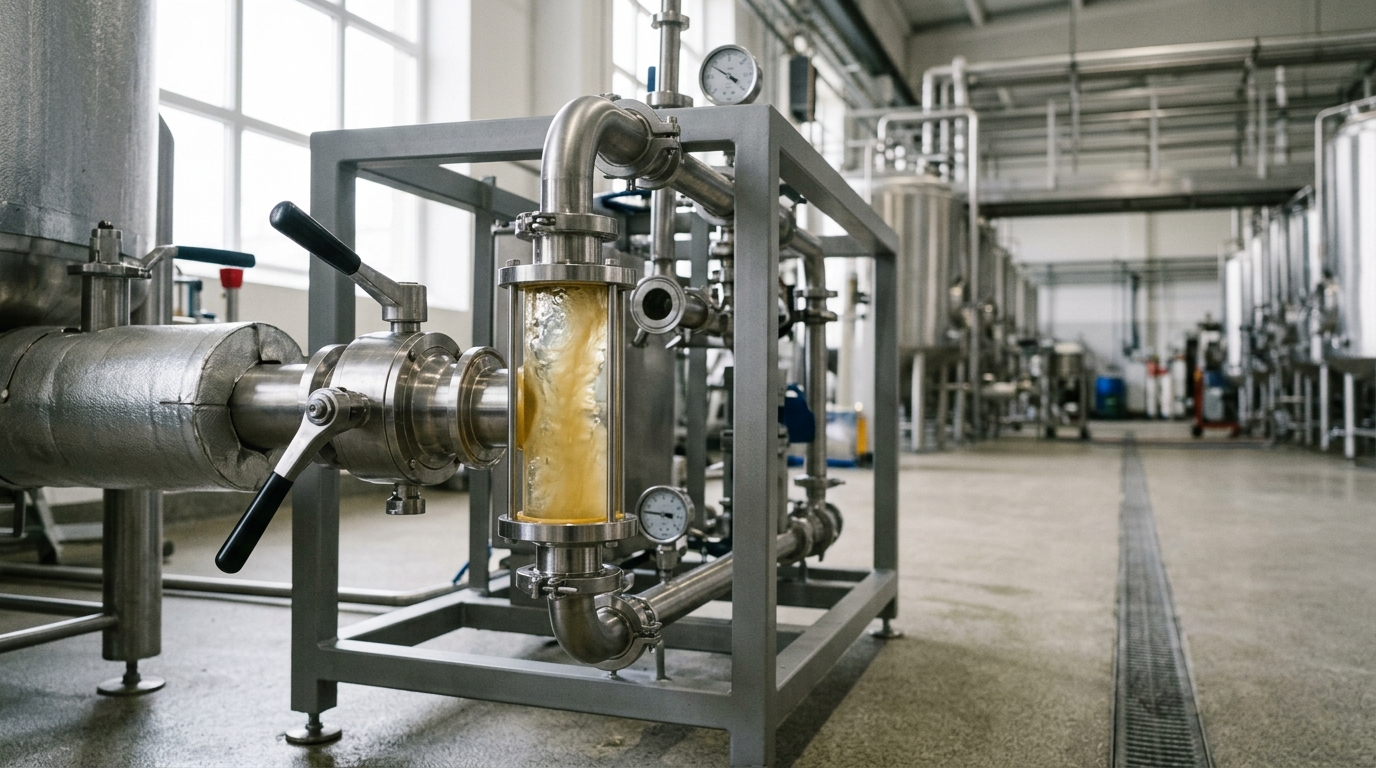
The newer wave applies the same fermentation infrastructure to a narrower target: not a whole organism as the food, and not a generic enzyme, but a single specific animal protein, produced by a genetically engineered microbial host and purified out of the fermentation broth. Perfect Day markets its flagship product, ProFerm, on exactly that basis — an animal-free whey protein it describes as free of lactose, cholesterol, hormones, and pesticides, produced through precision fermentation and supplied into branded dairy-alternative products [12]. That description is the company’s own claim about its own product, stated here as a claim rather than an independently audited fact, but the underlying category — a specific dairy protein manufactured by a fermentation host rather than a cow — is the same operation chymosin has already run for three and a half decades at industry-standard scale, extended from an enzyme to a nutritionally functional protein.
The 2026 adoption-barriers review is a useful corrective to any narrative that this newer wave has already solved its economics. It identifies the same three obstacles working against microbial protein scale-up regardless of product: high capital expenditure for bioreactors and downstream purification equipment that leaves microbial proteins “at a cost disadvantage relative to conventional agricultural proteins”; regulatory frameworks that require extensive novel-food safety documentation before a producer can commit to a strain at commercial scale; and consumer “neophobia” — the review’s own term for perceptions of unnaturalness manifesting as outright disgust in early-adoption research — that has nothing to do with the underlying chemistry [11]. The review also notes, as a sobering historical footnote rather than a prediction, that early single-cell-protein ventures in past decades “succumbed to competition from cheaper agricultural proteins and escalating maintenance expenses” [11] — a reminder that industrial microbial domestication has a real failure mode, not just a real precedent, and that chymosin’s forty-year ubiquity and Quorn’s four-decade run are survivors of a category that has also produced quiet shutdowns.
Cultivated meat is where the audit has teeth
Every claim so far in this article has had a documented commercial anchor: an edited tomato on sale in four regulatory jurisdictions, an enzyme running four-fifths of the world’s cheese production, a mycoprotein on shelves in twenty countries. Cultivated meat — animal muscle and fat tissue grown from a cell line in a bioreactor rather than in an animal — is the case where the anchor is thinner and the dispute between skeptics and believers is genuinely live, which is exactly why this article treats it as the audit centerpiece rather than folding it into the fermentation section above.
The single most important document in that dispute is David Humbird’s 2021 techno-economic analysis, published in Biotechnology and Bioengineering after originating as an independent, engineering-first report. Humbird’s analysis is not a general skepticism of the concept; it is a specific, quantitative engineering critique built from first-principles bioprocess design, and its most consequential finding is a physical ceiling rather than a cost estimate. Above roughly 20 cubic meters, Humbird finds, animal-cell bioreactors run into a hard constraint: because the respiratory quotient of growing animal cells sits near 1, the rate at which carbon dioxide needs to leave the vessel is essentially the same as the rate at which oxygen needs to enter it, and pushing the sparge rate higher to strip out more carbon dioxide risks killing cells through shear stress, since animal cells lack the rigid wall that lets microbial cells tolerate rougher mixing. The practical result is that bioreactors larger than about 20 cubic meters support a lower maximum cell density, not a higher one — scale stops helping past that point rather than continuing to deliver the economies of scale fermentation and chemical engineering normally expect [13].

The cost consequences follow directly from that ceiling. Humbird’s fed-batch process model, built around bioreactors at or below the 20-cubic-meter limit, converges on roughly thirty-seven dollars per kilogram of wet cell mass at the largest realistic production scale he models; a perfusion-based alternative converges on roughly fifty-one dollars per kilogram. At the very largest theoretical volumes he considers, and only by essentially eliminating growth-medium cost — a change he treats as necessary but explicitly insufficient on its own — the model’s absolute floor comes down to approximately sixteen dollars per kilogram. Growth medium, chiefly the amino acids that feed the cells, is the dominant line item: at a modeled scale of 100 kilotonnes of annual production, macronutrients alone account for roughly 51% of total fed-batch cost. Humbird models individual amino-acid prices as falling with production volume along a fitted relationship,
where
The industry’s counter-claims deserve to be stated as claims, not dismissed and not laundered into fact. A 2026 peer-reviewed review of the cultivated-meat sector, surveying the field five years after Humbird’s analysis, reports that “the 2025 Lever VC analysis cite[s] notably lower company-reported cost ranges” of ten to fifteen dollars per kilogram — explicitly flagged by the reviewers themselves as “(claimed)” figures rather than independently audited ones — against Humbird’s engineering-derived thirty-seven to fifty-one dollar range, and the same review states plainly that it does not attempt to reconcile the two [14]. That gap, five years on and still unreconciled in the peer-reviewed literature, is the honest state of the dispute: a physics-and-unit-operations case built from published bioreactor engineering on one side, and unaudited company-reported cost claims on the other, with no public techno-economic analysis in between that has closed the distance.
Regulatory approval has run well ahead of the production volumes that would settle the dispute empirically. In the United States, the FDA and USDA jointly evaluate cultivated meat, and Wikipedia’s account of the sector — corroborated in its broad strokes by the same 2026 peer-reviewed review’s description of a roughly 12-to-18-month US pathway from premarket consultation through facility inspection to label approval [14] — records the FDA completing its pre-market safety review of Upside Foods’ cultivated chicken in November 2022 and USDA granting inspection to both Upside Foods and Eat Just’s Good Meat subsidiary in June 2023, with Singapore having moved first of any country, approving Eat Just’s cultured chicken bites for sale in December 2020 [15]. But the same 2026 review is explicit that regulatory clearance has not translated into the fully cultivated products those approvals suggest: it reports that “the majority of the [cultivated meat] products currently sold in a few markets, including Singapore and the US, are hybrid products made primarily of plant-based ingredients with a small amount of cultured animal cells,” and states that in these hybrids “the actual cellular content in these products is frequently negligible” rather than nutritionally or structurally substantial [14]. The review also records a concrete casualty of the scale-up gap: Believer Meats underwent a shutdown “following financial and construction-related difficulties” [14], a company failure, not a laboratory failure, and exactly the kind of evidence a reader should weigh against unaudited cost-per-kilogram claims from companies that have not shut down. The honest structure of this dispute, as of today, is a skeptic’s case built from engineering first principles and a believer’s case built from projected cost roadmaps, with regulators having certified the safety of the product on both sides of that gap without adjudicating the economics at all.
De-extinction is a branding decision layered onto real gene editing
Colossal Biosciences’ 2025 announcement that it had produced three “dire wolf” pups — Romulus, Remus, and Khaleesi — is the case that most directly tests whether this article’s discipline about separating documented fact from marketing claim actually holds up under pressure, because the underlying science is genuinely real and the framing built on top of it is genuinely misleading, and both of those things are true at once. Stated as plainly as the company itself states it: Colossal made 20 targeted genetic edits across 14 loci in grey wolf genomic material, informed by dire wolf ancient-DNA sequence, and used the edited cells to produce the three living animals [16]. That is a documented, specific, verifiable genetic engineering achievement — the same kind of targeted, small-number-of-loci editing this article has already described in tga1’s seven variants and tb1’s regulatory rewrite, applied to an animal genome instead of a plant one.
What that achievement is not, and here the article turns to the primary genetics rather than to commentary about the announcement, is a resurrection of the species Aenocyon dirus. A 2026 paleogenomic study in Cell Genomics — co-authored, notably, by Colossal’s own chief science officer alongside university and museum researchers, and therefore not an outside critique but the company’s own scientific team publishing the underlying population genetics — dates the dire wolf lineage’s divergence from the ancestor it shares with grey wolves, dholes, and coyotes to approximately 4.5 million years ago, with a 95% confidence interval spanning roughly 2.89 to 5.84 million years. The same paper finds dire wolves carried a dual genetic ancestry — roughly 39% from a lineage related to South American canids and 61% from the lineage sister to dholes, coyotes, and grey wolves — and explicitly reports finding no evidence of genetic admixture between dire wolves and either of their sister lineages during the Pleistocene, despite geographic overlap that would have made interbreeding physically possible. The paper retains dire wolves in their own genus, Aenocyon, rather than folding them into Canis [17]. Twenty edits to fourteen loci cannot bridge a multi-million-year, genus-level divergence with no history of interbreeding; the edited animals are, genetically, grey wolves carrying a small number of dire-wolf-informed changes to visible traits like body size and skull proportions, not dire wolves.

A 2025 peer-reviewed commentary in Stem Cell Reports makes exactly this argument in print, independently of the popular-press reaction to the announcement, and its own phrase for what actually happened is the sharpest available: “what has been achieved is not resurrection, but simulation: a synthetic proxy designed to mimic phenotype, not to replicate genotype” [18]. The same commentary independently confirms Colossal’s own figure — roughly twenty genetic modifications across fourteen loci, informed by an estimated 91% of the reconstructed dire wolf genome — and argues the field would be better served by terminology like “synthetic proxies” or “engineered simulacra” than by “de-extinction,” on the grounds that the animals are edited members of an extant species built to resemble an extinct one, not restorations of the extinct species itself [18]. This article’s position is the position both of those peer-reviewed sources converge on without needing to be reconciled: the gene editing is a fact, verifiable at the level of loci and edit count; “de-extinction” is a branding decision made about that fact, and the two claims do not carry the same evidentiary weight even though they were announced in the same press release.
The company’s two other public de-extinction programs illustrate what unglamorous, unfinished progress toward the same goal actually looks like, and both are worth stating plainly rather than either dismissed or inflated. Colossal’s own thylacine project page describes a genome sequenced from a 108-year-old preserved specimen in 2018, refined in 2022, with the fat-tailed dunnart — a small living Australian marsupial — designated as the surrogate and gene-editing host species; the company states an internal aim of producing “an animal that is a near-perfect match to its original ancestor within the next decade,” a stated target rather than an achieved result [19]. Revive & Restore’s considerably older passenger-pigeon program, running in some form since genomic groundwork was published in 2017, aims to engineer several passenger-pigeon traits — including colonial breeding behavior and the male’s red breast coloring — into the band-tailed pigeon, the passenger pigeon’s closest living relative; the organization’s own current description frames the entire effort as “a long eco-evolutionary experiment” that “may take many generations to observe,” with no genetically modified pigeons yet produced [20]. Read against the dire wolf case, the contrast is instructive: the passenger pigeon and thylacine programs have made real, incremental, honestly-described genomic progress toward a stated future goal without yet producing an animal to put a misleading name on. The dire wolf program did produce the animal, and the honest description of it required a peer-reviewed rebuttal to establish in public print.
By 2100, the biosphere is a production schedule under named, checkable projections
Every case this article has covered — an edited tomato, a fermented enzyme, a bioreactor cell line, an edited wolf — is a local instance of the same larger pattern: the fraction of the biosphere under direct, designed selection control keeps growing, and it grew enormously even before any of the technologies above existed. Yinon Bar-On, Rob Phillips, and Ron Milo’s 2018 global biomass census puts a number on how far that process had already gone by the time genome editing arrived. Livestock biomass, by their estimate, is approximately 0.1 gigatons of carbon, against approximately 0.007 gigatons of carbon for all wild mammals combined — livestock alone outweighs the entirety of wild mammalian life by roughly a factor of fourteen. Humans add a further approximately 0.06 gigatons of carbon, putting human plus livestock biomass at roughly twenty-three times wild mammal biomass, and the paper states directly that humans and livestock together “outweigh all vertebrates combined, with the exception of fish” [21]. Separately, Our World in Data’s land-use accounting — compiled by Hannah Ritchie and Max Roser from national and international agricultural statistics — puts roughly half of all habitable land on Earth under agricultural use, with pastureland for livestock alone accounting for 67% of that agricultural area globally [22]. Domestication had already reshaped the vertebrate biosphere and half the habitable land surface of the planet before precision fermentation or gene editing touched a single genome; this article’s subject is not a new phenomenon but an old one whose editing tool just got dramatically more precise.

What genome editing and industrial fermentation add is not a bigger version of that same land-based footprint — both technologies exist substantially because they threaten to shrink it — but a second, parallel production surface: biomass grown in vessels rather than in fields or pastures, subject to selection pressure applied on the timescale of a design cycle rather than a breeding season. Whether that second surface grows to rival the first by 2100 is not something this article’s evidence settles, and treating it as settled would repeat the exact error this article has spent five sections auditing out of other people’s claims. Three checkable claims, stated as this article’s own predictions rather than attributed to any cited source, follow from the evidence assembled above.
First: given that Humbird’s engineering ceiling on animal-cell bioreactor scale-up remains unrefuted by any published techno-economic analysis five years after its release [13, 14], this article predicts that no fully cultivated (non-hybrid) meat product will reach retail price parity with the conventional meat category it targets, in any major market, before 2040. Horizon: end of 2039. Assumption: no bioreactor architecture that removes the roughly-20-cubic-meter oxygen-transfer/carbon-dioxide-stripping ceiling reaches commercial deployment in the interim — a real possibility this article cannot rule out, since Humbird’s ceiling is a property of stirred-tank aerobic culture specifically, not of animal cell culture in general. Indicator: independently audited, not company-reported, cost-per-kilogram figures for wet cell mass at commercial scale. Falsifier: a single independently verified fully cultivated product reaching shelf-price parity with its conventional counterpart anywhere before that date.
Second: given that recombinant chymosin needed roughly three and a half decades to go from novel approval to 80% market share in its category [10], and Quorn needed roughly four decades to reach sales in 20 countries from a 1985 launch [11], this article predicts that precision-fermentation-derived proteins (dairy and egg analogues specifically, not whole-organism fermented foods) will account for a majority of at least one named commodity dairy-protein category — most plausibly whey protein isolate sold into sports-nutrition and infant-formula-adjacent markets — in at least one major economy before 2045, on the same multi-decade-adoption curve chymosin already demonstrated. Horizon: end of 2044. Assumption: no regulatory reversal analogous to the EU’s 2018 mutagenesis ruling extends equivalent precautionary review to microbial fermentation hosts engineered by gene editing, which would slow approval timelines the way it has for edited crops in that jurisdiction. Indicator: published market-share data, from an industry body or government agricultural statistics agency, for fermentation-derived protein within a named commodity category. Falsifier: fermentation-derived protein’s share of that category still below 50% in every major economy as of the horizon date.
Third: given the biomass and land-use figures above, this article predicts that by 2100, wild terrestrial vertebrate biomass will represent a smaller share of total (wild plus human plus livestock plus cultivated) terrestrial vertebrate-equivalent biomass than the roughly 4% wild-mammal share [21] implies for 2018 — that is, the domesticated-plus-cultivated fraction will have grown, not stabilized or reversed, even accounting for any land area returned to wild habitat by yield gains or by a shift of animal-protein production into vessels. Horizon: 2100. Assumption: no civilizational discontinuity — collapse, a binding global land-use treaty with enforcement teeth, or a comparable shock — interrupts the trend measured from 2018 to whatever the next comparable global biomass census finds. Indicator: a future Bar-On-style global biomass census, ideally from the same research group’s ongoing methodology, at any date between now and 2100. Falsifier: such a census finding wild-mammal biomass share equal to or greater than its 2018 level.
None of these three predictions requires believing the boosterish version of any technology this article has covered, and none of them requires the precautionary reflex that would treat a documented gene edit and a marketing claim about that edit as equally suspect just because they arrived in the same press release. Maize did not choose tb1’s altered expression level; the silver foxes selected for tameness did not choose the coat-color genes that came along for the ride; and the tomato, the fermentation tank, and the edited wolf did not choose the humans now running the selection loop on purpose. What has actually changed across ten thousand years is not the existence of directed evolution — it has been running the entire time — but where the selection pressure gets applied: from a field, to a breeding program, to a bioreactor, and now, in the design software that specifies which fourteen loci to touch before the edit is ever made, to code. The next selection event most of these lineages experience will be authored before it is run.