A third answer to the same question
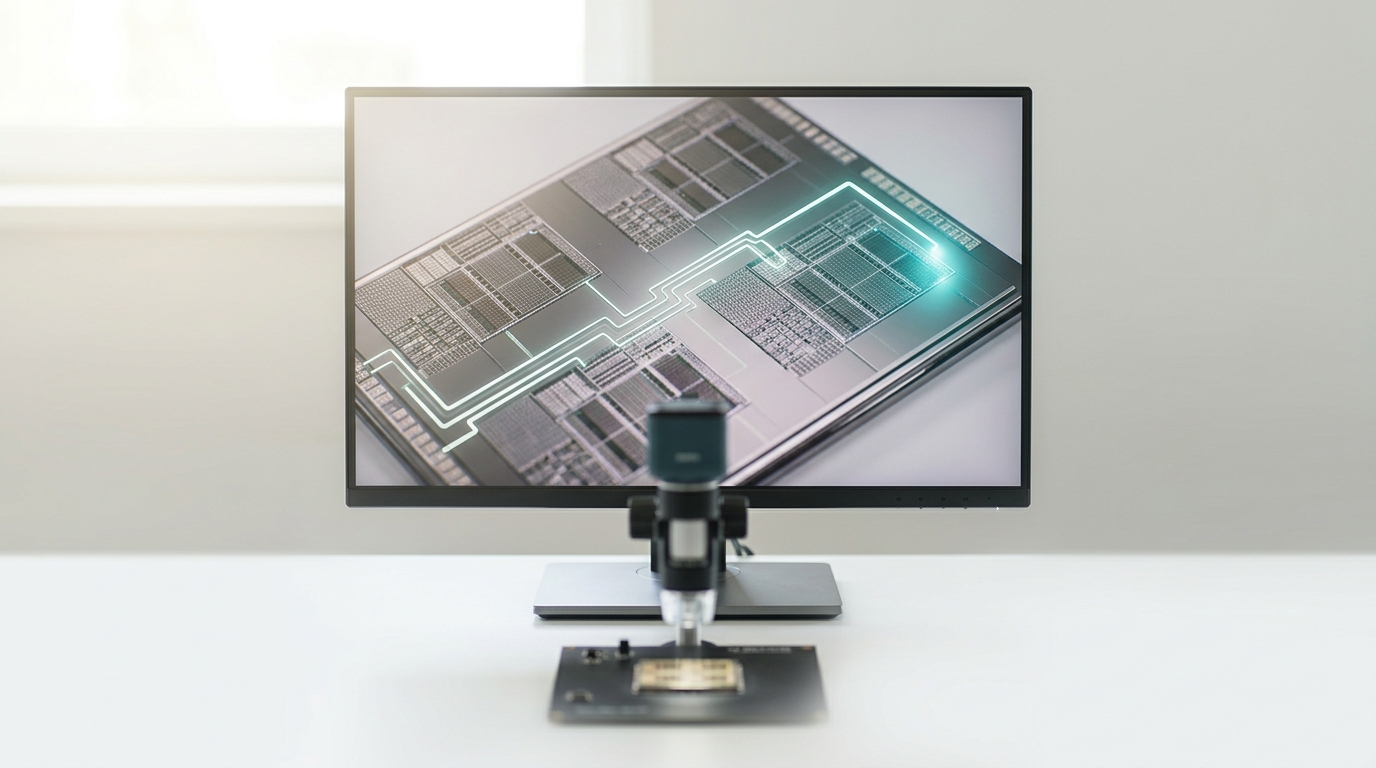
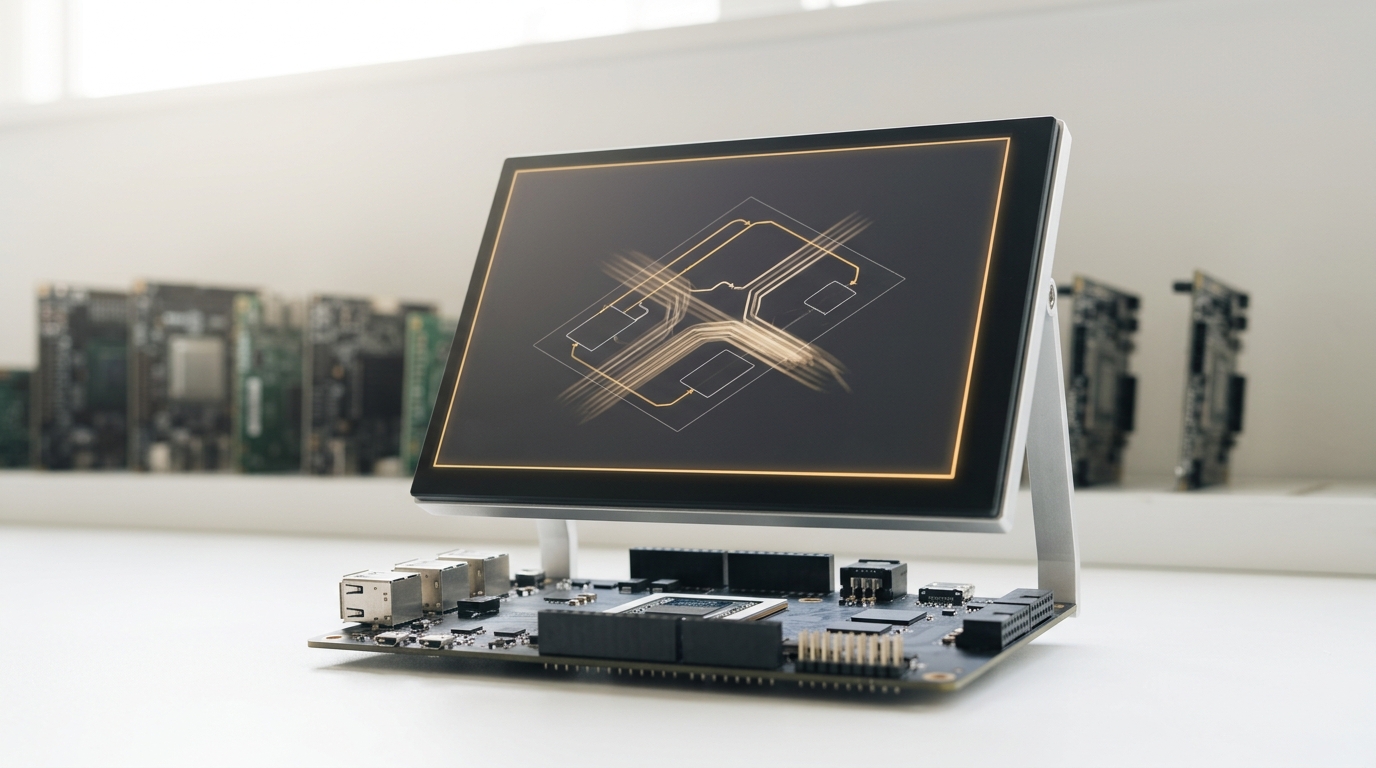
This cohort’s Cerebras and Groq briefings each cover a distinct architectural bet against the conventional GPU. SambaNova offers a third: reconfigurable dataflow architecture, in which the chip’s own internal data paths are reshaped around a specific model’s computational graph, rather than running a fixed circuit that software has to be adapted to fit. Where a conventional processor executes a fixed sequence of instructions and a GPU parallelizes many identical operations, SambaNova’s approach reconfigures the hardware itself for each workload [1].
The funding
SambaNova has raised $1.5 billion, backed by Vista, Intel Capital, and GV — a notably diverse investor base spanning private equity, a chipmaker’s own venture arm, and Alphabet’s venture fund, suggesting the company’s technology has drawn interest from parties with quite different strategic reasons for wanting exposure to it [2].
How it compares to Cerebras and Groq directly
Independent comparisons of the three leading non-GPU inference architectures generally position each company’s advantage differently: Cerebras for workloads that benefit from enormous on-chip memory and minimal cross-chip communication, Groq for latency-sensitive, deterministic-throughput inference, and SambaNova for workloads that benefit from switching flexibly between different model architectures without being locked into one fixed hardware configuration [1]. None of the three is a strictly superior answer to the other two — each targets a different point in the actual range of AI workload characteristics enterprises run in production.
Where SambaNova is actually being deployed
Enterprise-focused hardware guides place SambaNova specifically among the credible options for organizations running LLM inference at scale outside the three or four largest hyperscalers — companies with serious inference workloads but without the scale or in-house engineering resources to build fully custom silicon the way Amazon, Microsoft, and Google have [3]. That mid-market enterprise positioning is a meaningfully different go-to-market strategy than Cerebras’s largest-scale, most demanding-workload focus, and it gives SambaNova a customer base less concentrated among a handful of the very largest AI labs.
Why architectural diversity is healthy for the industry as a whole
Three well-funded companies pursuing three genuinely different architectural answers to the same underlying problem is a healthier sign for the industry than convergence on a single alternative architecture would be. It means real engineering uncertainty about which approach ultimately wins for which workloads is still being tested empirically, in production, rather than settled by market consolidation before the actual trade-offs are well understood — a dynamic worth watching across all three companies’ reported customer results over the next several years, rather than picking a single winner prematurely [4].
The engineering cost of reconfigurability
Reconfigurable dataflow hardware is not free of trade-offs relative to a fixed architecture. The circuitry that enables reconfiguration — the switching fabric and control logic that let the chip reshape its own data paths — occupies silicon area and adds design complexity that a purpose-built, fixed-function chip does not need to carry at all. SambaNova’s bet is that the flexibility this buys, letting one piece of hardware serve many different model architectures efficiently without requiring separate purpose-built silicon for each, is worth that area and complexity cost across the range of workloads its actual customers run. Whether that trade holds up depends heavily on how varied a given customer’s workload mix actually is — an enterprise running many different model types benefits far more from reconfigurability than one running a single, stable production workload repeatedly, where a fixed architecture tuned to that one workload could in principle be more efficient.
What would most strengthen SambaNova’s position
The clearest evidence that would validate the reconfigurable-dataflow bet at scale is published, independently verified benchmark results across a genuinely diverse workload set — not a single favorable comparison, but a range spanning training, high-throughput inference, and low-latency inference on multiple distinct model architectures. SambaNova’s flexibility argument is fundamentally a claim about performance breadth rather than performance peak on any single benchmark, and it is best evaluated on exactly those terms rather than on a narrow, single-number comparison against Cerebras or Groq on whichever workload happens to favor a fixed architecture most, since that comparison would say more about the specific benchmark chosen than about either architecture’s actual merit across the full range of workloads a real enterprise customer runs.