A Ray of Light and a Falling Stone Obey the Same Kind of Law
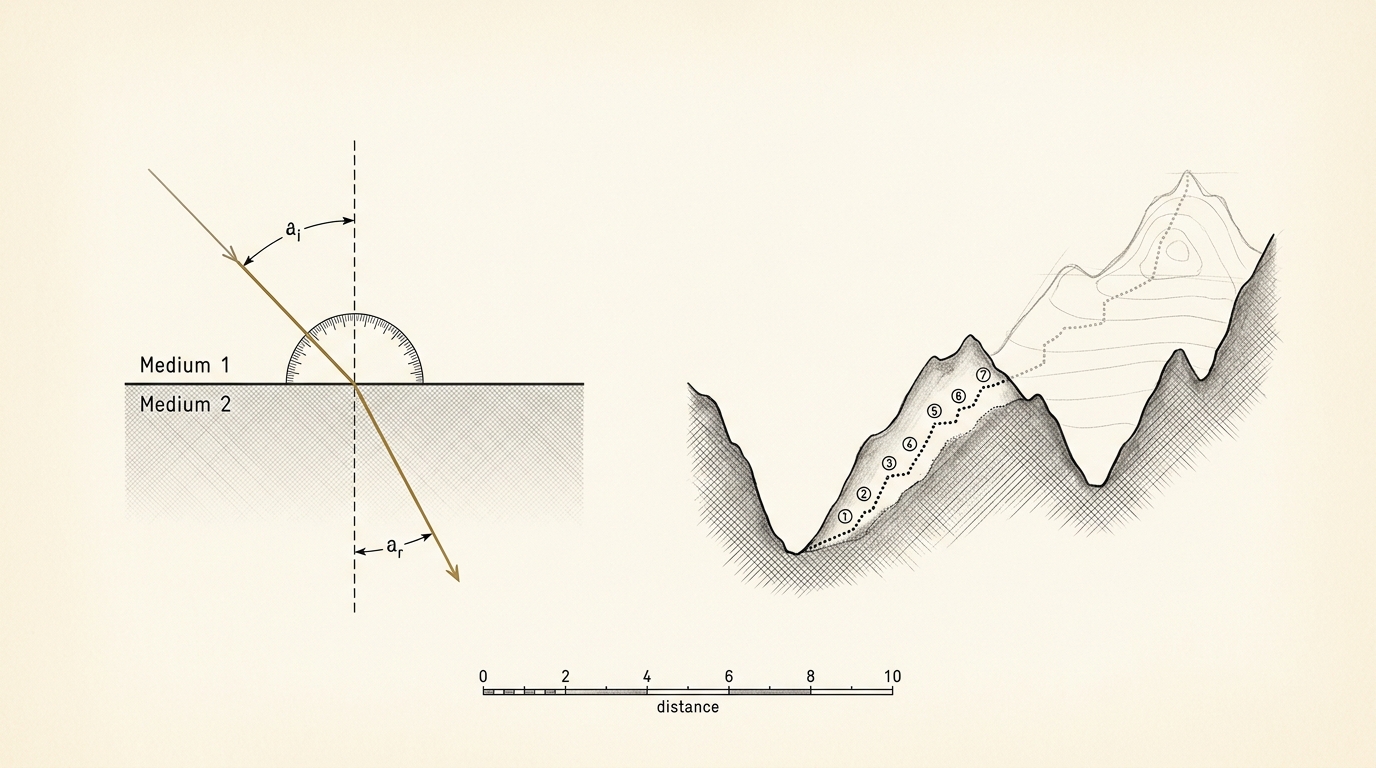
A beam of light crossing from air into glass bends at the interface by exactly the angle that gets it through in the least possible time. Pierre de Fermat stated this as a principle in the 1660s, and the consequence collapses into one line of algebra: for a ray crossing between two media of refractive index
Snell’s law, in other words, is not an independent fact about glass. It is what falls out of a single global stipulation — least time — applied to one path among infinitely many. Pierre-Louis Maupertuis generalized the same move to all of mechanics in the 1740s, proposing that nature always acts by the smallest possible “action,” and Euler, Lagrange, and Hamilton spent the following century turning that guess into the working machinery of classical physics: a moving body’s entire trajectory falls out of minimizing one integrated quantity over the whole path, not from adding up forces moment to moment. General relativity is this idea pushed as far as it goes. Einstein’s field equations recast gravity as the curvature of spacetime itself, and a body in free fall — no rocket, no resistance — simply follows the straightest available route through that curved geometry, a geodesic, obeying the same one-line logic as light and no other:
A law that reaches its answer by surveying every conceivable path and keeping only the extremal one looks, to anyone hearing it for the first time, like a law with a purpose. Maupertuis said as much explicitly, presenting least action in 1746 as proof of a wise Creator’s economy, and the accusation that variational mechanics was smuggling final causes back into physics did not go away with him: whether an extremal law secretly imports a goal working backward from the future is a question historians and philosophers of physics are still working through two centuries on, from Maupertuis’s own defenders through Planck’s generation and into recent metaphysics-of-physics scholarship [8]. The resolution most working physicists rely on: the extremal formulation and the local, moment-by-moment formulation — the Euler-Lagrange equations — are mathematically identical, so nothing in either version actually looks ahead. The appearance of purpose is a feature of the bookkeeping, not of the world.
Albert Einstein, writing in 1939 on the proper boundary between science and religion, named the other science that had drawn the same accusation. Discussing where an institution’s literal reading of scripture collides with settled findings, he wrote plainly that “this is where the struggle of the Church against the doctrines of Galileo and Darwin belongs” [10]. He had reason to place them together: both fields had been read, by their critics, as either requiring a designer or denying one. Physics answered the charge by showing its apparent purposefulness was locally exact all along. Biology, as the next section argues, answered a mirror-image version of the same charge — and did it by giving up on optimality altogether.
Evolution Never Asks What The Best Design Would Be
Herbert Simon, in 1956, built a deliberately primitive model organism to make a point about decision-making that turned out to describe natural selection as well as it described minds. His forager has one goal, limited vision, and no capacity to survey every path through its world; it explores until it meets a threshold of “good enough” and stops. Simon’s conclusion was blunt: “organisms adapt well enough to ‘satisfice’; they do not, in general, ‘optimize’” [1]. A satisficing path, in his formal sense, is one that clears a specified bar, not one selected from a comparison against every alternative bar available — his forager, he wrote, “has neither the senses nor the wits to discover an ‘optimal’ path — even assuming the concept of optimal to be clearly defined” [1]. Replace “forager” with “allele” and the sentence still parses: a mutation needs only to outcompete its immediate rivals in the population it actually finds itself in, never the best conceivable allele at that locus.
Ernst Mayr, writing five years later, solved biology’s own version of the final-cause problem the same way physics had solved its own. Mayr coined “teleonomic” to rescue goal-directed language for structures that are executing a genetic program — a bird’s migration, an eye’s development — while ruling illegitimate any claim that evolution itself, the process that built the program, is aimed at anything [2]. The parallel to least action is exact, though it runs in the opposite direction: physics needed to show that its apparently forward-looking law was really just the sum of purely local, backward-looking causes; biology needed to show that its genuinely forward-looking organisms — animals that plan, hunt, and grow toward an end state — were built by a process with no foresight at all. Selection has no equivalent of Hamilton’s integral. It cannot survey the paths not taken. It only ever compares what exists now to its own immediate neighbors, keeps what wins, and moves on with no way back.
The Detours Are the Signature
Sewall Wright gave this local, backward-looking process its classic picture in 1932: a “field of gene combinations” rendered as a landscape of fitness peaks and valleys, on which a population climbs whatever slope its current position faces and can stall on a modest peak forever if reaching a taller one requires crossing a valley of lower fitness first [4]. Nothing in that climb looks backward for a better route, and nothing looks forward to compare the peak it is climbing against peaks it cannot see. What it leaves behind, when the climb is long enough, is a fossil record of the specific slope it happened to be standing on at each step — and some of those fossils are anatomical.
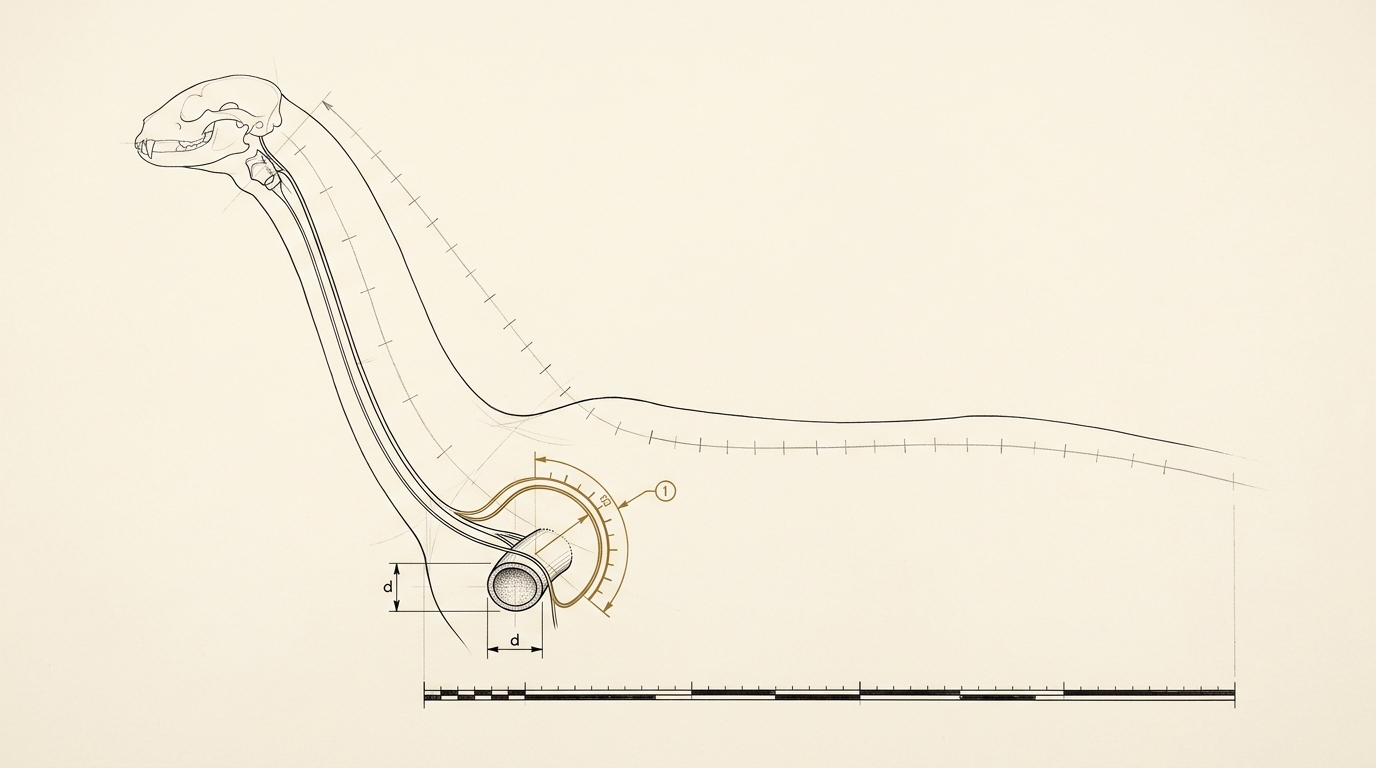
The recurrent laryngeal nerve is the textbook case. In every tetrapod, the nerve serving the larynx first forms behind the embryonic aortic arches, before a neck exists to separate throat from heart; as the neck lengthens in development, the nerve is dragged down with the heart’s great vessels and must loop around them before climbing back up to the larynx it could otherwise have reached directly. In a giraffe the total path runs close to five meters for a target a few centimeters from the brainstem. In sauropod dinosaurs it was worse: Mathew Wedel calculated that in Supersaurus, with a neck estimated at roughly 14 meters, the nerve’s path — and the individual neurons composing it — exceeded 28 meters, and in the very largest sauropods may have reached 40 to 50 meters, “probably the longest cells in the history of life” [3]. No engineer routing a new signal line down that neck would choose this path. Selection could not choose it either, because by the time a neck existed to make the detour absurd, the detour was already load-bearing anatomy; scrapping it and rewiring from scratch was never one of the moves on offer.
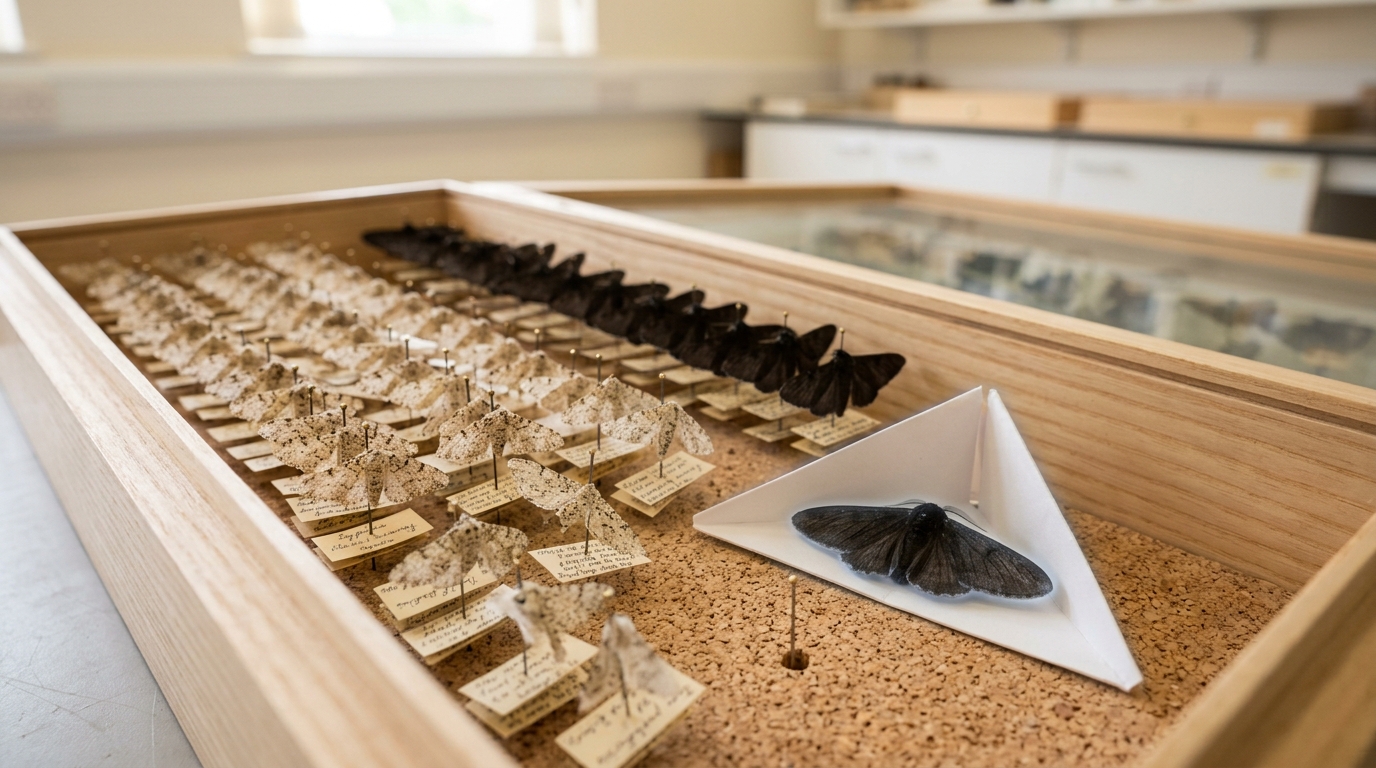
The vertebrate retina carries a related, more contested scar. Its photoreceptors face backward, away from incoming light, so that light must first cross the neural and vascular layers that photoreceptors ostensibly report to. Some biologists read this as a design an optimizing engineer would never choose. The fuller picture is more of a genuine dispute than a clean verdict: the photoreceptors sit that way because they are anchored in a pigment epithelium that recycles their light-sensing outer segments, a servicing relationship a forward-facing arrangement would lose, and the retina’s glial cells have separately been shown to act as living optical fibers, channeling photons through the intervening layers rather than simply losing them to scatter [13]. Whichever side of that argument turns out to matter more, both explanations are historical patches on a wiring decision made early and never revisited — not appeals to what a designer would have wanted.
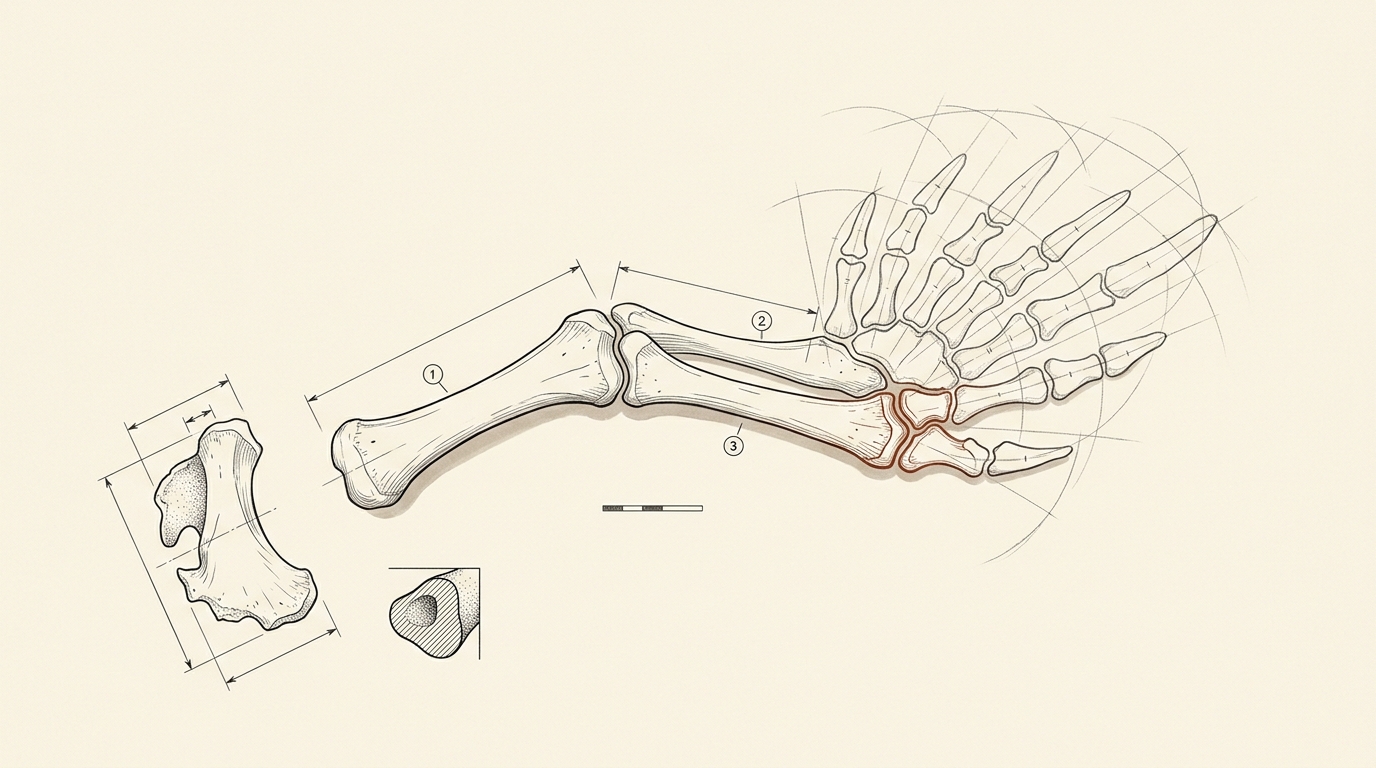
Stephen Jay Gould named the pattern directly: the panda’s usable “thumb” is an enlarged wrist bone recruited into an unrelated job, and its very clumsiness is what makes it evidence for descent rather than design — a competent designer had a real thumb available and did not choose a spare wrist bone [12]. Wright’s landscape supplies the mechanism; the nerve and the panda’s thumb supply the fossils it leaves behind. History, not optimality, is evolution’s signature — and that is also, near-exactly, the argument some attribute directly to Darwin in a much-repeated line about the species that survives being the one “most responsive to change.” Darwin never wrote it. It began as a 1963 paraphrase by a business professor, acquired quotation marks over decades of repetition, and was eventually inscribed in stone at a science museum before the misattribution was caught and corrected [9]. The line is popular because it sounds like Wright’s landscape compressed into a slogan; it is fake because the actual argument needs the slopes, the stalling, and the scars to mean anything at all.
Selection Hits a Ceiling Exactly Where the Ceiling Is Close and Steep
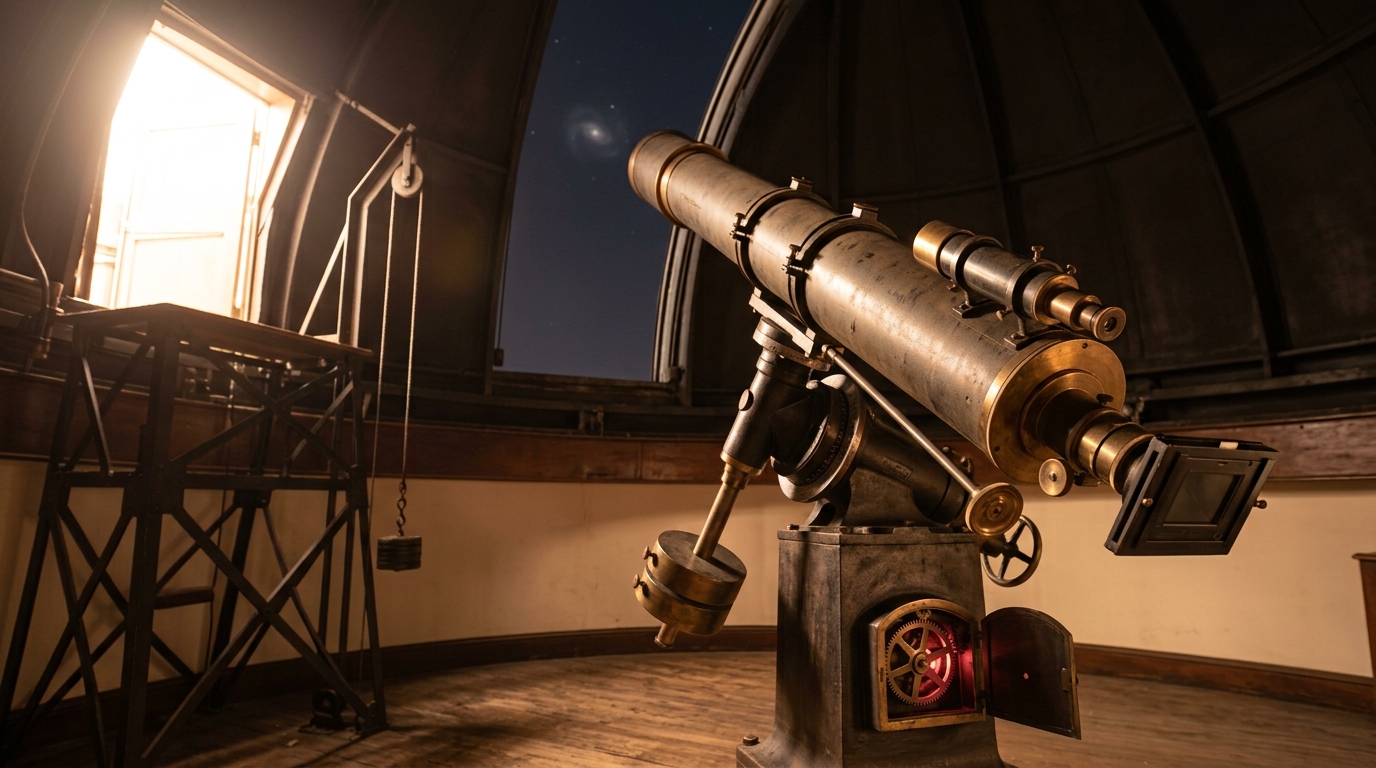
None of this means biology never meets a hard physical limit — only that when it does, the limit belongs to physics, not to any designer’s taste. A dark-adapted human rod cell can register a single absorbed photon: Selig Hecht, Simon Shlaer, and Maurice Pirenne showed in 1942 that of roughly ninety photons entering a subject’s eye, only about nine actually reached the retina at the flash intensity a subject could reliably detect, and because that light was spread across roughly 350 rods, no individual rod could have been absorbing more than one quantum — the cell’s response floor is the physical floor, one photon, and there is no lower number of photons a detector could ever be asked to count [6]. Baylor, Lamb, and Yau confirmed the mechanism directly in 1979, recording single-photon electrical events from isolated rod outer segments with a suction electrode [6]. A compound insect eye hits a comparable wall from the optics side rather than the chemistry side: H. B. Barlow showed in 1952 that in the honeybee and twenty-seven other Hymenoptera, each ommatidium’s angular resolving power sits right at the limit diffraction sets for an aperture that size, so that adding more, smaller ommatidia would buy no further acuity — the eye is exactly as good as a lens of its diameter can be, and not one degree better [5]. And at the scale of a single molecule, the rotary motor F1-ATPase converts the free energy of one ATP hydrolysis into mechanical rotation at an efficiency close enough to 100 percent that later biophysical measurements called the result surprising precisely because it does not contradict the laws of thermodynamics — it simply leaves them almost no room to spare [7].
What links a rod cell, a bee’s eye, and a rotary enzyme is not that selection got lucky three times. It is that in each case the physical ceiling sits directly above the population’s current position on the fitness slope, with a smooth, unbroken gradient leading straight to it and nothing else competing for the same genetic real estate. Photon-counting, diffraction, and thermodynamic efficiency are unlike a rerouted nerve in one specific way: there was no earlier, cheaper solution already occupying the ground, and no detour already built in before the requirement got hard. Where the terrain is smooth and the peak is close, hill-climbing and optimizing arrive at the same address by different roads. Where the terrain is not smooth — where an early developmental choice already claimed the ground — selection is stuck defending it forever.
One Rule Has No Memory; the Other Has Nothing Else
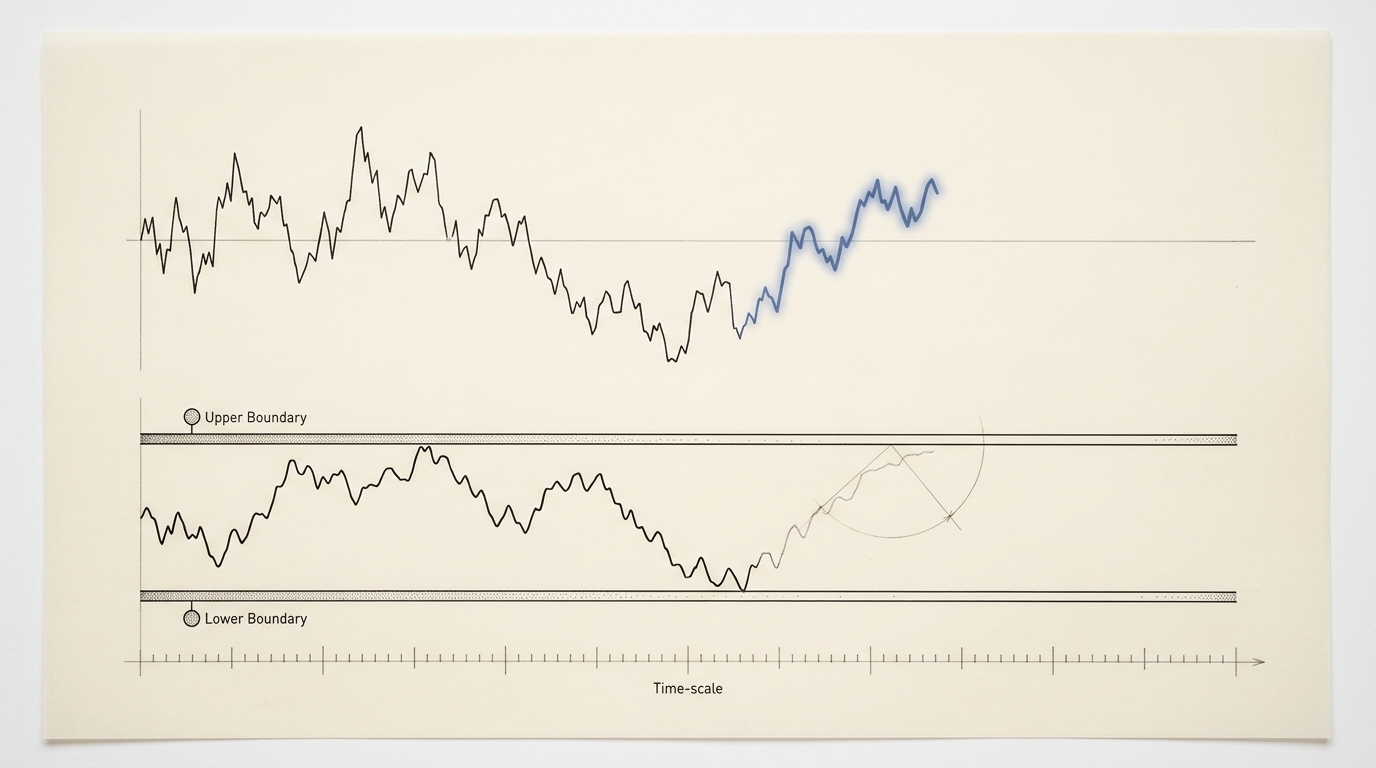
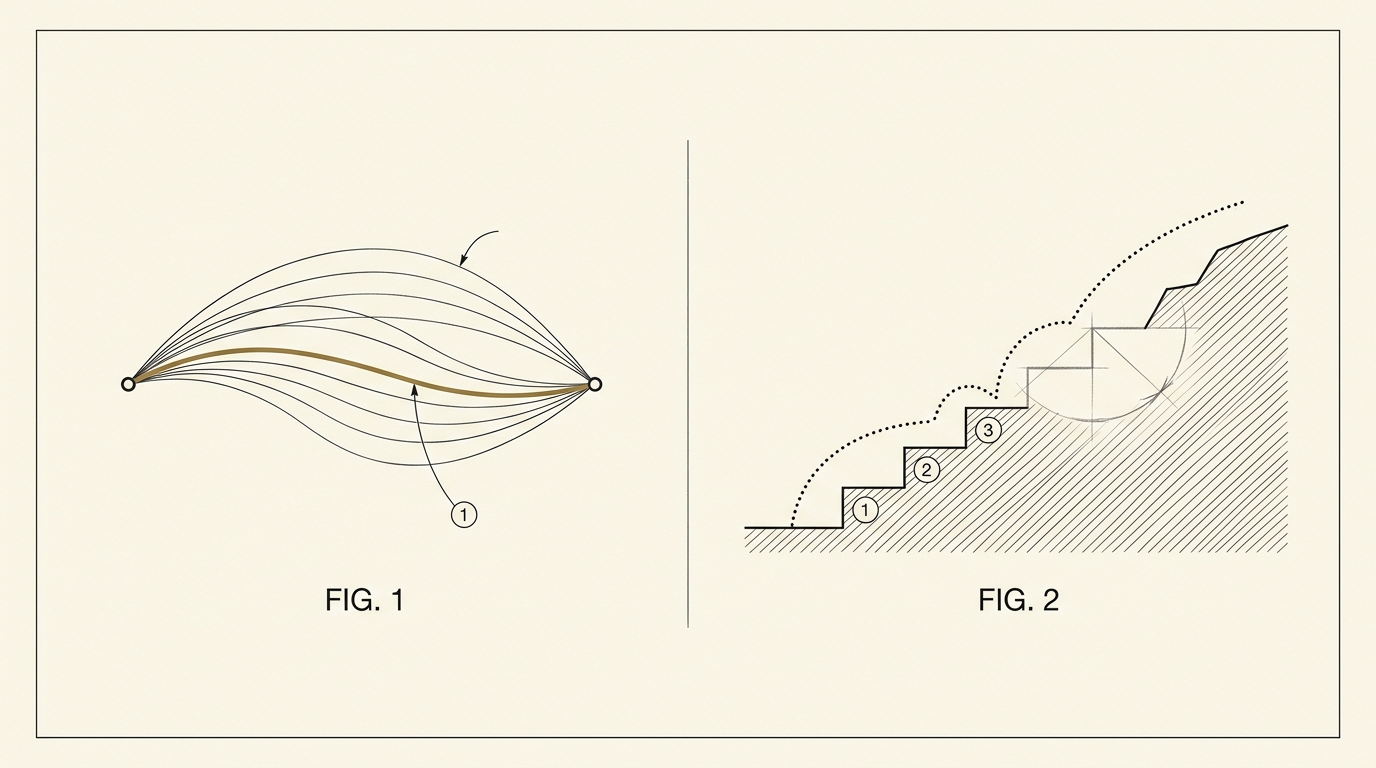
The contrast has an exact formal shape once the metaphors are set aside. A variational principle is a statement about a path taken as a whole: it is found by requiring the change in the action integral to vanish across every nearby alternative path at once,
evaluated using only the fixed start and end conditions — the equation has no term for how the system got to its starting point, because it does not need one. An adaptive walk is a statement about one step from one place:
a new position built only from the previous position and the local slope of fitness
Two Perfections, and What Happens When You Mistake One for the Other
Both kinds of near-perfection are real, and both get invoked badly. The variational kind — a bee’s eye at the diffraction limit, a molecular motor within reach of thermodynamics’s own ceiling — gets pressed into service as evidence of a designer, when it is exactly the case where a designer was never necessary: a smooth, close, unobstructed physical limit will draw any sufficiently patient hill-climber to the same place a global optimizer would have found. The satisficing kind — a rerouted nerve, a backward retina, a wrist bone doing a thumb’s job — gets pressed into engineering language it does not deserve, as when a badly-planned system is praised for having “evolved” toward its shape, borrowing evolution’s inevitability for what was really just unexamined patches nobody had authority to remove. Both errors run on the same confusion: mistaking a law that has no memory for a walk that has nothing else. A reader who keeps the two apart has a cleaner test than either side of the culture-war argument about design usually offers: ask whether the structure in front of you looks like the answer to a whole problem, or like the best move available from wherever the last one happened to land.