A roadmap that breaks the usual pattern
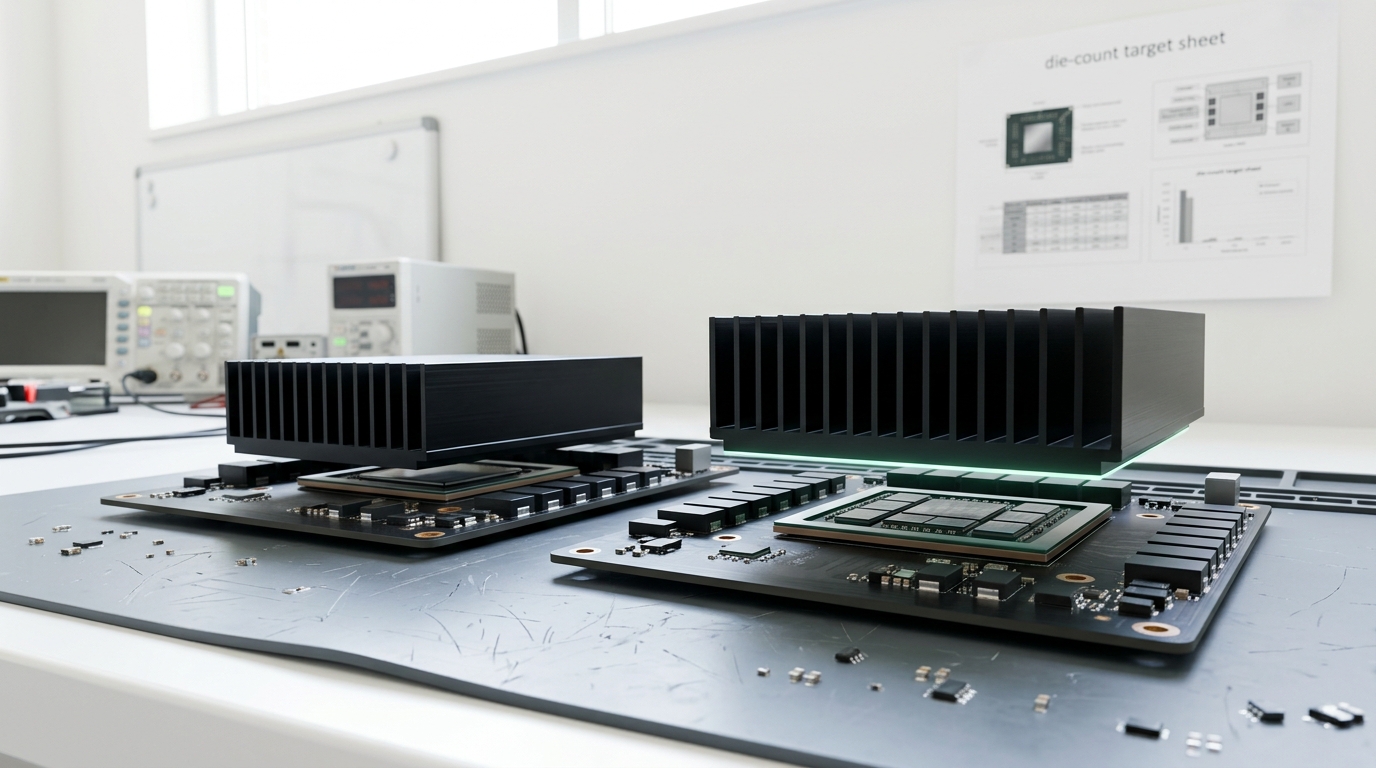
Chip roadmaps almost always promise more: more performance, more memory bandwidth, more of whatever the previous generation’s headline number was. Huawei’s own publicly disclosed roadmap for 2026 breaks that pattern in a specific, checkable way. The Ascend 950PR and Ascend 950DT, both slated for 2026 release, carry lower theoretical peak performance than Huawei’s existing best chip, the Ascend 910C [2]. This is not a rumor or a leak — it is what Huawei’s own roadmap disclosures show, and it is worth treating as a genuinely interesting fact rather than folding it silently into a broader “China is behind” narrative.
The obvious question, and why the obvious answer is probably wrong
The easy explanation is that Huawei is simply struggling and shipping a worse product. That explanation doesn’t fit the rest of what is known about Huawei’s strategy. A company that had lost the ability to design a faster chip would not announce the regression on a public roadmap; it would either delay the product or quietly reduce marketing emphasis on the comparison. Huawei naming both chips and disclosing their specifications suggests the peak-performance number was a deliberate design trade-off, not an unplanned shortfall.
The trade-off that makes sense once yield is the lens
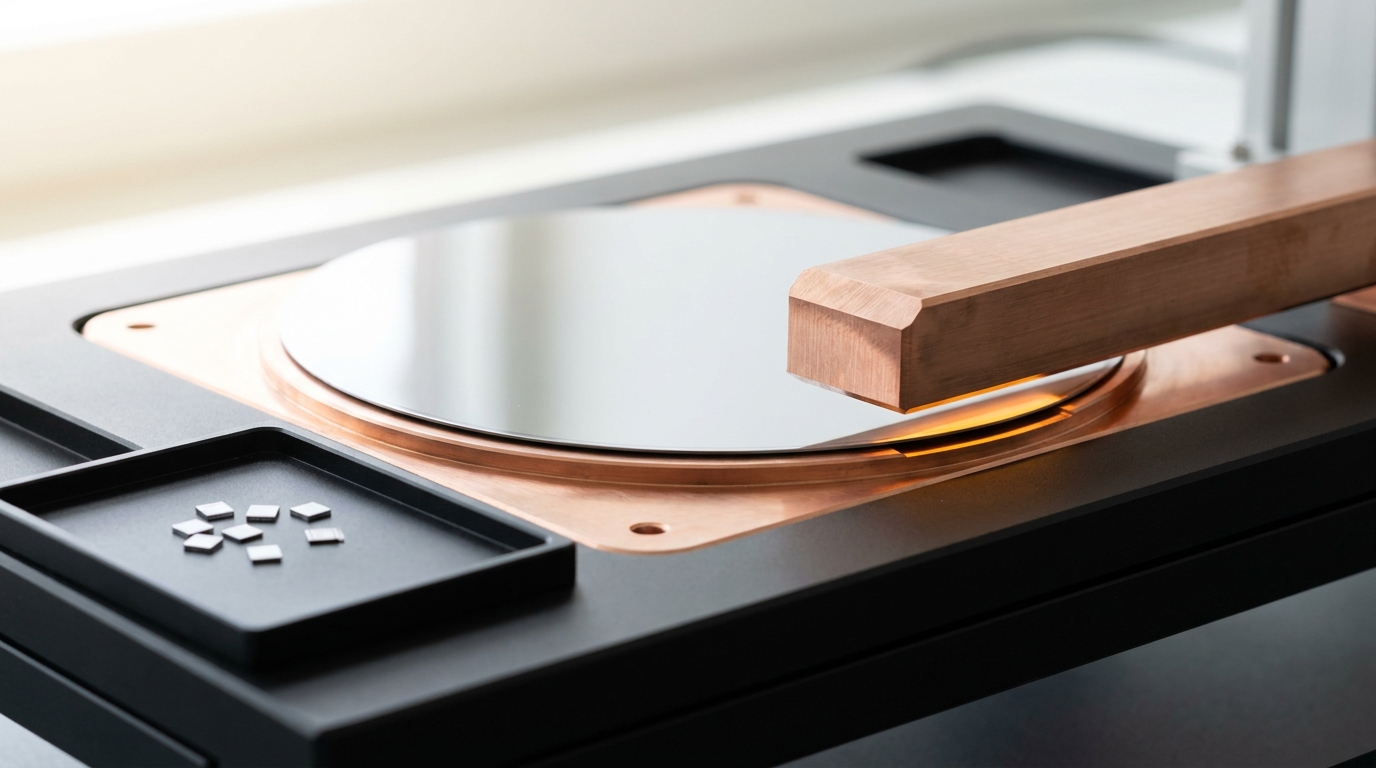
The most plausible explanation follows directly from this cohort’s companion briefing on SMIC’s reported 20-40% yield on the Ascend 910C: at that yield range, a design choice that favors more, smaller, higher-yielding dies over fewer, larger, lower-yielding ones can produce more usable compute in aggregate, even if any single die’s peak specification looks worse on paper [1]. A larger die is disproportionately more likely to contain a fatal defect simply because it covers more wafer area — a basic yield-economics relationship that holds regardless of who is manufacturing the chip. Under SMIC’s process constraints, Huawei may be choosing buildable volume over headline peak performance, which is a rational response to a supply constraint, not evidence of a design regression.
That 1.6 million die target is itself the tell. It is a volume figure, not a performance figure — and Huawei choosing to publicize a volume target at all suggests the company is managing investor and customer expectations around total buildable supply, in a way that a chip vendor with no yield constraint would have little reason to do.
Why this matters more than a single benchmark number
SMIC’s mass production of the Ascend 910B and a planned doubling of 7nm capacity in 2026 point in the same direction: Huawei’s China-based supply chain is optimizing hard for total shippable volume under a fixed, externally imposed process ceiling [3]. Multiple analysts now describe this as evidence of a genuinely bifurcating semiconductor ecosystem — one where Chinese firms are not simply trying to replicate the Western performance-maximizing playbook with worse tools, but developing a structurally different set of design priorities shaped by the specific constraint they actually face [4]. Reading the Ascend 950 line as evidence of that shift, rather than as a simple performance failure, is the more accurate — and more interesting — story the specification sheet actually supports.
What a Western vendor would do differently, and why it can’t here
A useful comparison is what Nvidia or AMD would do if handed the same yield constraint. Both companies could, in principle, respond to a similar yield ceiling by simply waiting — delaying a launch until TSMC’s process matures further, since neither depends on a single domestic foundry with a hard process ceiling. Huawei does not have that option in the same form: SMIC’s 7nm limit is not a temporary yield-maturation problem that improves with a few more months of process tuning, the way a new TSMC node’s early yields typically do. It is a ceiling set by tooling access that no amount of additional process engineering time, on its own, resolves. That distinction is the real reason a “just wait for yields to improve” comparison to a Western vendor’s product delays does not transfer cleanly to Huawei’s situation, and it is why the 950 line’s die-count strategy reads as a considered adaptation to a durable constraint rather than a temporary stopgap.
The reading this briefing recommends
Treat any single Ascend generation’s headline specification as a weaker signal than Huawei’s disclosed die-volume targets and SMIC’s yield trajectory. The performance number describes the best case; the volume and yield numbers describe what actually ships and at what implied cost — and, for a supply chain operating under a binding external constraint rather than a temporary engineering one, the second pair of numbers has consistently proven the more durable predictor of what the roadmap actually delivers.