The absence worth naming directly
Read back across this entire cohort’s company profiles — foundries, memory makers, accelerator vendors, the more than a dozen AI-chip startups covered in this Track alone — and one pattern stands out: the United States, South Korea, Taiwan, Japan, and China account for nearly every company named. Europe is a striking near-absence, despite being home to one of the two companies without whom the entire global chip industry could not function at all: ASML, covered in this cohort’s equipment briefing, the sole supplier of EUV lithography machines every leading-edge fab in the world depends on [4]. Europe dominates one critical layer of the supply chain and is nearly invisible in chip design, particularly AI accelerator design — a gap Axelera AI is one of the few companies attempting to close.
What Axelera AI actually builds
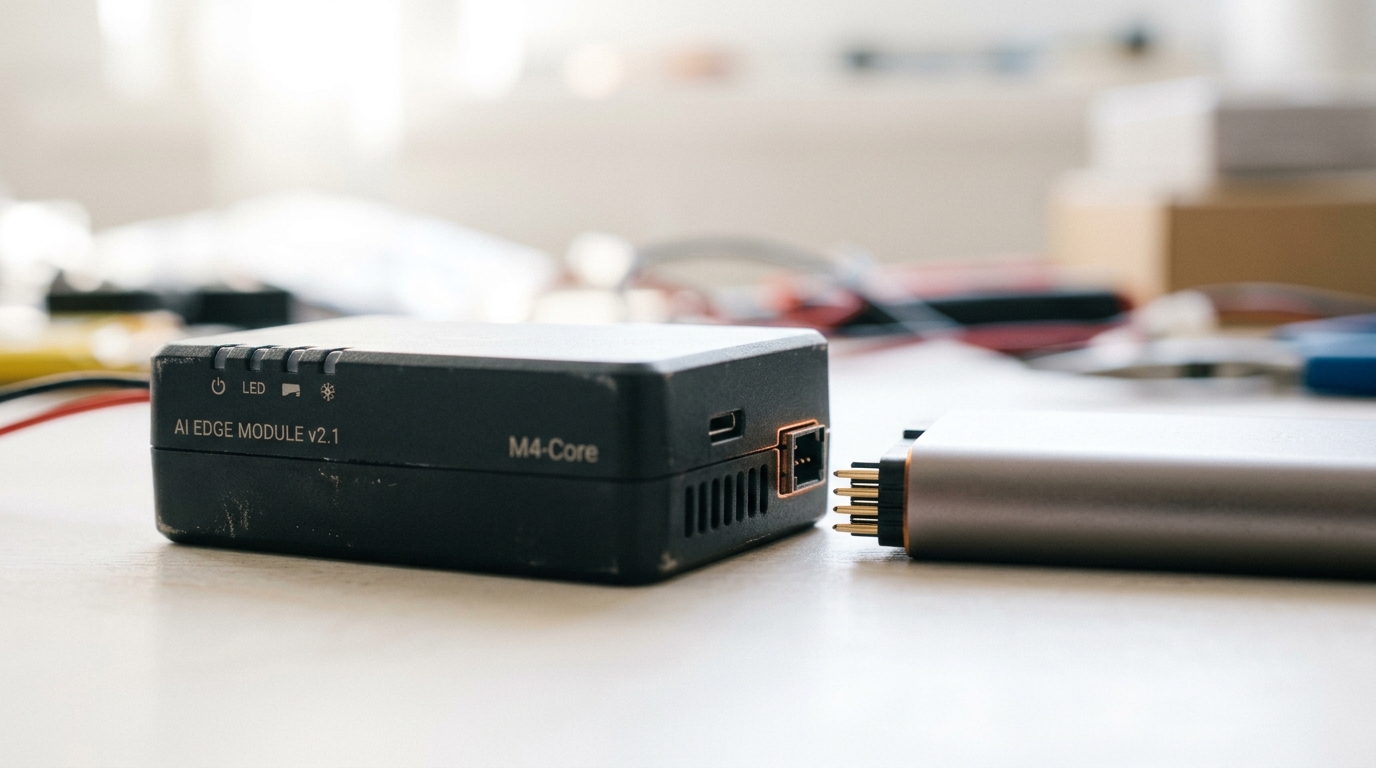
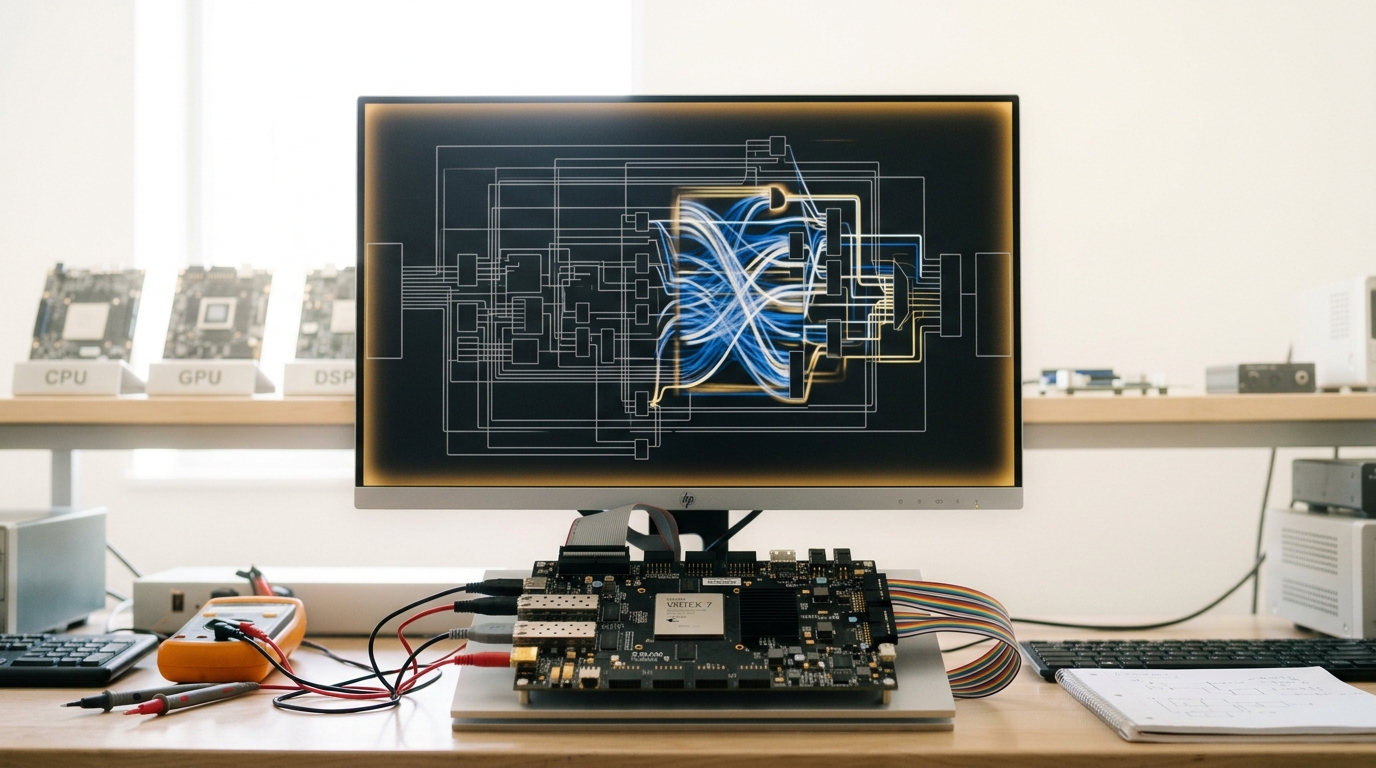
Axelera AI focuses on edge AI inference silicon — placing it, in terms of market segment, closer to this cohort’s SiMa.ai briefing than to the datacenter-scale accelerators dominating most of this cohort’s coverage. That positioning is itself a reasonable strategic choice for a European entrant: rather than attempting to compete directly against Nvidia and the well-funded US datacenter-accelerator startup cluster on their own turf, Axelera targets a market segment where proximity to European industrial, automotive, and manufacturing customers — sectors where Europe retains genuine strength — offers a more plausible path to a defensible customer base [2].
Why the design gap exists in the first place
Europe’s near-absence from AI chip design, despite the continent’s genuine strengths in lithography equipment, automotive electronics, and industrial technology, reflects a combination of factors this briefing can identify without claiming to fully explain: less concentrated venture capital available for capital-intensive semiconductor design bets compared to the US market, a smaller domestic hyperscaler and cloud-computing sector to serve as an anchor customer base the way Amazon, Microsoft, and Google do for several US-based custom-silicon efforts covered elsewhere in this cohort, and a historical industrial specialization in equipment and automotive semiconductors — covered in this cohort’s Track K — rather than AI-specific accelerator design.
What a single startup can realistically achieve against that gap
One company, however capable, cannot single-handedly close a continental-scale absence in chip design capacity and ecosystem depth. Axelera AI’s realistic contribution is narrower and still meaningful: establishing a credible proof point that European AI accelerator design is viable at all, potentially drawing further investment and talent into the space if the company succeeds commercially. Industry rankings place Axelera among the startups worth watching specifically for this reason — not because it is likely to challenge Nvidia’s scale directly, but because its success or failure carries signal value for whether Europe’s chip-design gap is a temporary, closeable condition or a more structural, durable one [3].
Why this matters for the rest of the world, not just Europe
A global AI accelerator market with credible design capability concentrated almost entirely outside Europe means European industrial and automotive customers — sectors that will need enormous amounts of edge and embedded AI inference over the coming decade — depend on imported silicon for a strategically important technology layer, similar in kind to the memory-supply dependency this cohort’s Micron briefing describes for the United States. Whether that dependency resolves through companies like Axelera AI, through European arms of foreign companies, or remains a structural feature of the market is one of the more genuinely open geographic questions this entire cohort raises.
The policy dimension this briefing doesn’t fully resolve
The European Union has, in recent years, pursued its own semiconductor policy initiatives aimed at strengthening domestic chip capability, largely modeled on the same competitive pressures that produced the US CHIPS Act and comparable programs in Japan and elsewhere covered throughout this cohort. Whether that policy environment provides enough concrete support — funding, procurement preference, regulatory clarity — to meaningfully accelerate companies like Axelera AI’s growth, or whether it remains more aspirational than operationally significant, is a genuinely open question this briefing cannot resolve without more detailed policy-specific research than its scope covers. What is clear from the company landscape alone is that the private-sector effort remains thin relative to the strategic stakes involved, regardless of how that policy question is ultimately answered.