The fast version
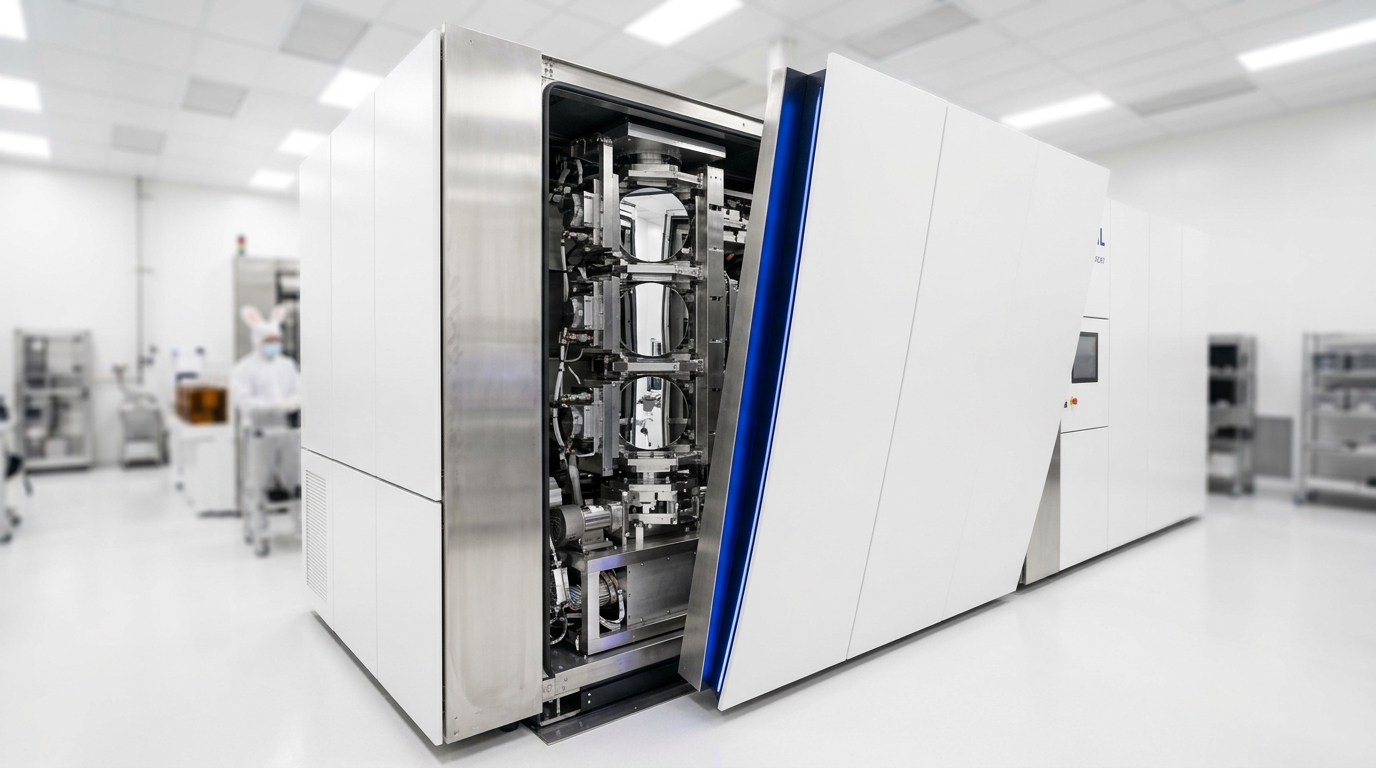
Every leading-edge chip covered anywhere in this cohort — every Nvidia GPU, every TSMC wafer, every accelerator from Broadcom, Marvell, or any of the dozens of other companies profiled — was patterned using a machine only one company on Earth can build: ASML, a Dutch company that is the world’s sole supplier of extreme ultraviolet (EUV) lithography systems [1].
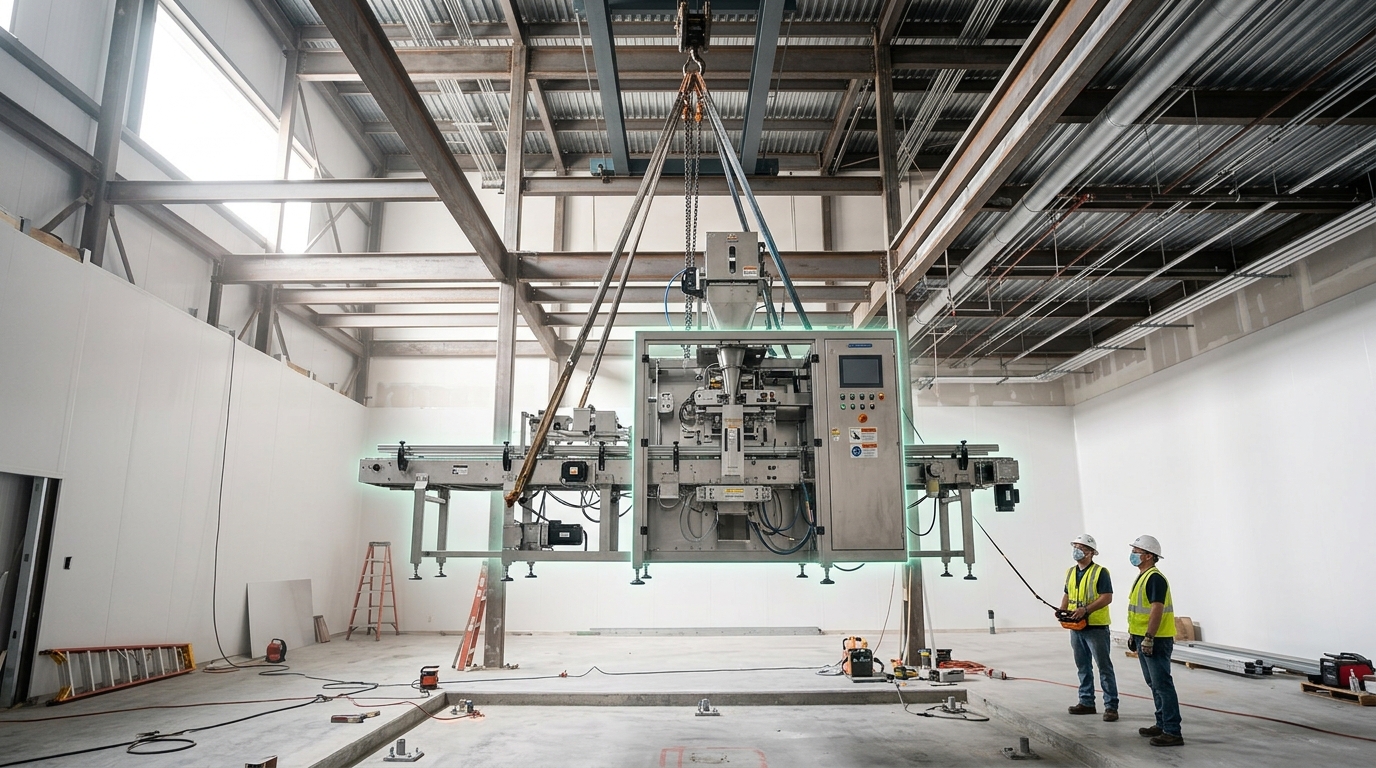
Why there’s no second supplier
EUV lithography requires light at a wavelength so extreme that essentially no material naturally reflects it well; the mirrors inside an EUV scanner are among the most precisely engineered optical components ever mass-produced, and the light source itself requires vaporizing microscopic tin droplets with a laser thousands of times per second. ASML’s system depends on an equally concentrated supply chain beneath it — Zeiss for the optics, Cymer (an ASML subsidiary) for the light source — meaning the barrier to a competitor isn’t one hard problem but an entire stack of world-first engineering achievements, accumulated over more than a decade, that no other company has replicated.
Proof of demand: one customer’s $8 billion vote
SK hynix, covered in this cohort’s memory-track briefings as the dominant HBM4 supplier, committed $8 billion in March 2026 specifically toward future EUV-based production capacity [2]. That is one company’s single investment in one supplier’s tools — a scale of customer commitment that would be extraordinary in almost any other equipment market, and is simply how the leading edge of this industry operates when there is only one seller.
What this means for the rest of this cohort
Every fab briefing in this cohort’s foundry track — TSMC, Samsung, Intel, even SMIC’s account of being blocked from EUV access entirely — is downstream of this one fact. A country or company’s access to ASML’s tools is close to a binary gate on whether it can compete at the leading edge at all, which is exactly why export controls on EUV tools are the single most consequential mechanism in this cohort’s China-and-geopolitics briefings. ASML’s order book, reported as surging through 2026, is worth reading as a leading indicator for the entire leading-edge chip industry’s near-term capacity, months before any of its customers’ own capacity announcements land [3].
Why every fab’s roadmap is quietly ASML’s roadmap too
TSMC’s N2 ramp, described in this cohort’s companion briefing as running across five fab phases in its first year at an unprecedented pace, is only possible because ASML could deliver enough EUV scanners on a matching schedule [4]. That dependency runs in both directions: TSMC’s aggressive capacity expansion is itself part of what justifies ASML’s own continued capital investment in scanner production capacity. A slowdown at either company would show up almost immediately in the other’s numbers, which is why ASML’s quarterly bookings and TSMC’s quarterly capex guidance are worth reading together rather than as two unrelated data points.
The single-sentence version worth remembering
If you take one fact from this briefing: no company on Earth besides ASML can currently build the machine that patterns a leading-edge chip, every other company profiled anywhere in this cohort’s foundry, accelerator, and memory tracks depends on that one fact being true, and the moment it stops being true — through a successful competitor emerging or ASML itself faltering — would be one of the most consequential events the entire semiconductor industry could experience. Nothing in the available 2026 reporting suggests either outcome is imminent, but the sheer degree of dependency is worth sitting with plainly rather than treating as background trivia. It is, in a very literal sense, the single most concentrated point of dependency in this entire cohort’s hundred-article survey of the semiconductor industry.
Why this briefing stays deliberately short
Given how much rides on this one fact, it might seem to deserve a longer treatment than this fast-reading piece provides. The deliberate choice here is the opposite: the core fact — one company, no substitute, every leading-edge chip in the world downstream of it — is simple enough to state clearly and does not need padding to land. The genuine complexity, in High-NA EUV’s specific technical roadmap, ASML’s own capital spending decisions, and the export-control policy built around exactly this dependency, belongs in the deeper companion pieces this cohort provides for readers who want it, not folded into what is meant to be the two-minute version of the story.
What to read next
For the deeper technical story — what ASML’s next-generation High-NA EUV platform actually changes, and why over 300,000 wafers have already been processed on it — see this cohort’s companion briefing, “ASML High-NA EUV and the Next Decade of Shrinking.”