Fitness Landscapes and the Limits of the Metaphor
The adaptive landscape is two things at once: a rigorous map from genotypes to fitness, and a picture of hills and valleys that quietly imports assumptions the mathematics never made.


Event attribution answers a narrower question than the one usually asked of it. The counterfactual is modelled rather than remembered, the risk ratio is a population quantity, and confidence collapses at the convective scale.
A technique survives only if it is copied faithfully enough to be improved upon. Thatching, transmission-chain experiments and the unsettled population-size debate show why craft skill has always travelled through people rather than pages.
A language model's mistakes are cheap because its environment is a buffer it owns. A robot's environment is matter with state it did not write and cannot roll back, and every hard part of embodied AI follows from that.
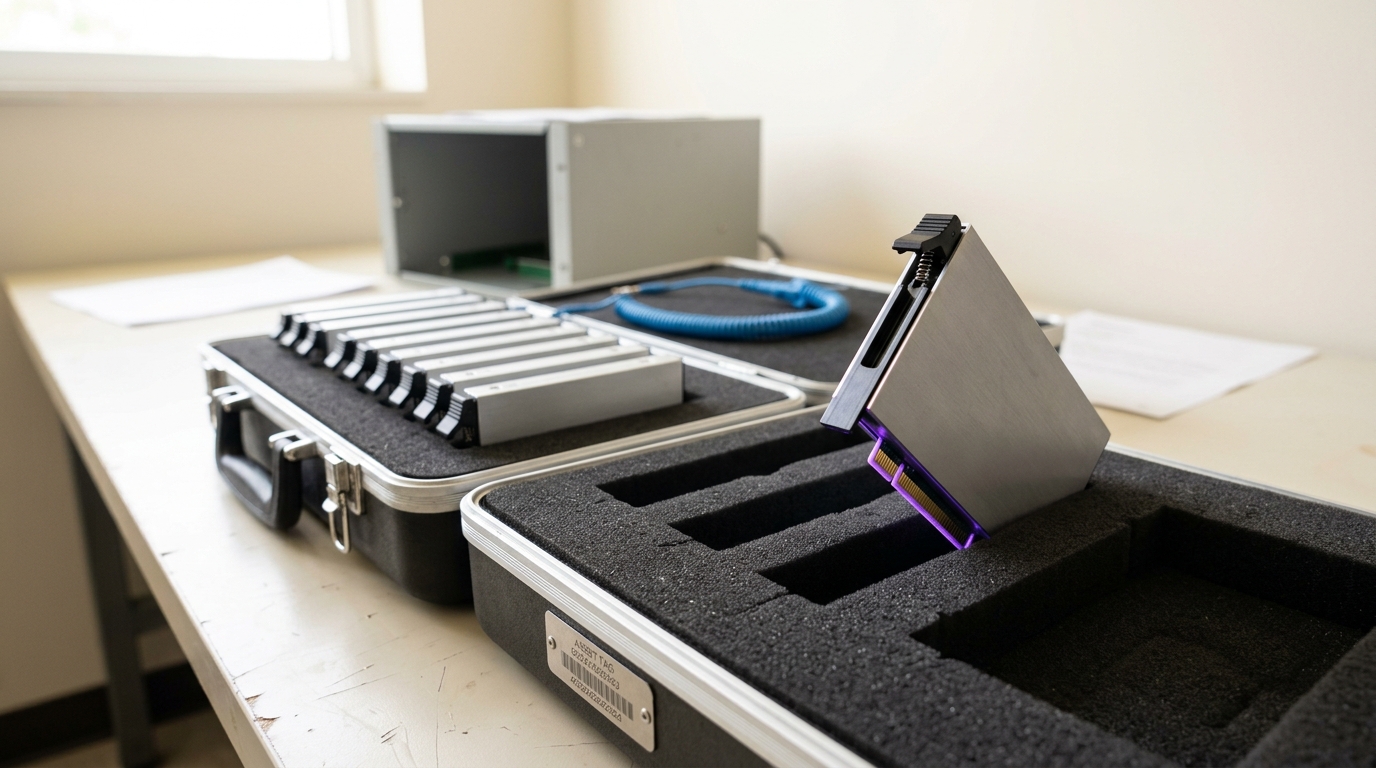
Performance now moves on the assembly rather than the transistor. Once a die is cut into pieces, the interface between them becomes the design, and the cost of a bit is set largely by how far that bit has to travel.
Reinforcement learning from human feedback does not install correctness. It fits a scalar model of what raters approved of and then pushes a policy up that surface — which is a different thing, in identifiable places.
Openness in model releases is not a binary and never was. It is a bundle of separately granted permissions over five separable artefacts, and the word on the announcement page rarely tells you which ones you hold.
Every AI rule must first name something: a model, a role, a use case, a compute number, or a running service. Each choice buys enforceability somewhere and loses it somewhere else, and the losses are where the arguments now are.
Nobody observes a particle. What exists is ionisation, deposited energy, arrival times and penetration depth, and a long chain of selection, modelling and correction that turns those into a published number.
Taking a mechanism apart tells you what each part was holding — but only once the part is off, and only for the mechanism on the bench. What interpretability has established, and what it has not.