Selection, Not Generation, Explains Knowledge
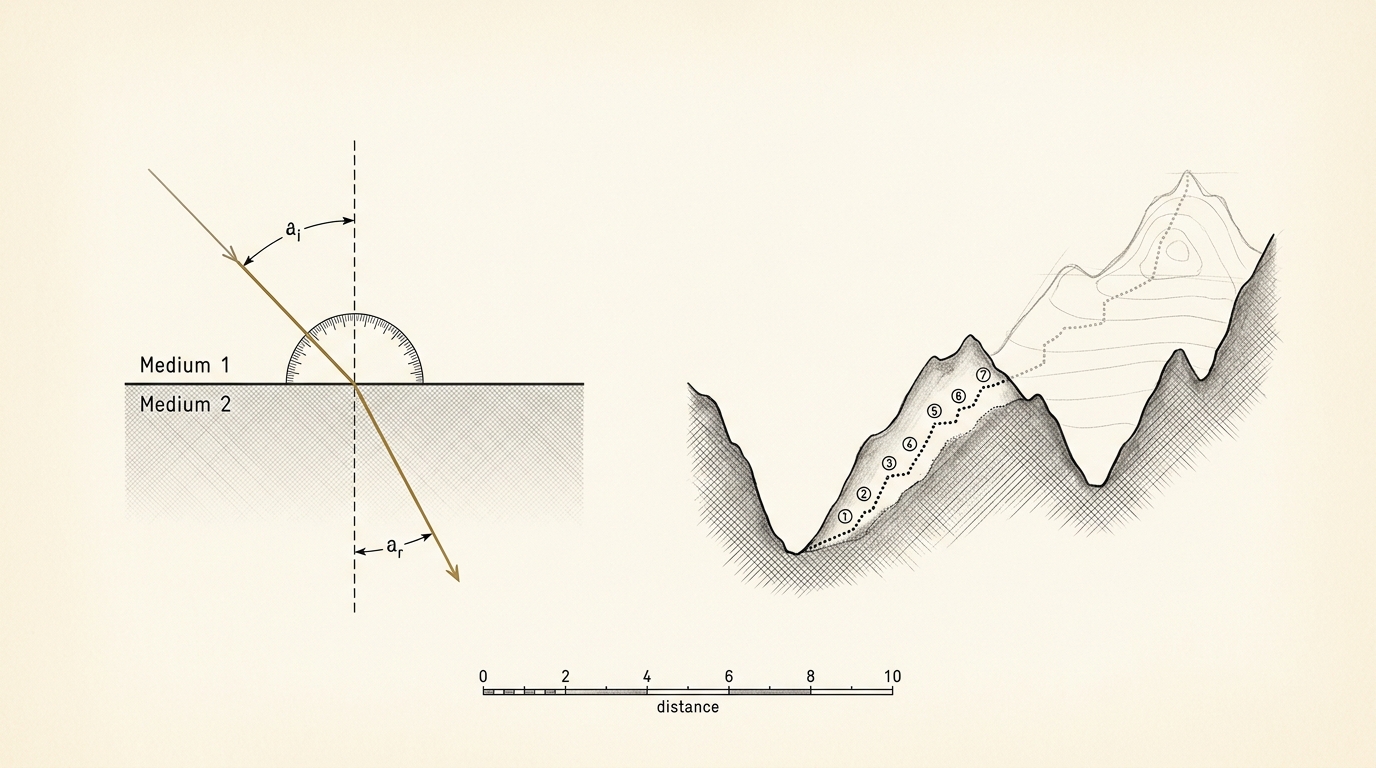
Donald Campbell’s 1960 paper in Psychological Review proposed that every genuine gain in fitted knowledge — a species’s adaptation, a rat’s learned route through a maze, a scientist’s new theory — requires the same two-stage process: variation produced without foreknowledge of which variant will succeed, followed by selection that retains only what survives contact with a criterion the variant did not anticipate [1]. Karl Popper reached a structurally identical position from philosophy of science rather than psychology, and gave it a sharper edge. In “Epistemology Without a Knowing Subject,” a 1967 paper later folded into Objective Knowledge: An Evolutionary Approach [3], Popper wrote: “Scientists try to eliminate their false theories, they try to let them die in their stead. The believer — whether animal or man — perishes with his false beliefs” [4]. An organism that guesses wrong about a predator does not get a second attempt at that guess; a scientist who guesses wrong about a theory can watch the guess fail on paper and try again the same afternoon. That difference in what dies is the entire case for calling scientific method an improvement on natural selection rather than merely an analogy to it.
This briefing tests that claim against one documented case rather than treating it as a slogan. Albert Einstein described his own working method often enough, and precisely enough, that his gedanken experiments can be checked against Campbell’s two stages directly: cheap, unforesighted variation in imagination, then selection so harsh that most of what he generated never survived to publication. The claim is narrower than “Einstein’s genius was evolutionary.” It is that a specific, well-documented method — building a scenario in imagination and testing it against a small number of principles held fixed — behaves like blind variation and selective retention when the two stages are examined separately, and that the places where it does not behave that way are exactly the places evolutionary epistemology predicts an intelligent variator should differ from a genetic one.
“Blind” Is a Technical Claim, Not an Insult
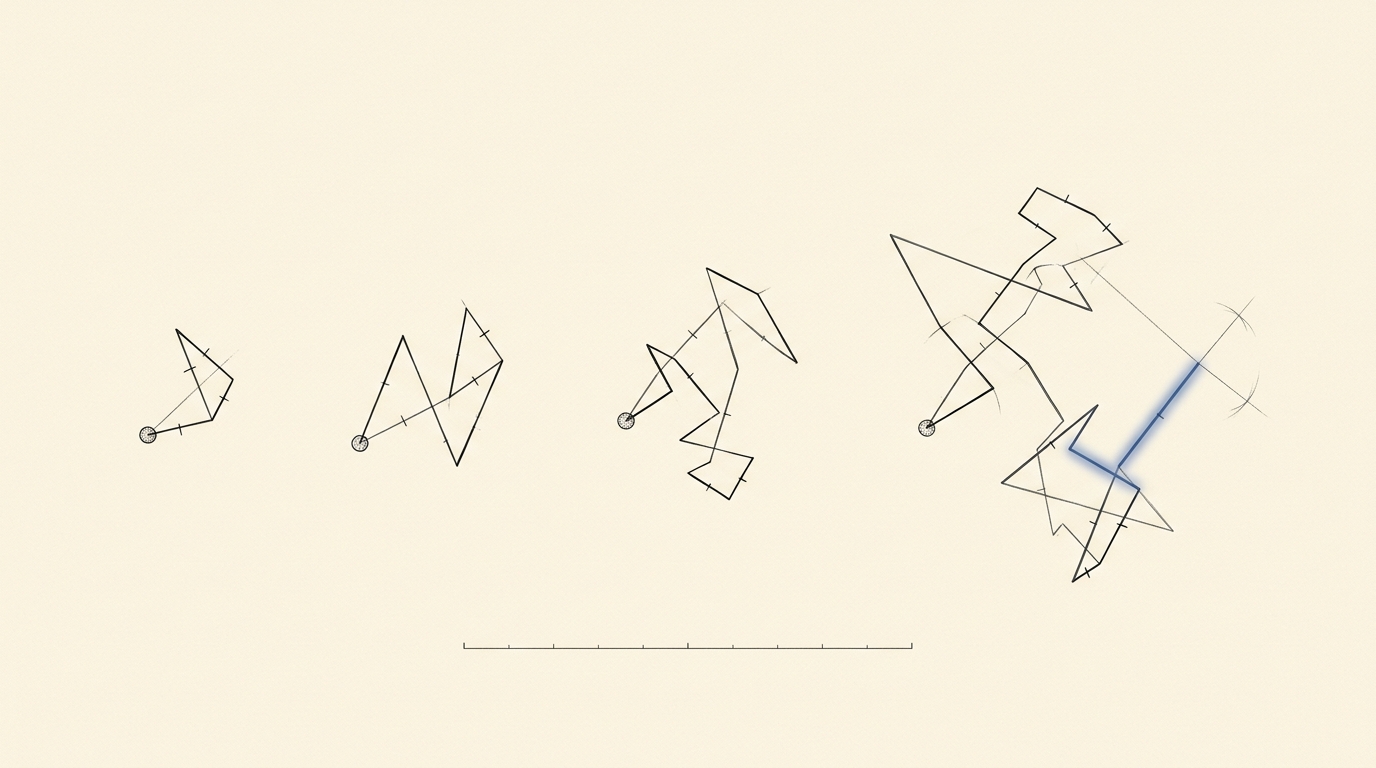
Campbell’s use of “blind” caused persistent trouble because readers heard “random,” and Campbell had not quite meant that. Dean Keith Simonton, the psychologist who has done the most sustained work extending Campbell’s model, notes that Campbell “must have eventually realized that the term ‘blind’ was problematic, for he much later tried to substitute the adjective ‘unjustified’ to describe the variations required” [2]. In Simonton’s own formalization, blindness is a matter of degree, set by a parameter for the creator’s prior knowledge of a variant’s eventual utility: a fully sighted variation is one where that knowledge approaches certainty before the variation is even produced, and a fully blind one is where it approaches zero [2]. Nothing about that definition requires a coin flip. It requires only that the trial not already be a correlated reflection of the selection criterion that will later judge it — that the mind not have already done, silently, the work the test is supposed to do.
The standard objection to this picture is that human creative search plainly is not blind in even that weaker sense: experts search narrower, better-aimed regions of a problem space than novices do, and expertise is exactly the kind of prior correlation Campbell’s definition excludes. Liane Gabora has pressed this point most directly, arguing that “creative minds work not by generating many possibilities blindly but by generating few possibilities intelligently, such that they are more likely than chance to be adaptive” [1]. This is a real tension in the model, not a misreading of it, and it resurfaces below in Einstein’s own case rather than being resolved away.
Four Documented Instances, Not a Legend
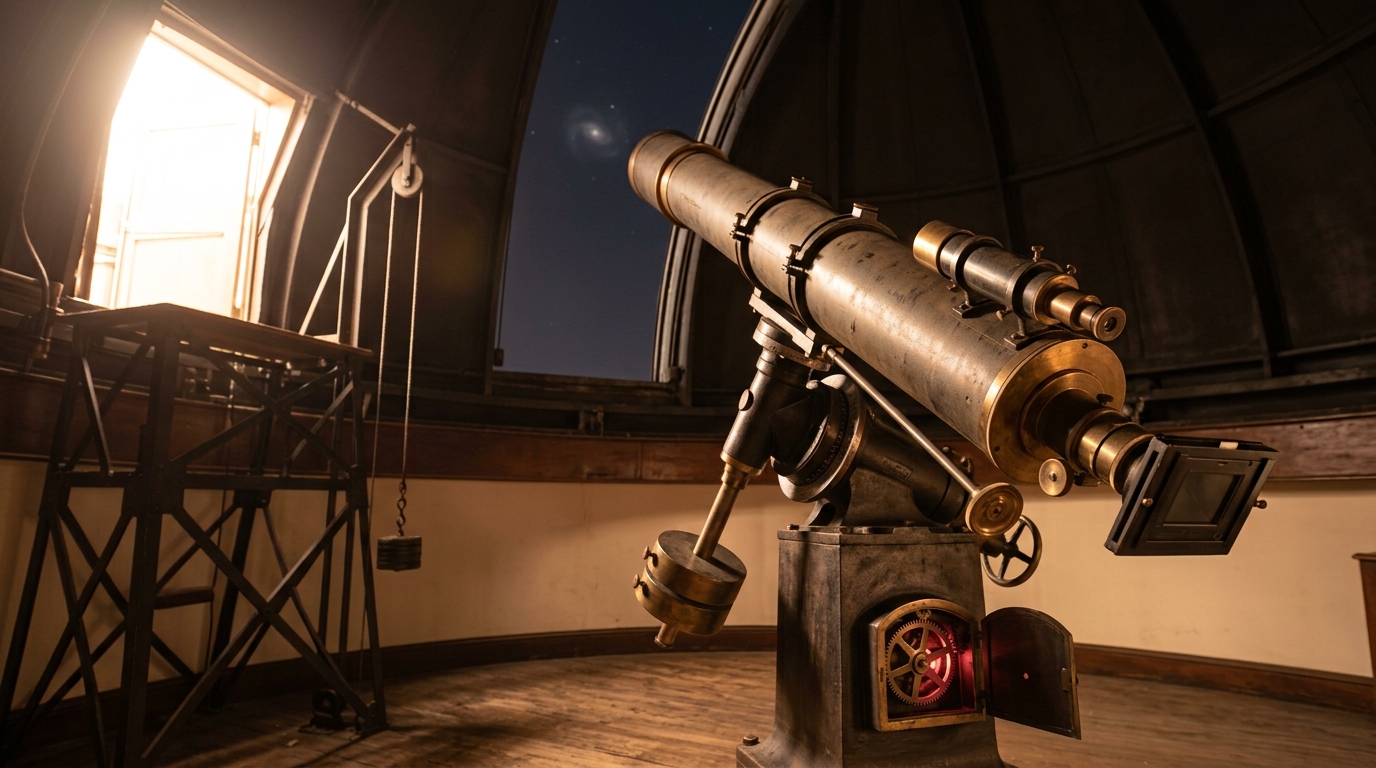
Einstein’s Autobiographical Notes, first published as “Notes for an Autobiography” in 1949, describe a specific paradox he says he first hit upon “at the age of sixteen”: “if I pursue a beam of light with the velocity c … I should observe such a beam of light as a spatially oscillatory electromagnetic field at rest. However, there seems to be no such thing, whether on the basis of experience or according to Maxwell’s equations” [5]. He is explicit that this adolescent scenario was not decoration: “One sees that in this paradox the germ of the special relativity theory is already contained,” reached, by his own account, only “after ten years of reflection” [5]. The variation cost him nothing but attention; a decade of selection against Maxwell’s equations and ordinary experience is what turned it into a theory.

The second instance carries a provenance question the first does not, and it deserves care rather than a clean quotation. The phrase “the happiest thought of my life” describing the insight that a freely falling observer feels no gravity does not come from the 1907 paper in which Einstein first worked the idea out; it comes from an unpublished manuscript of around 1920, held at the Morgan Library and catalogued as Document 31 in Volume 7 of Einstein’s collected papers, drafted for Nature but never published there [8]. Its own text reads: “At that moment I got the happiest thought of my life … Because for an observer in free-fall from the roof of a house there is during the fall — at least in his immediate vicinity — no gravitational field” [8]. When Einstein retold the same episode in person at Kyoto in December 1922, in a lecture preserved only through the physicist Jun Ishiwara’s notes and later translated for Physics Today, the label is absent but the scenario is identical: “I was sitting on a chair in my patent office in Bern. Suddenly a thought struck me: If a man falls freely, he would not feel his weight. I was taken aback. This simple thought experiment made a deep impression on me” [7]. The idea is attested twice, thirteen years apart, in Einstein’s own words; the famous label attaches to only one of those tellings.
The third instance is less a single experiment than a working method Einstein used repeatedly in the popular exposition he wrote to explain special and general relativity to a lay audience. The relativity of simultaneity is argued entirely through an embankment, a train, and two lightning strokes: “Events which are simultaneous with reference to the embankment are not simultaneous with respect to the train, and vice versa” [6]. The equivalence principle is argued through a sealed chest accelerated by a rope in empty space, whose occupant “will thus come to the conclusion that he and the chest are … in a gravitational field” indistinguishable from an ordinary one [6]. Both are fully specified counterfactual scenarios built to isolate one physical assumption at a time, and both cost Einstein nothing to run beyond the writing.
The fourth instance is the one selection treated most roughly. In 1935, Einstein, Boris Podolsky and Nathan Rosen published a thought experiment designed to show quantum mechanics incomplete, arguing from a stated criterion — “if, without in any way disturbing a system, we can predict with certainty … the value of a physical quantity, then there exists an element of reality corresponding to that quantity” — to the conclusion that quantum mechanics must be missing some such elements [9]. John Bell’s 1964 theorem showed that any theory completing quantum mechanics along EPR’s own lines, if it also respected locality, would have to obey inequalities that quantum mechanics itself violates in correlated-particle experiments [10]. Laboratory tests beginning in the 1970s found the predicted violations, and the 2022 Nobel Prize in Physics went to Alain Aspect, John Clauser and Anton Zeilinger “for experiments with entangled photons, establishing the violation of Bell inequalities and pioneering quantum information science” [11]. The thought experiment was built to kill a theory; the trial it set up ended up certifying, more precisely than before, the very entanglement it was designed to rule out. Selection did not confirm the hypothesis EPR proposed. It used the apparatus EPR proposed to confirm something else.

Imagination Is Cheap; Consistency Was Not
The reason gedanken experiments are an efficient habitat for blind variation is ordinary and almost accounting-like: they have no laboratory mortality. A biological mutation that fails costs an organism; a bred variety that fails costs a season; a wet-lab trial that fails costs reagents and months. A thought experiment that fails costs the time it takes to notice the contradiction, which for a trained physicist working from memorized principles can be seconds. Einstein could generate dozens of candidate scenarios about a falling body, a moving train, or a pursued light beam in a single sitting, because none of them required building anything.
What makes Einstein’s case informative rather than merely a demonstration of imagination’s low cost is that his selection was unusually harsh precisely where his variation was cheapest. He held two or three principles — the invariance of light’s speed, the equivalence of gravitational and inertial mass, later a demand for general covariance — fixed as non-negotiable selectors, and any scenario that violated one was killed regardless of how elegant it otherwise was. The clearest documented case of this ruthlessness is not a triumph but a multi-year failure he later admitted to in public. Between 1912 and 1915 Einstein worked from field equations now called the “Entwurf” theory, built with his friend Marcel Grossmann, which abandoned full general covariance for reasons he judged compelling at the time. In November 1915, reporting his new field equations to the Prussian Academy, he wrote of the theory he was discarding: “For these reasons I completely lost confidence in the field equations I had constructed and looked for a way that would constrain the possibilities in a natural manner. I was thus led back to the demand of a more general covariance of the field equations, which I had abandoned with a heavy heart three years ago when I was collaborating with my friend Grossmann” [12]. Historians Michel Janssen and Jürgen Renn have shown, from Einstein’s working notebooks, that the resources needed to find the correct equations were available to him as early as 1912 and were set aside, not missed [12]. That is Popper’s formula enacted by its own author: Einstein let three years of his own theory die in his stead, in public, rather than let a violated principle survive inside a theory bearing his name.

The Analogy Has Exact Parts and a Seam
Where the mapping is exact, it is worth stating plainly rather than hedging. Imagination supplies variation at negligible cost, the way mutation supplies variation to a population at the cost of some failed organisms; consistency checks against fixed principles, and eventually against experiment, supply selection; publication and subsequent confirmation supply retention, the analogue of a trait spreading through a population. Each of the four instances above shows a version generated cheaply and then discarded or confirmed by a criterion the generating act itself could not satisfy in advance.
Where the mapping breaks is exactly where Gabora’s objection above lands, and it should not be argued away. Einstein’s variation was saturated with prior knowledge: Maxwell’s equations, Lorentz’s 1895 monograph on electrodynamics, and — once Marcel Grossmann pointed him to it — Riemannian geometry, all read and absorbed years before the relevant gedanken experiment ran [7], narrowed which scenarios were even worth constructing. That is directed search by trained heuristics, not the unjustified generation Campbell’s strict definition calls for. Campbell himself effectively conceded the point by trying to replace “blind” with “unjustified” and by letting the prior-knowledge parameter float above zero rather than fixing it there as biological mutation requires [2]. What survives the concession is narrower than the original claim but still substantive: even heavily sighted variation remains far less constrained, at the moment of its production, than the selection immediately applied to it. Einstein could imagine a falling man in a windowless box in under a minute; establishing that the same equivalence held to the precision his later field equations demanded took him the better part of a decade. The asymmetry between how cheaply a scenario is produced and how expensively it is tested is what the evolutionary analogy actually needs, and that asymmetry holds even where the variation itself is not blind in Campbell’s original, stricter sense.
The Rare Skill Is Killing Your Own Ideas
A thought experiment is evolution’s cheapest possible habitat: no organism dies, no reagent is spent, and a wrong variant can be generated and discarded in the space of one afternoon’s reasoning. Einstein used that habitat more than most physicists of his generation, but the record does not show him generating uniquely many candidate scenarios — his own accounts describe a handful of specific, remembered ones, not a flood. What the record shows instead is a selector unwilling to let a favored variant survive a violated principle, applied for years against work he had already published under his own name. Popper’s line about theories dying in our stead describes a convenience evolution never offers an organism. Einstein’s Entwurf years show what it costs to actually use that convenience rather than merely possess it: the quality of a mind measured less by how many ideas it can produce than by how few of its own it is willing to protect.