A clean, concrete example of the AI boom’s reach
Most of this cohort’s coverage of the AI boom’s effects concerns companies directly in the accelerator or memory supply chain. SUMCO, one of the two Japanese companies covered in this cohort’s companion briefing as supplying more than half the world’s silicon wafers, offers a cleaner, more surprising example: a company several steps removed from any GPU or accelerator, visibly reallocating its own capital specifically because of AI-driven demand.
The two concrete decisions
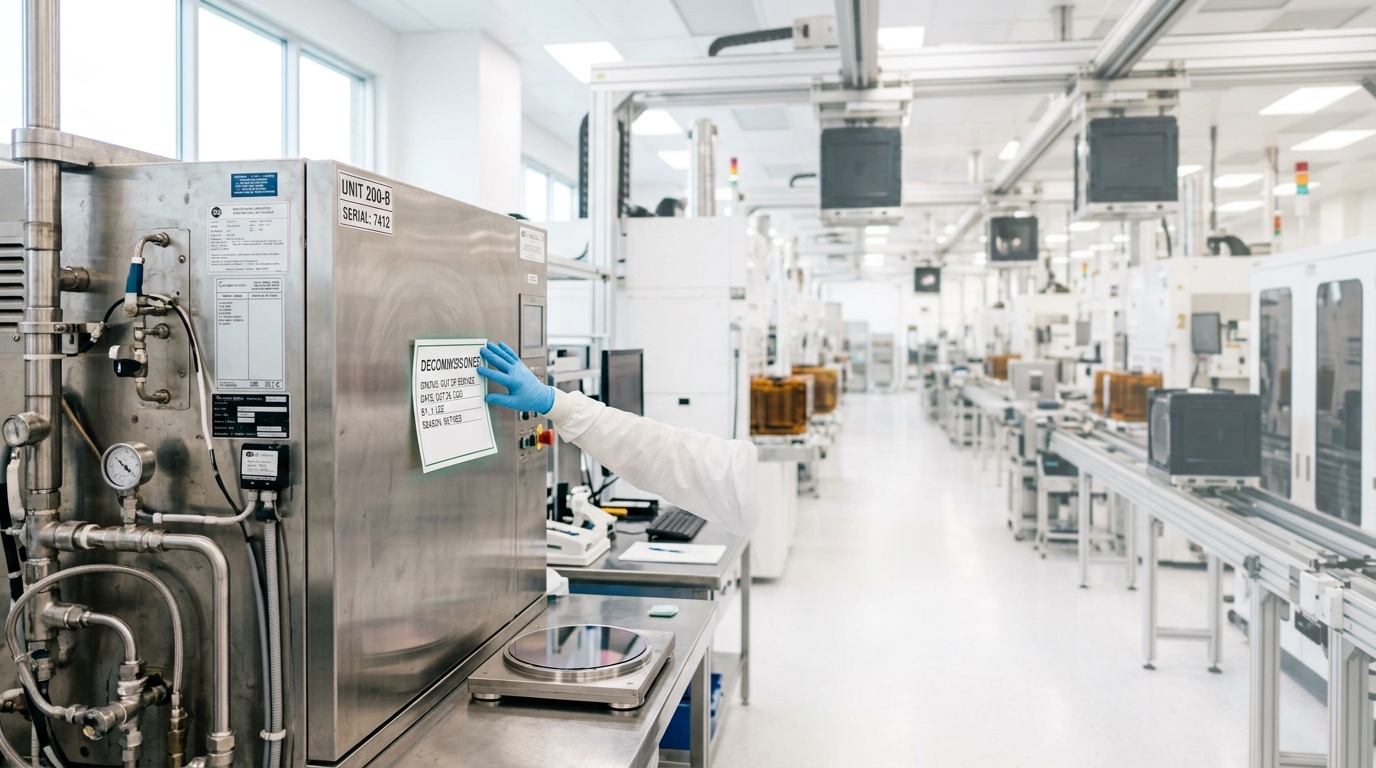
SUMCO announced it will terminate 200mm wafer production at its Miyazaki plant by late 2026, explicitly to shift focus toward high-end, AI-grade 300mm wafer output [1]. Separately, the company shelved a planned greenfield wafer plant in Saga, Japan, choosing to prioritize AI-grade capacity expansion at existing sites over building new capacity for the broader, lower-margin wafer market [1]. Both decisions point the same direction: capital and production capacity moving toward the specific wafer specifications AI chips require, away from more general-purpose production.
Why this decision is a real cost, not a costless pivot
Ending 200mm production has real consequences beyond SUMCO’s own balance sheet: 200mm wafers still serve real customers, particularly in the mature-node and specialty markets covered in this cohort’s GlobalFoundries and UMC briefings — automotive sensors, power management chips, and other applications that don’t need or benefit from the newest process nodes. SUMCO’s decision to deprioritize that segment in favor of AI-grade capacity means some portion of that mature-node demand will need to be served by other suppliers, or will face tighter supply than it otherwise would have — a ripple effect of the AI boom reaching into corners of the chip market with no direct AI connection at all.
Why the lead time matters more than the decision itself
New wafer production line capacity takes 18 to 24 months to bring online from investment decision to output [3]. That lead time is long enough that SUMCO’s 2026 capacity decisions will not visibly affect the market’s actual wafer supply until well into 2027 or later — meaning today’s wafer capacity tightness, documented across this cohort’s memory and foundry briefings, was effectively locked in by investment decisions made one to two years ago, and today’s decisions won’t relieve current tightness; they will only shape supply two years from now. Any reader trying to forecast wafer availability in 2028 should be watching capacity decisions being made right now, not waiting for today’s shortage to visibly ease on its own.
The broader materials-market context
SUMCO’s strategic reallocation sits inside a wafer-fab materials market projected for continued growth through the rest of the decade, with AI-grade demand increasingly the dominant driver of that growth rather than the broader semiconductor market’s more general expansion [4]. Combined with Shin-Etsu’s comparable position, covered in this cohort’s companion briefing, SUMCO’s specific 2026 decisions are a leading indicator worth tracking for the rest of the wafer supply chain: when the two companies that together supply over half the world’s silicon start reallocating capacity this visibly toward one specific end market, it is strong evidence of just how thoroughly the AI boom has reshaped demand at even the most foundational layer of the entire chip industry [2].
Why SUMCO’s choice is a bet, not a certainty
Committing capacity toward AI-grade wafers assumes the current demand pattern holds for long enough to justify the capital involved — a real bet, not a risk-free reallocation. This cohort’s markets-and-valuation track documents genuine, sourced debate about whether the broader AI infrastructure buildout is sustainable at its current pace or due for a correction. If that demand moderates meaningfully before SUMCO’s reallocated capacity is fully utilized, the company will have walked away from steady mature-node wafer revenue in favor of a more AI-concentrated business at exactly the wrong moment. SUMCO’s leadership is, in effect, making the same directional bet as most of the companies covered throughout this cohort’s foundry and memory tracks: that the AI demand curve is structural rather than a temporary spike.
The signal this sends to the rest of the materials supply chain
SUMCO is not making this decision in isolation — materials suppliers up and down the chain, including the specialty gas, photoresist, and substrate companies covered in this cohort’s broader equipment-and-materials research, watch decisions like this one closely as a signal about where to direct their own capital. A visible, public reallocation by a company as foundational as SUMCO tends to reinforce similar decisions elsewhere in the supply chain, potentially amplifying the same AI-driven capacity shift this briefing documents at SUMCO specifically into a broader, industry-wide pattern.