The fact worth knowing quickly
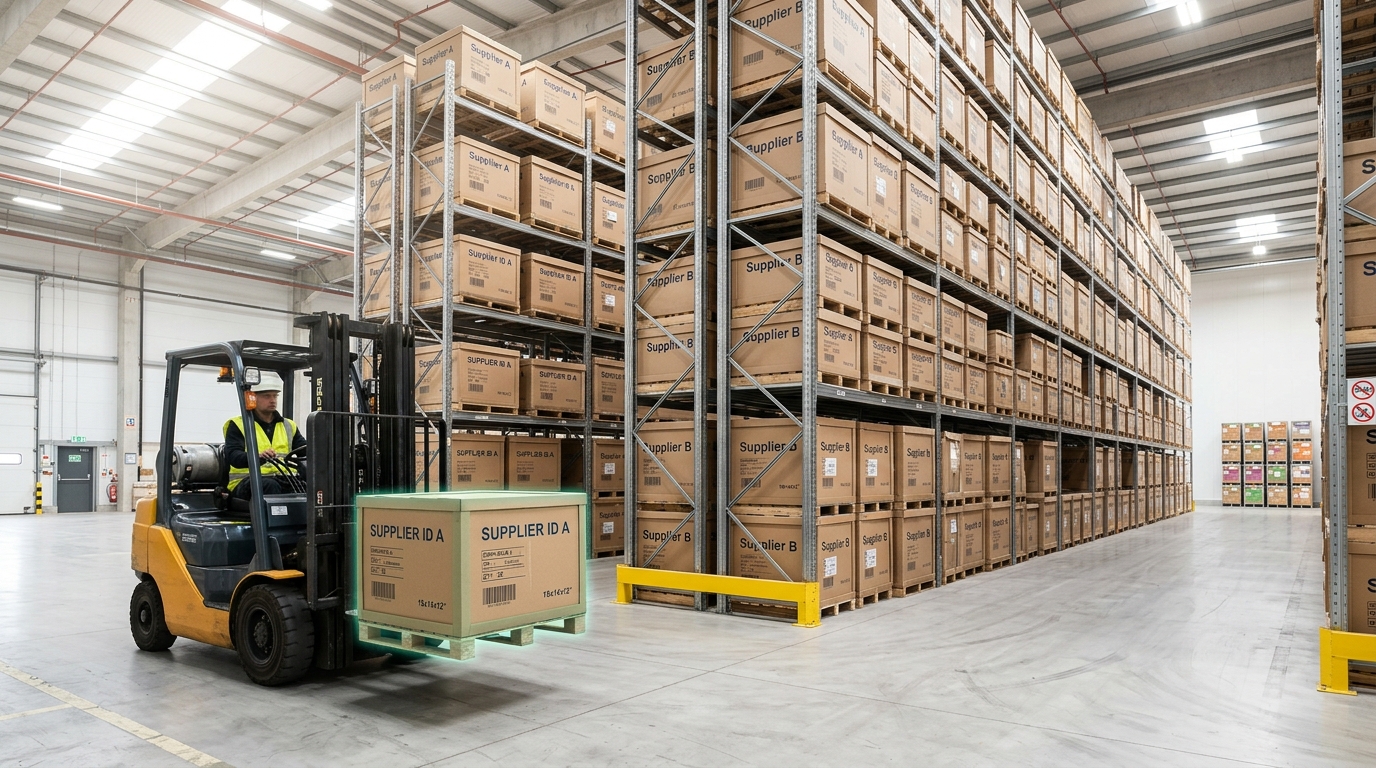
Every chip covered anywhere in this cohort — every Nvidia GPU, every TSMC-manufactured accelerator, every custom ASIC from Broadcom or Marvell — starts as a silicon wafer. The global silicon wafer industry is a highly consolidated oligopoly: the top five suppliers account for roughly 72.6% of the market, and just two of those five — Shin-Etsu and SUMCO, both Japanese companies — together hold roughly 53% of global silicon wafer production on their own [1].
Why almost nobody knows their names
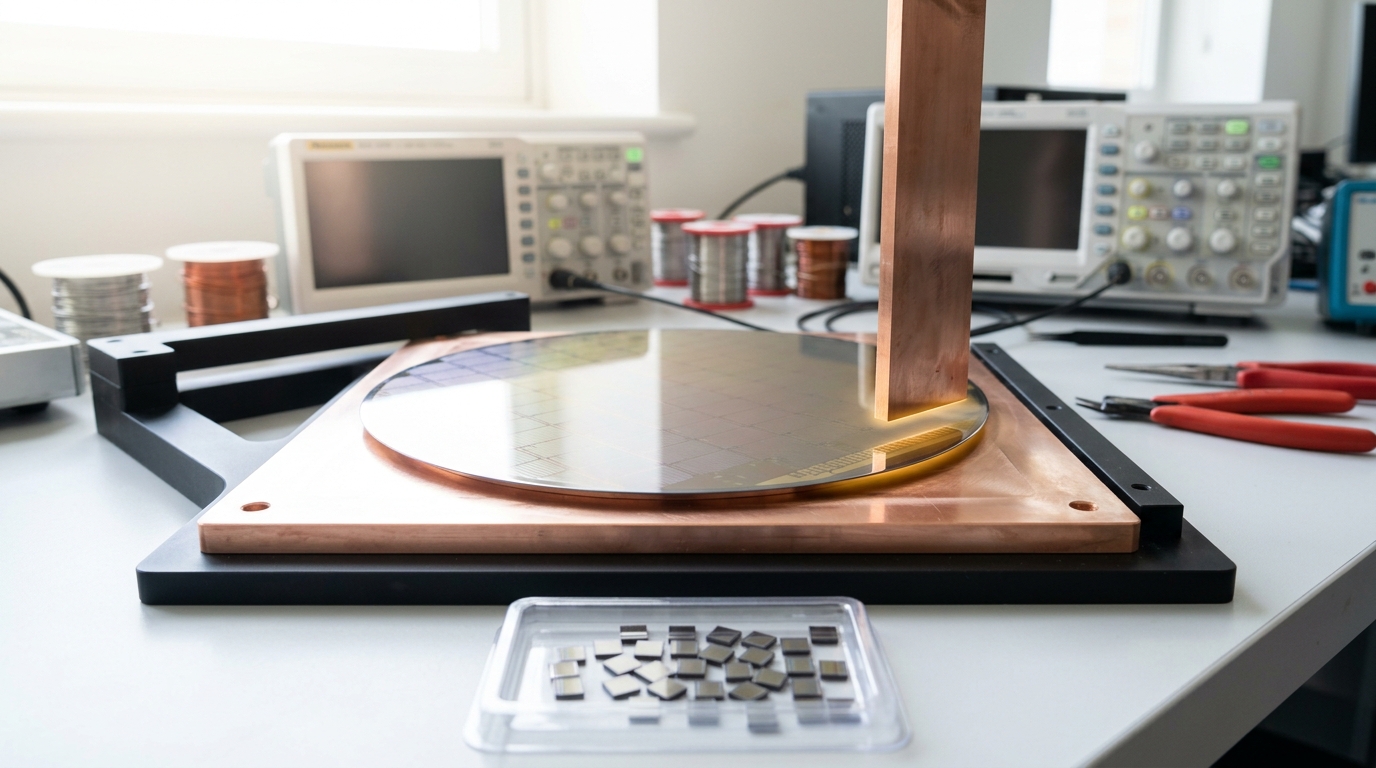
Neither Shin-Etsu nor SUMCO sells anything a consumer ever directly encounters — no chip carries their logo, no product box mentions them. Their entire business is the ultra-pure, precisely manufactured 300mm silicon substrate every other company in this cohort’s foundry and equipment tracks builds on top of. That combination — essential to literally everything, invisible to almost everyone — is a pattern this cohort has traced repeatedly across the equipment and materials layer: KLA’s inspection tools, Applied Materials’ deposition equipment, and now the literal raw material every one of those tools processes.
Rounding out the top five
The remaining top-five wafer suppliers — GlobalWafers, SK Siltron, and Siltronic — bring the top five’s combined share to roughly 72.6% of the global market [1]. That level of concentration in the industry’s most foundational raw material is worth comparing directly against ASML’s outright EUV monopoly, covered in this cohort’s companion briefing: wafers are not a single point of failure the way EUV lithography is, since multiple credible suppliers exist, but the concentration is still severe enough that a serious disruption at either Shin-Etsu or SUMCO alone would ripple through essentially the entire global chip supply chain simultaneously.
Why this matters for the AI boom specifically
Every gigawatt-scale accelerator deal, every HBM stack, every leading-edge logic die covered throughout this cohort’s other tracks ultimately traces back to wafer capacity from this small group of suppliers. Demand driven by AI, EVs, and IoT is described as making silicon wafer supply a critical bottleneck in its own right, with new production line lead times running 18 to 24 months — a supply-chain constraint this cohort’s companion briefing on SUMCO covers in more technical depth [4].
Why the concentration persists despite the obvious opportunity
Given how essential silicon wafers are and how profitable the leading suppliers evidently are, a reasonable question is why more companies haven’t entered the market to compete for a share of it. The answer is the same accumulated-expertise barrier this cohort documents across nearly every layer of the chip supply chain: producing ultra-pure, defect-free 300mm silicon crystal at the tolerances modern chips require depends on decades of accumulated crystal-growth and purification expertise that cannot be purchased or replicated quickly, similar in kind to the process-yield learning curve that protects TSMC’s foundry leadership and ASML’s lithography monopoly, both covered elsewhere in this cohort. A wafer looks like a simple, undifferentiated commodity from the outside; it is, in practice, one of the more quietly difficult products in the entire semiconductor supply chain to manufacture at the purity and consistency leading-edge chipmaking demands.
The single fact worth carrying forward
If this briefing leaves you with one number, make it this one: roughly half of the raw material behind every chip in this cohort’s entire hundred-article survey — every Nvidia GPU, every TSMC wafer, every HBM stack — passed through the hands of one of exactly two Japanese companies before any other name in this cohort ever touched it. That is a genuinely surprising fact for how little attention it receives, and it is exactly the kind of quietly foundational detail this cohort’s equipment-and-materials track exists to surface. Next time an accelerator announcement leads a headline, it’s worth remembering that somewhere upstream of it, months earlier and a continent away, a wafer from one of these two quiet, unfamiliar companies is what actually started the entire chain that made the announcement possible at all.
What to read next
For the deeper story on why wafer capacity can’t respond quickly to the current demand spike, and what SUMCO’s own strategic capacity decisions reveal about where the industry is headed, see this cohort’s companion briefing, “SUMCO and the 18-Month Wafer Lead Time.”