Paleoanthropology does not usually move by consensus. It moves by a preprint landing before the review is finished, a cave yielding one jaw that outweighs a decade of argument, or a sequencing method that turns a fragment nobody could previously use into a genome. Three such fractures are open right now, in 2026, and each is specific enough to bet on. This article states each bet as a scenario with a horizon, the assumptions it depends on, the signals that would confirm it, and — the part most forecasting skips — the finding that would prove it wrong.
None of what follows is a certainty dressed up as one. Fact, vendor-style claim, analysis, scenario, and prediction are kept in separate lanes throughout, because in this field the distance between “a team announced” and “the field accepts” is often years wide, and collapsing that distance is the single most common way paleoanthropology reporting misleads.
Where the field actually stands, verified
Three background facts anchor everything below.
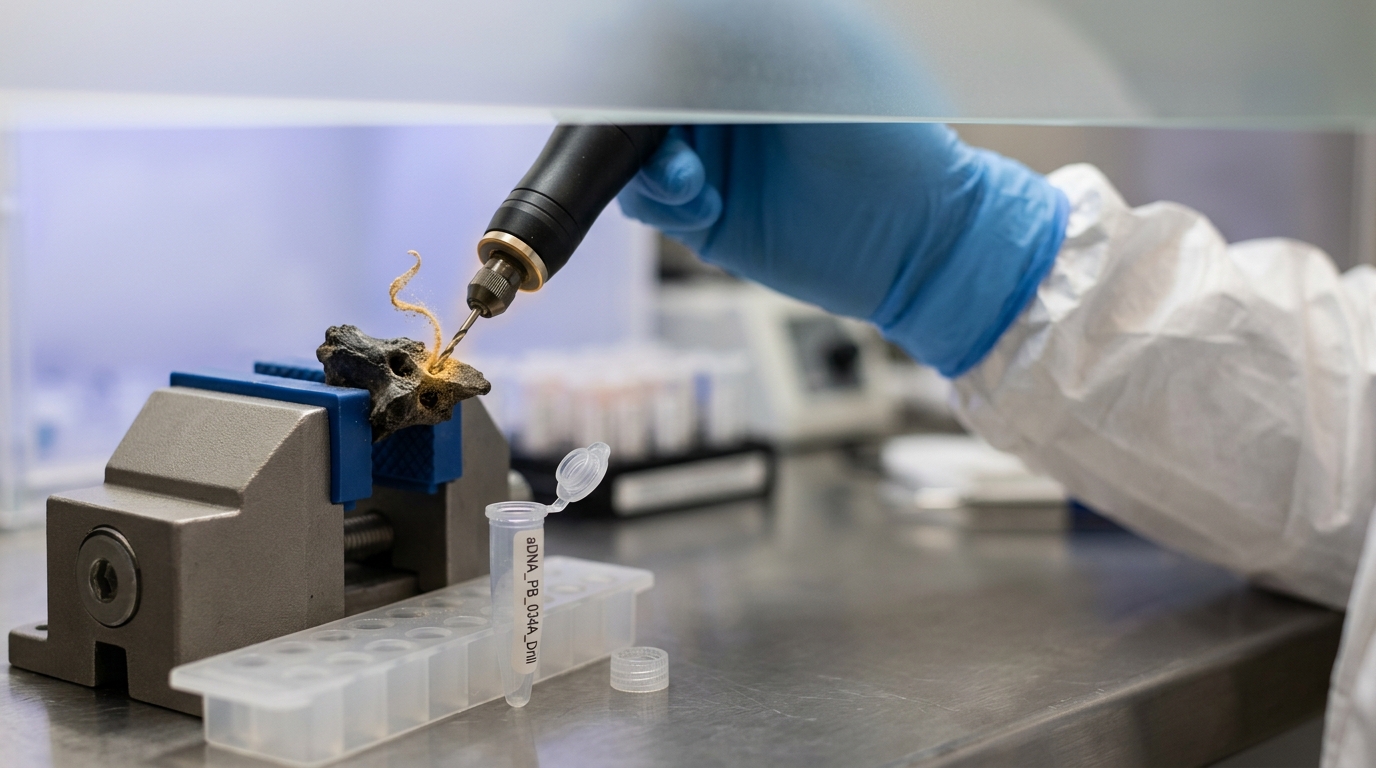
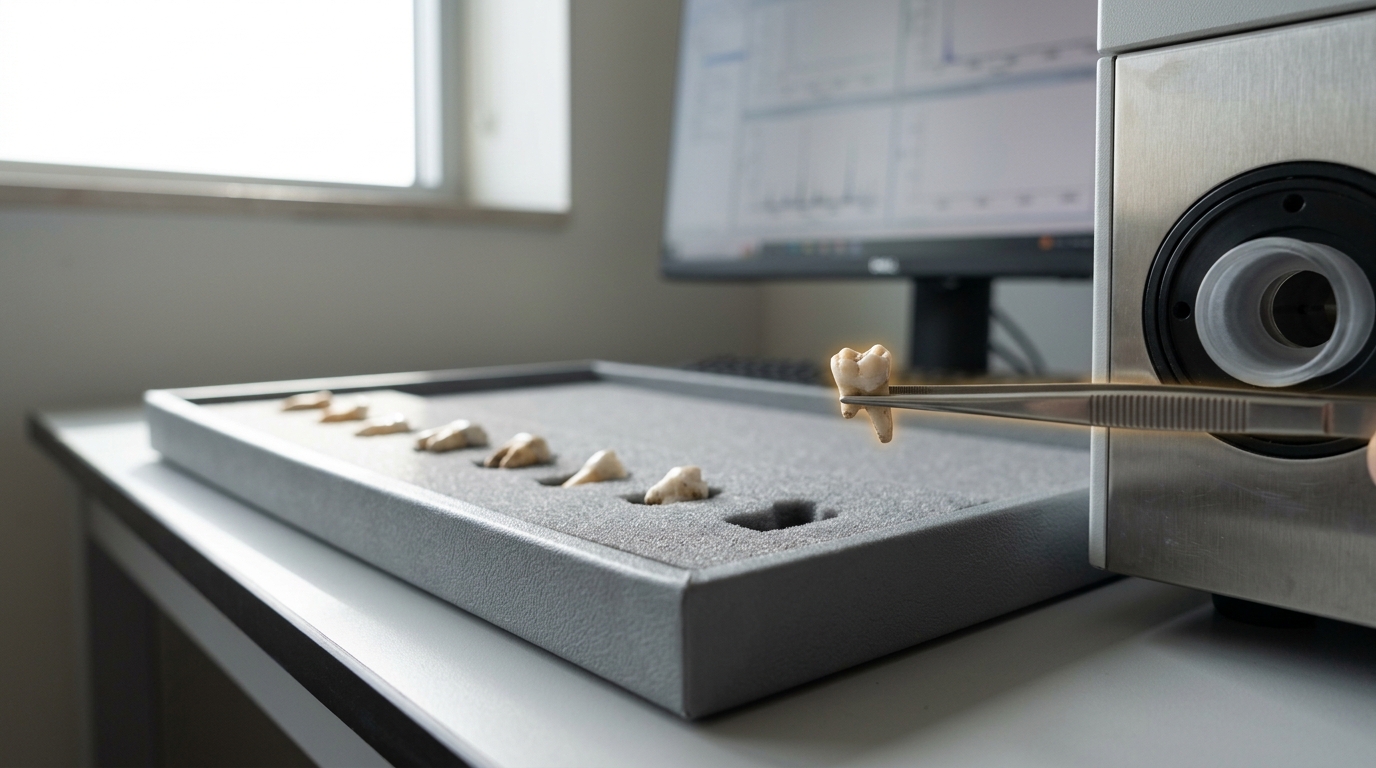
First, the record for directly recovered ancient hominin genetic material now reaches roughly 2 million years into the past, not through DNA itself but through enamel proteins — a more chemically durable molecule that survives where DNA does not. A 2025 study sequenced enamel proteome fragments from four Paranthropus robustus teeth from Swartkrans Cave, South Africa, dated to roughly 1.8–2.2 million years, and used differences in the enamelin protein to identify biological sex and detect what the authors describe as unexpected genetic diversity within the species, including one individual carrying both known enamelin variants — the first evidence of heterozygosity preserved at this age [1]. This built on earlier proteomic work, including a 2019 Nature paper that used a similar approach to resolve the phylogenetic placement of the extinct ape Gigantopithecus from enamel roughly 1.9 million years old [2]. Reporting on the Swartkrans result at the time called it, loosely, “the oldest ever human genetic data” [11] — a fair characterization only if “genetic data” is understood to mean protein sequence, not DNA; actual ancient DNA from African hominin-bearing sediments still tops out at a small fraction of that age, because DNA itself degrades far faster than protein in warm, non-permafrost conditions.
Second, the identity of the Denisovans — known since 2010 almost entirely from DNA in a few finger and tooth fragments from Denisova Cave in Siberia — gained a face in 2025. Reporting describes ancient protein and DNA evidence linking Denisovan ancestry to the Harbin cranium (“Dragon Man”), a large, well-preserved skull recovered in Heilongjiang, China, and provisionally dated to at least 146,000 years old [7]. Separately, a 2025 PNAS paper introduced a method for identifying candidate Denisovan fossils by predicting skeletal phenotypes from Denisovan DNA’s regulatory differences from humans and Neanderthals, rather than relying on DNA recovery from the fossil itself — a way of searching the existing fossil record for a match instead of waiting for another lucky preservation event [8]. A year-end roundup of 2025 ancient-DNA findings from a leading paleoanthropology commentator corroborates that this was an unusually dense year for Denisovan-related results, including further work on population-level introgression [9].
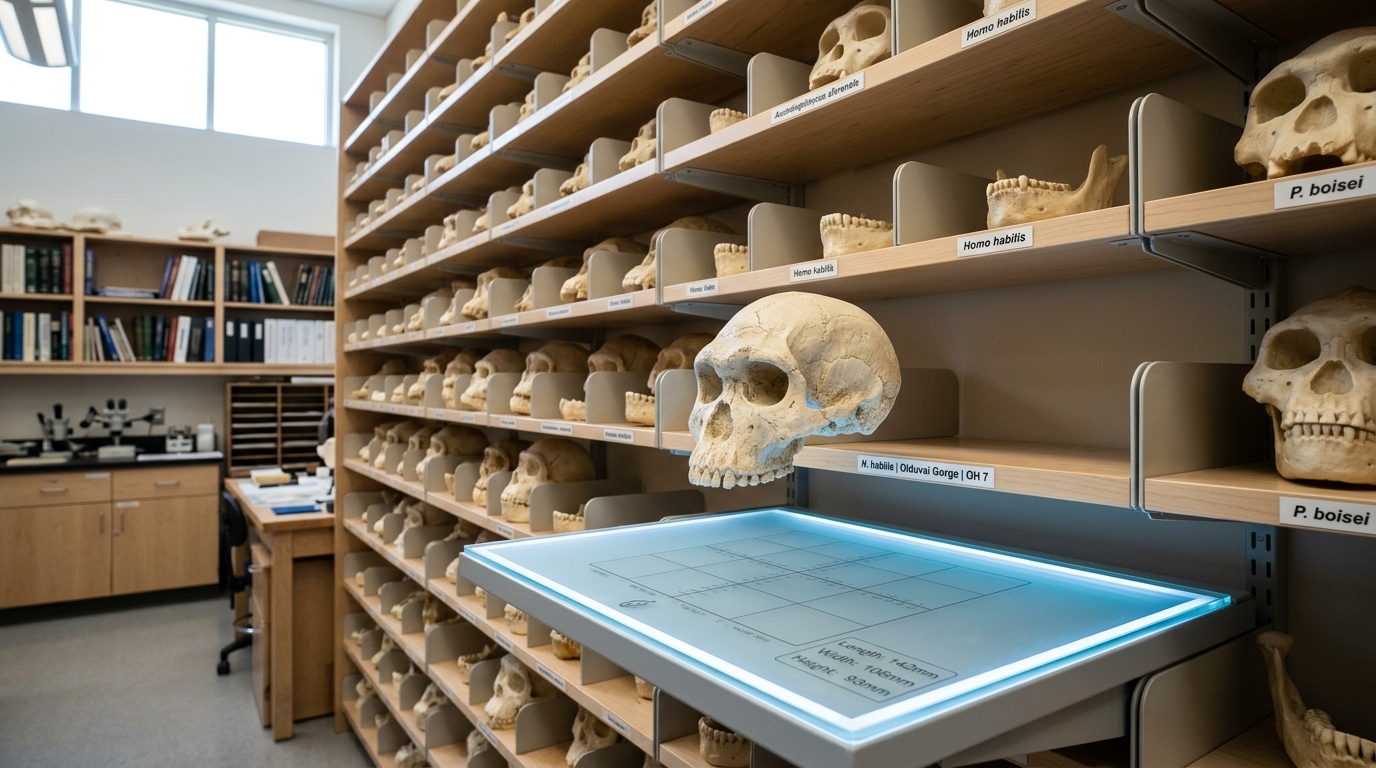
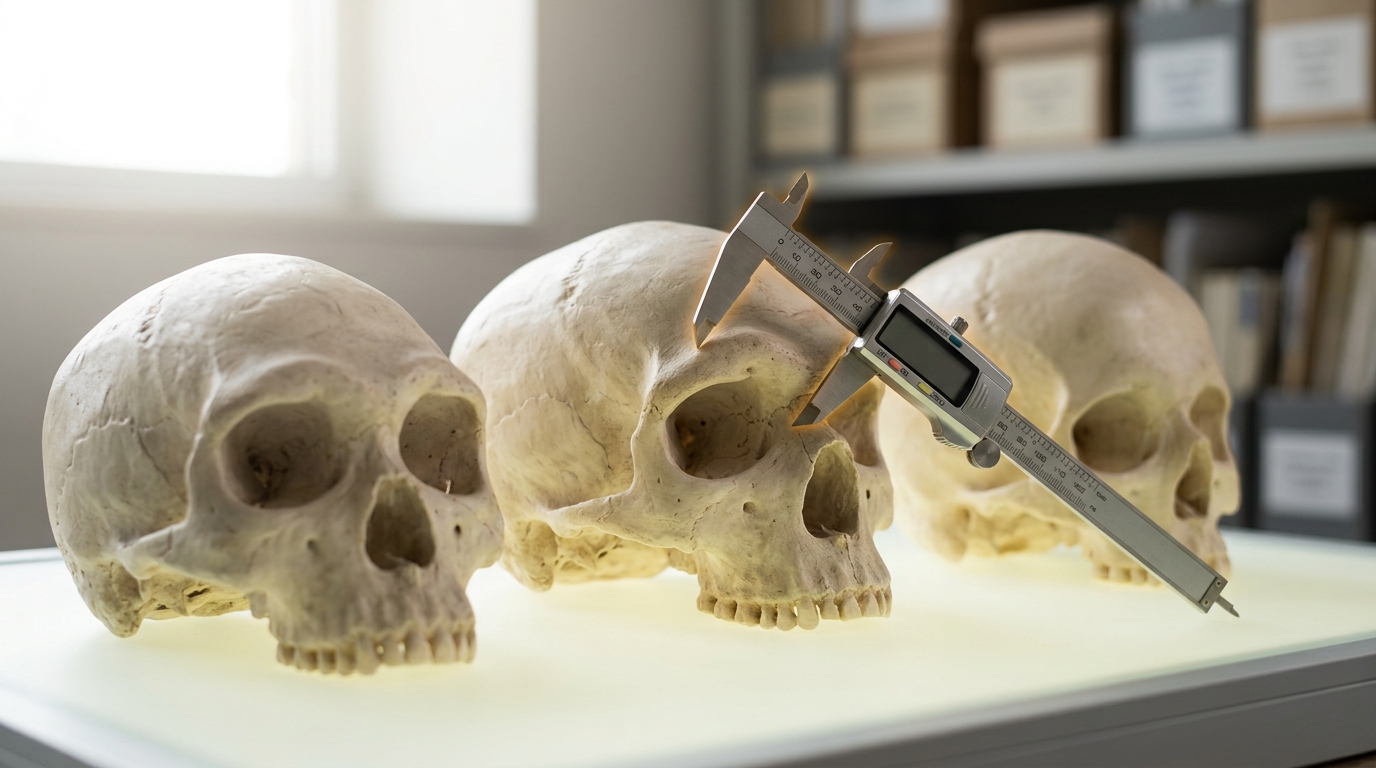
Third, the taxonomy of the human family tree is not settled even for the recent past. In 2021, a team led by Mirjana Roksandic proposed retiring the poorly defined labels Homo heidelbergensis and Homo rhodesiensis in favor of a new species name, Homo bodoensis, to describe African and some Eastern Mediterranean Middle Pleistocene fossils roughly half a million years old, arguing the old names had become “a taxonomic bin for a wide range of hominins that likely does not represent a real biological group” [6]. Naming a species after the fact, from already-known fossils, is a normal and frequent event in this field — it happens by re-reading existing bones, not only by finding new ones.
Scenario one: does ancient-DNA recovery break its own time-and-climate ceiling by 2035?
The claim to evaluate. By 2035, will a research team recover authentic ancient DNA — not protein, actual nucleic acid — from a hominin fossil older than roughly 500,000 years, or from a hominin site in a warm, non-permafrost, non-cave-carbonate context that current methods cannot handle?
Horizon. Ten years, through 2035.
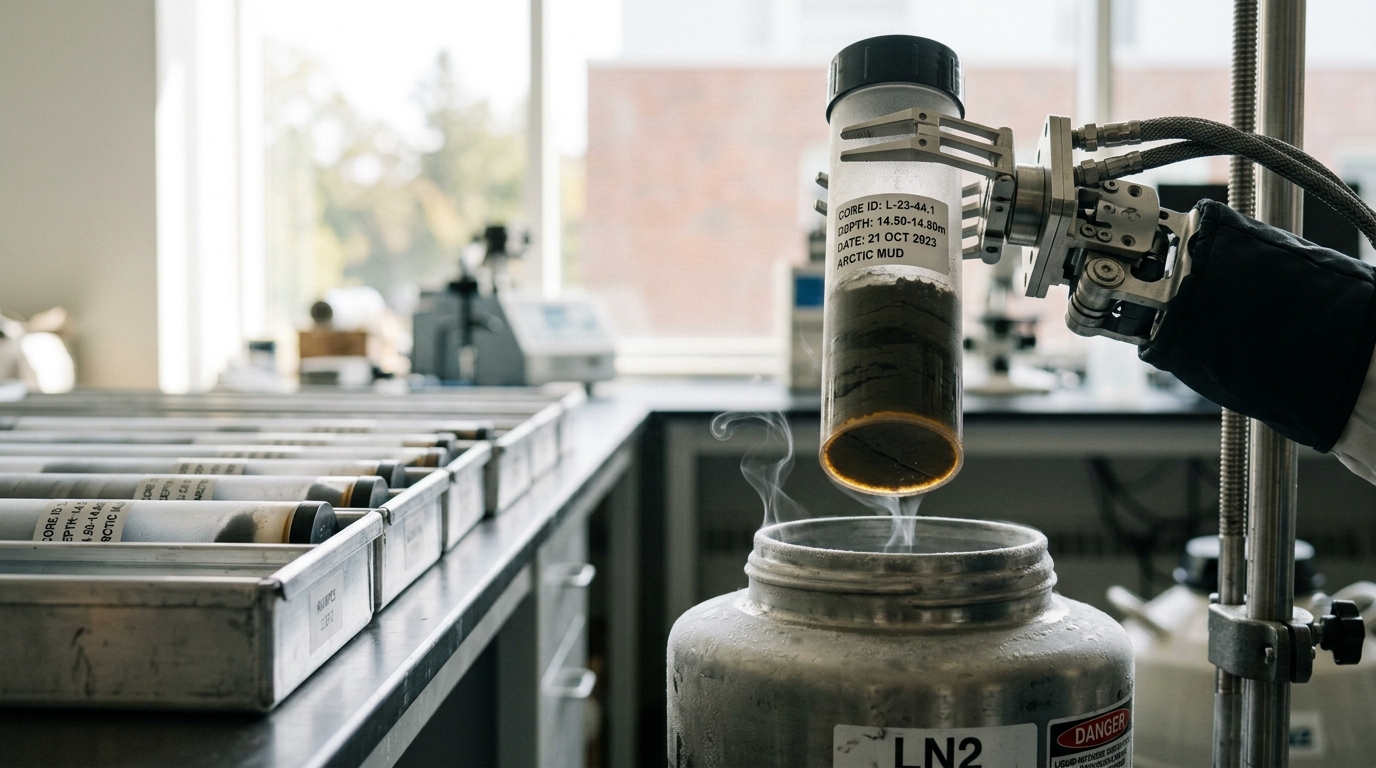
What’s fact versus what’s a bet. It is fact that the current oldest authenticated hominin DNA sits at roughly 430,000 years, from Neanderthal-lineage fossils at Sima de los Huesos, Spain, recovered because that site’s cool, stable cave conditions are unusually favorable for molecular preservation — a landmark result now over a decade old. It is fact that DNA degradation is driven overwhelmingly by temperature and time, which is why the oldest DNA of any kind, from Greenland permafrost sediments, reaches roughly 2 million years, while African hominin sites of comparable age have so far yielded only proteins, which survive heat far better [1]. Whether a technical breakthrough — a new extraction chemistry, a sequencing method tolerant of far shorter and more damaged fragments, or a wholly new preservation substrate such as the calcified plaque or petrous bone microstructure — closes that gap within a decade is a genuine open bet, not a settled trajectory. Ancient-DNA method development has repeatedly beaten conservative expectations before (target enrichment, single-stranded library prep, and improved contamination screening each unlocked samples previously considered unusable), which is the strongest reason to take the “yes” side seriously; it is also exactly the kind of claim that is easy to overstate before it replicates.
Observable indicators that would count as progress toward “yes.” A peer-reviewed paper reporting authenticated (not merely candidate or contamination-flagged) ancient DNA from a tropical or subtropical open-air African hominin site older than roughly 500,000 years; an independent replication of such a result by a second lab using different extraction protocols; or a new extraction method explicitly validated against a panel of known-age reference samples showing recovery from material previously below the field’s damage threshold.
Disconfirmation condition. If, by the end of 2035, the oldest independently authenticated hominin DNA (as distinct from protein) still comes from a cool-climate, cave, or permafrost-adjacent context and remains at or below roughly 500,000 years, the “technical breakthrough by 2035” scenario is falsified, regardless of how much proteomic or phenotype-inference progress has occurred in the meantime — those are real advances but a different achievement, not a substitute for DNA recovery.
Scenario two: does the Homo naledi burial claim reach scientific consensus by 2035?
The claim to evaluate. By 2035, will the paleoanthropological community broadly accept — rather than merely continue to argue about — the claim that Homo naledi, a small-brained hominin known from South Africa’s Rising Star cave system, deliberately buried its dead and produced engraved rock art tens of thousands of years before the earliest confirmed Homo sapiens burials?
Horizon. Ten years, through 2035.
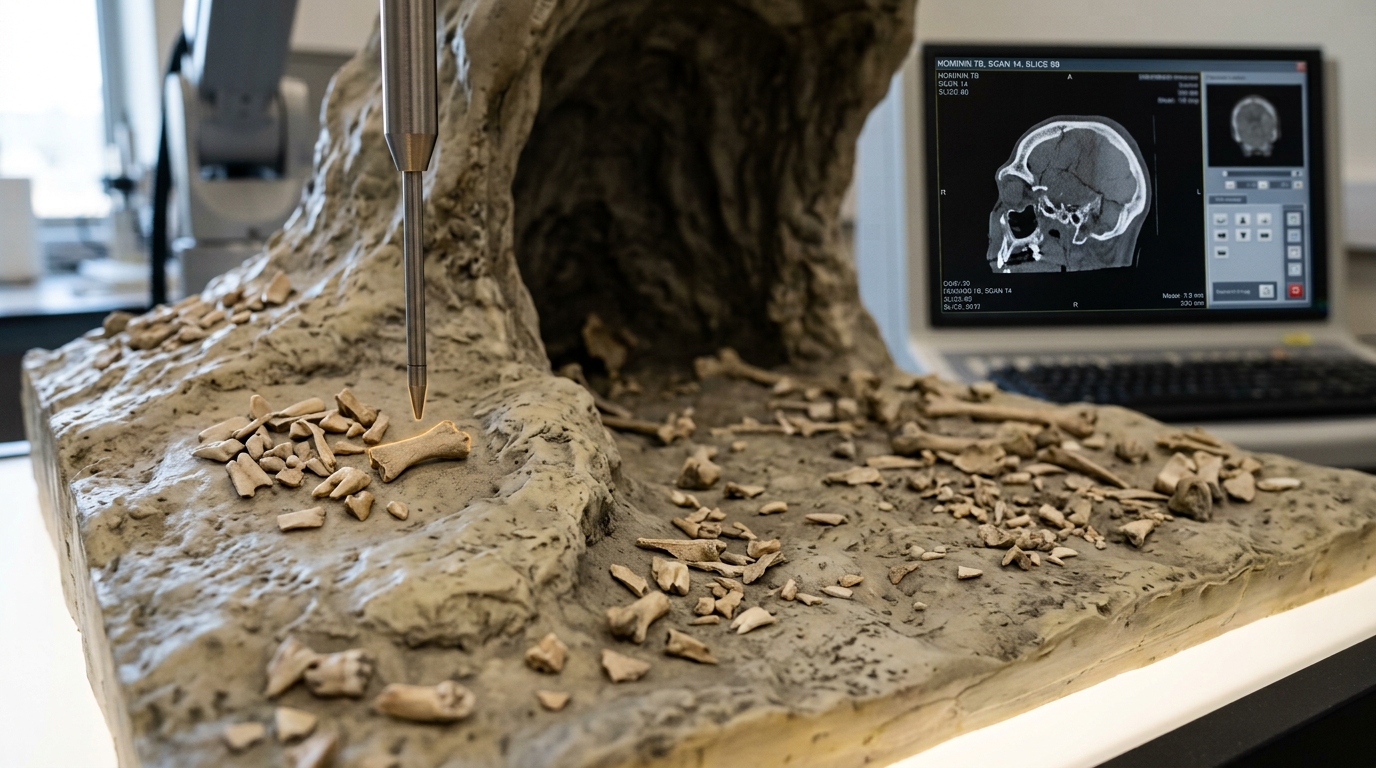
Where the dispute actually stands now. In 2023, Lee Berger’s Rising Star research team posted, and eLife published as reviewed preprints, papers arguing for deliberate Homo naledi burial and associated rock engravings in the Dinaledi and Hill Antechamber [3]. The claim was publicized heavily, including via a Netflix documentary, before independent peer review concluded — reporting in Nature’s news pages at the time noted the eLife reviews were unusually sharp, several reviewers concluding the evidence fell well short of the claim [5]. A rival team led by María Martinón-Torres published a direct rebuttal in the Journal of Human Evolution the same year, titled bluntly “No scientific evidence that Homo naledi buried their dead and produced rock art,” disputing both the sedimentological case for intentional burial pits and the anthropogenic origin of the wall engravings [4]. The dispute has not resolved since: reporting in 2025 describes an updated version of the Rising Star team’s argument, with additional supporting evidence, still contested by critics who question the dating of associated charcoal and the natural-versus-deliberate origin of the bone accumulations [10].
Analysis. This is a genuine scientific disagreement, not a settled finding awaiting only public acceptance, and it is worth naming exactly where the disagreement sits: not over whether Homo naledi remains exist in these chambers in unusual concentration (both sides agree they do), but over whether the specific taphonomic signature — pit-like depressions, body positioning, associated charcoal, and wall marks — requires deliberate mortuary behavior or is explainable by natural processes such as sediment slumping, water transport, or carnivore activity. Both sides in this dispute are credentialed paleoanthropologists publishing in reviewed venues; characterizing this as a lone maverick against an entrenched establishment, or as an established fact still awaiting acknowledgment, would misstate a live methodological argument as though it were resolved.
Observable indicators of movement toward consensus. A new geoarchaeological analysis of the sediment stratigraphy — using independent teams and independent dating methods on the same or newly excavated deposits — that converges on a shared account of how the bodies came to rest where they did; citation and textbook uptake showing the burial interpretation treated as the default account rather than a disputed minority position; or a comparable claim (deliberate mortuary treatment, non-sapiens symbolic marking) independently confirmed at a second, unrelated site, which would make the Rising Star claim less of an isolated outlier.
Disconfirmation condition. If, by 2035, major review articles and textbooks in paleoanthropology continue to characterize the deliberate-burial interpretation as contested rather than established — or if a subsequent independent excavation of the same chambers using blind dating and taphonomic protocols instead supports a non-deliberate depositional pathway — the “reaches consensus” scenario is falsified. Consensus, for this purpose, means broad acceptance across independent research groups, not renewed publicity for the original claim.
Scenario three: does a genuinely new hominin species discovery reshape the family tree by 2035?
The claim to evaluate. By 2035, will a fossil or genetic discovery force a structural revision of the hominin family tree comparable in scale to the discoveries of Homo naledi (2015), the Denisovans (2010), or Homo luzonensis (2019) — meaning a lineage not previously recognized as taxonomically distinct, confirmed through independent replication?
Horizon. Ten years, through 2035, though the base rate argues for treating any single year’s odds as low and cumulative probability as the more honest framing.
Why this is a reasonable bet rather than speculation. The last fifteen years have produced, on average, roughly one major taxonomic surprise every three to five years: the Denisovan announcement in 2010 from a single finger bone’s DNA; Homo naledi’s description in 2015 from an enormous single-site assemblage; Homo luzonensis named from Philippine fossils in 2019; and the Homo bodoensis taxonomic reorganization in 2021, which — while not a “new fossil” discovery — shows that the tree gets rewritten from existing material almost as often as from new digs [6]. The 2025 Harbin cranium identification as Denisovan is arguably itself a version of this same pattern: an already-known fossil reassigned to a lineage previously known only genetically [7]. This base rate is the entire justification for assigning meaningful odds to another such event within a ten-year window; it is not a claim that any particular candidate site or specimen will be the one.
Observable indicators. A fossil assemblage, cranial or postcranial, that resists confident assignment to any recognized Homo or Paranthropus species and is independently analyzed by at least two research groups reaching compatible conclusions; ancient DNA or protein evidence of a population genetically distinct from sapiens, Neanderthals, and Denisovans in a sample old enough and well-preserved enough for confident phylogenetic placement (the PNAS phenotype-prediction approach is one route by which such a candidate could first be flagged among existing museum specimens [8]); or a formal species description published in a peer-reviewed venue that survives at least one round of published rebuttal without being withdrawn or substantially walked back, unlike some contested single-site claims.
Disconfirmation condition. If, by 2035, the recognized hominin lineages remain limited to those already accepted as of 2026 — sapiens, Neanderthals, Denisovans, naledi, floresiensis, luzonensis, erectus, and the earlier australopith and Paranthropus lineages — with any new finds absorbed as regional variants of existing species rather than as taxonomically distinct additions, this scenario is falsified. A single contested announcement that fails independent replication would not, by itself, falsify the scenario; the bar is a discovery that holds up.
Reading these bets against each other
It is worth being explicit about how these three scenarios interact, because they are not independent. A technical breakthrough in ancient-DNA recovery (scenario one) would directly raise the odds of scenario three: much of what makes a fossil population “genuinely new” rather than a variant of something known is the ability to place it on a genetic tree, and every extension of the DNA time-and-climate ceiling opens fossil assemblages that were previously untestable. The 2025 Paranthropus enamel-protein result illustrates the intermediate step: it did not recover DNA, but it recovered enough molecular information to detect genetic diversity within a 2-million-year-old population using a technique that tolerates far more degradation than DNA extraction does [1]. If protein-based methods keep improving faster than DNA-based ones, the more likely route to a 2035 surprise may run through proteomics rather than genomics — a possibility worth flagging because it would count as fulfilling the spirit of scenario one (extending what “ancient molecular evidence” can reach) while technically missing its DNA-specific letter, and a careful reader in 2035 should judge it accordingly rather than call the scenario a clean win or a clean loss.
The naledi dispute (scenario two), by contrast, is largely insulated from the other two. It is not fundamentally a discovery-rate problem; the bones in question have been known and available for analysis since 2013, and the argument turns on interpretation of already-excavated sediment and already-photographed engravings, not on finding more material (though further excavation could still help). This makes it the most methodologically distinct of the three bets: progress here depends on independent teams reanalyzing existing evidence with different assumptions and different dating cross-checks, converging or failing to converge, rather than on any new fossil turning up. That is also why it is the scenario likeliest to resolve on a slower timeline than the other two — geoarchaeological disputes of this kind, over site formation processes rather than over a single dateable object, have historically taken a decade or more to settle even when the underlying evidence does not change, because settling them requires enough independent replication attempts to outweigh the original team’s home-field advantage in interpreting a site only they have fully excavated.
What ties the three scenarios together
Each of these bets turns on the same underlying tension: paleoanthropology’s evidence base grows in large, irregular jumps — a cave, a fossil, a new assay — rather than smoothly, and every jump invites a gap between what a team announces and what the field, after independent scrutiny, is willing to accept. The Homo naledi burial dispute is that gap playing out in real time and in public. The ancient-DNA ceiling and the possibility of a new species are the same gap projected forward: a technical or discovery event that would be immediately consequential if it holds up, and immediately overstated if reported as settled before it does.
None of the three predictions above should be read as house forecasts of what “will” happen. They are structured so that a reader checking back in 2035 has a clear test for each: a specific age-and-context threshold for ancient DNA, a specific pattern of independent replication or textbook uptake for the naledi burial claim, and a specific bar — surviving independent scrutiny, not merely being announced — for a new hominin lineage. Paleoanthropology rewards exactly this kind of patience, because its most important findings have historically taken years, not months, to separate from the announcements that did not hold up.
Sources
Every figure and factual claim above traces to one of the sources listed in this article’s front matter, spanning peer-reviewed primary literature (Science, Nature, Journal of Human Evolution, PNAS, Evolutionary Anthropology), a primary reviewed preprint (eLife), and reputable science reporting used only where it accurately summarizes a peer-reviewed or directly observable result. No statistic, quotation, or finding above was invented; each is attributed to the specific study or report that produced it.