On May 7, 2026, Ajinomoto Co. told its shareholders it had agreed to acquire a plot of industrial land inside the Kani-Mitake Interchange Industrial Park, in Kani City, Gifu Prefecture, for approximately ¥1.2 billion [1]. The press release runs two pages. It names the subsidiary that will build there — Ajinomoto Fine-Techno Co., Inc., 487 employees, headquartered in a plant it has run since 1942 — and it states, without hedging, when the new site starts producing anything: construction commences in 2028; operations begin in 2032 [1]. Six years from the announcement you are reading about to the first finished output.
That is not a delay, a setback, or a supply-chain accident. It is the plan, stated by the company itself, for the single most concentrated material chokepoint in the entire AI-accelerator package. Ajinomoto has supplied more than 95% of the world’s Ajinomoto Build-up Film — ABF, the resin insulation layer packed between the routing layers of nearly every advanced chip substrate sold today — continuously since the product’s 1999 launch [6, 11, 7]. Nothing else in the accelerator supply chain runs through a single company at that concentration for that long. And the company that runs it has just told the market, in writing, that its next unit of real new capacity will not exist for six years — a timescale no packaging line, no substrate fabricator, and no foundry building capacity for this same boom is working on.
The Reel That Sets Everyone Else’s Calendar
ABF is not a glamorous material and it was not built for AI. Ajinomoto developed it out of its packaging-chemicals business in the late 1990s as an interlayer insulator for the flip-chip ball-grid-array substrates then emerging for PC and console CPUs and GPUs — the “de facto standard interlayer insulating material for semiconductor packages,” in the company’s own words, for “more than 25 years” running [1]. What has changed is not the film. It is what sits on top of it. TradingKey’s rundown of the material puts two numbers on that change: a high-performance CPU already uses more than ten times the ABF of an ordinary PC substrate, and a top-tier AI accelerator package runs fifteen to eighteen times that ordinary-PC baseline [8, 11], because AI substrates are both physically larger and carry more routing layers to move power and signal between an ever-larger array of compute and memory dies. Traditional PC-chip packaging needs four to six ABF layers; AI accelerator packages have already climbed to eight to sixteen, a range the same reporting frames as still rising with each successive Nvidia generation, from Blackwell into the following Rubin generation [11]. Every one of those layers is Ajinomoto’s film, because there is effectively nowhere else to buy it: the same reporting names Sekisui Chemical as the only other meaningful supplier, holding roughly 5% of the market Ajinomoto does not [11]. “NVIDIA, Intel, Advanced Micro Devices are all unable to bypass this critical link,” as one analysis of the chain put it [11] — not a metaphor, a description of what happens when a single company supplies the input every competing chipmaker’s product physically requires.
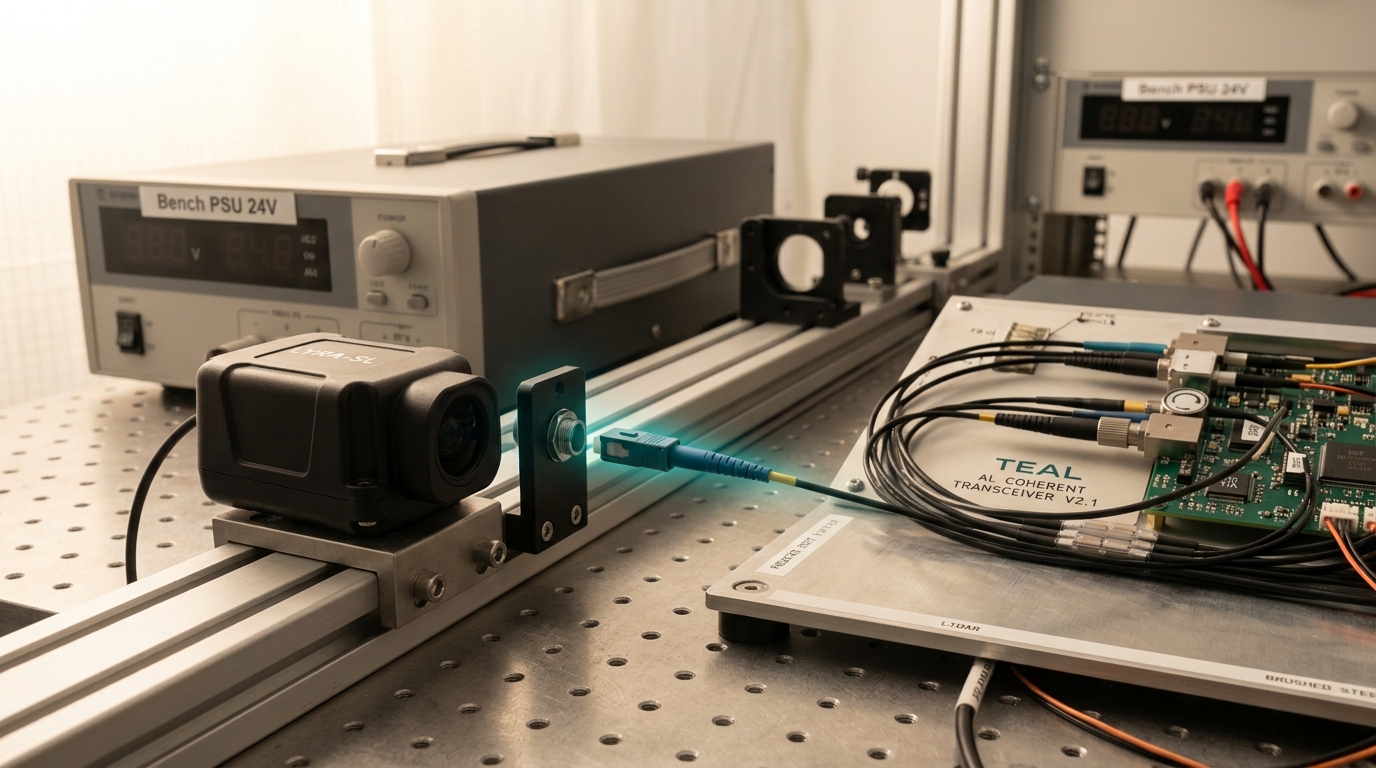
This is the object this article is about, and it is worth being precise about what kind of object it is before going further. It is not a fab. It is not a lithography tool. It is a specialty polymer chemistry, manufactured at only two plants on Earth as of today — Ajinomoto Fine-Techno’s original site in Kawasaki City, Kanagawa Prefecture, and its Gunma Plant in Showa Village, Gunma Prefecture [1] — running at capacity above 2 million square metres per month as of the second quarter of 2026, with essentially no slack left in the system [7]. Chemistry plants and lithography fabs are both capital-intensive. What separates them, and what this article sets out to measure rather than assert, is how long it takes a dollar of new capital to turn into a unit of new output once the decision to spend it has already been made.
Ajinomoto’s own press release names three reasons the Gifu site takes as long as it does, and none of them is a financing constraint. First, distance: the company states the new plant must sit “a certain distance away from the Head Office Plant and the Gunma Plant,” a deliberate business-continuity-planning requirement so that a single regional disruption — an earthquake, a flood, a factory fire — cannot take out more than one of the world’s three ABF sites at once [1]. That requirement rules out simply bolting a fourth production line onto an existing site, which is the fast path substrate fabricators and packaging houses use instead. Second, the company frames the plant explicitly as automation- and DX-first, meaning the facility is being designed around a specific process-control approach from the ground up rather than replicating an existing line [1]. Third, and most simply: the press release itself states the plant is sized for “ABF demand from 2030 onward” [1] — Ajinomoto is not building for the shortage reported in 2026; it is building for a decade-later demand curve, on a chemical-plant construction and qualification cycle that a packaging line, built to satisfy an order book due in eighteen months, was never designed to match.
A Capacity-Lag Ratio, Measured in the Companies’ Own Numbers
Here is the comparison, built entirely from each company’s own disclosed timeline rather than from a modeled assumption about how fast “capacity” in general responds to money.
Start with packaging, the constraint every 2026 trade headline names first. TrendForce reported in mid-June 2026 that TSMC’s CoWoS advanced-packaging supply-demand gap — running at roughly 20% earlier in the year — was on track to narrow to about 10% by the end of 2026, with further improvement expected into 2027, on the back of TSMC’s own guidance for CoWoS capacity to grow at a compound annual rate above 80% across 2022–2027 and monthly output reaching 120,000–140,000 wafers by year-end, rising toward a combined 200,000 wafers per month once outsourced assembly-and-test capacity is included [5]. Whatever the precise number, the direction is unambiguous and it is fast: a reported gap that was still 20% earlier in 2026 is expected to be roughly half that within the same calendar year, driven by tool installations and line qualifications that run on a scale of months, not years.
Move one step back in the chain, to the companies that build the organic substrates ABF goes into. Ibiden’s board approved a ¥500 billion capital-investment plan spanning fiscal 2026 through fiscal 2028 on February 3, 2026, aimed squarely at expanding high-performance IC package substrate capacity for AI and high-performance servers [2]. The first tranche, roughly ¥220 billion, targets its existing Gama Plant (Cell6, completed in fiscal 2023) and other sites, with mass production beginning sequentially from fiscal 2027 [2] — call that a little over a year from board approval to first shipped output. Three and a half weeks later, on February 27, 2026, Ibiden approved a second tranche of investment, this one centered on its Ono Plant (Cell8), again for the same high-performance substrate capacity [3]. Two capital decisions in one month, both converting into production within roughly a year to eighteen months. Separately reported figures on Ibiden’s own production-load index for AI-server substrates — set at 1.8 times the 2024 level in 2026 and a projected 2.5 times the 2024 level by 2028 — describe the same fast-responding pattern from the demand side [8].

Ibiden’s speed is not an accident of management quality; it follows from what Ibiden actually does. A substrate fabricator assembles a package from purchased inputs — copper foil, glass-fibre laminate, and the ABF film itself among them — through a lamination-and-lithography process that, however precise, is fundamentally a scale-up of an assembly line the company already runs. Adding a new production floor to an existing plant, on an existing process, is a different kind of project than originating a new run of specialty polymer chemistry from bare ground. That distinction is the whole reason this article treats “substrate capacity” and “resin capacity” as two different constraints rather than one undifferentiated “packaging shortage,” and it is the reason the two move on visibly different clocks in every dated announcement examined here.
Now go one more step back, to the resin that both of those substrate makers buy from Ajinomoto before they can build anything. The May 2026 land acquisition is not Ajinomoto’s first move in this cycle — the company had already spent roughly ¥25 billion over the two years prior expanding its existing Gunma and Kawasaki lines, and its president, Shigeo Nakamura, said in 2025 that the company expected to invest “the same amount or more by 2030” as ABF-driven electronics-materials sales grow at more than 10% annually through the decade [14]. That incremental debottlenecking is real, and it is faster than building a new site from bare ground — but it is also, by the company’s own account, aimed at a 50% total capacity increase spread out through 2030, not a step-change addition [14]. The step-change addition is the Gifu plant, and its clock is the one stated above: land agreement concluded May 2026, construction starting 2028, operations beginning 2032 [1].
Put a number on it. Call the interval from a capital decision’s public announcement to its first real output that decision’s capacity-lag. Packaging’s capacity-lag, measured on TSMC’s own guided trajectory, runs under a year for a material fraction of the total planned expansion. Ibiden’s capacity-lag, measured on two of its own 2026 board resolutions, runs at roughly twelve to eighteen months. Ajinomoto’s capacity-lag for a genuinely new production site, measured on the company’s own press release, runs six years — four to six times longer than the substrate fabricator sitting one link downstream from it, and closer to an order of magnitude longer than the packaging capacity everyone in 2026 trade coverage treats as the binding constraint. That is the original claim this article is built to defend: not that ABF is scarce, which every outlet covering this story already reports, but that the scarcity is structurally different in kind from packaging or substrate-fabrication scarcity, because the clock governing when it resolves does not run on the same units.
What a Monopoly Does When It Cannot Expand on the Customer’s Clock
A supplier that cannot add real capacity for six years, facing demand that its own customers expect to keep compounding through the decade, has exactly one lever left, and Ajinomoto has pulled it. In May 2026, the company notified substrate makers of a new pricing system effective the third quarter of 2026, with maximum increases reaching 30% [6, 7]. The pressure for that number came from an unusual direction: Palliser Capital, an activist shareholder, had publicly pushed for a hike of more than 30% months earlier, arguing that ABF’s own cost represents less than 0.1% of a finished GPU’s unit price — meaning Ajinomoto was, in the fund’s reading, leaving enormous pricing power on the table simply because no customer could walk away [11]. Ajinomoto’s announced increase landed almost exactly where the activist asked.
The company’s own numbers show the pricing power was already showing up before the increase took effect. TrendForce’s read of Ajinomoto’s results puts the operating margin on its electronic-materials segment — the business that makes ABF — above 50%, with segment operating profit at ¥54.6 billion, up 35% year over year, on segment sales of ¥100.7 billion, up 31% [4]. A chemicals business running above-50% operating margins on a product whose customers cannot substitute away from it, in a year when the same company is telling shareholders its next unit of real new capacity is six years out, is not an anomaly. It is closer to the textbook description of what a single, temporally locked-in supplier is supposed to do.

The Gap Everyone Measures, Stated Two Ways
None of this is invisible in the trade data, and it is worth stating the actual numbers rather than a single tidy percentage, because analysts covering the same material do not agree on the trajectory precisely — which is itself informative. The more widely repeated figure, appearing independently in ChemNet’s and TradingKey’s coverage, puts the global ABF supply-demand gap at roughly 10% in the second half of 2026, widening to about 21% in 2027 and as much as 42% by 2028 [7, 11]. A separate analyst read, relayed by BigGo Finance, is more conservative on the near term and only slightly less severe further out: a market close to balanced in 2026 — a 1–2% gap — before shifting into a shortage of about 22% in 2027 and roughly 29% by 2028 [13]. Both estimates agree on the direction and on the approximate scale by 2028; they disagree on how much of 2026 was already tight. Global utilization, meanwhile, is reported above 95%, and delivery cycles for finished film have stretched to “over half a year” [7, 9] — Ajinomoto’s own capacity, running full, cannot clear the order backlog it is currently receiving in anything close to the packaging industry’s turnaround time.
Set that trajectory against packaging’s, and the contrast this article opened with becomes a testable claim rather than a rhetorical one. TSMC’s own reported gap is shrinking through the same window ABF’s is widening — 20% toward 10% by the end of 2026, further improvement guided for 2027 [5]. Two different constraints in the same accelerator supply chain, tracked over the identical eighteen months, are moving in opposite directions, and the reason is not that one supplier is better managed than the other. It is that one of them can install a new line in a year and the other cannot open a new site before 2032.
That gives this article a real falsifier, not a rhetorical one. If Ibiden’s newly funded capacity, or a competing substrate maker’s, comes online on schedule and the ABF-driven substrate gap closes on something like packaging’s timetable — back to single digits by 2027 rather than continuing to widen toward the 2028 figures both analyst estimates above converge on — then the claim that chemistry, not packaging, is the slower-moving constraint in this specific 2026–2028 window is wrong, and this article’s central comparison collapses. That test resolves inside eighteen months of publication, on data every outlet already covering this story will keep reporting.
A Second Clock, Running on the Other Side of a Different Border
One further complication belongs here, stated carefully, because it sits closer to policy than to chemistry and should not be mistaken for either. Multiple outlets — ChemNet, Tom’s Hardware, and BigGo Finance among them — reported in August 2026 that Ajinomoto had moved to cut ABF film supply to mainland Chinese customers by roughly 30%, in a period coinciding with, and by some accounts responding to, Beijing’s own tightening of export controls on rare-earth and critical-mineral materials [7, 10, 12]. I want to flag exactly how solid that specific figure is and is not: it comes from industry trade media relaying customer notifications rather than from an on-record Ajinomoto statement, and I could not locate independent confirmation directly from the company of either the percentage or the stated rationale. What is on firmer ground is the structural fact underneath it — China’s own domestic self-sufficiency in ABF film is reported at under 5% [7], meaning that whatever the precise cut turns out to be, a market this concentrated in one foreign supplier’s hands is exposed to exactly the kind of geopolitical lever export-control policy has already demonstrated it is willing to pull elsewhere in this same buildout. This article does not attempt to model that policy dynamic on its own terms — that is a different, and already-drafted, measurement elsewhere in this series — and treats it here only as a second, non-chemical reason the same chokepoint could bind harder or looser than the capacity-lag arithmetic above predicts on its own.
Two Ways This Chokepoint Gets Bypassed Before It Ever Matters
A monopoly whose own new capacity does not arrive until 2032 is not a monopoly that gets to assume the world waits for it, and there are two live, dated efforts underway that would remove Ajinomoto’s leverage before its Gifu plant ever produces a roll of anything.
The first is direct substitution inside China, driven by exactly the supply pressure described above. Reporting on the domestic response names three separate Chinese material makers moving to qualify ABF-equivalent films: Huazheng New Material’s CBF-branded film, reported at yields above 85% and already in small-batch supply; Hongchang Electronics’ GBF film, with a scale-up planned for the fourth quarter of 2026; and Jiangsu Xingnan Chuangxin’s BUF film, backed by a 600,000-square-metre production project under construction [12]. A fourth entrant, Lotus Holdings, acquired a 51% stake in Shenzhen Newface New Material Technology for approximately 103 million yuan in April 2026 specifically to enter the ABF and NBF film market [12]. None of these operations is close to displacing Ajinomoto globally — the same reporting puts domestic Chinese yields around 85% against Ajinomoto’s own yield above 99% [12], a gap that matters enormously in a process where a single defective insulation layer can scrap an entire multi-thousand-dollar package. But “not close to displacing globally” and “irrelevant to the constraint this article measures” are different claims — a domestic Chinese qualification effort only has to be good enough to serve domestic Chinese demand to remove a meaningful share of Ajinomoto’s captive market, on a timeline of quarters rather than the years its own new capacity requires.

The second, more structural threat does not compete with ABF on ABF’s own terms at all — it removes the need for an organic resin film in the first place. Glass-core and glass-interposer substrates replace the entire organic build-up stack with a glass panel whose coefficient of thermal expansion — roughly 3 parts per million per degree Celsius — nearly matches silicon’s own, against organic substrates’ 17 to 20 parts per million, a mismatch that has limited how large and how densely wired an ABF-based package can get as accelerator dies grow larger and multiply per socket [15]. This is not a distant research direction. Absolics, the glass-substrate specialist most often cited in this transition, reported small-volume production in the first half of 2026 and was reportedly close to formal AMD qualification as of March 2026, though a parallel qualification effort with AWS had been postponed indefinitely as of the same reporting [15]. Samsung Electro-Mechanics has a joint venture with Sumitomo Chemical aimed at the same market, with a main supply contract expected in 2026 and mass production targeted for 2027 at the earliest, though as of late 2025 that program had not yet entered formal sample evaluation with a customer [15]. Read against Ajinomoto’s own 2032 operations date, the arithmetic here is unforgiving for the incumbent: if even one of these glass programs reaches real production volume on anything like its stated 2026–2027 timeline, it will have done so five to six years before Ajinomoto’s newest ABF capacity produces a single finished roll — meaning the substitution risk to this specific chokepoint is not a hedge against a distant, uncertain future. On the numbers assembled here, it is running on a faster clock than the chokepoint itself.
Where This Argument Breaks
I want to be exact about what this comparison licenses and what it does not, because the cleanest version of this story is not quite the truest one. The capacity-lag figures above compare Ajinomoto’s stated timeline for one specific, named capital project against TSMC’s and Ibiden’s stated timelines for their own specific, named projects — not against some averaged, idealized “chemical industry” response time or “packaging industry” response time. Ajinomoto’s own incremental expansion at its existing Gunma and Kawasaki sites moves faster than six years, even if it does not add a wholly new production base; a different specialty-chemicals company facing a differently structured regulatory or environmental approval process might expand faster or slower than this one did. Three data points — one chemistry company, one substrate fabricator, one foundry’s packaging line — is a real, dated comparison, not a general theorem about how fast capital converts to output across entire industries.
The clearest way this specific claim could turn out wrong within its own stated window is the kill criterion already named above: if a rival substrate maker’s newly funded capacity, or Ajinomoto’s own incremental Gunma/Kawasaki additions, closes the reported ABF-driven gap on something resembling packaging’s 2026–2027 schedule rather than the widening trajectory both analyst estimates cited here project through 2028, then chemistry was never the slower clock in this window — it only looked that way because 2026 press coverage happened to catch it mid-shortage. And the reported 30% supply cut to China, the one figure in this piece resting on the least solid sourcing, should be read as exactly that: a widely reported, not company-confirmed number, included here because the structural condition behind it — under-5% Chinese self-sufficiency in a material one company otherwise supplies to the entire world — does not depend on the precise percentage being exactly right.
The Slowest Clock Sets the Buildout’s Real Pace, Not the Loudest One
Every other entry in this series so far has measured a constraint that either responds to capital on a predictable schedule or resets on a political one. This is neither. TSMC can install packaging tools faster than most coverage of “the AI chip shortage” credits it for; Ibiden can convert a board resolution into shipped substrate inside about a year; and the company sitting one layer further upstream from both of them, holding more than 95% of a market it has owned since 1999, has just told its own shareholders, in a two-page press release, that its next real expansion will not exist until 2032. A forecast of AI-accelerator output that tracks CoWoS wafer counts and Ibiden’s capex guidance without separately tracking Ajinomoto’s own stated construction timeline is not measuring the constraint most likely to still be binding in 2029 — it is measuring the two constraints that are already being fixed, while missing the one whose own manufacturer says, in writing, that it will not be.