Hesai Group shipped 1,620,406 lidar units in 2025, priced its cheapest automotive sensor at roughly $200, and reported the lidar industry’s first full year of GAAP profitability doing it: RMB435.9 million (US$62.3 million) in net income on RMB3,027.6 million (US$432.9 million) in revenue, up 45.8 percent year over year [2, 3]. Nine years ago, a comparable lidar unit cost more than $50,000 [4]. That collapse is the headline every trade outlet ran. The detail that makes it interesting is that Hesai’s $200 sensor is not, on the physics, the better one.
The better one, on paper, is coherent — frequency-modulated continuous-wave (FMCW) lidar, which detects the beat frequency between a returning light wave and a tapped sample of the laser that sent it, rather than simply timing a pulse’s round trip. Five Waymo engineers said so themselves, in print, in February 2025: coherent lidar delivers “the direct measurement of target approach velocities via the Doppler effect” and is “largely immune to interference from other lidars and sunlight,” advantages a pulsed time-of-flight sensor — the kind Hesai actually sells by the million — cannot match by adding more silicon [1]. Waymo’s own paper is also the best public explanation on record for why, a decade into the automotive lidar industry’s existence, that advantage still is not sitting inside a $200 sensor. The paper does not blame immaturity or indifference. It puts a number on the gap, in watts, and then explains exactly which unsolved manufacturing problem that number traces back to.
Coherent Detection’s Sensitivity Claim Survives a Waymo Audit of Its Own Technology
A pulsed time-of-flight sensor is a stopwatch: it fires a burst of photons, starts a clock, and waits for a photodiode to register enough returning photons to cross a threshold. Whatever else lands on that photodiode — sunlight, another car’s headlight, another lidar’s own pulses — adds to the same threshold and can trigger it early or bury a real return beneath false ones. A related, separately documented failure mode hits the same threshold from the opposite direction: a retroreflective road sign or safety vest can return so much light that it blurs the point cloud and scatters false-positive points into the space around the object, an effect the industry calls “blooming” [7]. A coherent lidar detects light differently: it mixes the returning wave with an optical “local oscillator,” a sample tapped directly off the same laser that transmitted the pulse, on the detector itself, and only light sharing the transmitted wave’s exact frequency and phase produces a beat signal the receiver can read at all. “Light that is not at exactly the same wavelength, such as sunlight or from an adjacent lidar system, is simply ignored,” is how Chet Babla, an indie Semiconductor executive whose company sells the signal-processing silicon coherent lidar makers need, put it in a 2023 trade-press explainer [9]. Greg Smolka, vice president of business development at Insight LiDAR, framed the same receiver-side selectivity in Jeff Hecht’s 2019 Laser Focus World account of the technology: “your detector is looking for an exact match that comes back coherent with the lidar beam” [8].
Waymo’s 2025 paper does not merely assert that selectivity; it derives the resulting sensitivity from the receiver’s own noise statistics rather than from a marketing claim. Operating in the shot-noise-limited regime — where the dominant noise source is the quantum randomness of the light itself, not the electronics reading it — a coherent receiver needs only 10 to 30 detected photoelectrons to reach 50 percent detection probability at the false-alarm rates automotive lidar targets, a figure the paper calls “near single-photon sensitivity” [1]. Coherent detection also reports velocity in the same instant it reports range, because the identical beat-frequency signal that reveals distance shifts under the Doppler effect when a target is moving — a pedestrian stepping off a curb reports closing speed on the very first return, rather than needing a second pulse and a subtraction [1].
The same paper is careful, though, not to let that headline number stand alone. Two pages later it reports that a coherent lidar’s link transmission — how much of the transmitted light actually returns to the receiver — runs approximately 6 decibels lower than a comparable time-of-flight system’s at long range: 3 decibels because coherent detection only registers one polarization of the returning light, and another 3 decibels because a coherent receiver mostly collects light from the narrow center of its own transmit beam while a time-of-flight receiver’s larger aperture catches more of the beam’s wings [1]. And the clean 10-to-30-photoelectron figure comes with its own asterisk: “due to the statistics of speckle… very high average numbers of photoelectrons are required to reach >90% detection probability,” the paper states, naming the same random constructive-and-destructive interference pattern that any coherent illumination produces off a rough real surface as the reason the easy 50-percent number does not simply scale up to the reliability an automotive sensor actually needs [1]. Waymo’s own answer to that problem is to average four independent speckle realizations per measurement point, a design choice built into the same case study that produces this article’s central power number below. None of the sensitivity or interference-immunity physics described above is disputed anywhere in the record reviewed for this article. What comes next is a second company’s engineers reaching the same speckle problem from the opposite side, and drawing a harder conclusion from it.
Innoviz Spent Years Building the Same Detector and Reported a Harder Verdict
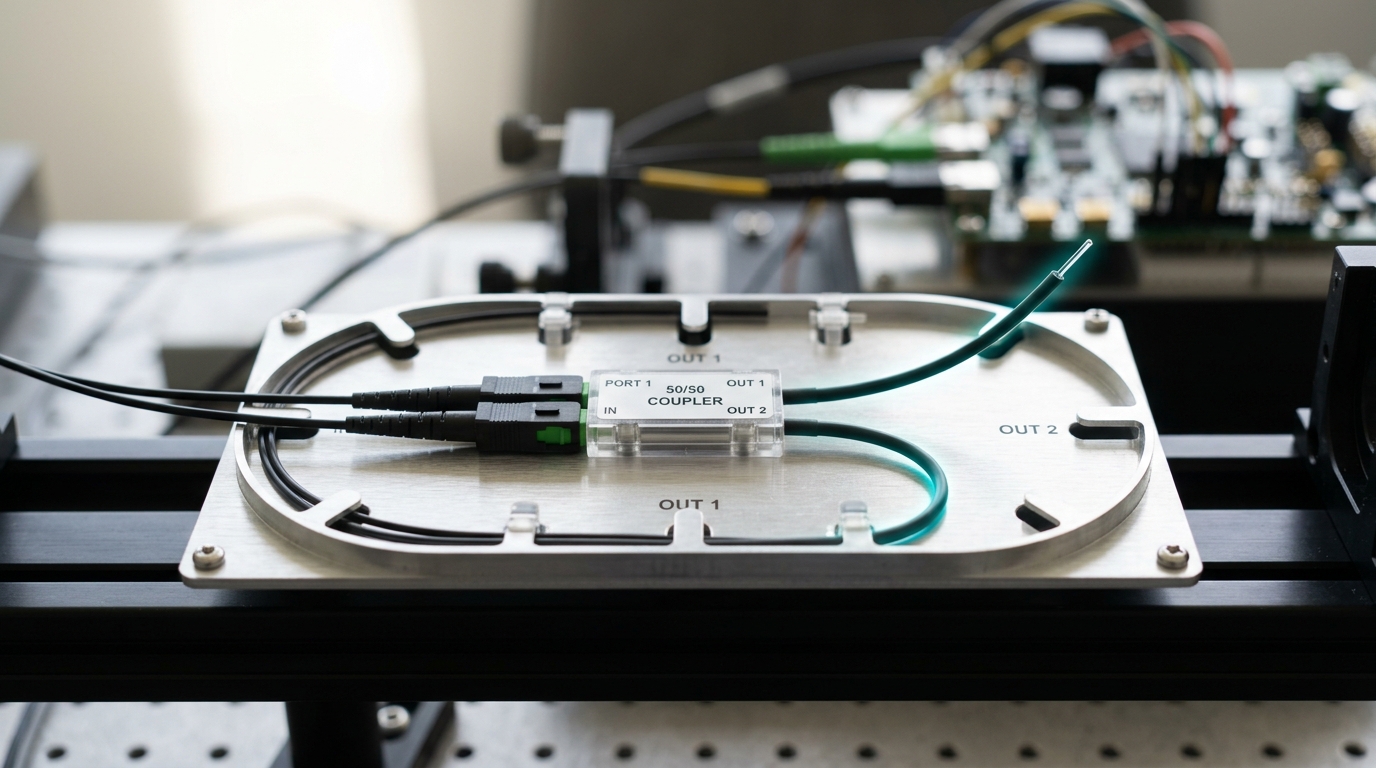
Innoviz Technologies makes only time-of-flight lidar, has never shipped an FMCW sensor commercially, and has an obvious interest in the conclusion it reached — worth stating plainly, because Innoviz’s November 2025 technical position paper is also the most detailed public rebuttal on record of the coherent-detection case above, and it does not read like an outsider dismissing a rival technology it never built. The company says it “spent several years building prototype FMCW LiDARs” and tested them “in the lab and on the road” against “rain, fog, high glare, and occlusion” before concluding that pulsed detection wins for automotive use [6].
Innoviz’s sharpest objection lands on exactly the caveat Waymo’s own paper already flagged. FMCW’s “ultra-narrow optical bandwidth,” Innoviz argues, produces “a significant speckle effect” that “severely degrades signal uniformity and reduces detection statistics,” and the company states that this removes “much, if not all, of the theoretical advantage in range and sensitivity” a shot-noise calculation like Waymo’s promises on paper [6]. Read against Waymo’s own admission that “very high average numbers of photoelectrons are required to reach >90% detection probability” because of speckle, Innoviz’s complaint stops looking like a rival’s spin and starts looking like the same physics, pushed to a less forgiving practical conclusion: Waymo mitigates the problem by averaging four independent speckle realizations per point in its case study; Innoviz’s position is that doing so in a real, moving, weather-affected scene costs more time and compute than the sensitivity gain is worth.
Innoviz’s weather numbers are more specific and easier to check against basic atmospheric optics. “FMCW performance in fog starts to degrade at roughly 25 meters, whereas ToF starts to degrade at around 125 meters,” the company states, attributing the gap to wavelength: FMCW systems mostly run at 1550 nanometers, which “are absorbed more by water,” while time-of-flight’s more common 905-nanometer wavelength “handles these conditions better” [6]. That wavelength-absorption relationship is standard physics, not a proprietary Innoviz finding, and it cuts in a specific direction worth naming: coherent lidar mostly runs at 1550nm precisely because that wavelength is eye-safe at far higher power than 905nm, which is the same property the power budget below depends on — so the fog penalty and the higher-power tolerance are two faces of the same wavelength choice, not two independent trade-offs. Innoviz adds two further objections about manufacturing readiness rather than physics: FMCW’s need for “long coherent integration times per chirp” caps its achievable pixel rate below time-of-flight’s parallel-pulse approach, and “the five largest Silicon Photonics fabs used for FMCW chip fabrication are not certified for automotive reliability standards” — a supply-chain claim this article did not independently verify against each fab’s own certification filings, but one consistent with how recently automotive-grade silicon-photonics foundry platforms have themselves begun reaching production timelines at all [6].
Two Numbers, “200 Milliwatts” and “6.2 Watts,” Are Not Actually Disagreeing
Read the trade press on coherent lidar’s power requirements and two figures show up that look contradictory. Babla’s 2023 piece states that “an FMCW lidar system with an approximate 300m range can be realized with a laser power of less than 200mW,” and adds that “a comparable direct detection system would require 1000x greater peak power for the same range” — an argument for coherent detection’s power advantage, not against it [9]. Waymo’s 2025 paper, running a full automotive case study, arrives at the opposite-sounding number. Its Table 1 specifies a typical long-range advanced-driver-assistance requirement — 250-meter range, a 120-by-25-degree field of view, 0.05-degree resolution, 5 percent target reflectance, 90 percent detection probability at a false-alarm rate of one in a million per range bin — and derives from it 1.2×10⁷ shots per second, 50 photons required per detection, a worst-case link transmission of −106.1 decibels, and a resulting transmit power of 6.2 watts for the idealized case [1]. Both numbers are correct. The difference between them is the entire adoption problem.
Babla’s figure is peak power: the instantaneous power a single continuous-wave beam needs at any given moment, which is genuinely tiny next to the kilowatt-scale peaks a pulsed time-of-flight laser fires for a few nanoseconds at a stretch. Waymo’s figure is aggregate transmit power: the summed, continuously sustained power draw of every channel a full automotive field of view and point rate actually requires, running all at once rather than firing briefly and going quiet for most of a duty cycle. A time-of-flight laser’s low average power comes from firing a very bright pulse for a very short time and then doing nothing; a coherent laser’s low peak power comes from running continuously at low power per channel, but automotive lidar needs enough channels, covering enough field of view, at enough points per second, that the continuous draw sums instead of amortizing across a duty cycle the way a pulsed laser’s does. Hesai’s FTX — an actual, shipping, roughly $200 sensor — draws under 6 watts total across its laser, receiver, and onboard processing combined [12]. Waymo’s own case study says a coherent automotive system needs about that much power, or more, for the transmit laser array alone, before counting the receiver, the local-oscillator distribution network, or anything else a working sensor needs around it. That is not a rounding difference between two marketing claims. It is the entire cost gap, expressed in the one unit that does not care which side’s engineer wrote it down.
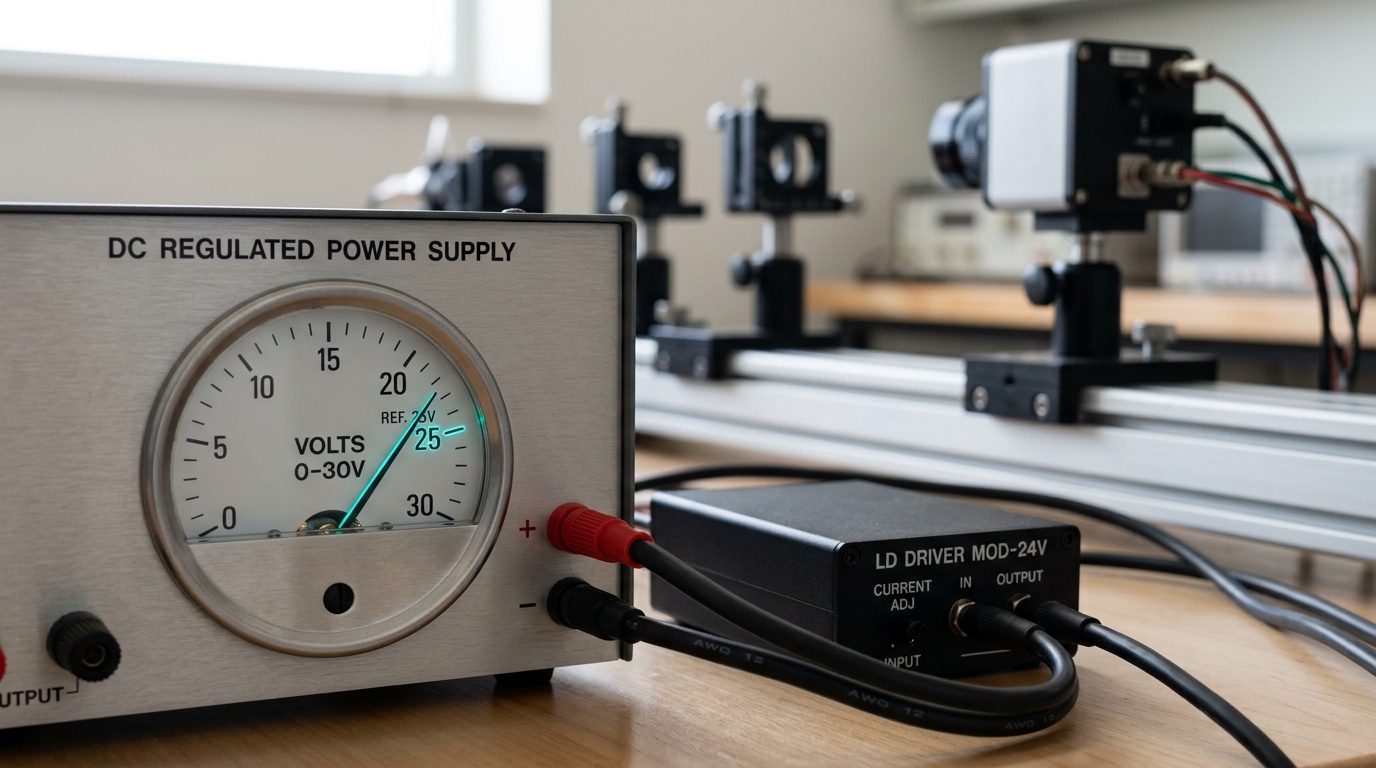
Waymo’s own paper does not leave the idealized 6.2 watts standing as the operative number, either. Circulators — the components that route a laser’s outgoing light toward the target while separately routing the return back to the receiver without the two colliding — are, in the paper’s words, “expensive optical components that are unlikely to be used in vehicle lidars in the near future, and eliminating the circulator incurs an optical loss of 3 dB,” which the paper says pushes “realistic implementations” to “total system losses on the order of 3−6 dB or higher,” and the laser power requirement to “at least 10−20 W” [1]. Automotive engineering is, in this specific instance, choosing to throw away roughly half the collected signal rather than fit a part too expensive for a car — which is exactly why the realistic figure is triple the idealized one, and why “6.2 watts” understates the number any real coherent automotive sensor would actually need to hit.
| Property | Time-of-flight (Hesai FTX, shipping) | Coherent/FMCW (Waymo ADAS case study) |
|---|---|---|
| Detection mechanism | Direct photon detection against a threshold | Heterodyne mixing against a local-oscillator sample [1] |
| Interference immunity | None inherent to the detection scheme | Wavelength- and phase-matched rejection of other sources [1, 9] |
| Velocity per point | Requires multiple pulses | Instantaneous, via Doppler beat frequency [1] |
| Fog degradation onset (Innoviz test) | ≈125 meters | ≈25 meters [6] |
| Total sensor power draw | <6 W, laser + receiver + processing (FTX) [12] | 6.2 W idealized transmit array alone; 10–20 W realistic [1] |
| Cheapest available unit price | ≈$200 (FTX, shipping at volume) [4] | $1,490 (Voyant CARBON, non-automotive) [10] |
| 2025–2026 shipment scale | 1.62M units (2025); 3–3.5M guided (2026) [2] | Not disclosed; Aeva’s entire Q1 2026 revenue was $6.3M [11] |
The Paper’s Own Diagnosis Names a Yield Problem, Not an Exotic-Physics Problem
Waymo’s paper does not stop at naming the power gap; it names the specific manufacturing bottleneck keeping it open. Reaching several watts of continuous power at automotive cost, the paper states, requires “either tens to hundreds of SOA channels in parallel, implying high SOA integration yields and low cost per SOA channel, or significant increases in the output power of SOAs integrated with PICs” — semiconductor optical amplifiers bonded onto photonic integrated circuits, the same general heterogeneous-integration family the wider silicon-photonics industry is racing to industrialize for entirely different reasons, on foundry roadmaps that will not clear before the end of this decade [1]. The paper is specific about how far current technology sits from that target: “state of the art demonstrations of single-mode SOAs integrated with PICs have achieved approximately 100 mW per channel,” against a design that needs several watts aggregate — meaning tens of such channels operating in parallel, at automotive yields nobody has publicly demonstrated, or a roughly tenfold jump in per-channel output power, before the cost side of the equation even enters the picture [1].
The paper names two further headwinds worth stating precisely, because neither is a claim that the sensing physics is wrong. Real driving scenes routinely produce multiple returns from a single laser pulse — a beam clipping a sign’s edge, or passing partway through road spray or foliage — and “the canonical frequency-modulated continuous wave (FMCW) scheme using two chirps cannot handle multiple returns,” forcing more complex modulation and post-processing than a comparably priced pulsed system needs [1]. And the compute load that disambiguation requires is not trivial: the paper’s own case study computes roughly 1.1×10¹³ floating-point operations per second of required processing, which it describes as “comparable to a high-end desktop graphical processing unit,” adding cost and power to a sensor that is already fighting a power budget on the optics side alone [1]. The paper’s own four-point summary of what “broadly adopted” coherent lidar still needs is stated without hedging: optimized link transmission, aggregate laser power in the watts range, robust multiple-return disambiguation, and dedicated compute ASICs [1]. All four are foundry, packaging, or silicon-design problems. None of them is a claim that the sensitivity or interference-immunity physics described earlier in this article is mistaken.
While the Watts Problem Waited, Hesai Rebuilt the Cheaper Sensor Twice
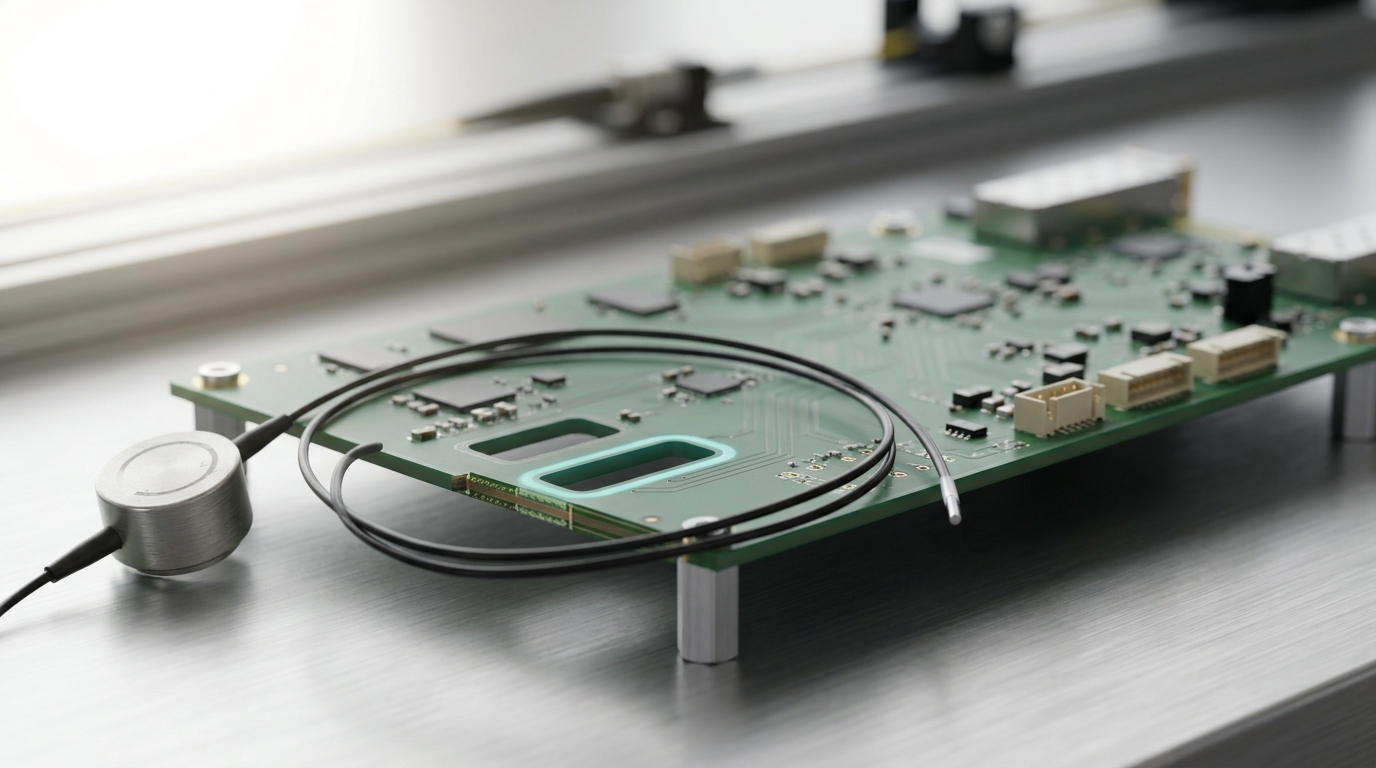
Hesai’s $200 figure is not a promotional low-ball; it is the current floor of a cost curve the company has been running down in public for a decade. A comparable lidar unit that cost more than $50,000 roughly ten years ago now sells, in Hesai’s FTX solid-state form, for approximately $200 — a reduction the company attributes to chip integration and mass production rather than any change in detection physics [4]. The FTX itself is a modest sensor by long-range standards: a blind-spot-class device with a 180-by-140-degree field of view, 20 to 30 meters of range at 10 percent target reflectivity, 492,000 points per second, and under 6 watts of total power draw [12]. It reached electric two-wheelers in 2026, supplying Niu Technologies’ NXT2 scooter; Automotive World reported that Niu chief executive Li Yan said a single perception solution can no longer meet the demands of increasingly complex urban traffic, characterizing his position as framing lidar as a necessary step rather than a premium addition, not a luxury sensor reserved for expensive cars [4].
The volume behind that price point is not a pilot program. Hesai shipped 1,620,406 lidar units across all product lines in 2025 — 1,381,133 of them for advanced driver-assistance systems, up 202.6 percent year over year, and 239,273 for robotics applications, up 425.8 percent — while reporting its first full year of GAAP profitability: RMB435.9 million (US$62.3 million) in net income on RMB3,027.6 million (US$432.9 million) in revenue, a 45.8 percent increase, at a 41.8 percent gross margin [2]. The company’s guidance for 2026 raises the bar to 3 to 3.5 million units, and its own regulatory filings show the trend continuing rather than plateauing: the first half of 2026 alone brought 1,099,998 units shipped, up 100.8 percent year over year, at a 39.7 percent gross margin [5]. CEO Yifan “David” Li’s own description of the milestone was measured rather than triumphant: “2025 was a landmark year as Hesai became the first lidar company to achieve full-year GAAP profitability” [2]. The shipment count behind that sentence is the actual argument of this article: whatever coherent detection can do that pulsed detection cannot, a market bought 1.6 million pulsed units in a single year at a price no coherent system has come near, while that market’s most detailed public technical voice on the coherent alternative was still describing semiconductor-optical-amplifier integration yield as an open problem rather than a shipped solution [2, 1].
Aeva Has the Design Wins Coherent Lidar Needed; It Does Not Yet Have Hesai’s Volume
None of this means coherent lidar has lost the automotive argument outright — it means the argument is being fought at a completely different scale than Hesai’s. Aeva Technologies, the most visible automotive-focused FMCW company still standing after several coherent-lidar startups shut down or pivoted over the past two years, reported first-quarter 2026 revenue of $6.3 million, up from $3.4 million a year earlier, in a filing with the U.S. Securities and Exchange Commission rather than a press release alone [11]. In the same filing, Aeva disclosed that it had “delivered production intent Atlas sensors to Daimler Truck,” language the company itself frames as a technology-maturity milestone toward an autonomous-truck production program, not a volume-shipment announcement [11]. The filing discloses no per-unit price for Atlas, no total order size, and no confirmed date when volume production begins — gaps this article states rather than fills from a less authoritative source, since Aeva’s own regulatory disclosure is the more reliable place to look, and it simply does not say.
Scale the two companies against each other and the gap is the whole story: Aeva’s entire quarterly revenue, across every program and every customer, is $6.3 million; Hesai shipped enough units in 2025 alone to generate over $432 million in revenue and turn a $62 million profit doing it. The cheapest commercially available coherent lidar on the market as of this writing is not even automotive-qualified — Voyant Photonics’ CARBON, a chip-scale FMCW sensor built for “industrial, robotics, and security applications” rather than passenger vehicles, launched around CES 2025 priced at $1,490 for a single unit, roughly 7.5 times Hesai’s FTX [10]. That is the cost curve’s present shape: the cheapest FMCW sensor anyone will sell today, built for a market with looser reliability requirements than automotive ADAS, still costs multiples of the pulsed sensor Hesai is shipping by the million into cars and scooters.
The Engineers Who Wrote the Power-Budget Paper Also Have the Clearest Reason to Want the Answer
It is worth asking why Waymo, specifically, published a paper working out coherent lidar’s automotive power budget in careful, unflattering detail rather than either dismissing the technology or hyping it. The paper’s own title supplies the answer: “Coherent Lidar for Ride-Hailing Autonomous Vehicles,” not for privately owned passenger cars in general [1]. A single driver’s adaptive cruise control system encounters another lidar-equipped vehicle in its field of view occasionally, for a few seconds at a time, in specific traffic conditions. A dense robotaxi fleet operating continuously across the same city blocks, with dozens of one operator’s own vehicles converging on the same intersections, pickup zones, and depot lots throughout the day, encounters other lidars constantly — from vehicles that are, in a meaningful operational sense, all the same customer’s sensors interfering with each other. Interference immunity that is a nice-to-have for one commuter’s morning drive is closer to a fleet-operations line item for a company running thousands of identical sensors through the same few square miles, which is precisely the buyer for whom Waymo’s own paper judges the engineering investment worthwhile: “although these challenges have yet to be fully addressed in a cost-effective fashion, they are by no means insurmountable. Given the inherent advantages of coherent lidar, the rewards are high if these issues can be solved” [1].
Innoviz’s own customer base points the same direction from the opposite side. The company sells only time-of-flight sensors into consumer ADAS programs where centimeter-level accuracy already exceeds what the actual driving task requires, and says as much directly: “centimeter-level accuracy is sufficient for safe lane keeping, cut-in detection, and collision avoidance” [6]. Hesai’s own shipment mix draws the same line from its data rather than its marketing: 1.38 million of its 1.62 million 2025 units went to ADAS programs priced against exactly that consumer requirement, while its smaller robotics segment — a closer analogue to a fleet-operated sensor bought by a buyer who prices uptime and interference rather than one driver’s sticker price — grew faster, 425.8 percent year over year, off a smaller base [2]. Two buyers are pricing the identical underlying detection-physics trade-off differently, and the $200 sensor is winning the larger of the two markets — not because the physics case for coherent detection is wrong, but because most of that market was never the buyer the physics case was actually built for.
The Verdict Falls Apart the Day a Fab Reports a Real Yield Number
This is not a permanent verdict, and it should say plainly what would break it. If a silicon-photonics or III-V foundry publishes — not promises, publishes, with a stated yield percentage and a cost-per-channel figure attached — a semiconductor-optical-amplifier integration platform that lets a coherent automotive lidar hit Waymo’s own 6.2-to-20-watt aggregate power budget at a bill of materials anywhere near Hesai’s $200, and a coherent sensor built on that platform ships more than 100,000 units in a single year to an automotive customer, the claim that a power-budget and yield problem — not a physics limitation — kept coherent detection out of cars is falsified in the interesting direction: the advantage Waymo’s engineers already proved on paper will have survived contact with a real production line. Absent that, the more mundane failure mode is just as informative. If cheap, high-yield SOA channels do eventually arrive and coherent automotive lidar still cannot clear fog past roughly 25 meters, or still cannot hold its sensitivity against a real pedestrian’s rough jacket at the reliability an automotive sensor needs, then the power budget was never the whole story — the speckle statistics Waymo’s own equations already flagged, not the watts, would turn out to be the harder problem underneath it.
Neither failure mode has happened yet. What has happened is legible in two numbers that required no modeling to produce: 1,620,406 and 6.2. Hesai shipped the first number in 2025, in sensors that mostly run on less power than Waymo’s own paper says a single automotive-grade coherent transmit array needs before anyone has built the receiver, the compute, or the vehicle the whole assembly rides in. Coherent detection has not lost the argument Waymo’s engineers made for it in February 2025 — nobody in the record reviewed for this article, Innoviz included, disputes the shot-noise mathematics behind it. It has lost, so far, the argument over who can build that transmit array for what it costs, and that argument is still being settled in watts, not in decibels.