The claim is negative in form
A biosignature is usually described as a positive thing: a gas, a texture, a molecule, an isotope ratio. In practice, a defensible claim of life detection is almost entirely a stack of negatives. The observation itself is rarely the difficult part. What is difficult is the list of things that could have produced the same observation without any biology, and the evidence that each of them did not.
This inverts the ordinary intuition about discovery. A detection is not strong because the signal is strong. It is strong to exactly the degree that the alternatives have been closed. A ten-sigma feature with three plausible abiotic explanations is weaker evidence for life than a three-sigma feature with none — and in practice, the abiotic explanations are never fully exhausted, only pushed down to residual implausibility. That is why the working vocabulary of the field has converged on hedged terms. NASA’s own language for the Perseverance result at Jezero Crater is a potential biosignature, defined explicitly as a substance or structure that might have a biological origin but requires more data before biology can be separated from non-biological chemistry [21].
The rest of this article is an inventory of what has to be ruled out, and a set of cases in which the ruling-out failed — not as cautionary anecdotes, but as methodology.
There is no operational definition of the thing being detected
The first problem is that the target is undefined. Cleland and Chyba argued that attempts to define life run into robust counter-examples and that the situation resembles trying to define water before molecular theory existed: without a general theory of the underlying nature of living systems, definitional disagreement can be expected to persist indefinitely [1]. Their claim is not that the word is meaningless. It is that a definition cannot do the work of a theory, and that arguing about the boundary case does not settle the science.
The practical consequence is severe. An instrument cannot be built to detect life. It can only be built to detect a physical or chemical quantity that life on Earth is known to affect. Every biosignature is therefore a proxy chosen from a sample of one biosphere, and the inference runs from proxy to biology through a chain of assumptions about chemistry, geology, stellar environment and instrument behaviour. Schwieterman and colleagues, reviewing the remotely detectable candidates, adopt exactly this posture: all proposed exoplanet biosignatures are potential biosignatures in current practice, and a biological origin has to be argued for rather than read off [5].
Disequilibrium is the most general proposal, and it is not sufficient
If no gas can be trusted individually, the natural move is to look for a property of the whole atmosphere. The most general candidate is thermodynamic disequilibrium: life is a persistent chemical engine, so a biosphere should hold its planet’s atmosphere away from the composition it would relax to if all permitted reactions ran to completion. The quantity is the available Gibbs energy — the difference between the free energy of the observed composition and that of its equilibrium state at the same elemental abundances, temperature and pressure:
Krissansen-Totton, Olson and Catling computed this across Earth history and reported values that make the appeal obvious and the limitation equally obvious. Earth’s purely gas-phase disequilibrium is small, about 1.5 joules per mole of atmosphere; when the full atmosphere-ocean fluid envelope is included, the figure rises to roughly 2,326 joules per mole, dominated by the coexistence of nitrogen, oxygen and liquid water, which would react to nitric acid at equilibrium. For the maximum Archean case — an anoxic atmosphere in which the disequilibrium is carried by the coexistence of carbon dioxide, nitrogen, methane and liquid water — they obtain about 234 joules per mole [2].
The same paper supplies the disqualifier. The authors state plainly that the magnitude of atmospheric disequilibrium does not on its own indicate the presence of life, and note that the abiotic photochemical disequilibrium of Mars is comparable in magnitude to the biological disequilibrium of the early Earth [2]. Photochemistry is also a chemical engine. A general metric that a dead planet can score as highly on as a living one cannot be a decision rule; it is at best a flag that directs attention to which species carry the imbalance and what flux would be required to maintain them.
Every candidate gas has an abiotic shadow
Below the general metric sits the gas-by-gas work, and this is where most claims fail. The literature here is essentially a catalogue of abiotic production routes.
Oxygen is the strongest single candidate and has the best-developed false-positive taxonomy. Meadows and colleagues set out four principal abiotic mechanisms with discriminants for each. A planet depleted in non-condensable gases lets water rise high in the atmosphere, where photolysis and hydrogen escape leave oxygen behind; the tell is high stratospheric water vapour and the absence of a nitrogen collisional signature. A planet around an M dwarf can lose an ocean during the star’s extended pre-main-sequence luminous phase, potentially building up hundreds of bars of oxygen; the tell is collisionally induced absorption from oxygen dimers and the absence of water. Carbon-dioxide photolysis without efficient recombination catalysts accumulates oxygen and carbon monoxide together; the tell is carbon monoxide and carbon dioxide present with methane absent. Surface photocatalysis on titanium-bearing minerals splits water directly [4].
Methane is worse: water-rock reactions produce it abundantly, so its value as a biosignature depends on the company it keeps, above all on simultaneous detection of an oxidising gas that should have consumed it [5]. Nitrous oxide has small abiotic sources on modern Earth but its reliability depends on the stellar environment. Methyl chloride has biological sources, combustion sources and volcanic gas-phase sources at once [5].
Dimethyl sulfide illustrates how quickly an abiotic shadow can appear. It was promoted as a candidate partly because its terrestrial production is overwhelmingly biological. Then it was identified in cometary material from 67P/Churyumov-Gerasimenko, and subsequently detected in the interstellar medium toward the molecular cloud G+0.693-0.027, with the ratio of dimethyl sulfide to methanol in the cloud closely matching the cometary value. The authors of that detection state directly that this provides observational evidence of efficient abiotic production and casts doubt on the molecule’s reliability as a biomarker [17]. A candidate gas can lose its status not because a claimed detection was wrong, but because chemistry elsewhere in the galaxy turned out to be more productive than assumed.
Frameworks for the exclusion, and scales for reporting it
Two responses to this situation have been proposed, and they solve different problems.
The first is inferential. Catling and colleagues set out a Bayesian framework in which biogeochemical models of an Exo-Earth system simulate what would be observed with and without a biosphere, and observations are then scored against both. The posterior probability of life takes the standard form
where
The second is communicative. Green and colleagues proposed a Confidence of Life Detection scale, a seven-level ladder running from initial identification of a signal consistent with biological origin up to confirmed detection, and framed it explicitly as the beginning of a community dialogue rather than a prescription [6]. A subsequent community workshop report worked through standards of evidence across Solar System and exoplanet targets, arguing that life detection will require multiple measurements and multiple approaches rather than a single decisive observation [7].
Analysis: these frameworks are governance for reporting, not machinery for producing evidence. A scale cannot manufacture the exclusions it asks you to declare, and a Bayesian posterior is only as good as the model space over which the abiotic likelihood was computed. The value of both is that they force the abiotic hypothesis set to be written down and made public, which is precisely what the contested cases below did not do early enough.
Four contested cases, read as method
Viking’s labelled release
The 1976 Viking landers carried a labelled release experiment that added radiolabelled nutrients to Martian soil and monitored for released radioactive gas. Both landers, thousands of kilometres apart, returned similar repeatable positive responses, and the heat-sterilised control behaved as a control should. Levin and Straat have argued for decades — and restated in 2016 — that the biological explanation remains viable, that abiotic interpretations are not conclusive, and that because later missions raise contamination concerns, the labelled release data may be the only measurements ever made on biologically pristine Martian samples [8].
The methodological difficulty is that a second Viking instrument, the gas chromatograph-mass spectrometer, found no organic molecules at detectable levels, and the two results were read as inconsistent. The abiotic accounts have accumulated since. Quinn and colleagues showed experimentally that radiation-damaged perchlorate salts produce reactive products that reproduce both the labelled release signal — hypochlorite reacting with amino acids in the nutrient medium to form N-chloroamino acids, which then decompose and release labelled carbon dioxide — and the oxygen release seen in the separate gas exchange experiment, without invoking hydrogen peroxide or superoxide [9].
What this case actually shows is not that Viking was badly designed. It is that a single positive assay with a correct-looking control is insufficient when the chemical inventory of the sample is unknown. Perchlorate had not been discovered on Mars in 1976. The abiotic hypothesis that eventually competed with life was not on anyone’s list because the relevant chemistry had not been observed yet. The dispute is not settled; Levin and Straat’s position and the perchlorate-radiolysis position are both live in the literature, and this article does not adjudicate between them.
ALH84001
In 1996 McKay and colleagues reported four co-located features in the Martian meteorite ALH84001: polycyclic aromatic hydrocarbons on fresh fracture surfaces, carbonate globules, fine-grained magnetite and iron sulfides within those globules, and micrometre-scale textures resembling terrestrial bacterially induced carbonate precipitates. Their argument was explicitly cumulative rather than singular — no one feature was claimed to be decisive, and the paper acknowledged that inorganic formation remained possible [10].
That cumulative structure was the weak point. Each strand was subsequently given an abiotic account, and a co-location argument collapses when the strands share a common abiotic cause. Steele and colleagues, using co-located nanoscale analysis of the carbonates and silicates, reported complex refractory organic material associated with mineral assemblages formed by serpentinisation and carbonation, co-located with nanophase magnetite and formed in situ during water-rock interaction on Mars — evidence for two potentially distinct mechanisms of abiotic organic synthesis in the late Noachian, which they frame as a background signal that any search for past life on Mars must take into account [11].
The lesson is about correlation between lines of evidence. Independent lines multiply confidence; lines with a shared generator do not.
Phosphine on Venus
Greaves and colleagues reported millimetre-wave spectral detections of phosphine in the Venusian cloud decks from the James Clerk Maxwell Telescope and ALMA, inferring an abundance around 20 parts per billion, and stated that they could find no known abiotic production route in the atmosphere, clouds, surface, subsurface, lightning, volcanism or meteoritic delivery [12].
Villanueva and colleagues then conducted independent reanalyses and concluded there was no evidence of phosphine, raising two specific methodological objections: the spectral features in question are several kilometres per second wide, and the phosphine transition cannot be cleanly separated from a nearby sulfur dioxide feature; their reanalysis yielded upper limits inconsistent with the original abundance [13].
Two things are worth separating. First, the original claim was itself an argument from exclusion — the authors’ case rested on the absence of a known abiotic route, not on a positive biological mechanism. That is the weakest possible form of the exclusion argument, because absence of a known route is a statement about the completeness of a literature. Second, the dispute that followed was not about biology at all. It was about baseline removal in spectroscopy and about line confusion. The claim never got as far as the biological question; it failed at the stage of establishing that the molecule was present. This remains contested, with the original authors having published a reply.
Dimethyl sulfide on K2-18 b
The most recent case follows the same shape at higher resolution. Madhusudhan and colleagues reported spectral features in JWST mid-infrared observations of the sub-Neptune K2-18 b consistent with dimethyl sulfide and/or dimethyl disulfide at about three-sigma significance, while themselves stating that more observations were needed, that the two molecules were degenerate in the data, and that accurate cross sections and possible non-biological sources still required work [14].
Three independent responses appeared. Luque and colleagues performed a joint analysis of the full 0.6-to-12-micron spectrum across three instruments and found insufficient evidence for either molecule, reporting that alternative molecules fit equally well and estimating that roughly twenty-five additional transits would be needed for a three-sigma statement [15]. Stevenson and colleagues found the mid-infrared spectrum highly susceptible to unresolved instrumental systematics, showing that different wavelength binning schemes yield materially different atmospheric interpretations, and reported that 87.5 per cent of their retrievals using the original preferred binning scheme did not favour the molecules in question [16].
The failure mode here is not fabrication or carelessness; it is that a marginal feature in a data set with unresolved systematics is sensitive to analysis choices that are made before any astrobiology enters. The relevant exclusions were about detrending and binning. And even had the molecule been securely present, the interstellar and cometary detections discussed above would have moved the argument straight to the abiotic-source question [17].
Morphology is the hardest case, because mimicry is cheap
Shape is the oldest biosignature and the least reliable one, because self-organising abiotic chemistry produces ordered structure freely. Silica-carbonate biomorphs grown in the laboratory under early-Earth-like conditions reproduce spheroids resembling cocci, framboidal clusters, and helical and worm-like filaments. Rouillard and colleagues mapped the accessible morphologies as a function of pH and barium concentration and proposed three discriminants that can eliminate the biomorph hypothesis rather than confirm biology: population size distributions, which are broad and bell-like for biomorphs but narrower for single-strain bacterial populations; continuous spatial gradients in size and density across a sample, rarely seen in biological communities; and smooth morphological variation under constant conditions, unlike the morphological diversity of a microbial assemblage [18]. Note the direction of all three: they are tests for excluding the abiotic explanation, not tests for detecting life.
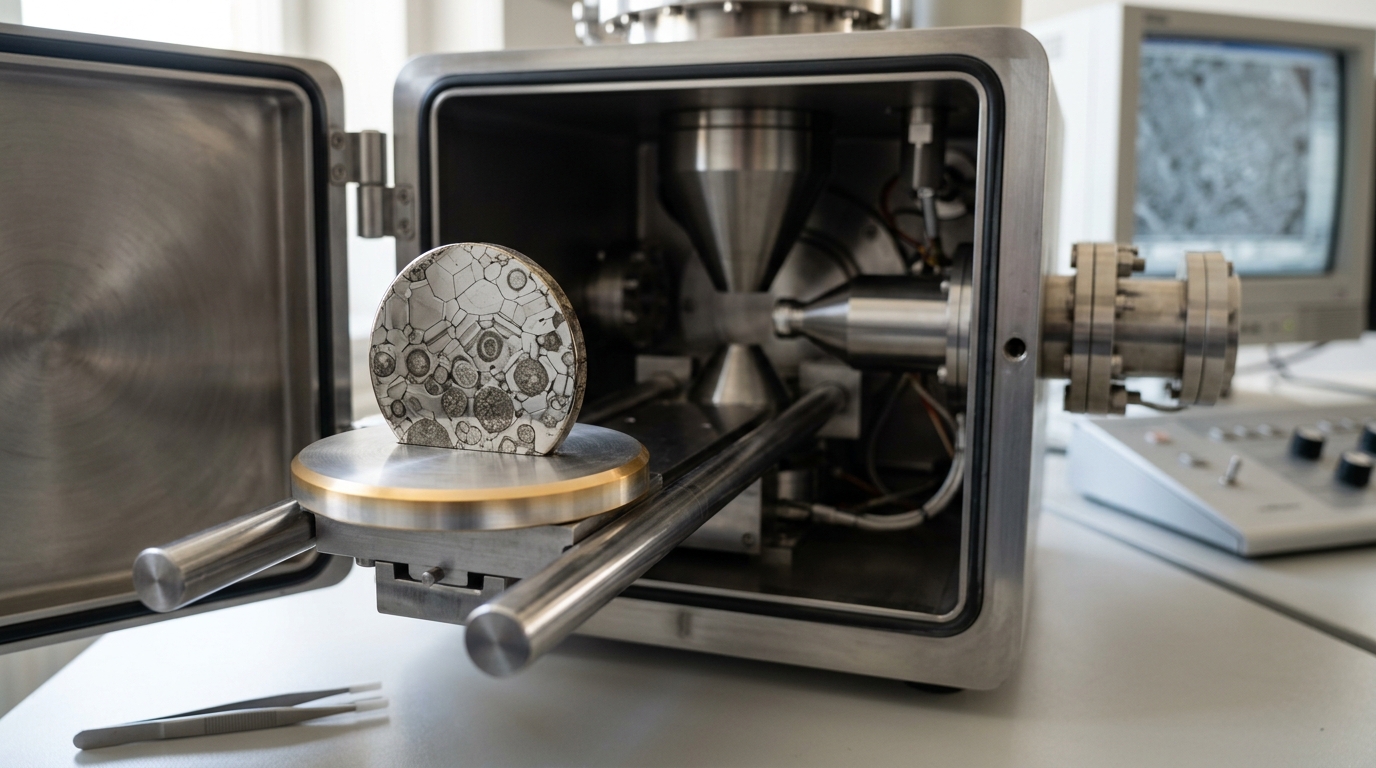
The same problem operates at outcrop scale. Cone-shaped structures reported from 3,700-million-year-old rocks of the Isua supracrustal belt in Greenland were interpreted as stromatolites. Allwood and colleagues re-examined them in three dimensions in the context of host-rock fabrics, combined with texture-specific major and trace element chemistry, and concluded that the structures are more plausibly deformation features formed in carbonate-altered metasediments long after burial [19]. The decisive move was not better imaging of the structure itself; it was placing the structure in its structural-geological context and asking what the surrounding rock had been through.
A recent survey of the problem argues that both abiotic self-organisation and biological mechanisms have been proposed for a range of geological patterns, and that discriminating between them is a general and unsolved problem for interpreting the terrestrial record as well as for astrobiology [20]. That work is a preprint and should be read as such.
Anyone who has walked a salt works knows the intuition being tested. An evaporating pan cracks into plates with straight shared edges, near-regular polygons, repeated hopper-crystal textures at the millimetre scale, and a size gradient that runs with the drying front. It is one of the most ordered surfaces in nature and it is produced by nothing but a supersaturated solution and the sun.
Contamination is an irreversible failure mode
Two contamination problems bear on the exclusion argument, and they are asymmetric in consequence.
Forward contamination is the transport of terrestrial organisms to a target body. It is governed internationally through the COSPAR framework under the 1967 Outer Space Treaty, and its scientific rather than merely ethical rationale is that a contaminated site can no longer answer the question it was visited to answer. The Mars Special Regions machinery exists for this reason: regions where terrestrial organisms could propagate are defined by thresholds on temperature and water activity, with a dedicated mission category for spacecraft that access them [22]. Contamination is not a measurement error that can be subtracted later. It removes the possibility of a clean measurement permanently, which is why Levin and Straat’s argument that the Viking data may be uniquely pristine carries weight independent of their interpretation of the result [8].
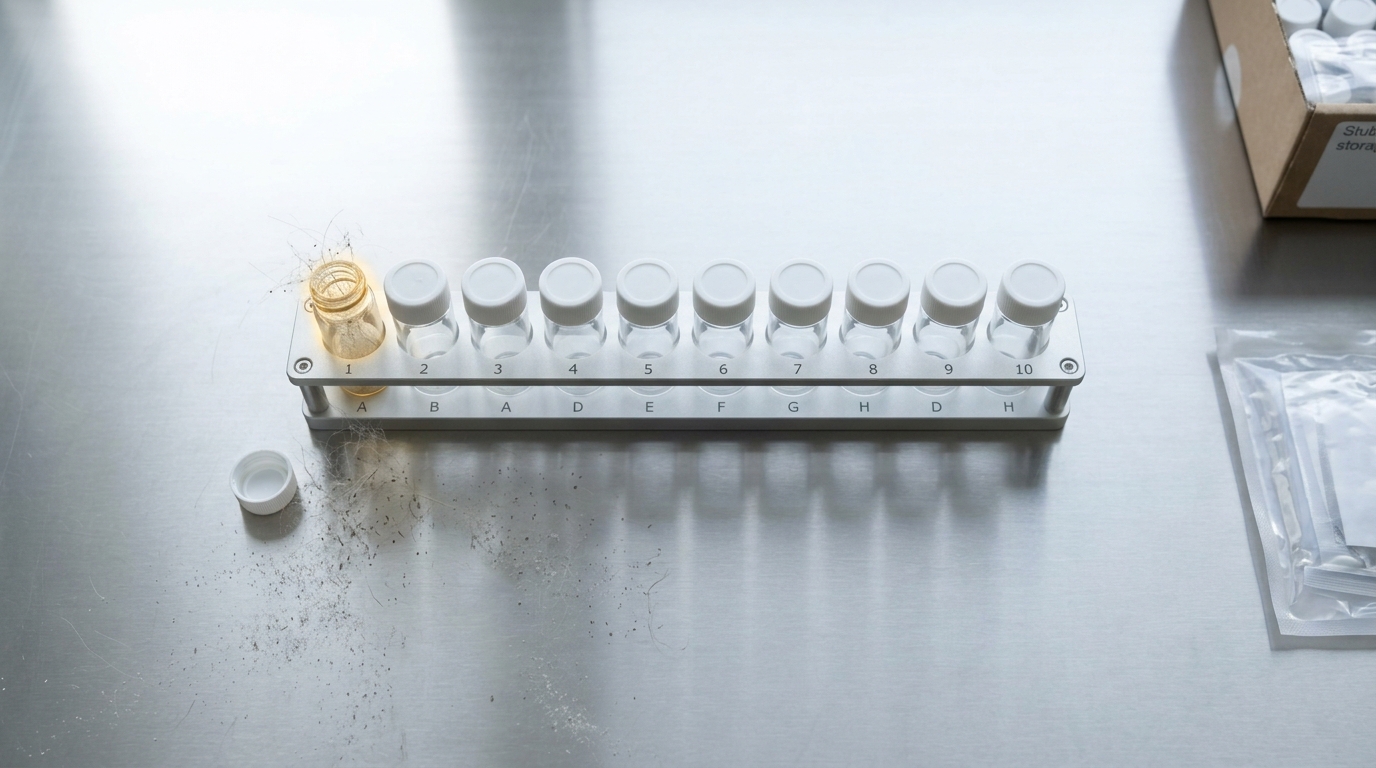
Backward contamination — terrestrial material carried outward and returned, or terrestrial molecules present in the instrument — is what turns a detection into an argument about provenance. The 1996 ALH84001 paper had to include contamination studies to argue the aromatic hydrocarbons were indigenous [10]. Contemporary practice pushes this earlier: for the Jezero Crater result, NASA’s own framing stresses that the minerals implicated, vivianite and greigite, can be generated abiotically through high temperatures, acidic conditions or binding to organic compounds, and that the Bright Angel rocks make those routes less likely without ruling them out [21].
Why the standard is deliberately asymmetric
The demand for exceptional evidence in this field is not decoration. It follows from four structural features of the problem.
First, the hypothesis space is unbalanced. Abiotic chemistry operates everywhere and has had billions of years to explore its possibilities; the prior probability that an unexplained signal has an abiotic cause is therefore high before any data arrive, which is exactly the term the Bayesian framework isolates [3].
Second, the abiotic hypothesis set is open. Perchlorate was not on the Viking list; interstellar dimethyl sulfide was not on the exoplanet list. New abiotic chemistry has repeatedly arrived after a claim, not before it, which means a claim’s exclusions have a shelf life.
Third, the observations are frequently unrepeatable. An exoplanet transit spectrum is expensive and epoch-specific; a returned sample is finite; a landing site can be visited once. Independent replication, the ordinary corrective in laboratory science, is often unavailable, which puts more weight on the analysis choices of a single team [16].
Fourth, the cost of a false positive is disproportionate. A retracted detection of life damages public trust in a way that a retracted measurement of a stellar radius does not, which is the explicit motivation behind the reporting frameworks [6, 7].
Prediction, with its terms stated. Horizon: through 2035. Assumption: the observational cadence of the next decade continues to deliver marginal three-sigma-class atmospheric features rather than unambiguous ones, and no in-situ Solar System mission returns a sample to a terrestrial laboratory before the end of that window. Under those assumptions I expect no single-instrument spectroscopic result to achieve community consensus as a life detection, and I expect at least one further high-profile claim to be contested primarily on data-reduction grounds rather than on biology. Observable indicators that this is holding: reanalysis papers appearing within twelve months of each major claim; disputes centring on detrending, binning and line confusion; convergence of published claims on hedged phrasing tied to a confidence scale. Disconfirmation condition: if a single instrument’s spectroscopic result is accepted as a life detection by a broad cross-section of the field without a returned sample or independent in-situ confirmation, this prediction is wrong.
The salt pan is the honest picture of the whole enterprise. Order is not evidence. What makes the difference is the pan next to it, run under the same sun with one thing changed, and the patience to keep cutting bunds until only one explanation is still standing in water.