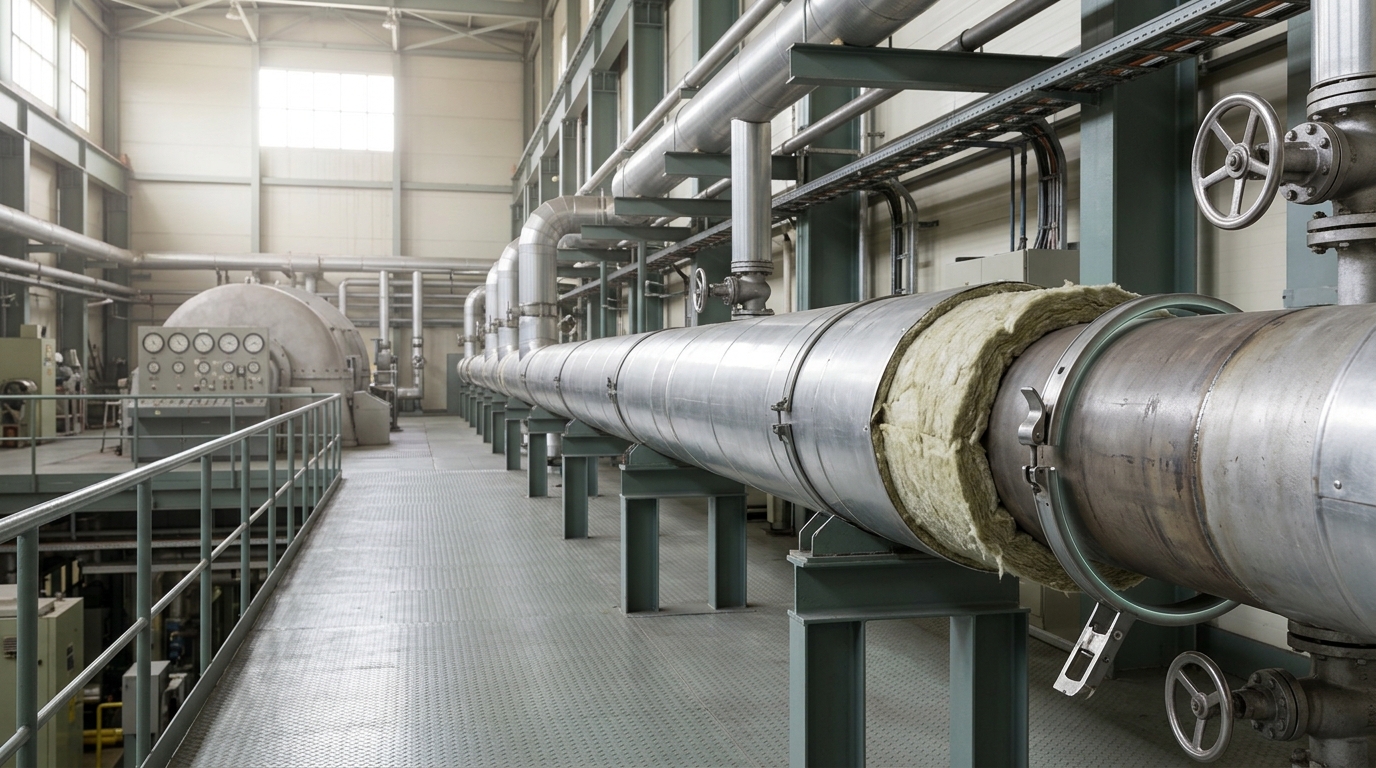
This article coins “evolutionary nuclear physics,” and it owes you a graded analogy
No biologist, historian of technology, or nuclear engineer uses the phrase “evolutionary nuclear physics.” It is coined here, for this publication, as a working lens: read reactor design history the way a phylogeneticist reads a family tree — populations of designs, a fitness landscape defined by markets and regulators rather than predators and climate, descent from named ancestors, drift, founder effects, and extinction events with causes that can be individually diagnosed. The nuclear physics underneath has to be exactly right regardless of the metaphor; the evolutionary reading is only worth keeping if it makes a true claim easier to see than plain narrative history would.
So the discipline this article imposes on itself is simple to state and harder to keep: every time the analogy is invoked, it is graded. Some parts of reactor history map onto population thinking almost mechanically — a specific 1990 paper shows the mechanism is mathematically identical to a model economists already use for exactly this kind of lock-in, and that correspondence is not decorative. Other parts break immediately: reactor lineages routinely inherit lessons from unrelated branches within a news cycle, something no biological lineage can do. Both kinds of claim appear below, and neither is allowed to pass as the other. The closing section audits the whole analogy explicitly, point by point, rather than leaving the reader to guess which parts were doing real work.
The case study is the design decision that made light-water reactors — the pressurized-water and boiling-water families that supply the large majority of the world’s nuclear electricity today — the default, followed outward to the cousins that survived in isolation, the branches that went extinct for identifiable reasons, the three accidents that changed what “fit” meant, and the resurrection attempts now under way for lineages that were pronounced dead decades ago.
A submarine’s engineering constraints, not a civilian merit contest, produced the default reactor
The founder event has a name, an institution, and a date. Hyman Rickover’s naval reactor program assigned the design of a pressurized-water reactor for submarine propulsion to the Bettis Atomic Power Laboratory on December 31, 1947, working with Alvin Weinberg’s group at Oak Ridge to develop the underlying technology [20] [14]. USS Nautilus got under way on nuclear power for the first time on January 17, 1955, driven by the Submarine Thermal Reactor, later designated S2W, a pressurized-water design built by Westinghouse [20]. The choice of pressurized water over other coolants was a submarine-specific engineering decision — compactness within a hull with a limited beam, a coolant chemistry the Navy’s own laboratories already understood well, and a schedule that rewarded a design that could be developed on a fixed timetable rather than one requiring more open-ended research. None of those three pressures is a civilian-power argument. A submarine reactor has to fit inside a hull, has no interest in refueling economics over a forty-year plant life, and answers to a single naval customer rather than a diffuse set of utilities.
Shippingport, which achieved first criticality at 4:30 a.m. on December 2, 1957, and delivered its first electricity on December 18, 1957, civilianized that submarine reactor directly: the plant used a pressurized-water design originally intended for a nuclear-powered aircraft carrier that President Eisenhower had cancelled, redirected into the first demonstration of nuclear electricity generation in the United States under Rickover’s own naval reactor organization [21]. This is the founder event in the strict population-genetics sense — a small founding population (one naval design lineage) colonizing an empty niche (civilian electricity generation) and carrying forward whatever traits it happened to have, whether or not those traits were the best available for the new environment.
Robin Cowan’s 1990 paper in the Journal of Economic History names this mechanism directly and traces its consequences with hard numbers. Cowan’s argument, stated in his own terms, is that “light water is considered inferior to other technologies, yet it dominates the market for power reactors” [1]. The dominance did not arise because light water won a civilian design competition; it arose because the Navy’s heavy, sustained investment in light-water submarine reactors generated learning-by-doing — accumulated operating experience, a trained workforce, a manufacturing base, and a body of engineering data — before competing civilian technologies had comparable investment behind them. By the time alternative reactor lines were ready for serious civilian development, light water had already built a lead in cumulative experience that no competitor could close except by matching decades of investment nobody was willing to make. Cowan’s case study is explicitly a story about increasing returns foreclosing technically credible alternatives, not about light water winning an engineering comparison on the merits [1].
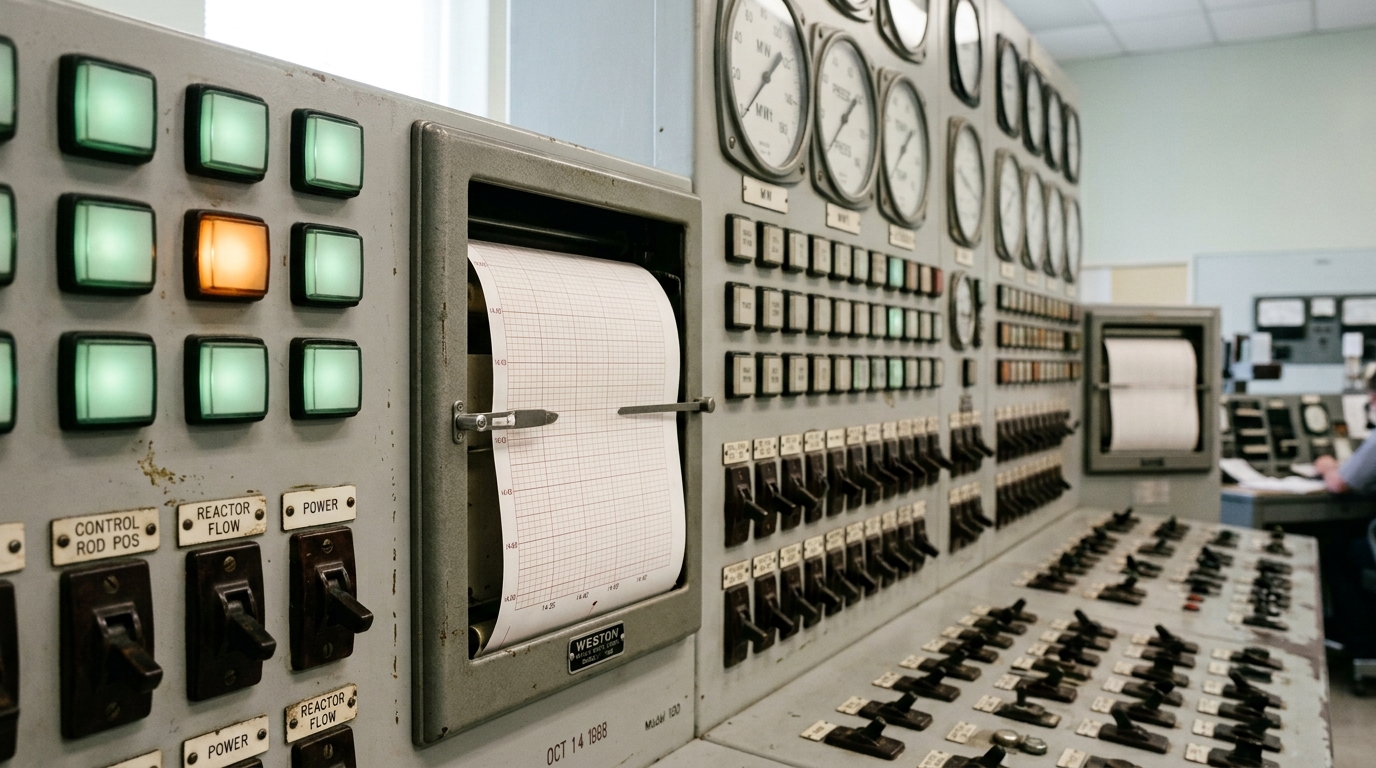
The counterfactual candidates were real, not manufactured for the sake of a tidier story. Britain’s Magnox program had already put reactor-generated electricity on a national grid before Shippingport existed in useful form: Calder Hall connected to the UK grid on August 27, 1956, and is frequently described as the world’s first commercial-scale nuclear power station [22]. Magnox used natural uranium fuel with a graphite moderator and carbon-dioxide coolant, which meant no uranium enrichment plant was required at all — a genuine economic and proliferation advantage relative to light water’s need for enriched fuel. Heavy-water moderation offered a related advantage on pure neutron economy: heavy water’s extra neutron makes it far less prone to parasitically absorbing neutrons than ordinary light water, which is precisely why a heavy-water-moderated design can sustain a chain reaction on unenriched natural uranium where a light-water design cannot [23]. On paper, at the moment civilian nuclear power was being decided, gas-graphite and heavy-water designs each had a real claim to superior civilian-relevant economics. Cowan’s point is that “on paper” is not how the market was actually settled; increasing returns from a submarine program beat parametric merit before the civilian comparison was ever run to completion [1].
The pedigree branches by direct descent, convergence, and isolation
A phylogenetic tree distinguishes three different relationships between similar organisms, and reactor lineages exhibit all three, which is exactly the kind of distinction plain narrative history tends to flatten. The pressurized-water reactor is a case of direct descent: the design documents, the primary-loop philosophy, and much of the component engineering trace continuously from the naval program through Shippingport into the commercial PWR fleets built by Westinghouse, Combustion Engineering, Babcock & Wilcox, and their licensees. The boiling-water reactor is a case of convergent origin within the same clade: it developed independently at Argonne National Laboratory, where Samuel Untermyer II proposed and ran the BORAX series of experiments to test whether a reactor could safely tolerate bulk boiling in its core, with General Electric then commercializing the result through the BWR/1 to BWR/6 product lines [25]. BWR and PWR share a coolant and a moderator — both are light water — but they were not derived from a single design lineage; they arrived at the same environmental niche (cheap, well-understood light water) from separate starting points, the reactor-design equivalent of two unrelated lineages independently evolving a similar body plan under similar selection pressure.
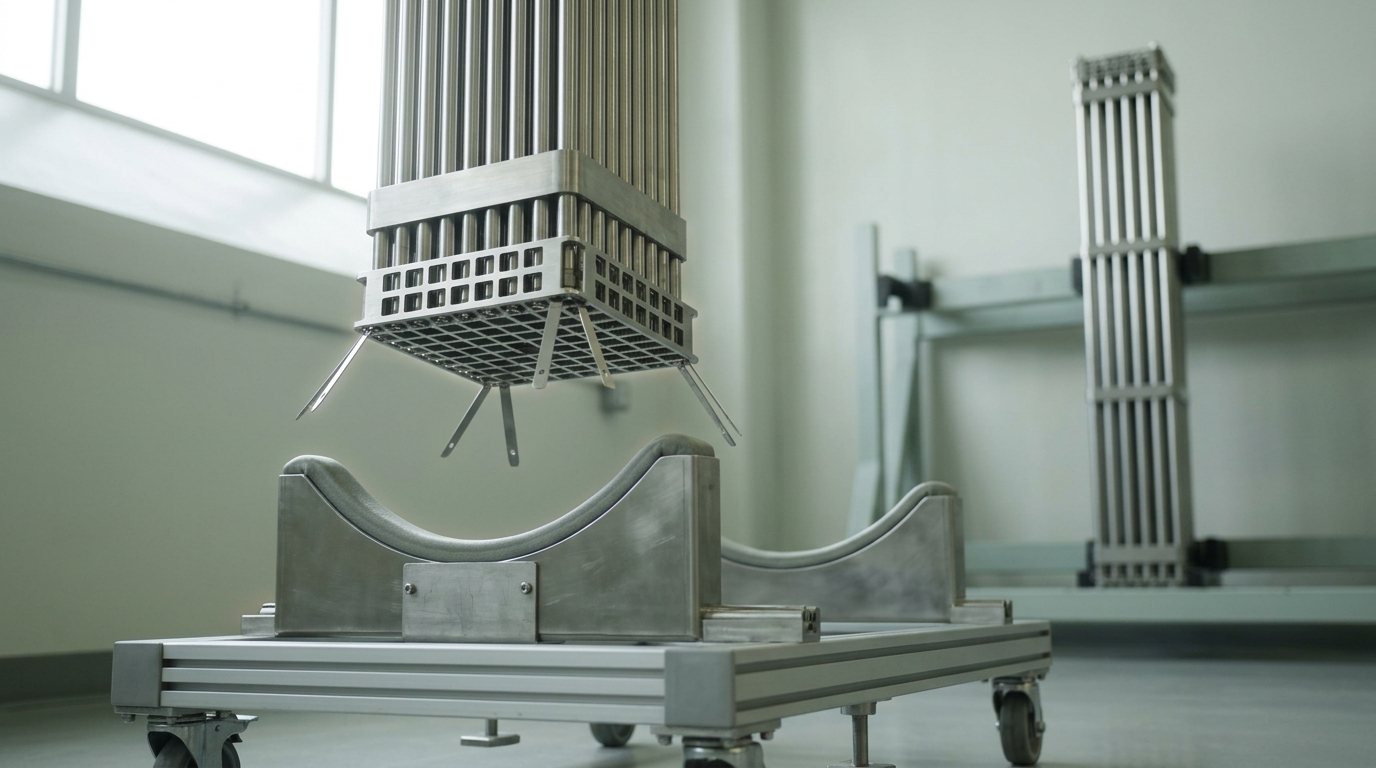
The Soviet VVER supplies a third relationship: independent convergent origin under geographic isolation. The design was proposed at the Kurchatov Institute by Savely Feinberg and built into a prototype at Novovoronezh before the 1970s, arriving at a pressurized-water body plan without access to the American naval program’s data or hardware [26]. Isolation produced real morphological differences rather than an identical copy: VVER units use horizontal steam generators rather than the vertical units standard in Western PWRs, hexagonal rather than square fuel-assembly cross-sections, and pressure vessels without bottom penetrations — differences a population geneticist would recognize as drift accumulating in a separated gene pool that nonetheless converged on the same basic strategy under the same selection pressure. VVER remains commercially active today, in operation across Russia, Ukraine, Belarus, Armenia, China, the Czech Republic, Finland, Hungary, Slovakia, Bulgaria, India, and Iran, with export construction under way in Turkey, Bangladesh, and Egypt [26].
Two cousins escaped the light-water clade’s dominance by occupying a genuinely different niche rather than by resisting selection directly. CANDU, Canada’s heavy-water design, exploits the neutron-economy advantage described above to run on natural, unenriched uranium — a durable niche for any country wanting to avoid dependence on enrichment services — and remains operational today with seventeen units in Canada plus exported fleets in South Korea, Romania, China, India, and Argentina [23]. Britain’s advanced gas-cooled reactor is the opposite case: an island lineage now approaching total extinction. The AGR succeeded Magnox specifically to raise steam conditions enough that the plant could use conventional coal-plant-style turbines, but its export prospects were undermined from the start by the UK’s own procurement structure — the Central Electricity Generating Board split its first-generation AGR orders among three separate design-and-build consortia, each producing a materially different detailed design, which meant there was no single standardized AGR to sell abroad even before construction delays became public. Dungeness B, ordered in 1965, did not begin generating until 1983, thirteen years late [24]. No new AGR has been ordered since the 1980s, and the isolation shows in the closure schedule: Dungeness B closed in 2021, Hunterston B and Hinkley Point B in 2022, and as of the most recent extension announcement in July 2026 the four remaining stations — Hartlepool, Heysham 1, Heysham 2, and Torness — are scheduled to close by March 2030, after which EDF expects the entire AGR fleet to pass into government-owned decommissioning by the mid-2030s [24] [6]. An island lineage, never exported, aging out on its own timetable — the AGR is as close as reactor history comes to an endemic species on a shrinking range.
Extinct branches each died of a named, specific cause
A dead branch on a phylogenetic tree still carries information, provided the cause of death is diagnosed rather than waved at generically as “the past.” Four reactor lineages went extinct in the first three decades of civilian nuclear power, and each died of something different and specific enough to name.
Fermi 1, a sodium-cooled fast breeder fueled with 26-percent-enriched metallic uranium, suffered a partial core meltdown on October 5, 1966, when a blockage in one of the lower support-plate coolant orifices restricted sodium flow and damaged two of its ninety-two fuel assemblies, some fuel reaching roughly seven hundred degrees Fahrenheit before the event was brought under control; no abnormal radioactivity reached the environment [16]. The plant restarted in July 1970 but shut permanently on November 27, 1972, for lack of funding and aging equipment, and was formally decommissioned by the end of 1975 [16]. The selection pressure here was materials engineering colliding with economics: a demonstrated design flaw plus the ordinary cost of running an experimental first-of-a-kind plant, with no political constituency large enough to fund a second attempt.
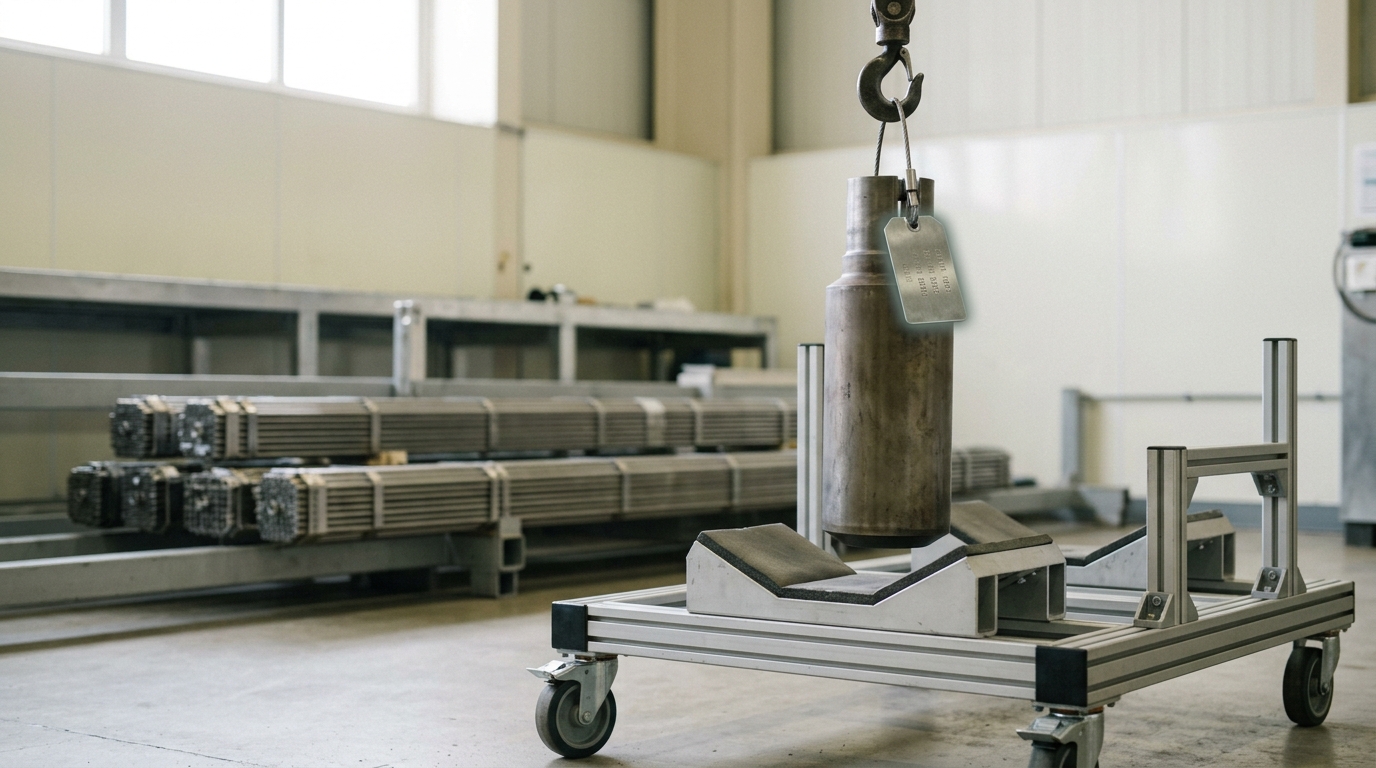
Piqua’s organically cooled and moderated reactor, a 45.5-megawatt-thermal Atomic Energy Commission demonstration unit using terphenyl — a biphenyl-like organic oil — as both coolant and moderator, ran from 1963 to 1966 before neutron flux inside the core induced polymerization of the terphenyl itself, thickening it and fouling heat-transfer surfaces, compounded by control-rod problems [17]. The Atomic Energy Commission terminated the program citing higher-priority needs for funding and personnel, a lack of continuing programmatic interest, and the unresolved technical problems together [17]. This is a materials extinction in the most literal sense available in reactor engineering: the coolant chemically degraded under the exact radiation environment the reactor existed to produce.
The molten-salt reactor experiment at Oak Ridge is the most consequential extinction on this list, because it died of neither an accident nor a materials failure. The reactor went critical on June 1, 1965, and operated until December 1969, logging 11,555 hours of equivalent full-power operation along with 19,405 hours of fuel-salt pump circulation and 23,566 hours of coolant-pump circulation, critical roughly 80 percent of the time across one fifteen-month stretch that included uninterrupted runs of one, three, and six months [12]. The experiment itself worked. What killed the follow-on program was institutional and political: expertise in the technology was concentrated almost entirely at Oak Ridge, giving it a thin national political base, while the competing liquid-metal fast-breeder program had an earlier start and government contracts distributed across many congressional districts, and by the early 1970s the Atomic Energy Commission judged it could not justify diverting funds from the breeder program to a molten-salt effort that lacked comparable geographic constituency [13]. Alvin Weinberg, who had championed both reactor safety broadly and molten-salt technology specifically, was removed from the directorship of Oak Ridge National Laboratory by the Nixon administration in 1973 after eighteen years in the role, a dismissal that effectively ended serious domestic pursuit of the technology until a brief, nonproliferation-driven revival under the Carter administration between 1977 and 1981 produced what remains a reference design for commercial molten-salt reactors [14]. Molten salt did not lose an engineering contest; it lost a funding contest inside one government agency, a selection pressure with nothing to do with reactor physics.
Superphénix is the costliest extinction on the list and the clearest case of a design killed by economics compounded by politics rather than by physics failing outright. The French sodium-cooled fast breeder connected to the grid on January 14, 1986, with a nameplate capacity of 1,242 megawatts, but achieved a lifetime capacity factor of only 31.2 percent across an eleven-year operating life split roughly into fifty-three months of normal operation (mostly at reduced power), twenty-five months resolving technical problems including sodium leaks and corrosion, and sixty-six months halted for political and administrative reasons [15]. By December 1996 the plant had finally reached 90 percent of nominal power, a sign the technical problems were becoming tractable — but France’s highest administrative court invalidated the reactor’s 1994 restart authorization on February 28, 1997, and incoming prime minister Lionel Jospin’s government announced permanent closure that June, formalized by ministerial decree in December 1998, with the last fuel rod removed on March 18, 2003 [15]. Total cost ran to an estimated sixty billion French francs, on the order of nine point one billion euros, and a 1996 French government accounting review found that an availability factor above 46 percent — a bar the plant was approaching but had not yet cleared — would have justified continued operation through 2001 [15]. Superphénix is the rare extinction where the technical trajectory was arguably still improving when a political decision, not a technical one, ended the branch.
Three accidents did the selecting that markets and regulators had not
Fitness functions in biology are set by climate, predation, and resource availability; in reactor history they are set by capital markets, insurance, regulators, and public consent, and three accidents rewrote all four within thirty-two years.
Three Mile Island’s 1979 partial meltdown killed no one, but it cratered the American nuclear order book. Fifty-two U.S. reactors were cancelled between 1980 and 1984 alone, on top of forty reactors already cancelled before the accident amid the 1973 oil shock and overcapacity concerns, and no new U.S. nuclear plant was authorized to begin construction from 1978 until 2012 — a construction gap of roughly three and a half decades [19]. The World Nuclear Association’s own account of the period describes the American nuclear construction industry entering “the doldrums for two decades” as a direct consequence [4]. This is selection acting on financing risk rather than on reactor physics: the accident changed what regulators and lenders would tolerate, and that change alone was enough to end new construction for a generation without a single subsequent U.S. accident.
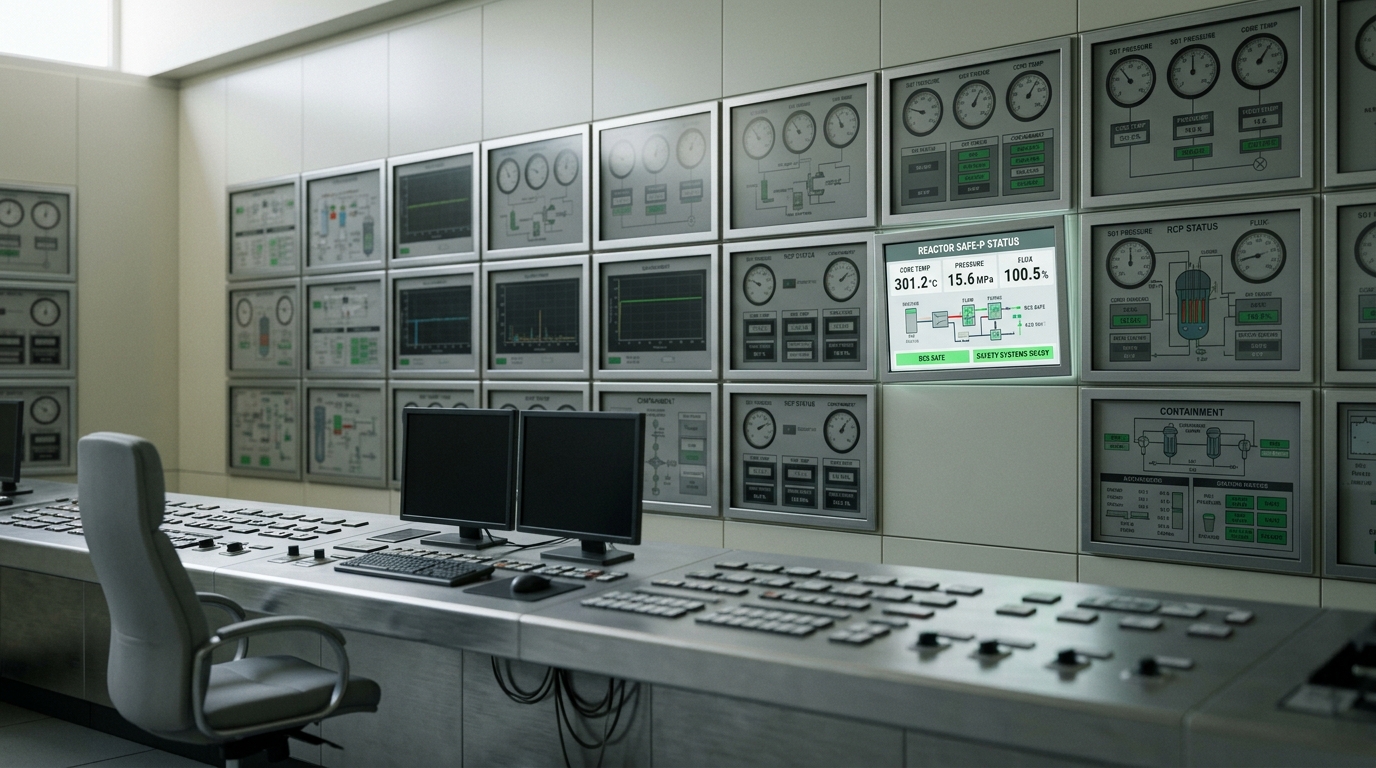
Chernobyl selected against a specific, nameable design trait. The RBMK reactor that exploded on April 26, 1986, had a positive void coefficient: as coolant water boiled into steam voids under certain operating conditions, reactivity increased rather than decreased, because fewer water molecules meant less neutron absorption and therefore more fission — the opposite of the negative feedback every Western commercial design relies on for inherent stability [9]. That positive feedback, combined with a control-rod design flaw that produced a brief power surge on insertion rather than an immediate shutdown, overwhelmed every other influence on reactivity during the operators’ shutdown test and destroyed the reactor [9]. Every remaining RBMK worldwide was subsequently modified — redesigned control rods, additional neutron absorbers, fuel enrichment raised from 1.8 to 2.4 percent uranium-235 to improve low-power stability, and faster automatic shutdown systems — changes a German nuclear safety authority concluded make “a repetition of the 1986 Chernobyl accident… virtually impossible” [9]. A specific design trait was identified, named, and selected out of the surviving population globally; no RBMK unit built after 1986 was licensed with the original characteristic intact.
Fukushima Daiichi selected against a vulnerability that had already been recognized and fixed elsewhere: dependence on continuous electrical power for decay-heat removal. The March 2011 tsunami, at fifteen metres, flooded the site and disabled twelve of the plant’s thirteen backup generators, submerging switchgear and batteries housed in basement areas and isolating the operating reactors from any heat sink [10]. The striking detail is that the American nuclear industry had already closed this exact gap a decade earlier: after the September 11, 2001 attacks, U.S. plants were required to prepare for extended station blackout with portable, power-independent means of adding cooling water, a mandate every U.S. plant satisfied by 2008, after which it became a formal license condition [10]. Japan had not adopted an equivalent requirement before 2011. The measurable consequence internationally was that passive decay-heat removal — systems that work by gravity, natural convection, or stored pressure rather than by powered pumps — moved from an advanced-design feature to something close to a baseline requirement: current safety literature describes passive safety as “requiring no operator intervention in the event of a major malfunction,” a design goal newer reactors treat as close to mandatory rather than optional, with regulators estimating an order of magnitude or more reduction in core-melt likelihood as a result [11]. Germany’s response went beyond design retrofits to end the lineage in that jurisdiction outright: Chancellor Merkel ordered an immediate three-month moratorium and the shutdown of the country’s eight oldest reactors within days of the accident, the government revived a previously softened phase-out plan on May 30, 2011, targeting closure of every remaining reactor by the end of 2022, and the Bundestag approved the plan 513 to 79 that June; Germany’s final three plants — Isar 2, Neckarwestheim 2, and Emsland — shut down in mid-April 2023, ending a nuclear program that had supplied more than a quarter of the country’s electricity from seventeen reactors as recently as 2011 [5]. That is a selection event operating at the level of an entire national jurisdiction rather than a single design trait.
Underneath all three accidents ran a quieter, continuous selection pressure that never made headlines the way a meltdown does: construction cost escalation. The empirical picture here is genuinely contested, and the contest is worth stating honestly rather than resolving by fiat. A dataset assembled by Jessica Lovering, Arthur Yip, and Ted Nordhaus covering 349 reactors across seven countries — the United States, France, Canada, West Germany, Japan, India, and South Korea — representing 58 percent of all reactors built worldwide between 1960 and 2010, found that cost trends “varied significantly in magnitude and in structure by era, country, and experience,” with much milder escalation in several countries than in the U.S. fleet and, in some countries and periods, outright cost declines; the authors conclude there is “no inherent cost escalation trend associated with nuclear technology,” explicitly setting that finding against a narrative built mainly on the more limited U.S. and French cost series that earlier work had relied on [3]. Both readings can be true at once: American and French experience does show real cost escalation over the periods most heavily studied, and a wider seven-country dataset shows that escalation was not a universal, technology-inherent law. What both sides of the literature agree on is that every retrofit driven by TMI, Chernobyl, and Fukushima added capital and licensing cost to plants already under construction or already operating, cost that never appears as a discrete line item labeled “safety” but that compounds quietly across every design that survives each accident. In a population-thinking frame, this is the fitness cost every surviving lineage pays continuously, as distinct from the acute, one-time cost an extinction event imposes on a lineage that does not survive it.
A new radiation is under way, and one resurrection is the live test of the whole model
The period since roughly 2020 looks like an adaptive radiation: multiple lineages, some entirely new and some revived from apparent extinction, are being tried simultaneously against a changed environment — climate-driven demand for reliable, low-carbon power; data-center electricity demand; and renewed interest in fuel-cycle characteristics that light water does not offer.
The small modular reactor attempt closest to market has already shown both a regulatory success and a commercial failure inside three years. NuScale’s 160-megawatt-thermal, 50-megawatt-electric design received the U.S. Nuclear Regulatory Commission’s final safety evaluation report — the core regulatory approval milestone — on August 28, 2020, and the NRC issued a full design certification for the design in January 2023, the first small-modular-reactor design certification in U.S. history [18]. Regulatory success did not translate into a completed project: the Utah Associated Municipal Power Systems’ six-module Carbon Free Power Project at Idaho National Laboratory, the design’s flagship customer, saw its projected cost climb from fifty-five dollars per megawatt-hour to a range of ninety to one hundred dollars per megawatt-hour under inflationary pressure, could not reach the 80 percent subscription commitment needed to proceed, and UAMPS and NuScale jointly cancelled the project in November 2023 [18]. A design can clear every regulatory hurdle and still fail the market-selection test that follows it — exactly the distinction population thinking is built to keep separate.
Other new and revived designs have moved further. Vogtle units 3 and 4 in Georgia, the first new large U.S. reactors to enter service in over three decades, connected to the grid on April 1, 2023 and reached commercial operation that July for unit 3, with unit 4 connecting to the grid in March 2024 [4]. China’s HTR-PM, a twin-reactor 250-megawatt-thermal pebble-bed design at Shidaowan feeding a single 210-megawatt-electric turbine, reached first criticality in its two units in September and November 2021 and commercial operation in December 2023 [7]. Russia’s Akademik Lomonosov, a floating plant carrying two 35-megawatt KLT-40S reactors derived from icebreaker propulsion units and fueled with low-enriched uranium on a three-to-four-year refueling cycle, began commercial operation in May 2020 at Pevek in the Chukotka region, having been reassigned there from an originally planned site at Vilyuchinsk in 2012 [8].
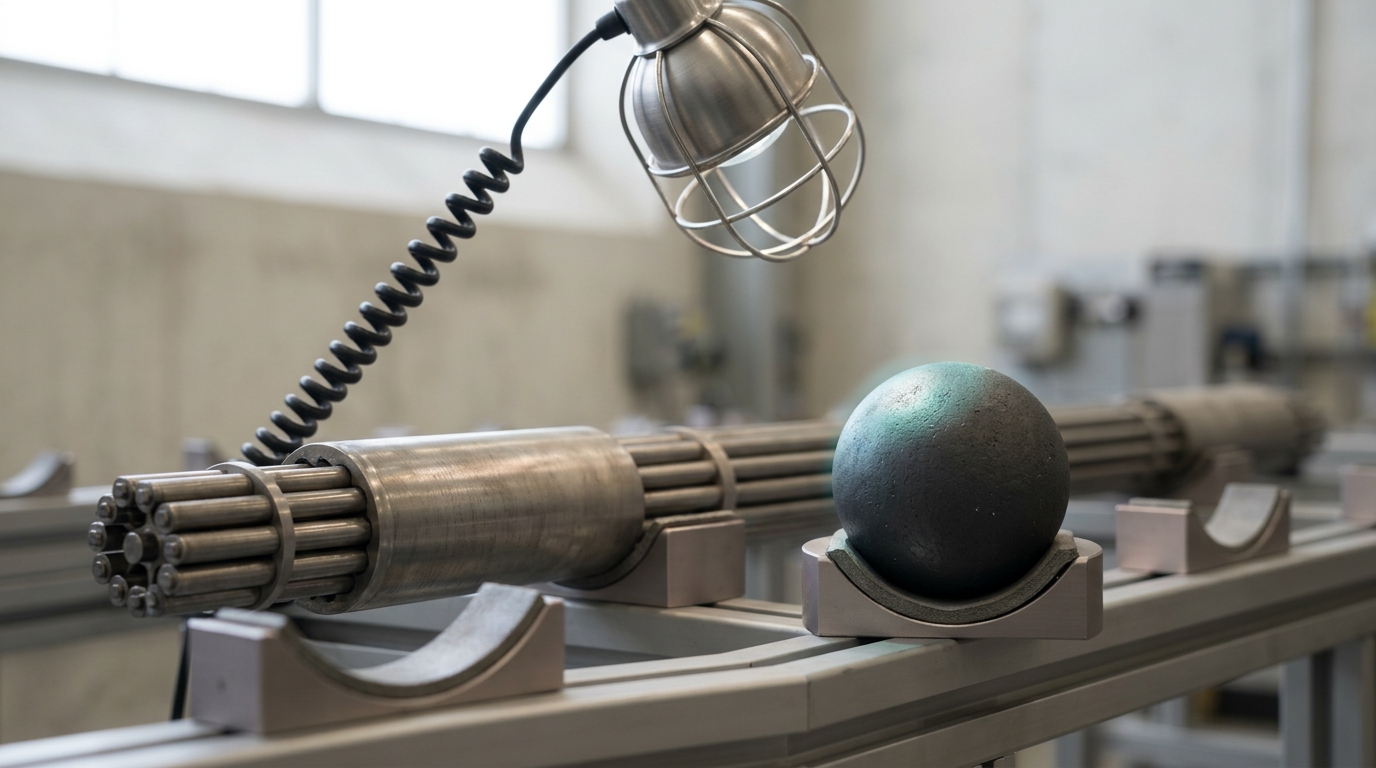
Molten salt supplies the sharpest test of whether an extinct lineage can revive when its environment changes, because the lineage did not merely lose market share the way AGR did — it was formally defunded and its chief advocate removed from his post. China’s TMSR-LF1, built by the Shanghai Institute of Applied Physics, reached criticality in October 2023 and was reported operating at full power by June 2024; in October 2025 it achieved the first thorium-to-uranium fuel conversion demonstrated in a molten-salt reactor, detecting protactinium-233 after ten days of full-power operation, with a 100-megawatt-thermal demonstration thorium reactor targeted by 2035 as the next step [7]. Sodium fast reactors are being retried as well: TerraPower’s Natrium project in Kemmerer, Wyoming — a 345-megawatt-electric sodium-cooled fast reactor paired with molten-salt thermal storage, funded roughly half by the U.S. Department of Energy with a further billion-dollar commitment from Bill Gates — submitted its construction permit application to the NRC on March 28, 2024, broke ground on its sodium test and fill facility in June 2024, cleared a final environmental impact statement finding no adverse effects in October 2025, and received the NRC’s construction permit for Kemmerer Unit 1 on March 4, 2026, the first construction permit the NRC has ever issued for a non-light-water reactor; reactor construction itself began the following month [27]. Western molten-salt developers pursuing similarly ambitious designs are, as of this writing, publishing vendor roadmaps rather than operating plants, and that distinction matters: a roadmap is a claim about the future made by an interested party, not a verified operating result, and this article treats it as exactly that.
Because this is the live test the premise promised rather than a settled conclusion, the honest way to close this section is with the indicators that would confirm or kill each revival within roughly a decade, not with a prediction dressed as a fact. For molten salt specifically: confirmation would look like TMSR-LF1 or a successor sustaining full-power operation for a multi-year campaign without a fuel-salt chemistry failure, plus at least one Western regulator issuing a construction permit for a molten-salt design rather than only a pre-application review; disconfirmation would look like a second unplanned extended shutdown for chloride or fluoride salt corrosion of structural materials, the same materials problem that has recurred across molten-salt programs since Oak Ridge. For sodium fast reactors: confirmation looks like Natrium reaching criticality on a schedule within roughly two years of its current construction-permit timeline; disconfirmation looks like a schedule slip past 2035 driven by sodium-handling or licensing issues, echoing Superphénix and Fermi 1’s histories with the same coolant. For small modular light-water designs: confirmation looks like a second SMR customer reaching financial close after NuScale’s cancellation; disconfirmation looks like SMR economics remaining uncompetitive with large-reactor and renewable-plus-storage alternatives through the early 2030s. These are falsifiable, dated claims about what would need to happen, not forecasts that it will.
The analogy is exact about lock-in and broken about inheritance — that boundary is the finding
Graded against biological evolution, several parts of this history are exact rather than merely suggestive. Descent is literal: design documents, safety-case arguments, and component specifications pass from Nautilus to Shippingport to the commercial PWR fleet as physical inheritance, not metaphorical resemblance. Variation across national programs — American, French, Soviet, British, Canadian, Chinese — produced genuinely distinct lineages under geographic and institutional isolation, exactly as allopatric speciation produces distinct populations under geographic separation. Selection by markets, regulators, and accidents is observably real and, in the case of TMI, Chernobyl, and Fukushima, dated and measurable. And the founder-effect and lock-in mechanism Cowan documents is not just analogous to a general economic idea — it is the same model. W. Brian Arthur’s 1989 formalization of competing technologies under increasing returns describes exactly this dynamic as a generalized Pólya urn: two technologies accumulate adopters, and the probability the next adopter chooses technology A over B is proportional to how many adopters A already has, so that
where
Other parts of the analogy fail on contact, and the failure is informative rather than embarrassing. Reactor evolution is Lamarckian to its core: a lesson learned by one lineage transfers horizontally, immediately, and completely to every other living lineage, something no biological inheritance system permits. Fukushima did not modify only Japanese BWRs or only the RBMK-adjacent designs that shared its specific vulnerability; it modified essentially every operating reactor design on Earth, PWR, BWR, CANDU, and VVER alike, within a regulatory cycle measured in a few years rather than the many generations biological selection would require to fix an equivalent trait. A biological population cannot decide, collectively and on purpose, to redesign its own genome after observing a competitor’s fitness disaster; a regulator can, and after 2011, most of them did. Intentional foresight is real in this history in a way it is not in biology at all — engineers explicitly evaluated heavy water and gas-graphite designs against light water before Shippingport was built, understood the neutron-economy tradeoffs involved, and were overruled anyway by accumulated capital and institutional momentum, which is a different failure mode than simply not knowing better. Foresight existed and lost to path dependency; that is a stronger and more specific claim than saying evolution has no foresight, because it locates exactly where human intention intersected the lock-in mechanism and where the mechanism won anyway.
That combination — real design intentions, routinely defeated by increasing-returns dynamics that are mathematically identical to a textbook model of technology lock-in, compounded by an inheritance system so unconstrained it does not resemble biological descent at all past the founder-event stage — is exactly why reactor history rewards phylogenetic reading in the first place. It is cultural evolution with unusually complete documentation: design decisions are dated, cost overruns are audited, accidents are investigated by international bodies that publish their findings, and closure decrees are matters of public record. Most cultural lineages leave nothing like this evidentiary trail. Reactor design history can be studied phylogenetically precisely because, unlike most of culture, almost everything about who descended from whom, who died of what, and who is trying to come back was written down.