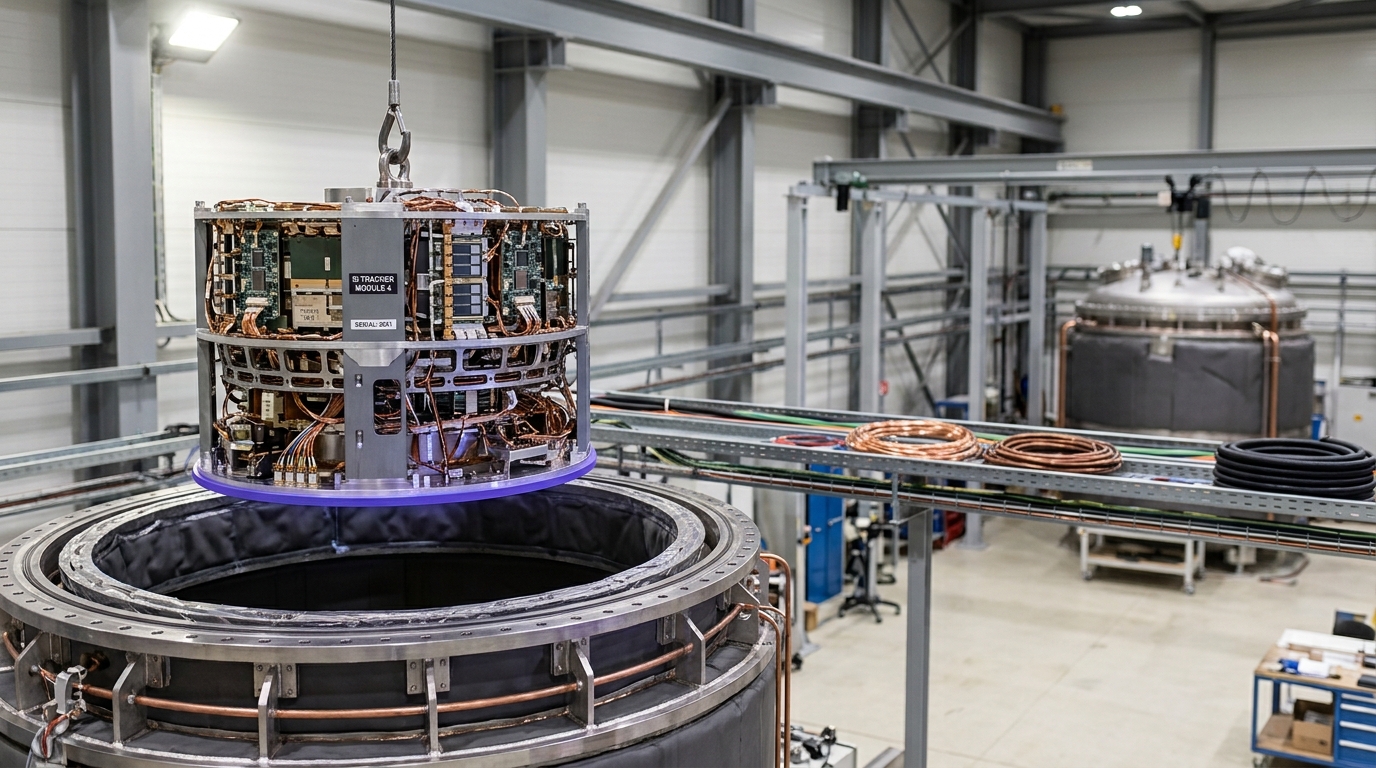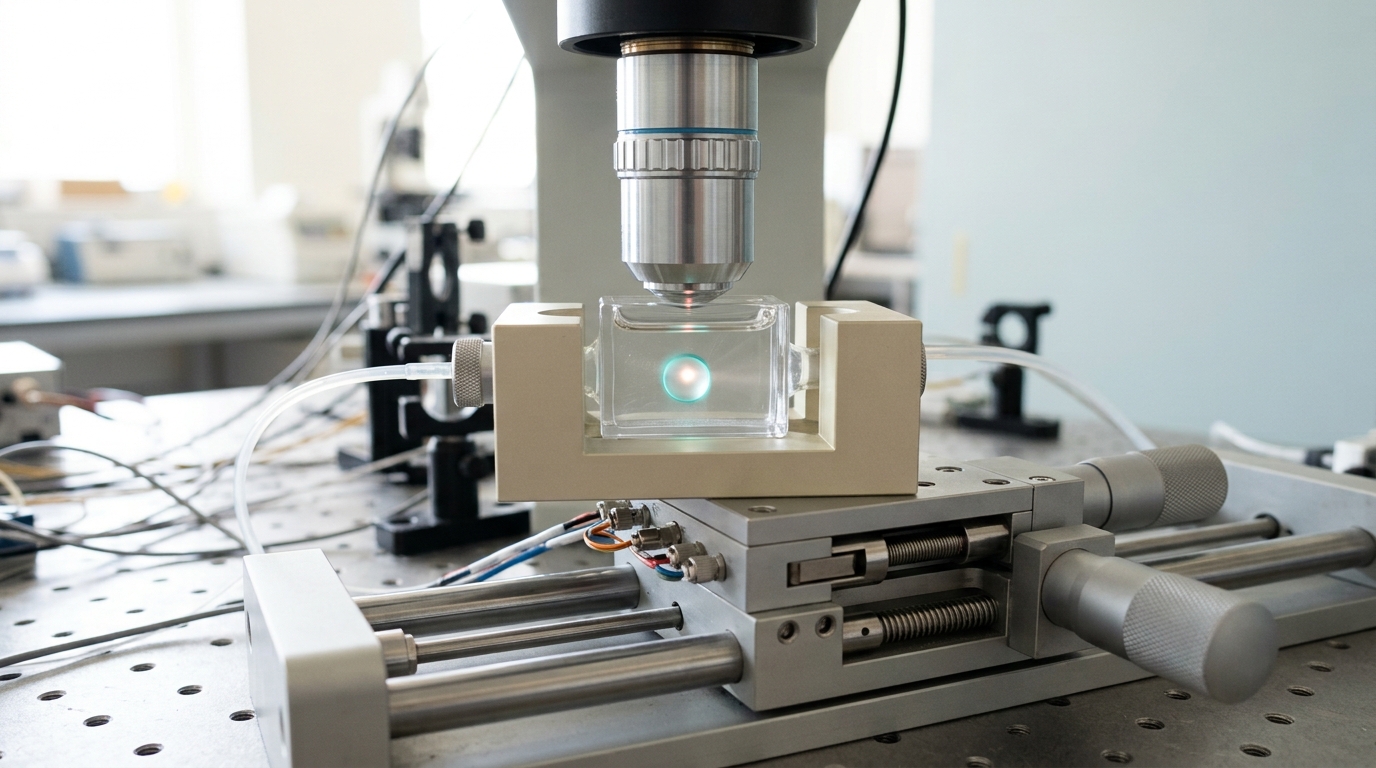
In April 1911, in a cellar laboratory in Leiden, a technician named Gilles Holst watched a galvanometer needle that would not stop falling. Heike Kamerlingh Onnes had built his career on producing liquid helium — the coldest laboratory environment on Earth, three years earlier — and he was now using it to ask a modest question: does the electrical resistance of pure metals approach zero smoothly as temperature falls toward absolute zero, or does it level off at some small residual value set by impurities? Mercury, chosen because it could be purified by repeated distillation, gave neither answer. At 4.2 kelvin its resistance did not decline gradually. It vanished, within a fraction of a degree, to a value indistinguishable from nothing at all. Onnes had discovered superconductivity, and he had no explanation for it. He received the 1913 Nobel Prize in Physics for his low-temperature work generally, helium liquefaction chief among it [1].
That gap — a real, reproducible, measurable phenomenon with no accepted mechanism — is the shape condensed-matter physics has repeated at every major turn since. This is a history of those turns: what was found, how long the explanation took, and what got overclaimed along the way. It follows one thread through a century of matter: what happens when huge numbers of interacting particles stop behaving like the sum of their parts, and start behaving like something genuinely new.
Fact: a 46-year wait for a mechanism
Superconductivity resisted explanation for so long that an entire generation of theorists worked on it and failed. Einstein tried. So did Bohr, Heisenberg, and Feynman at various points. The difficulty was that resistance-free current flow is not a small perturbation on ordinary metallic conduction — it is qualitatively different, and none of the tools of single-particle quantum mechanics touched it.
The breakthrough, when it came in 1957, came from taking electron-electron interaction seriously in a specific, surprising form. John Bardeen, Leon Cooper, and John Robert Schrieffer showed that an attractive interaction between electrons — mediated, weakly, by the vibrating lattice of positive ions around them (a phonon) — is enough to bind electrons into loosely correlated pairs even though the electrons individually repel one another electrostatically. Below a critical temperature, the entire population of conduction electrons condenses into a single coherent quantum state built from these Cooper pairs. Because that macroscopic state has an energy gap separating it from the nearest excited state, there is no low-energy way for the current-carrying condensate to lose energy to the lattice through ordinary scattering. Resistance does not decrease; it structurally cannot appear. Bardeen, Cooper, and Schrieffer published “Theory of Superconductivity” in Physical Review in 1957 [2], having submitted it that July after a period of intense, competitive work once Cooper had shown that even an arbitrarily weak attraction could bind pairs at the Fermi surface [3]. The theory, now known universally as BCS, won its authors the 1972 Nobel Prize.
BCS theory gives condensed-matter physics one of its few genuinely load-bearing equations, and it
is worth writing down because it exposes a real, falsifiable assumption rather than decorating the
prose. In the weak-coupling limit, the transition temperature
The exponential is the important feature, not decoration: it says
Fact: an accidental discovery that broke the ceiling
By the early 1980s, essentially every accessible metallic and intermetallic superconductor had been tried, and the practical record for critical temperature sat at 23.2 kelvin, held by niobium-germanium since 1973 — a material requiring liquid helium and offering no real hope of an inexpensive refrigerant. Most of the field considered ceramic oxides a dead end for superconductivity: they are usually insulators, brittle, and structurally nothing like the clean metallic lattices BCS theory was built around.
J. Georg Bednorz and K. Alex Müller, working at IBM’s Zurich research laboratory, tested that
assumption anyway, systematically substituting elements into a family of copper-oxide perovskites.
In a barium-doped lanthanum copper oxide compound, they found a sharp drop in resistivity
beginning near 35 kelvin — still cold by ordinary standards, but 12 kelvin above the prior record,
in a material class nobody expected to superconduct at all. They published cautiously, titling
the paper “Possible High-
Fact: a different kind of surprise — precision nobody engineered
Not every major finding in this history was a search for higher temperatures. In 1980, Klaus von Klitzing was studying the Hall effect — the sideways voltage that develops across a current- carrying conductor in a magnetic field — in silicon transistor structures cooled to near absolute zero and exposed to strong fields. He found that the Hall resistance did not vary smoothly with field strength, as ordinary theory predicted, but instead locked onto a sequence of exactly flat plateaus. The value of resistance on each plateau depended only on fundamental constants — Planck’s constant and the electron charge — divided by a small integer, independent of the specific sample, its geometry, or the amount of disorder in it. This precision was unexpected precisely because real samples are never perfectly clean; the quantum Hall effect turned out to be protected by the topology of the electron system’s quantum state, not by material purity. Von Klitzing received the 1985 Nobel Prize in Physics for the discovery [6], and the effect became the practical international standard for the ohm.
Analysis: from symmetry-breaking to topology as an organizing principle
For most of the twentieth century, phases of matter were classified by Landau’s theory of symmetry-breaking: a solid breaks the translational symmetry of a liquid, a ferromagnet breaks rotational symmetry in spin space, and a phase transition is a point where some order parameter switches on or off. That framework could not accommodate the quantum Hall effect’s plateaus, because two quantum Hall states with the same symmetry can still be physically distinct — and un-transformable into one another without closing an energy gap. J. Michael Kosterlitz and David Thouless showed in the 1970s that two-dimensional systems can undergo phase transitions driven by the unbinding of topological defects (vortex pairs) rather than by conventional symmetry-breaking, and Thouless later showed that the integer plateaus of the quantum Hall effect are topological invariants — quantized numbers that cannot change continuously, the same mathematical structure that distinguishes a doughnut from a sphere by counting holes. F. Duncan Haldane extended topological reasoning to one-dimensional magnetic chains, correctly predicting a qualitative difference between chains built from integer and half-integer quantum spins. In 2016 the Royal Swedish Academy of Sciences awarded Thouless, Haldane, and Kosterlitz the Nobel Prize in Physics “for theoretical discoveries of topological phase transitions and topological phases of matter” [7]. It is fair to call this the field’s second organizing revolution, on the same order as BCS: it supplied a classification scheme for matter that Landau’s theory simply could not express.
That theoretical foundation predicted a class of three-dimensional materials — topological insulators — that are electrically insulating in their interior but forced by that same topology to conduct along their surface, in a way that resists backscattering from ordinary disorder. Theory came first in 2005–2007; experimental confirmation followed within roughly a year via angle-resolved photoemission spectroscopy (ARPES), which images the momentum-resolved electronic structure of a freshly cleaved crystal surface directly. Bismuth selenide and related compounds showed the predicted single “Dirac cone” surface state, and the review literature that consolidated this work remains a standard reference for how the theoretical prediction and the ARPES confirmation fit together [8]. Unlike the quantum Hall effect, which needs a strong magnetic field and near-absolute-zero temperatures, topological insulators display their protected surface conduction at more accessible conditions, which is why the field moved quickly from discovery to device speculation — spintronics, low-dissipation interconnects, and topological qubits among the proposed applications, all of which remain research-stage rather than shipping technology as of this writing.
Quasiparticles: the vocabulary that makes strongly correlated matter tractable
None of this history would be describable in ordinary language without one conceptual device:
the quasiparticle. A solid contains on the order of


Vendor-style overclaim and scenario: the room-temperature superconductor problem
No part of this history attracts more overclaiming than the search for a superconductor that needs
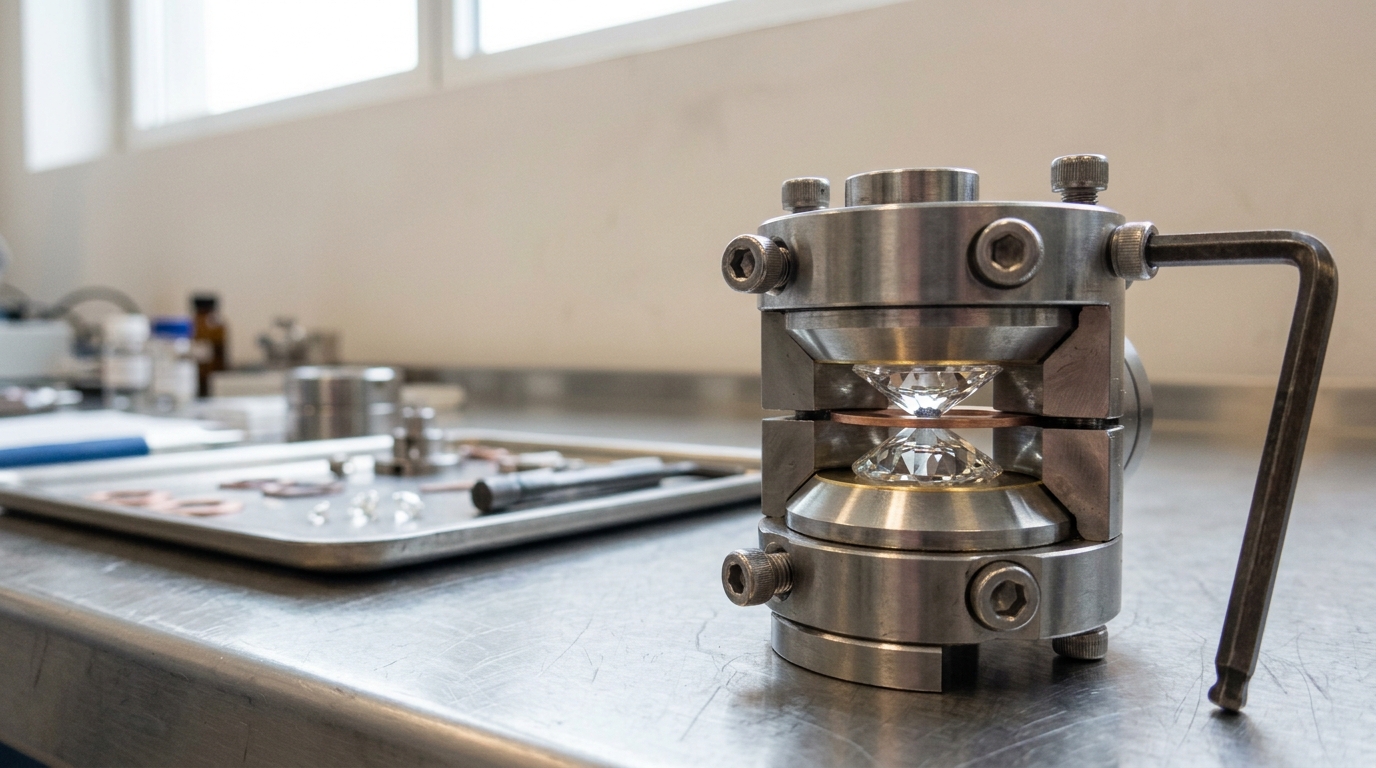
no refrigeration at all. The physical logic for looking at hydrogen-rich compounds under extreme
pressure is sound and traces to a real prediction: hydrogen, compressed enough, should behave like
a light, strongly-bonded lattice with a very high phonon frequency
Two subsequent claims did not hold up under scrutiny, and the distinction between the confirmed hydride results above and these two matters. In 2020 and again in 2023, a group led by Ranga Dias at the University of Rochester published claims of room-temperature superconductivity in carbonaceous sulfur hydride and, separately, a lutetium-hydrogen-nitrogen compound, both in Nature. Independent laboratories could not reproduce the reported resistance drops, and Nature’s own investigation found that the raw magnetic-susceptibility data underlying the first paper had been processed with an unspecified, non-standard background-subtraction procedure; the paper was retracted in September 2022, and the second, related paper was retracted in November 2023, the third retraction of a Dias-led claim [9]. Separately, in mid-2023, a South Korean group’s preprint claiming an ambient-pressure, ambient-temperature superconductor called LK-99 spread rapidly on social media on the strength of a video showing partial levitation over a magnet. Within weeks, multiple independent replication attempts and materials characterization studies traced the resistance drops and the levitation to a ferromagnetic impurity phase — chiefly copper sulfide — rather than to superconductivity, and the claim did not survive scrutiny [10]. Both episodes are useful precisely because they show the discipline working as intended: extraordinary claims triggered replication attempts within weeks, and the claims did not survive the attempt.
A grounded scenario, not a prediction, follows from the confirmed hydride results: if a
phonon-mediated hydride superconductor can be found or engineered that maintains a high
Analysis: what the century actually shows about how this field advances
Laid end to end, these episodes do not read as a smooth accumulation of knowledge. They read as a repeating cycle: an anomalous measurement arrives well before any theory can explain it; the anomaly survives years or decades of skepticism and failed explanation; a mechanism eventually arrives that reorganizes the field’s vocabulary rather than merely patching the old one; and the new vocabulary then predicts materials or effects nobody had looked for. Superconductivity sat unexplained for 46 years before BCS. The quantum Hall effect’s topological character took most of a decade after 1980 to be understood as topological rather than merely precise. Cuprates have now gone almost four decades without a BCS-equivalent microscopic theory, and some of the most carefully studied “strange metal” phases still resist description in terms of well-defined quasiparticles at all. This is worth stating plainly because popular accounts of physics tend to imply that experiment confirms theory in a tidy sequence. In condensed-matter physics, across every major episode in this history, the empirical anomaly came first, sometimes by decades, and the theory that made sense of it came only once someone was willing to abandon an assumption — a fixed temperature ceiling, a symmetry-based classification, a single-particle description — that had seemed foundational.
The same pattern explains why the discipline treats replication as non-negotiable rather than procedural. A field whose history includes multiple confirmed instances of “impossible” behavior turning out to be real (mercury’s vanishing resistance, ceramic superconductivity, topologically protected surface conduction) cannot simply dismiss extraordinary claims on priors, and that is precisely what makes it vulnerable to claims that are extraordinary but false. The Dias retractions and the LK-99 episode are not embarrassments to be minimized; they are evidence that the correction mechanism — independent labs re-running the same measurement with published raw data — works on a timescale of weeks to a few years, which is fast relative to how long some real anomalies (cuprates, strange metals) have remained genuinely unresolved.
Devices: where the physics has already left the laboratory
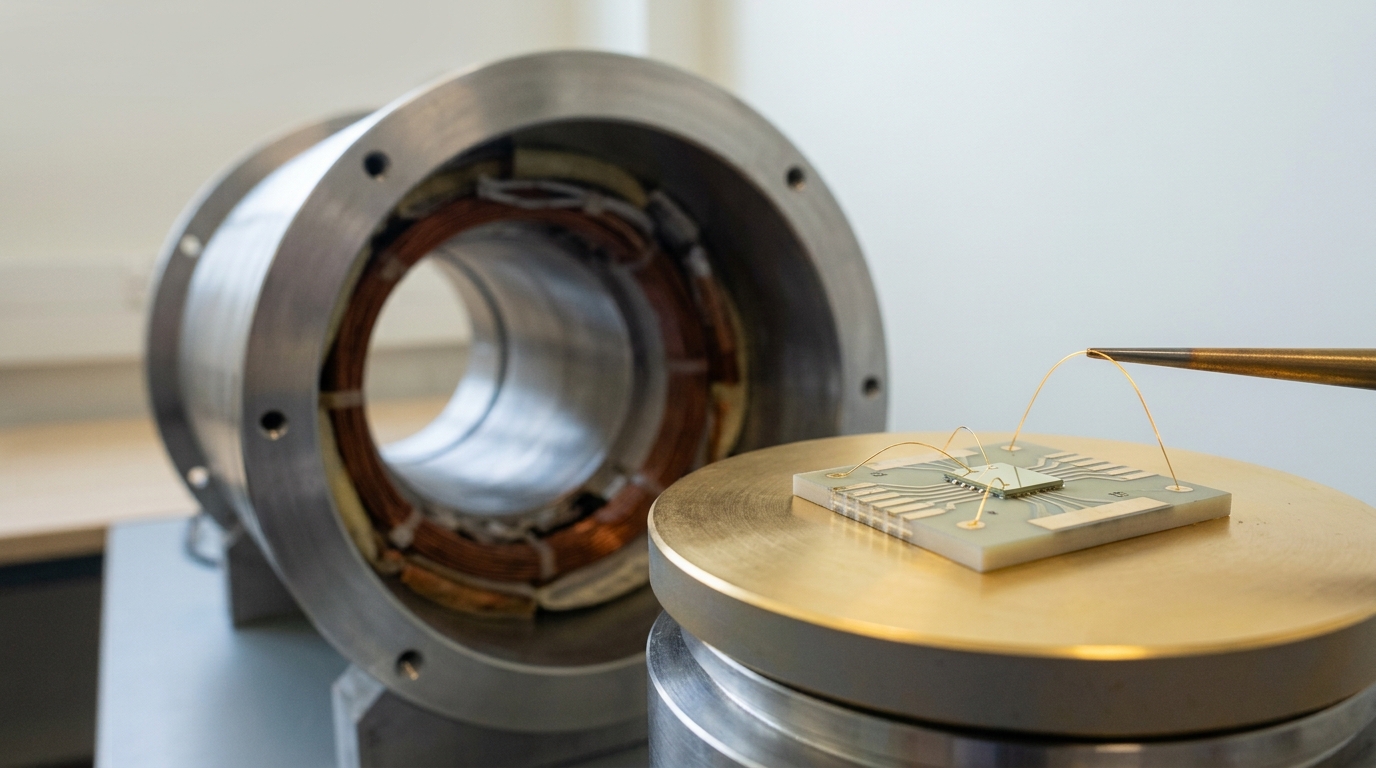
Not every consequence of this history is still confined to a cryostat. Brian Josephson predicted in 1962 that a supercurrent could tunnel between two superconductors separated by a thin insulating barrier, and that the current-phase relationship across that junction would be exquisitely sensitive to magnetic flux. Superconducting quantum interference devices (SQUIDs) built from Josephson junctions are now the most sensitive magnetometers available, used in magnetoencephalography to image neural activity through the skull without surgery, and in some geophysical and materials- characterization instruments referenced throughout this article’s own source record. The same junctions, operated as two-level quantum systems rather than as magnetometers, are the physical basis of superconducting qubits — the approach used by several of the largest current efforts in quantum computing, though those systems still require dilution-refrigerator temperatures and remain far from the room-temperature ambition discussed above. The quantum Hall effect’s flat, sample- independent resistance plateaus were adopted by metrology institutes worldwide as the practical realization of the ohm, illustrating how a purely fundamental discovery about topology in electron systems became, within a few years, a calibration standard used far outside physics research entirely.
Where the frontier sits now
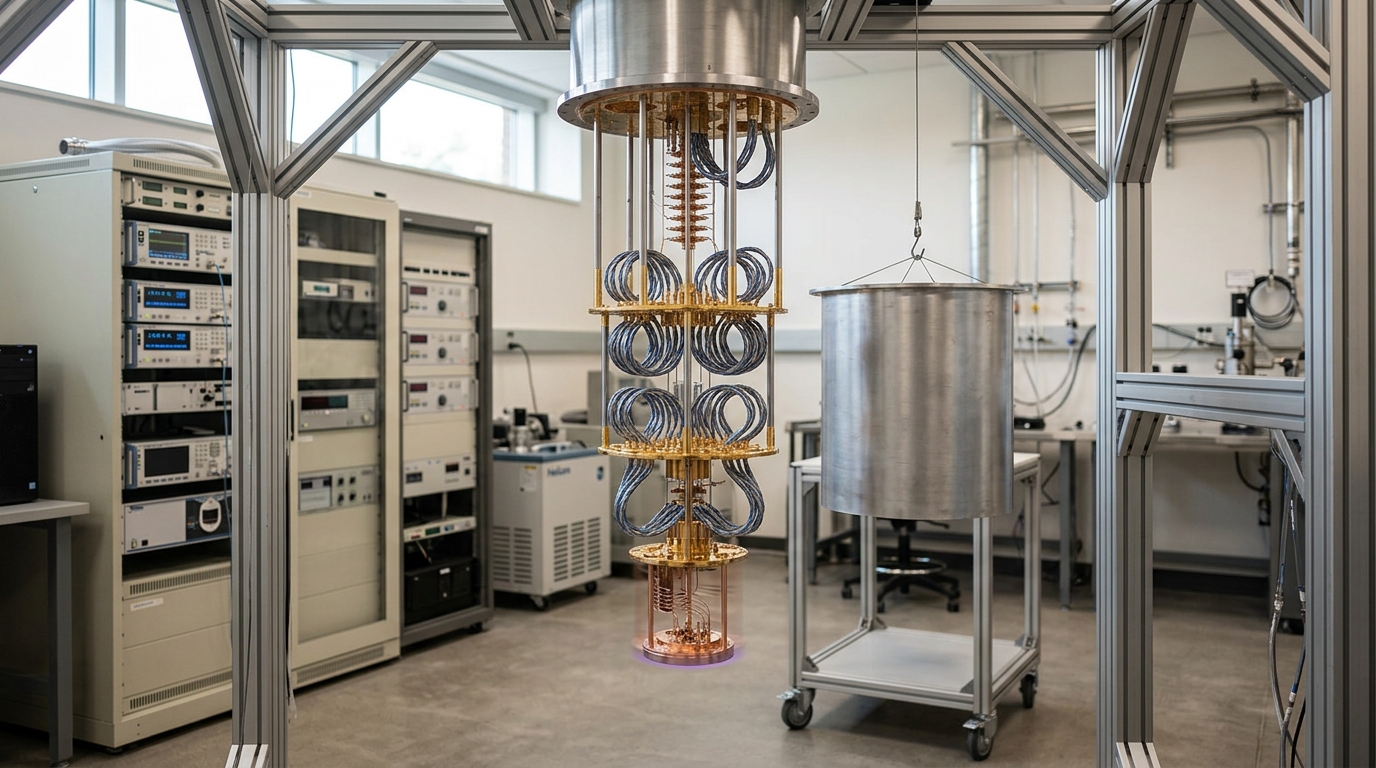
Two directions currently dominate serious work in this area. The first is engineering rather than discovery: dilution refrigerators now maintain sample stages below 10 millikelvin routinely, and that reachable base temperature, combined with the topological classification scheme from 2016, is what makes qubits built from topologically protected quasiparticles (proposed but not yet conclusively demonstrated at scale) a live research program rather than pure speculation. The second is nonequilibrium condensed matter — driving materials with intense laser pulses to see whether transient states inaccessible in thermal equilibrium, including transient superconductivity reported in some cuprates under mid-infrared illumination, can be stabilized rather than only glimpsed for picoseconds. Both directions extend, rather than replace, the same argument this history has traced from a Leiden cellar in 1911 onward: emergent collective behavior in many-body quantum systems keeps producing regularities — quantized, protected, sometimes precise to twelve decimal places — that no examination of any single particle in the system could have predicted.