A Buried Wire Cannot Be Discontinued. A Cloud Service Can.
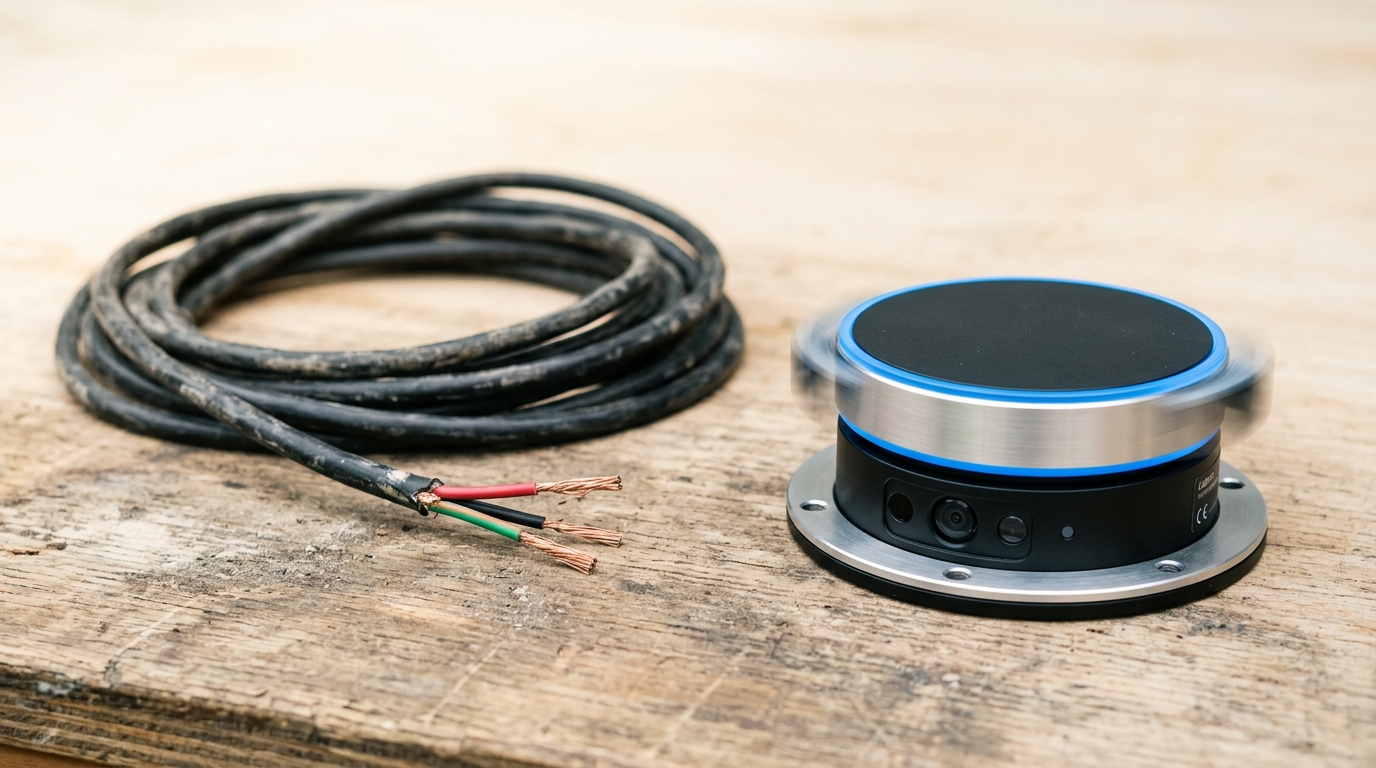
Husqvarna’s Automower has needed a buried loop of wire around the lawn’s edge since 1995, when the company introduced what it and most of the trade press still call the world’s first commercial robotic lawn mower, the solar-powered Solar Mower [7]. For twenty-eight years the wire was the whole boundary system: dig a shallow trench, run the cable, and the mower would not cross it until someone dug it up. That arrangement has one property almost nobody bothered to name, because it was never in question: once the wire was buried, nothing Husqvarna did in a boardroom on another continent could make it stop being a boundary. A company can go bankrupt, get acquired, or simply lose interest in a product line, and a buried wire keeps doing its one job regardless.
The category has spent the last three years replacing that wire. Husqvarna’s own wire-free NERA line arrived in early 2023 [7]; Mammotion’s LUBA line pairs 360-degree LiDAR with a cloud-delivered correction service it calls iNavi [1]; Worx, a brand of the Chinese power-tool group Positec, now sells a flagship called Landroid Vision Cloud that fuses onboard vision with a service it calls RTK Cloud [3]. All three describe the change in the same register: less to install, nothing to dig up, precision that used to need a physical antenna now arriving, in Worx’s own words, “straight from the cloud” [4]. What none of the marketing states as plainly is the trade being made underneath the convenience. The wire’s one boring virtue — that it could not be discontinued — did not carry over. It was replaced by a signal that originates on a server somebody else operates, and the household-robotics category already has a documented instance of exactly that kind of promise being broken years ahead of schedule. This article names the trade precisely enough to score it, and tests the claim against that instance rather than against a hypothetical one.
Tri-Fusion Is Three Technologies. Only One of Them Answers to a Company.
Start with what actually replaced the wire, because the marketing name for it obscures how much of the job one part of it is doing. Mammotion calls its LUBA 3 AWD’s navigation stack “Tri-Fusion Positioning,” combining 360-degree LiDAR, dual-camera AI vision, and NetRTK — network-delivered Real-Time Kinematic GNSS correction [1]. The LiDAR and the cameras are onboard hardware: once the mower ships, they work the same way whether or not Mammotion the company still exists next year. NetRTK is not onboard. Mammotion’s own description of how it works is direct about this: the correction data is “developed by Mammotion Atlas Lab” and delivered through “a vast, permanent network of regional satellite observation stations,” retrieved over 4G or Wi-Fi, with no antenna or base station required at the home [2]. The 3000 and 5000 models carry a “Lifetime Free iNavi Service” as a headline feature [1]. Read literally, that phrase promises the correction signal for as long as the mower runs. What it can actually promise, since the network belongs to Mammotion and not to the owner, is the correction signal for as long as Mammotion chooses to keep the Atlas Lab network switched on — a distinction the phrase “lifetime free” is not built to communicate, and one Mammotion’s own support material quietly concedes elsewhere: the complimentary 4G data plan bundled with the mower runs for a defined introductory period, after which “cloud-based features that require cellular connectivity may no longer be available” without a renewed plan [2]. The free forever claim and the plan-lapses-and-features-stop caveat sit in the same company’s own documentation, describing the same underlying dependency from two different angles.
Worx’s architecture makes the same structural choice under a different name. Landroid Vision Cloud pairs a full-HD camera running V-SLAM — visual simultaneous localization and mapping — with RTK Cloud, described on Worx’s own product page as delivering positioning “accurate down to an inch” without an on-site antenna: “no rooftop antennas, no lawn poles, only pure RTK accuracy — straight from the cloud” [3]. Worx’s European product page is more specific about where that accuracy actually originates: “instead of installing hardware at home, the mower receives real-time correction data from the cloud, tailored to its precise location,” and, naming the operator directly, “Worx operates a dedicated network of professionally installed reference stations, optimized to support robotic operation in real-world residential conditions” [4]. That sentence is the whole argument in miniature: the antenna did not disappear when Worx removed it from the customer’s yard. It moved to a location Worx controls, on a network Worx built and operates, and the mower’s advertised “down to an inch” precision is contingent on that network staying online. Worx’s own launch materials describe the product as “a fully installation-free experience, eliminating the need for boundary wires or external antennas” [5] — true from the customer’s yard, and silent about the antenna’s new address.
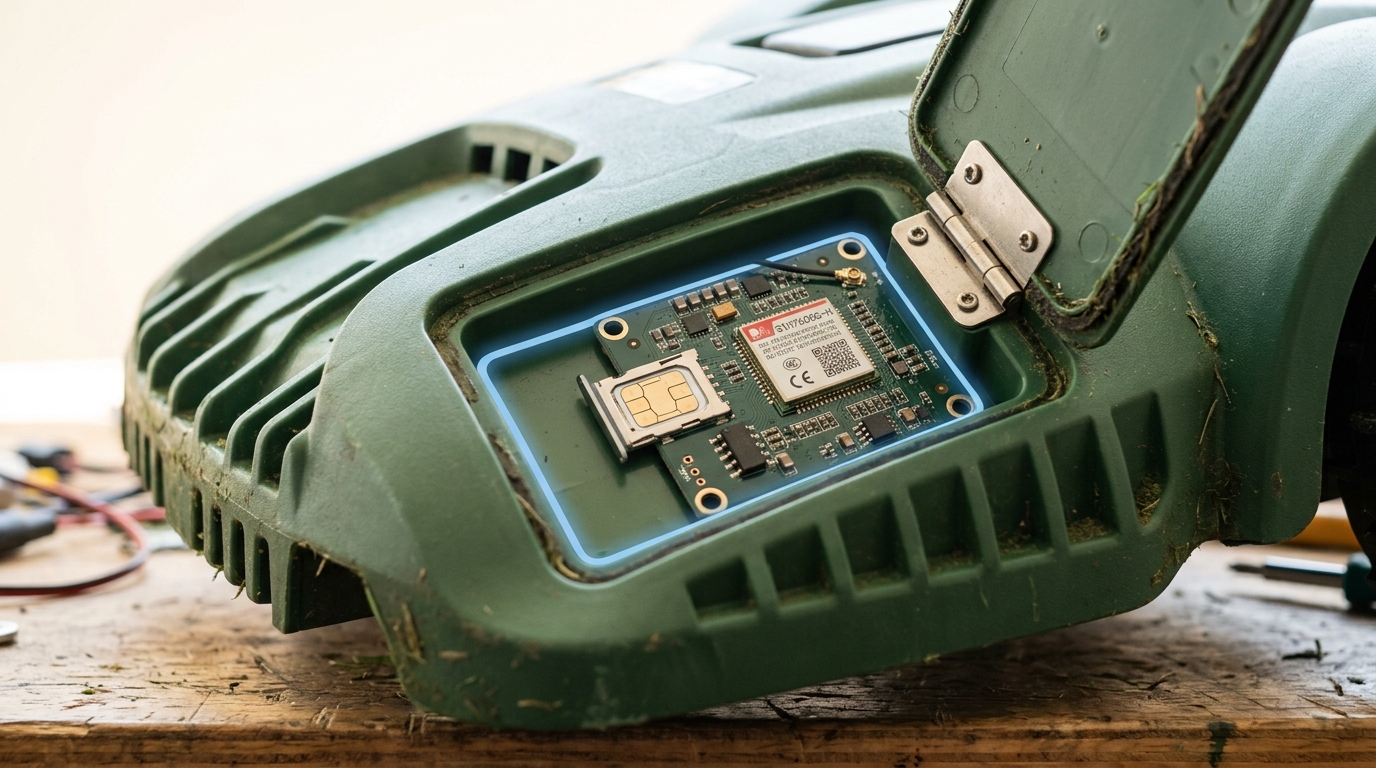
It is worth being precise about how much of the navigation problem RTK is actually solving, because Mammotion’s own product line shows the split is a marketing tier rather than a technical necessity. Within the same LUBA 3 AWD family, the entry-tier LUBA 3 AWD 1500 runs on LiDAR alone, without NetRTK, and is rated to handle roughly 0.37 acre on that basis. NetRTK is reserved for the larger, costlier AWD 3000 and 5000 models, rated to 0.75 and roughly 1.25 acres respectively, where the marketing case for cloud-delivered correction is extended coverage and tighter edge precision rather than the ability to navigate at all. That is a real product decision, and a defensible one — bigger lawns benefit from tighter positioning — but it means the cloud dependency being described here is not the price of wire-free mowing in general. It is the price of the flagship tier specifically, bundled in at the exact price point where a buyer is least likely to read the fine print about what “network-delivered” means for a five- or ten-year appliance.
The Dependency Ratio: How Much of the Mower’s Advertised Precision the Owner Cannot Self-Host
Call the quantity this article is actually tracking a dependency ratio: the share of a wire-free mower’s advertised positioning performance that depends on a correction or mapping service the owner cannot self-host, substitute, or continue operating independently of the manufacturer, against the share achieved by onboard sensing the owner already owns outright. This is a proposed construct, not a number either company publishes, and it is deliberately scored qualitatively — high, partial, or low — against three questions that can be answered directly from each vendor’s own published architecture rather than estimated: Does the advertised flagship precision require the vendor’s cloud service, or only benefit from it? Does the vendor operate the correction network itself, or license it from a shared, third-party infrastructure a customer could in principle reach through another provider? And does the vendor sell, or even permit, an owner-hosted alternative that removes the ongoing dependency entirely?
Mammotion’s LUBA 3 AWD scores high on dependency by this test. The Tri-Fusion architecture’s headline precision claim is explicitly tied to iNavi’s NetRTK correction, that correction is delivered exclusively through a network Mammotion’s own Atlas Lab division built and operates [2], and nothing in the company’s published materials describes an owner-purchasable local alternative — a base station a customer could buy and control independently of Mammotion’s servers. Worx’s Landroid Vision Cloud scores the same way for the same structural reasons: the flagship precision claim depends on RTK Cloud, Worx operates that network itself rather than routing it through shared infrastructure [4], and the company’s marketing treats the absence of any local hardware option as the selling point, not a limitation to be offset [3, 5].
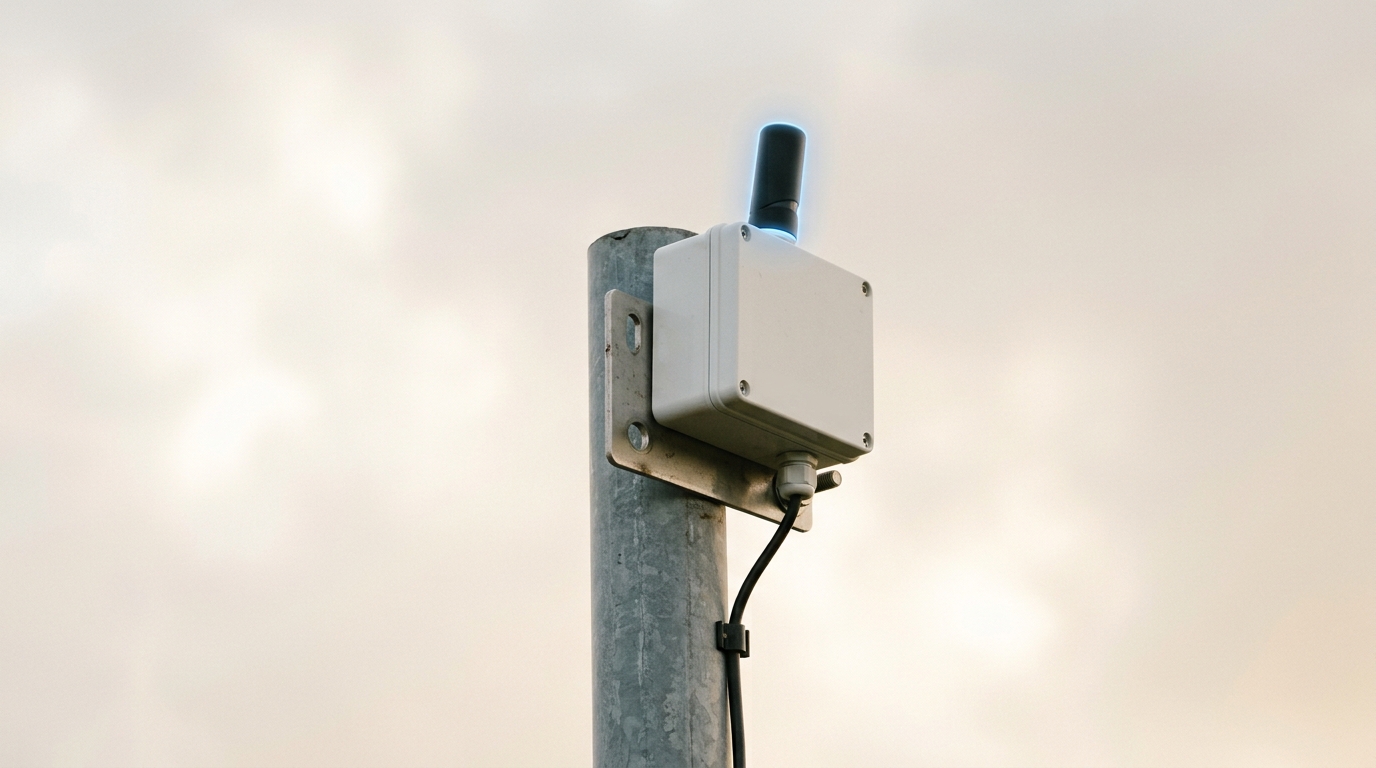
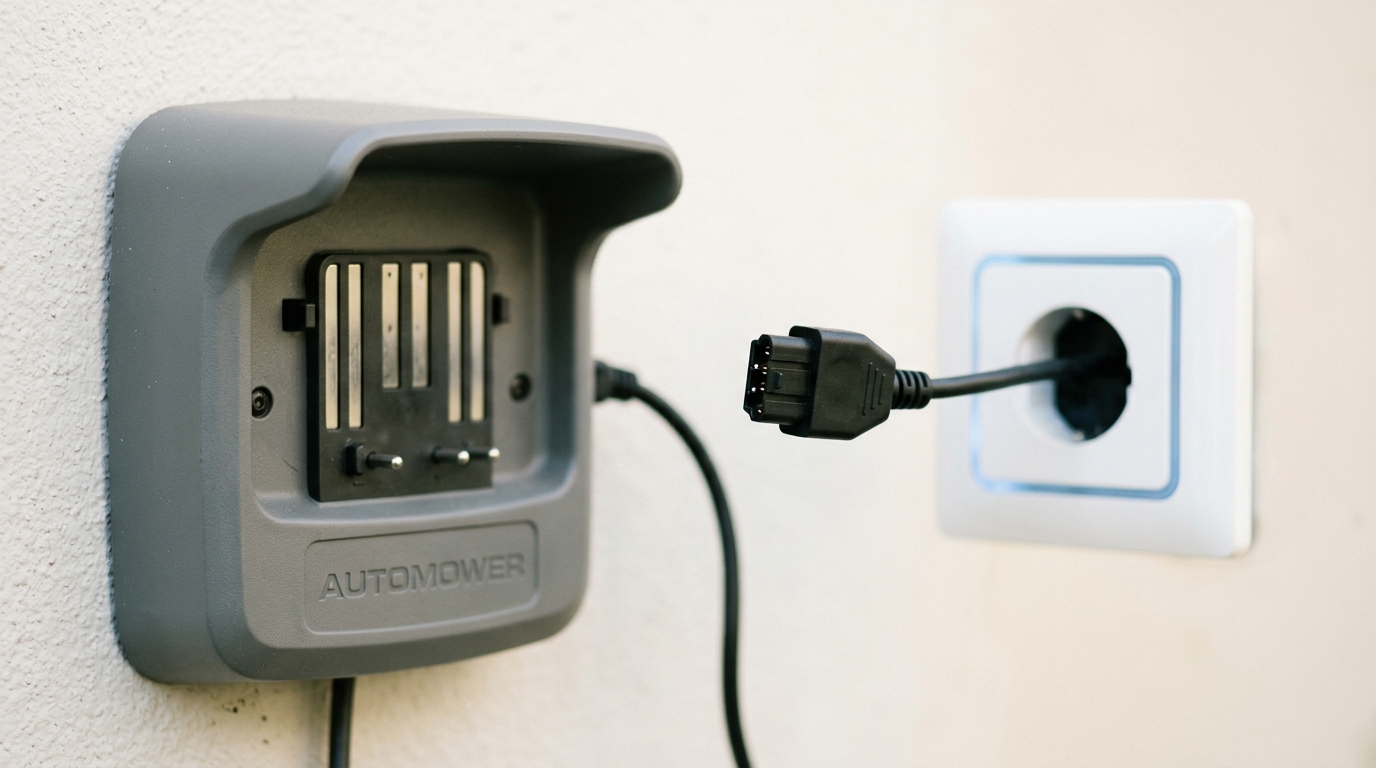
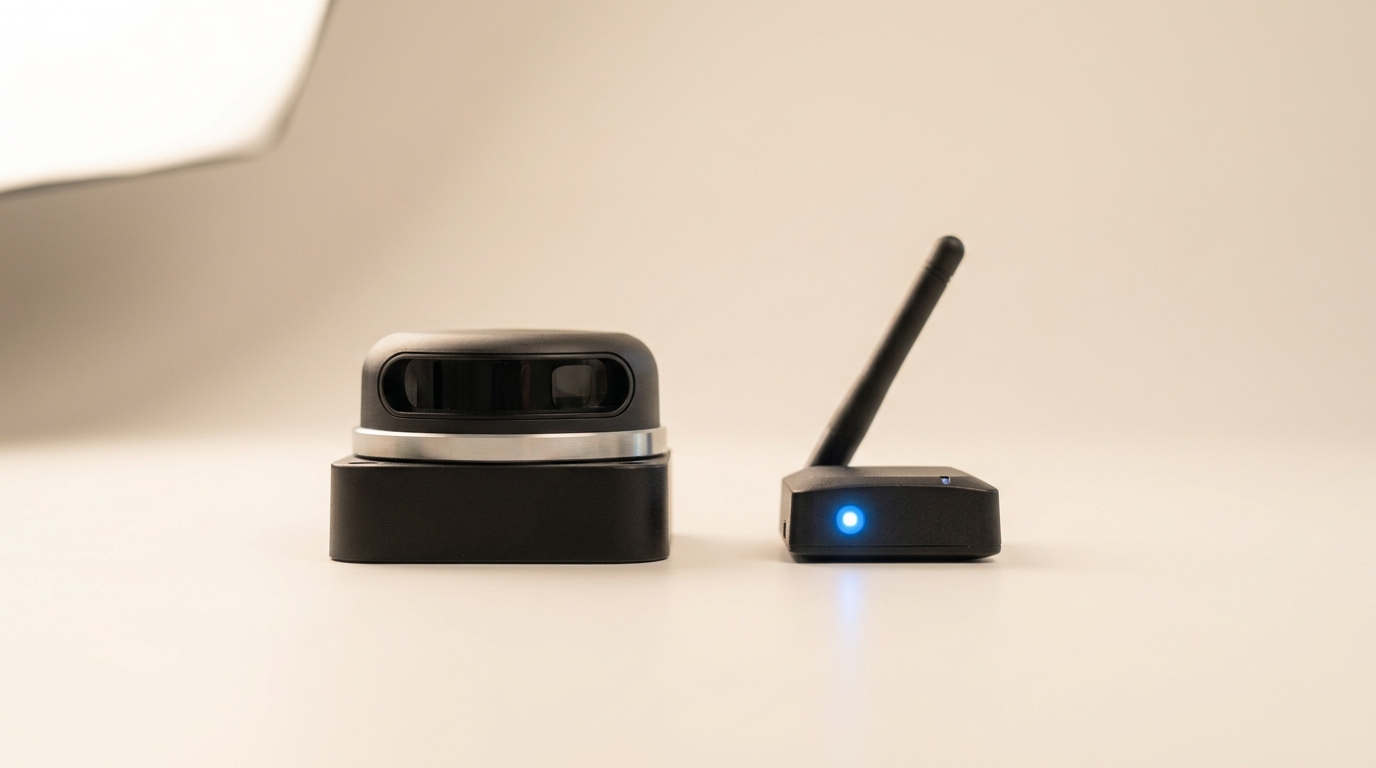
Husqvarna’s EPOS system, the satellite-positioning layer behind its NERA line and its commercial CEORA mowers, scores differently, and the difference is the most useful data point in this whole comparison because it did not require imagining a hypothetical better design — Husqvarna already ships it. The company’s own installation guidance names two options explicitly: a Husqvarna Cloud path, which needs “a stable internet connection, either through cellular data or home Wi-Fi, across the entire work area” and requires no additional hardware; and a reference-station path, in which the owner buys and mounts a physical EPOS RS1 unit at least two metres up with a clear view of the sky, described in Husqvarna’s own material as a “standalone solution: no internet connection required for navigation” [8]. The cloud path is free and simpler to install; the reference-station path costs a one-time hardware purchase and, once mounted, answers to nobody but its owner. Scored against the same three questions, Husqvarna’s dependency ratio is not fixed the way Mammotion’s and Worx’s currently are — it is a dial the customer sets at checkout, because the company sells both settings.
That dial matters less in practice than it should, and it is worth stating why rather than treating the existence of the option as the end of the argument. Husqvarna’s own installation guidance presents the cloud path first, describes it as needing “no reference station” and no additional expense, and offers the cloud option in more than two dozen markets already — meaning the station is positioned as the fallback, for gardens where cellular reception cannot cover the whole work area or a market falls outside that list, not as the default a new buyer is steered toward [8]. Nothing in that framing nudges a buyer toward the resilient option; if anything, ordinary consumer default-bias runs the other way, toward the free path that asks nothing of the customer at checkout. A dependency ratio that a company merely permits an owner to lower, at extra cost and extra installation effort, against a default that keeps it high, is not the same claim as a dependency ratio that is actually low across the installed base. Husqvarna deserves credit here for building the option at all — Mammotion and Worx have not — but the honest description of Husqvarna’s own fleet is that most of it is very likely running on the same cloud-default architecture as its two rivals, by the same ordinary mechanism that makes any opt-in safety feature underused: it is not the box that gets checked by someone who has not yet had a reason to worry about it.
Household Robotics Already Has a Company That Broke This Exact Promise
The reason this dependency is worth naming precisely, rather than treating as an abstract engineering tradeoff, is that household robotics has a documented mortality rate the wire never had to survive. Seven Dreamers Laboratories raised roughly ¥10 billion — on the order of $89 million — to build Laundroid, a laundry-folding robot, and filed for bankruptcy in Tokyo on April 23, 2019, having never shipped a unit to a paying customer [12]. FoldiMate, founded in 2012 and pursuing a mechanically different approach to the same task, emailed its own customers on August 30, 2021, to say it had ceased operations [13]. Neither company’s product depended on a live cloud service in the way a wire-free mower does — they failed before shipping, which is a different failure mode — but both are proof that well-financed household-robotics ventures do not survive at a trivial rate. More recently, and inside the exact product category this article is about, iRobot filed for Chapter 11 protection in Delaware on December 14, 2025 [9]; a bankruptcy court confirmed its reorganization plan on January 22, 2026, and the plan took effect the next day, January 23, 2026 — the date on which the reorganized company’s stock actually issued to its new owner [10] — emerging under the ownership of Shenzhen Picea Robotics, described by IDC as iRobot’s own primary Chinese contract manufacturer [11]. The company that invented the consumer robot-vacuum category did not survive to the end of 2025 as an independent business.
None of those three cases, though, shows what happens to a household robot’s cloud-dependent features specifically when the company behind them stops running the service — because none of the three had shipped a large installed base of network-dependent hardware still operating in customers’ homes at the moment of failure. Neato Robotics did, and its case is the sharpest available precedent for exactly the mechanism this article is describing. Neato closed in 2023; its parent company, the German appliance group Vorwerk, initially committed to keeping Neato’s cloud services running for roughly five years after the shutdown, through approximately 2028, so that owners’ existing robot vacuums would keep their app control, scheduling, and no-go zones [14]. That promise did not hold. Vorwerk accelerated the cloud shutdown by roughly three years, ending it in Q4 2025 instead, and gave a reason that has nothing to do with running out of money: “cybersecurity standards, compliance obligations, and regulations have advanced in ways that make it no longer possible to safely and sustainably operate these legacy systems” [14]. Once the cloud went dark, Neato owners lost scheduling, remote start, and no-go zone configuration — the app-based conveniences the cloud existed to provide — while the bare vacuum could still be started by pressing a physical button on the unit itself [14].
That last detail is the one worth sitting with, because it marks the actual boundary of the risk this article is tracking, in both directions. Neato’s vacuums navigate their floor plans using onboard sensing; the cloud service governed scheduling and remote convenience, not the physical ability to clean a room, so Vorwerk’s shutdown degraded the product without disabling its core function. A wire-free lawn mower’s cloud dependency sits on the other side of that same boundary. For Mammotion’s AWD 3000 and 5000 and for Worx’s Landroid Vision Cloud, the network-delivered correction is not a scheduling convenience layered on top of a self-sufficient machine — it is a load-bearing input to the positioning claim the flagship product is sold on. If either company made the decision Vorwerk made, for the same stated reason — that continuing to operate a specific network is no longer worth the compliance burden — the mowers would not merely lose a smart-home convenience. They would lose the precision tier they were purchased for.
The Counter-Case: Maybe the Network Isn’t Really the Vendor’s to Lose
The honest objection to all of this is that “cloud-delivered” does not automatically mean “vendor-controlled and irreplaceable.” A great deal of commercial RTK correction runs over shared, third-party infrastructure — networks like u-blox’s PointPerfect or a national CORS system — that a manufacturer merely resells access to. If Mammotion’s or Worx’s correction service worked that way, a company’s own business failure would not necessarily kill the signal: the underlying network operator would still exist, and in principle another company’s hardware could keep pointing at the same corrections even if the original mower-maker walked away. Under that architecture, the dependency ratio this article proposes would be considerably lower than it looks from the marketing copy alone, because the vendor would be a reseller of someone else’s durable infrastructure rather than the infrastructure’s sole owner.
That counter-case does not currently apply to either flagship product examined here, and the companies’ own words are why. Mammotion states plainly that iNavi’s correction network was “developed by Mammotion Atlas Lab” and delivered through Mammotion’s own permanent network of reference stations [2] — not licensed, resold, or interoperable with a third party’s infrastructure by design. Worx is equally direct on its own European product page: “Worx operates a dedicated network of professionally installed reference stations, optimized to support robotic operation in real-world residential conditions” [4]. Both companies are describing single-vendor, proprietary correction networks as a selling point — evidence of engineering investment and service quality — without appearing to register that the same fact is also a single point of failure with the company’s name on it. Worx’s parent, Positec, is not a distressed startup; it secured $250 million in equity financing in January 2025 and manufactures under the Worx, Rockwell, Kress, and Cat brand names, with Worx alone having sold more than a million robotic mowers globally [6]. That solvency is real, and it is also beside the point Neato’s case actually makes. Vorwerk is a large, private, multi-billion-euro German group — it did not go bankrupt, run out of money, or lose a lawsuit. It simply decided, years into a five-year promise, that continuing to run a specific legacy cloud system was no longer worth the compliance burden, and shortened the promise by three years [14]. A company’s balance sheet says whether it can afford to keep a correction network running. It says nothing about whether the company will choose to.
The One Fallback Either Company Has Documented Answers a Different Question
There is a second, narrower way this whole argument could turn out to be overstated for either flagship product, and it deserves to be checked directly rather than assumed away: a vendor could have engineered a genuine degraded-but-functional offline mode, so that losing the network costs the mower some precision rather than its ability to operate at all. Worx comes closest to describing exactly that. Its European product material states that when satellite visibility drops, the system falls back to vision: “visual landmarks act as reference points” and dead-reckoning “refined by vision” carries the mower through the gap using onboard cameras and wheel-motion sensing rather than RTK [4]. Read quickly, that sounds like the fallback this article’s kill criterion asks for. Read carefully, it is a fallback for a different failure: satellite signals blocked by tree canopy or a garden wall, not the RTK Cloud network itself going dark. Nothing in Worx’s published material describes what the mower does, or how well it does it, if the company’s own reference-station network — the thing “delivering corrections to each individual mower” [4] — stops answering entirely, whether for an afternoon’s maintenance outage or because a Vorwerk-style decision ended the service for good. Mammotion’s public material is thinner still on this exact point: it names a fallback between 4G and Wi-Fi if one connection is weak [2], which is a fallback between two paths to the same cloud, not a fallback away from the cloud. Until one of the two companies publishes a direct answer — what does this mower actually do, and at what accuracy, with its correction network fully and permanently unreachable — the honest position is that the degraded-offline-mode escape hatch this section went looking for has not been shown to exist for either product, not that it has been shown not to.
What a Resilient Design Already Looks Like, Sold at a One-Time Price
This is where the comparison earns its place as an argument rather than a warning, because the industry does not have to invent a fix — one of the three named vendors in this piece already sells it. Husqvarna’s EPOS reference-station option is not a theoretical mitigation; it is a line item a customer can add to an order today, at the cost of a one-time hardware purchase and a somewhat fussier install — a pole mounted at least two metres high with a clear view of the sky — in exchange for a system Husqvarna itself describes as needing “no internet connection required for navigation” [8]. An owner who buys that option has, in the plainest sense available, bought their way out of the exact failure mode Neato’s customers lived through: if Husqvarna’s cloud vanished tomorrow for any reason — insolvency, acquisition, or a Vorwerk-style compliance decision — a reference-station customer’s mower would keep receiving corrections from a box the owner bolted to a pole in their own yard, not from a server the company might someday decide is not worth running.
Neither Mammotion nor Worx currently sells the equivalent for their flagship, cloud-dependent products. That is a business decision each company is free to make, and it may well be the right one commercially — a hardware accessory adds cost and installation friction that “no antenna, ever” marketing is specifically designed to avoid, and Positec’s balance sheet suggests Worx is in no immediate danger of a Laundroid- or FoldiMate-style collapse. But the decision has a real, falsifiable consequence for anyone treating a “lifetime free” cloud claim as a technical property of the mower rather than a business promise about the company behind it. Neato’s owners were given a specific, named, five-year version of that same promise, from a solvent, non-bankrupt corporate parent, and watched it get shortened by more than half. Nothing published by Mammotion or Worx describes what happens to a LUBA 3 AWD’s advertised acreage or a Landroid Vision Cloud’s advertised inch-level precision if either company’s own version of that decision arrives.
That gap is also where this argument stakes something checkable rather than merely suspicious. It fails, specifically, the moment either company publishes a documented degraded-offline mode that holds acceptable accuracy with the correction network permanently unreachable, or starts selling an owner-hosted reference-station option of its own — at that point the dependency ratio this piece has scored as high drops to whatever the fallback or the hardware option actually delivers, and the claim should be revised down accordingly rather than defended past the evidence. Until one of those two things happens, “cloud-delivered” and “wire-free” are not describing the same kind of independence the industry’s own marketing implies they are, and a buyer comparing three otherwise similar mowers has a real, present-tense reason to ask which one of them is still lawn care if the company behind it stops answering. The wire, whatever else was wrong with it, was never going to send that email.