A ledger with three columns
This article is not about what Grok can do. It is a narrower and more checkable question: what has xAI actually spent, drawn, and been permitted to draw, in building Colossus, its compute cluster in Memphis, Tennessee — a physical site of turbines, chillers, substations, and pipe, not a Meta facility, not a metaphor, and not a model? The series this article belongs to keeps those two questions apart deliberately. Grok is a family of models xAI trains and serves; Colossus is the datacenter campus, expanding into a second site across the state line in Southaven, Mississippi, where that training happens. Public claims about Grok’s capabilities are vendor assertions, evaluated elsewhere. What follows is a documented account of three ledgers that exist independently of any of those claims: capital raised against revenue reported, power drawn against power permitted, and water withdrawn against water available — each backed by a funding disclosure, a utility filing, a regulatory record, or independent reporting that this article cites by name.
One number belongs up front precisely because it will not appear again except to be flagged as absent. xAI has not published, in any primary disclosure this article could locate, a parameter count for any released or announced Grok model. Trade-press pieces circulating in 2026 attribute figures in the trillions to Grok 5 specifically, sourced to unnamed leaks or extrapolation rather than to an xAI technical report or system card. This article treats every one of those figures as unconfirmed and declines to repeat any of them as fact. What can be documented, and is the actual subject here, is the resource account behind the cluster those models train on.

What has actually been raised, and against what revenue
xAI’s own announcement states that the company closed an upsized Series E funding round on 6 January 2026, raising 20 billion dollars against an initial 15 billion dollar target, with participation from Valor Equity Partners, StepStone Group, Fidelity Management and Research Company, the Qatar Investment Authority, MGX, and Baron Capital Group, alongside strategic investment from Nvidia and Cisco Investments [1]. That round followed a November 2025 valuation near 230 billion dollars. Less than a month later, on 3 February 2026, Elon Musk’s SpaceX absorbed xAI in an all-stock transaction that, per Reuters reporting carried by Yahoo Finance, valued the combined entity at 1.25 trillion dollars, with xAI’s own stake in the deal set at 250 billion dollars and SpaceX’s at 1 trillion dollars; the same reporting notes SpaceX is preparing an IPO later in 2026 that some banks estimate could value the company as high as 1.5 trillion dollars [2].
Set against that capital scale, the same reporting carries a specific and less-repeated figure: xAI’s own reported quarterly net loss of 1.46 billion dollars against revenue of just 107 million dollars, alongside SpaceX’s considerably more mature business generating roughly 8 billion dollars in annual profit on 15 to 16 billion dollars in revenue [2]. None of this is unusual for a frontier AI lab in a capital-intensive buildout phase — every major lab in this cycle runs losses that dwarf revenue while infrastructure is under construction. It is stated here because it is the number that anchors everything that follows: the 20-billion-dollar tranche, and the 250-billion-dollar valuation built partly on top of it, is what pays for the physical plant described in the rest of this article, not a return already being generated by it.
From accelerator to gigawatt: the arithmetic underneath the marketing
The technical starting point is disclosed with unusual precision, because Nvidia had a marketing interest in disclosing it. In an October 2024 press release, Nvidia stated that Colossus connected up to 100,000 liquid-cooled H100 GPUs on a single RDMA fabric using its Spectrum-X Ethernet platform, built in 122 days from the first rack’s arrival, with only 19 days between first rack and the start of training, and quoted Musk calling it “the most powerful training system in the world” [4]. Nvidia’s own current H100 product page lists the SXM variant’s thermal design power at up to 700 watts, configurable [5]. That is enough to write a first, deliberately narrow equation — the power draw of the accelerator silicon alone, ignoring everything else in the building:
Seventy megawatts is the draw of the H100 dies themselves at that phase’s disclosed count, before a single fan, pump, switch, or host CPU is counted. Compare that to what was actually approved to feed the site at roughly that stage of its build: the Tennessee Valley Authority’s board approved a request, routed through the local distributor Memphis Light, Gas and Water, for just over 100 megawatts, with xAI stating it needed 150 megawatts in total to run the cluster it had built [7]. That is a site-level figure roughly twice the raw silicon draw computed above. The gap is not evidence of anything hidden; it is exactly what a datacenter’s overhead is supposed to look like — network switches, storage arrays, host CPUs, cooling plant, and power-conversion losses between the utility feed and the board. This article does not have a disclosed power usage effectiveness figure for Colossus to cite, so it stops at stating the ratio implied by the two disclosed numbers rather than asserting an industry-standard multiplier as fact.
The site did not stay at 150 megawatts. By the account maintained by the nonprofit research group Global Energy Monitor, which tracks power-generating assets from public filings and satellite imagery, Colossus 1’s Unit 1 carries an official capacity of 198 megawatts, and the Shelby County Health Department’s air permit — the subject of the next section — authorizes turbines capable of roughly 247.2 megawatts combined [6]. A second small equation falls directly out of that filing: the permit covers 15 Solar SMT-130 turbine units for a combined 247.2 megawatts, implying an average unit rating of
The Southaven site’s later authorization, covered in the DOJ-intervention reporting below, lists 27 turbines totaling roughly 495 megawatts — 495 divided by 27 is about 18.3 megawatts per unit, a broadly similar class of mobile turbine, though the two filings may not describe identical hardware and the comparison should be read as illustrative rather than exact [10]. The arithmetic’s real point is structural: once a training cluster crosses roughly 100,000 accelerators, the constraint that actually shapes the build is no longer chip supply. It is how many tens of megawatts a distribution utility can add to one site on a timeline measured in months rather than the multi-year interval a permanent transmission upgrade requires — which is precisely why a site like this leans on truck-delivered mobile turbines instead of waiting on the grid.
The turbines Memphis didn’t plan for
The scale of the ask changed abruptly and publicly. TVA’s board approved the original, roughly 150-megawatt project on 7 November 2024. Less than a month later, at the Greater Memphis Chamber’s Annual Chairman’s Luncheon on 4 December 2024, xAI announced plans to expand toward 1 million GPUs requiring 1,000 to 1,500 megawatts — about a third of the city of Memphis’s own peak electricity demand, according to the Southern Alliance for Clean Energy’s account of the filings and the chamber’s own press release [8]. That is the basis of the “bait and switch” characterization environmental advocates have used since: a project scoped and approved at one order of magnitude, then re-scoped upward almost immediately after community and regulatory buy-in had already been secured for the smaller version.
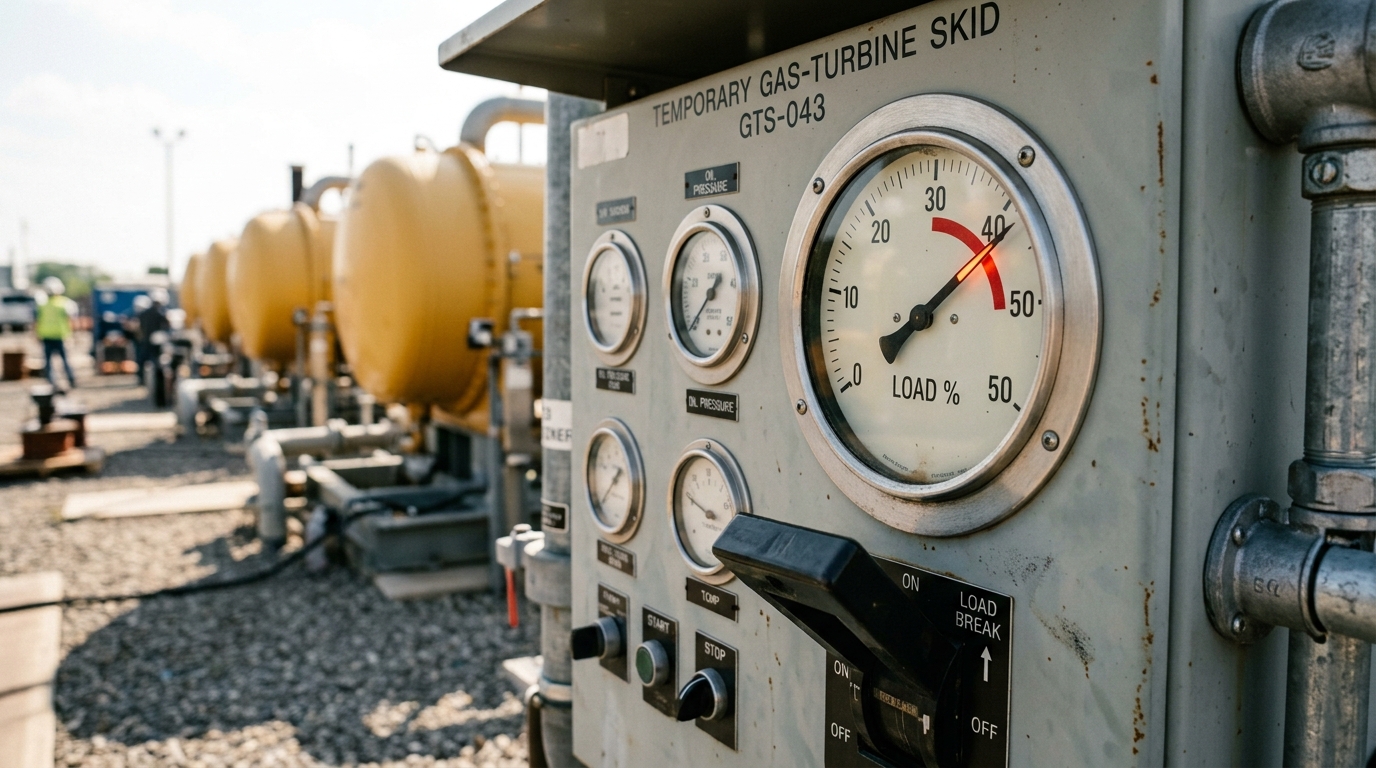
The turbines used to bridge the gap between what the grid could deliver and what the site wanted became the most litigated part of the buildout. Aerial imagery reviewed by reporters in April 2025 showed roughly 35 gas-fueled turbines already on site, months before any air permit existed. The Shelby County Health Department granted a permit on 2 July 2025 covering only 15 of them, for up to 247 megawatts, valid through 2 January 2027 [3] [6]. The regulatory response escalated from there and crossed a state line. At the Southaven, Mississippi site — Colossus 2’s power supply, referred to in filings under the subsidiary MZX Tech — the NAACP and the Mississippi State Conference of the NAACP, represented by the Southern Environmental Law Center and Earthjustice, filed suit in the U.S. District Court for the Northern District of Mississippi on 14 April 2026, following an unanswered 60-day notice of intent to sue sent that February. The complaint alleges 27 gas turbines, capable of roughly 495 megawatts combined, operating without a Clean Air Act permit, with potential emissions estimated at more than 1,700 tons of nitrogen oxides, 180 tons of fine particulate matter, 500 tons of carbon monoxide, and 19 tons of formaldehyde annually [9].
What happened next is the sharpest illustration of how these three ledgers — capital, power, and regulation — now intersect with a fourth: national-security policy. In June 2026, the U.S. Department of Defense intervened in the litigation on xAI’s side. Per Utility Dive’s reporting, DoD’s Chief Digital and Artificial Intelligence Officer, Cameron Stanley, argued that “xAI’s Grok represents one of only four proprietary state-of-the-art frontier AI currently capable of supporting national security applications,” and disclosed that a Grok Gov Model had been used operationally, enabling U.S. forces to deploy munitions to more than 2,000 distinct targets within 96 hours during an operation the filing named “Operation Epic Fury.” Mississippi’s state environmental agency separately defended the turbines’ operation that July under the Clean Air Act’s mobile-source provisions, and Governor Tate Reeves called the project the largest private investment in Mississippi’s history [10]. Each of those is a claim made by an interested party in an active legal dispute — DoD’s characterization of Grok’s operational role, the state’s legal theory, and the governor’s economic framing — and none of them is independent confirmation of anything about Grok’s technical capability. They are documented positions in a live case, stated here as exactly that.

Water: the second constraint that didn’t make the pitch deck
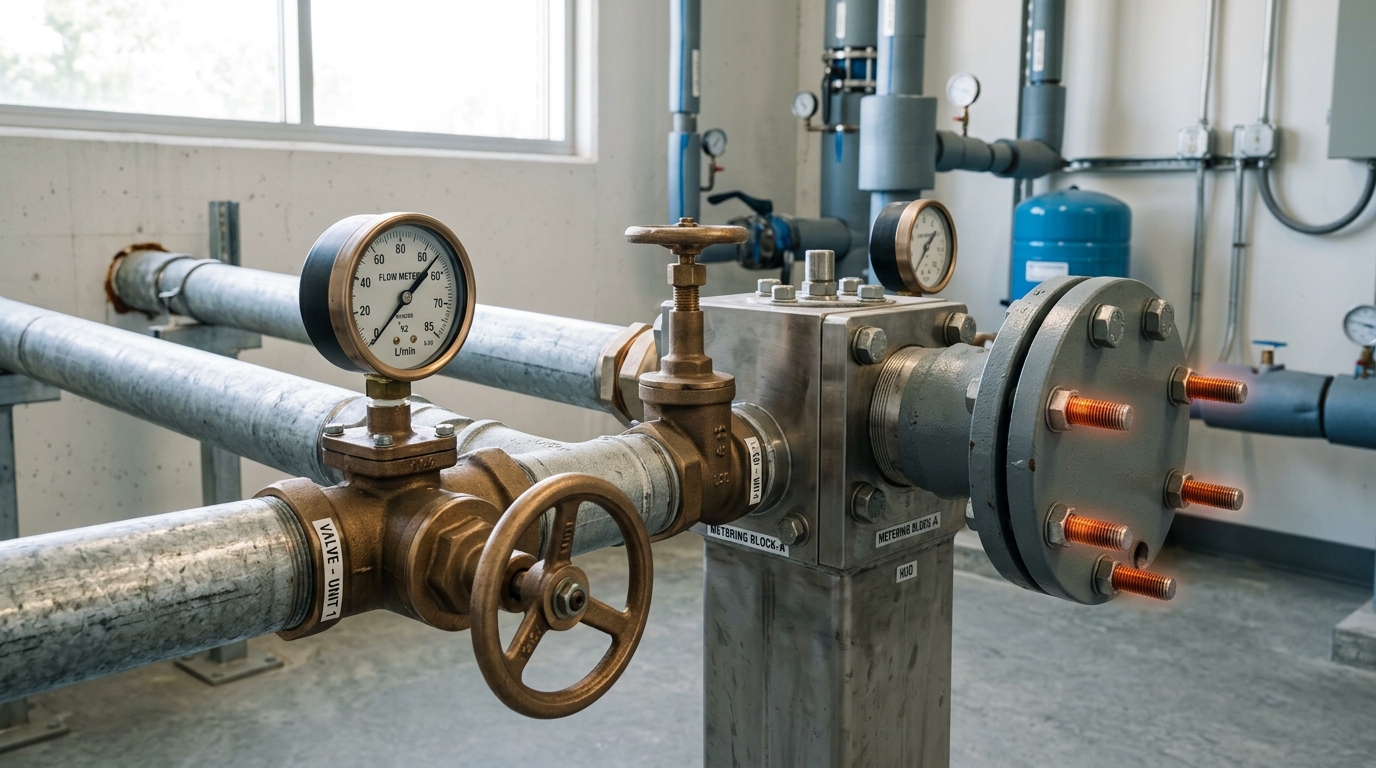
Cooling a cluster this size requires water at a scale that, like the power story, outran the infrastructure built to supply it. In the interim, before any recycled-water alternative existed, the site drew on the Memphis Sand Aquifer, the region’s sole-source drinking-water aquifer. The Memphis Flyer, drawing on Memphis Light, Gas and Water records, reported a single documented purchase of more than 25 million gallons by xAI in March 2026, alongside a daily draw figure of 812,502 gallons, at an industrial rate of 19 cents per hundred gallons against a standard residential rate of 32 cents [11]. The local advocacy group Protect Our Aquifer, which has pressed MLGW’s board for public hearings on the question, separately documents an interim ceiling of 1.3 million gallons per day of municipal drinking water pending a recycled supply, against a projected peak cooling demand as high as 5 to 5.7 million gallons a day — in a service area the group notes already carries documented arsenic-contamination risk in parts of the aquifer that increased pumping could draw toward drinking-water intakes [12]. These are two separate reports from two separate dates rather than a single reconciled figure, and this article presents them as such rather than averaging them into one number neither source actually published.
The intended fix is a water-recycling plant sourcing treated effluent from the city’s own wastewater system rather than the aquifer. Per Governing’s reporting, the plant draws from a municipal wastewater treatment facility roughly a quarter mile from Colossus that processes about 40 million gallons a day, and is designed to route about 3 million gallons a day to Colossus’s cooling towers and a further 7 million gallons a day toward a nearby TVA power plant, with xAI paying the city for the treated water it receives; an xAI engineer, Mark Carroll, is quoted arguing there is “no reason this water needs to be as clean as drinking water” [13]. Construction broke ground in October 2025 — but per E&E News, halted abruptly in April 2026, after Memphis utility CEO Doug McGowen disclosed a substantial cost gap: xAI’s own initial estimate was 80 million dollars, against the utility’s estimate closer to 200 million dollars. Musk stated publicly that the company needed to “focus on finishing Colossus 2 and ensuring it is extremely stable” before resuming the recycling plant, and the same reporting notes the pause coincides with SpaceX’s IPO preparations and speculation about space-based data centers, where terrestrial water recycling would be moot [14]. Memphis officials, per that reporting, hold a buyback right if the project stalls indefinitely but no binding authority to compel its completion.
There is a genuine disagreement here worth stating plainly rather than resolving by fiat, because the two sides are not always describing the same water. Protect Our Aquifer’s concern is about the Memphis Sand Aquifer specifically — a finite, sole-source groundwater body already showing contamination risk, drawn down today for an interim need. A different argument, made in an opinion piece for the barge-industry trade outlet The Waterways Journal by Ken Eriksen (whose professional credentials the piece does not state), holds that the recycled-water diversion is trivial relative to the Mississippi River’s flow: Eriksen puts Colossus’s diversion from treated effluent at 13 million gallons a day, against a Mississippi River flow of roughly 593,000 cubic feet per second, or about 383 billion gallons a day, calling the diversion “a mere 0.003 percent” even in drought conditions [17]. Both figures can be true without contradicting each other, because they answer different questions: whether a river notices a diversion, and whether a specific, finite, sole-source drinking aquifer can sustain an interim draw for as long as an aquifer’s replenishment takes to catch up. This article characterizes that as a live disagreement over which resource is actually load-bearing, not a dispute over facts a reader could adjudicate from either piece alone.
What independent energy analysts say about the physical ceiling
Zoomed out from Memphis specifically, the pattern this site illustrates is one energy-sector analysts describe as general across the industry, not particular to xAI. Wood Mackenzie’s data shows developers added only about 25 gigawatts of new data center capacity to their project pipelines in the fourth quarter of 2025 — roughly half the pace of the previous quarter. Wood Mackenzie analyst Ben Hertz-Shargel, quoted in Fortune, described this as “a bend in the trajectory,” adding: “Utilities just don’t necessarily have either the grid capacity or the generating capacity to be able to build it fast enough to accommodate these new large energy demand centers.” The same reporting notes that sites in secondary or tertiary power markets can still secure a connection in 18 to 36 months, while constrained primary markets now face waits of five to seven years [15].
Separate, aggregate figures reported by Yahoo Finance point the same direction. The Electric Power Research Institute’s 2026 “Powering Intelligence” analysis estimates data centers could reach 9 to 17 percent of total U.S. electricity generation by 2030 — more than double the current share — while 451 Research’s forecast has U.S. data center grid demand climbing from 61.8 gigawatts in 2025 to 75.8 gigawatts in 2026 and 134.4 gigawatts by 2030. The same reporting cites long average lead times for large power transformers and gas turbine orders, and notes that annual high-voltage transmission construction has fallen sharply from its pace earlier last decade [16]. None of these figures are about Colossus specifically. They are the industry-wide backdrop that makes Colossus’s specific path — permanent grid connection supplemented, then substantially exceeded, by mobile gas turbines — legible as a pattern other large sites are also following, rather than an aberration unique to xAI.
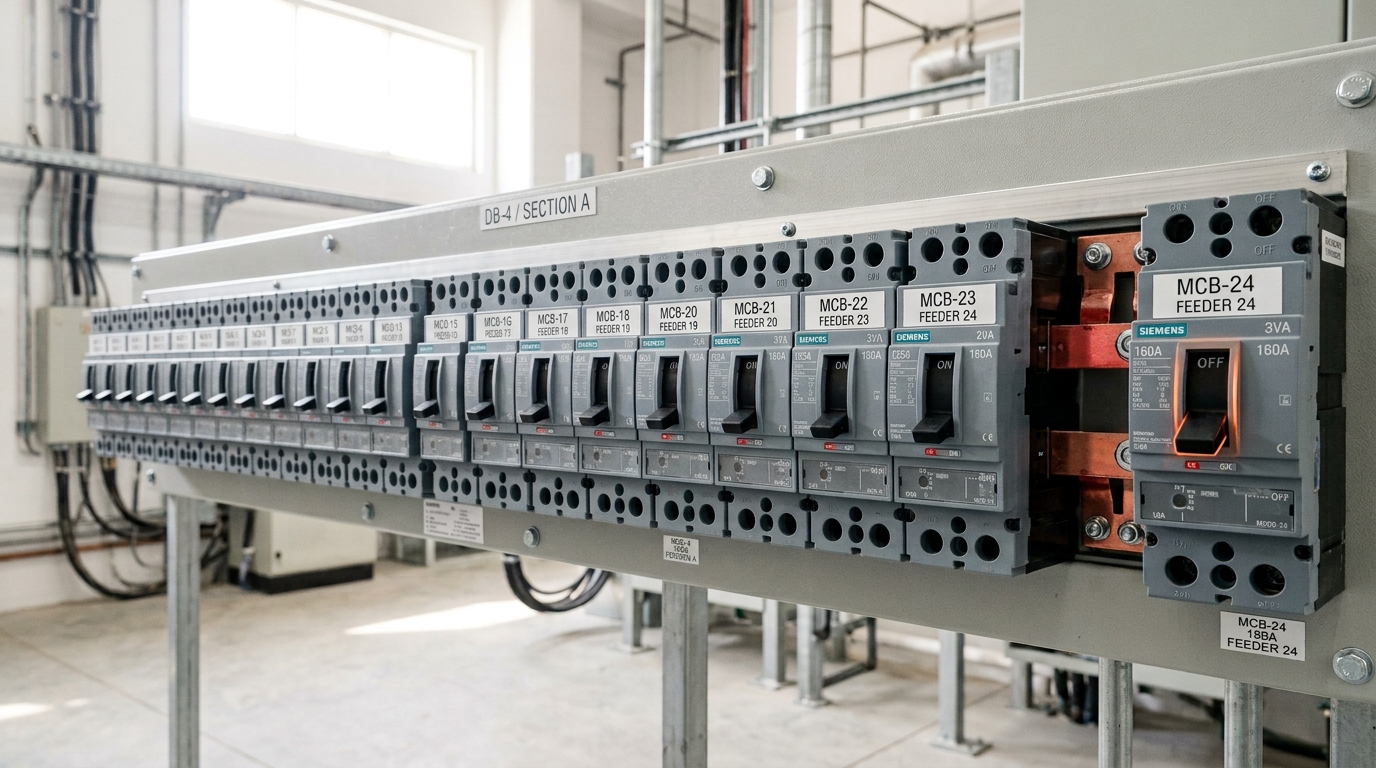
That backdrop is also why a site’s permitted or announced capacity and its energized capacity are two different numbers, and why this article has been careful to attribute each figure above to the specific stage — board approval, permit, litigation filing, or analyst pipeline estimate — it actually describes. A breaker reserved for a future load is not the same fact as a breaker carrying one.
The unconfirmed number this series will not print
It is worth returning briefly to the point raised at the outset, because it is the discipline this article is built around. A search of 2026 trade coverage turns up figures for the still-unreleased Grok 5 ranging as high as ten trillion parameters or more, attached to specific training-cluster claims and specific dates, presented with the confidence of a specification sheet. None of it traces to an xAI system card, technical report, or other primary disclosure this article could locate and verify. The pattern is familiar from every other frontier lab: parameter counts for the most capable models are, at the time of writing, a closely held detail, and the gap left by their absence gets filled by unnamed sourcing and extrapolation from unrelated data points. This article states no Grok parameter count as fact, for any model, because none is documented. What it has instead documented is measured in megawatts, gallons, dollars, and litigation dockets — a resource account that exists whether or not xAI ever discloses what any given Grok model contains.
What the record does and does not show
Three figures anchor what can actually be said with a citation behind it. Capital: 20 billion dollars raised in a single January 2026 round, inside a company valued at 250 billion dollars in a merger the same reporting describes as running a 1.46-billion-dollar quarterly loss against 107 million dollars in revenue. Power: a cluster whose disclosed 100,000-GPU accelerator count implies roughly 70 megawatts of raw silicon draw, sited on a permanent grid connection that started near 150 megawatts and was supplemented by mobile turbines now litigated at nearly 500 megawatts across two states. Water: an interim draw of roughly 1 million gallons a day from a sole-source drinking aquifer, against a recycling plant meant to replace it that broke ground, then stalled, amid a cost overrun of more than double the original estimate. None of these numbers required trusting a vendor claim about model capability; each traces to a funding announcement, a utility board vote, a permit, a lawsuit, or a piece of independent reporting cited above.
Two forecasts follow from that record, stated with a horizon and a way to check them later. First: given Wood Mackenzie’s documented slowdown in new data-center pipeline additions and the multi-year interconnection queues reported for constrained markets, expect Colossus’s own expansion path to continue relying on mobile, permitted-after-the-fact generation rather than permanent transmission-connected capacity through at least the end of 2027. This would be disconfirmed by a public TVA or MLGW filing showing a permanent interconnection upgrade at gigawatt scale energized before that date. Second: given the cost overrun and stated pause on the water-recycling plant, expect xAI’s daily aquifer draw, as tracked by Protect Our Aquifer and MLGW board filings, to remain above the 1.3-million-gallon interim ceiling those filings currently describe through 2026. This would be disconfirmed by MLGW or Protect Our Aquifer publicly reporting the recycling plant operational and aquifer withdrawal reduced to that or a lower figure before the end of the year.
What should not be forecast, on this record, is anything about Grok’s capability, training methodology, or parameter count — that is a different question, answered by different evidence, and this article has deliberately not touched it. The resource footprint documented here is real, dated, and citable independent of whatever Grok 5 turns out to be.