Reading the record straight
xAI’s Colossus is a specific, real thing: a GPU training cluster the company operates on a former Electrolux appliance-factory site in South Memphis, Tennessee, later extended with a second complex across the state line in Southaven, Mississippi. It is not a Meta facility, not a fictional machine, and not the wartime codebreaking computer that happens to share its name — it is xAI’s own compute plant, built to train the Grok family of models. Both Colossus and Grok are unusually well documented from two directions that do not always agree with each other. On one side sits xAI’s own material: launch blog posts, a published model card, product pages. On the other sits everything xAI did not choose to publish but that became documented anyway — utility board votes, a Chamber of Commerce press release, federal court filings, and independent technical teardowns by people who went and looked at the hardware. This piece keeps those two columns separate, and adds a third for a genre that has grown up specifically around Grok: parameter-count figures that circulate with striking precision and no attributable source at all.
This is a deliberately narrower piece than a full architecture account would be. It reports what xAI has put its own name to, what regulators, litigants and independent reporters have separately documented about the Memphis and Southaven buildout, and where the gap between the two currently sits. It does not estimate a parameter count for any Grok model, because xAI has not published one for any model discussed here, and no number below is presented as settled unless it traces to a specific claim, a specific date, and a specific speaker.
What xAI has put its own name to
Start with the smallest, most reliable pile: xAI’s own technical disclosures about Grok. They are narrower than the marketing coverage around them suggests, and it is worth being precise about exactly where they stop.
The Grok 3 launch post describes a model trained “on our Colossus supercluster with 10x the compute of previous state-of-the-art models,” a relative claim with no absolute FLOP figure attached, and states a “context window of 1 million tokens — 8 times larger than our previous models” [1]. It also describes Grok 3’s reasoning behavior directly: the “Think” mode can spend “anywhere from a few seconds to several minutes reasoning” before answering, and at the company’s highest reported test-time compute setting the model reached 93.3% on the 2025 American Invitational Mathematics Examination using a self-consistency method sampling 64 attempts per problem [1]. Separately, the same post is where xAI first put a specific hardware figure on the record for a cluster it had, by then, already expanded: “we are preparing to train even larger models on our 200,000 GPU cluster” [1].
The Grok 4 launch page, dated to the model’s July 9, 2025 release, adds a concrete API-facing number: a “256,000 context window” for the Grok 4 API [2]. On training, xAI describes using “Colossus, our 200,000 GPU cluster” for the reinforcement-learning stage, claims a “6x” improvement in “the compute efficiency of our training,” and states that Grok 4 was trained with “over an order of magnitude more compute than had been used previously” [2]. Every one of those is worth reading as exactly what it is — a vendor’s own relative comparison against its own prior model, not an absolute, independently checkable FLOP count, and not, on its own, a specification of how many of the 200,000 GPUs were dedicated to Grok 4 specifically versus other work running on the same cluster.
The company’s most formal technical document is the Grok 4 model card, dated August 20, 2025, and it is worth reading for what it is: a safety and risk-evaluation report structured around xAI’s own Risk Management Framework, not a specification sheet [3]. It discloses real, specific technical detail of a kind marketing pages do not — a training pipeline description (“pre-trained with a data recipe that includes publicly available Internet data, data produced by third-parties for xAI, data from users or contractors, and internally generated data,” followed by “a variety of reinforcement learning techniques — human feedback, verifiable rewards, and model grading — along with supervised finetuning”) and a full table of dual-use capability evaluations, including an 87% score on the biology section of the WMDP benchmark and a 43% unguided success rate on the CyBench cybersecurity benchmark [3]. What that document does not contain, anywhere in its eight pages, is a parameter count, a total training-compute figure, or a context-window number — all three are simply absent from xAI’s own most formal disclosure about this model.
Grok 4.1, announced November 17, 2025, is where xAI formalized a two-mode design already implied by “Think”: a reasoning variant internally coded quasarflux that “uses thinking tokens” for extended deliberation, and a non-reasoning variant coded tensor that “uses no thinking tokens for an immediate response” [4]. xAI describes the update as reusing “the same large scale reinforcement learning infrastructure that powered Grok 4,” retuned with new methods for using “frontier agentic reasoning models as reward models,” and reports a top position on the LMArena text leaderboard alongside a claimed reduction in hallucination rate on production queries measured against the FActScore benchmark [4]. As with the two Grok 4 pages, no parameter count appears anywhere on it.
Put together, that is the entire verified content of what xAI itself has said about how Grok works: two context-window figures (1 million tokens for Grok 3, 256,000 for the Grok 4 API), a description of reasoning as a trainable, switchable mode rather than an always-on behavior, relative compute-scaling claims stated without absolute figures, a documented RL-plus-SFT training recipe, and a set of disclosed safety-evaluation scores. It is a real technical record. It is also a short one, and the shortness is itself informative: xAI has chosen to disclose safety behavior in detail and architecture almost not at all.
Colossus: the compute the company describes, and the compute others counted
Where Grok’s internals are lightly documented, Colossus’s physical buildout is unusually heavily documented — partly by xAI, mostly by everyone else who had a reason to count.
The originating claim is xAI’s own 200,000-GPU figure, given above. Independent technical reporting fills in how the cluster got there. ServeTheHome, a hardware-focused trade publication, toured and described the original build in detail in an October 2024 piece: 100,000 Nvidia H100 GPUs, organized as eight-server, 64-GPU liquid-cooled racks built around Supermicro’s 4U Universal GPU systems, with racks grouped into 512-GPU clusters and a custom cooling loop that liquid-cools not just the GPUs and CPUs but the board’s Broadcom PCIe switches as well [12]. The same piece is the source, citing Supermicro’s own account, for the build-speed figure that has followed Colossus into most subsequent coverage: “in only 122 days, the teams built this giant cluster” [12]. A separate infrastructure-industry account puts a second interval on the record — a further 92 days to double the cluster to 200,000 GPUs — which lines up with xAI’s own 200,000-GPU figure from the Grok 3 and Grok 4 posts above [9]. By the same account’s most recent snapshot, the cluster’s composition had shifted again, to roughly 150,000 H100, 50,000 H200 and 30,000 GB200-class accelerators, with a reported (not xAI-disclosed) power draw of around 250 megawatts at that configuration [9].
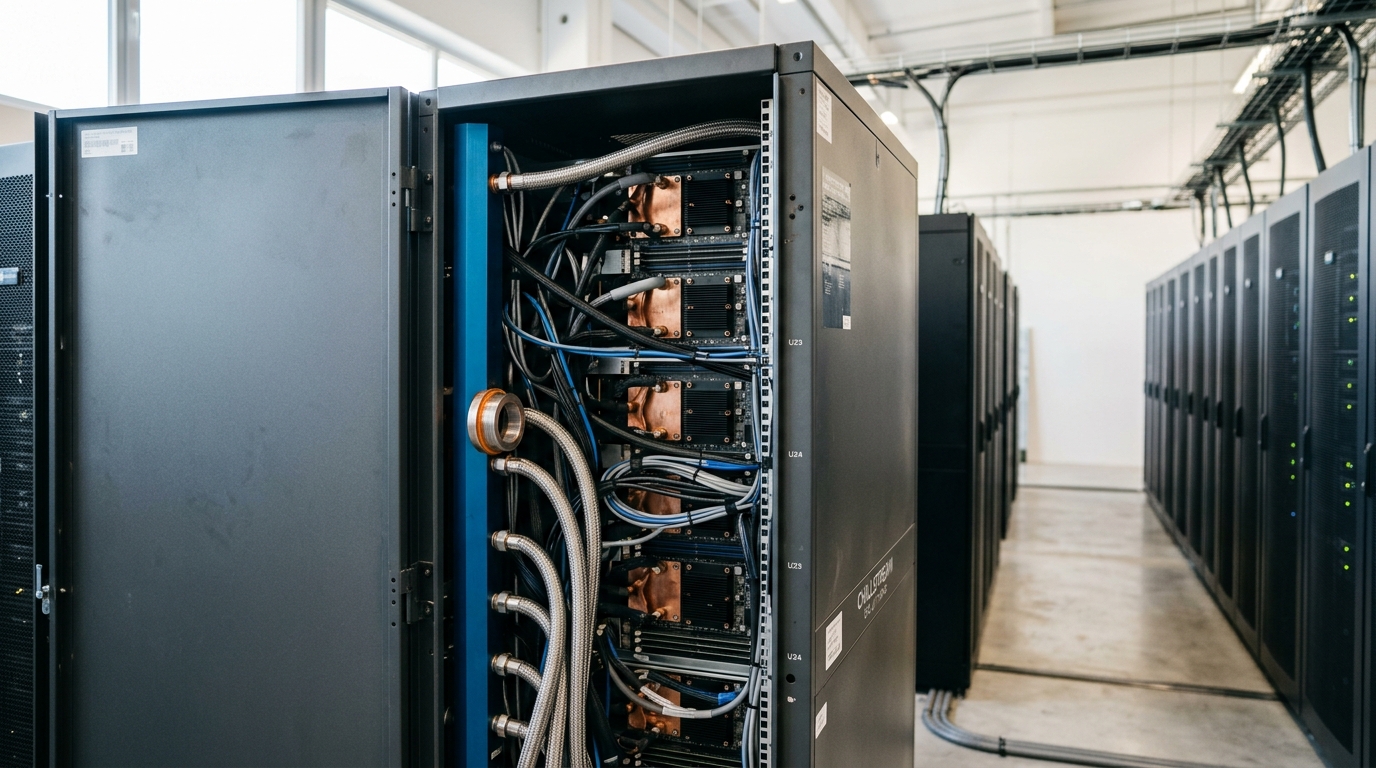
That reported 250-megawatt figure is worth pausing on, because a naive back-of-envelope estimate from the chips alone comes out much lower. Nvidia’s own datasheet lists the H100 SXM5 module’s maximum thermal design power at 700 watts [5]. Multiplying that by the disclosed size of the original cluster gives the accelerators’ own nameplate draw at launch:
Independently reported total generating capacity at the site during roughly that period ran several times higher than that — on the order of 570 megawatts once a documented 150-megawatt grid connection (below) is added to the roughly 420 megawatts of turbine capacity litigants and reporters separately counted on the ground (also below). None of that gap is evidence that either figure is wrong. It is what a real facility looks like once CPUs, memory, storage, networking gear and — above all — liquid-cooling infrastructure are added on top of the accelerators themselves, and once generation is sized with reserve margin rather than run flat to nameplate. The arithmetic is offered here for exactly that reason: to show why “GPU count” and “site power” cannot be inferred from one another without the buildout details neither company nor litigant fully discloses.
Colossus 2 is the clearest example of a figure that belongs squarely in the vendor-claim column rather than the confirmed-fact one. On December 30, 2025, Elon Musk announced that xAI had purchased a third building in Memphis, expanding the campus toward a stated 2-gigawatt total capacity and roughly 555,000 GPUs, reported to represent about $18 billion in accelerator purchases — implying, by simple division, something on the order of $32,000 per GPU [10]. The reporting is explicit that this is Musk’s own announcement rather than an independently audited figure, and the newer accelerator generation involved (GB200- and GB300-class parts, alongside roughly 30,000 legacy H100/H200 units carried over from Colossus 1) is provisioned at markedly higher power density per chip than the H100 generation it succeeds [10]. Scaling the same simple arithmetic to the announced target illustrates the shift, while making clear it is a comparison of two different companies’ disclosed totals rather than a measured rack figure:
roughly five times the 700-watt figure for a single H100. xAI has not published a rack-level or chip-level power figure for Colossus 2 itself; this is an inference from two independently sourced totals, offered as illustration of direction and scale rather than as a disclosed specification. Musk has also stated a longer-run ambition of reaching roughly 1 million GPUs across xAI’s sites; that is a stated target and a forward-looking claim, not a completed buildout, and it is reported here as exactly that.
The permitted path onto the grid
Set the turbine controversy aside for a moment and look at the utility-regulated half of Colossus’s power story, which is comparatively well documented through public board records.
Memphis Light, Gas and Water is the local utility serving the site; MLGW in turn buys wholesale power from the Tennessee Valley Authority, and TVA’s own rules require board-level approval for any single customer load request above 100 megawatts [14]. The connection grew in visible steps. An initial site connection is reported at roughly 8 megawatts, upgraded to 50 megawatts over the summer of 2024 as MLGW built out local capacity [13]. The TVA board then approved a 150-megawatt supply agreement for the site in a vote reported in early November 2024 — a decision the Southern Environmental Law Center publicly criticized at the time as having been made, in the organization’s words, without “studying the impact it will have on local communities,” while TVA itself maintained the load would support grid “system flexibility” through demand-response participation and would not threaten reliability for other customers [13].
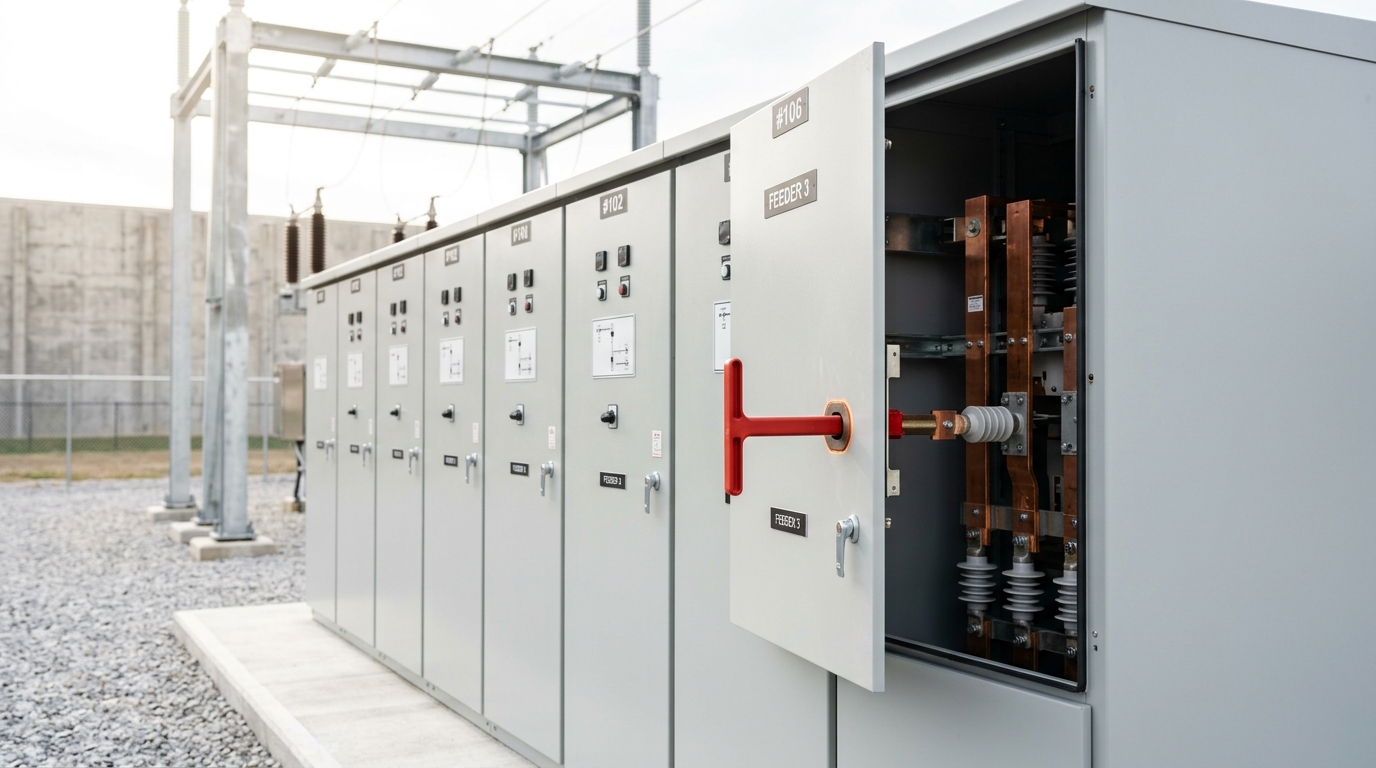
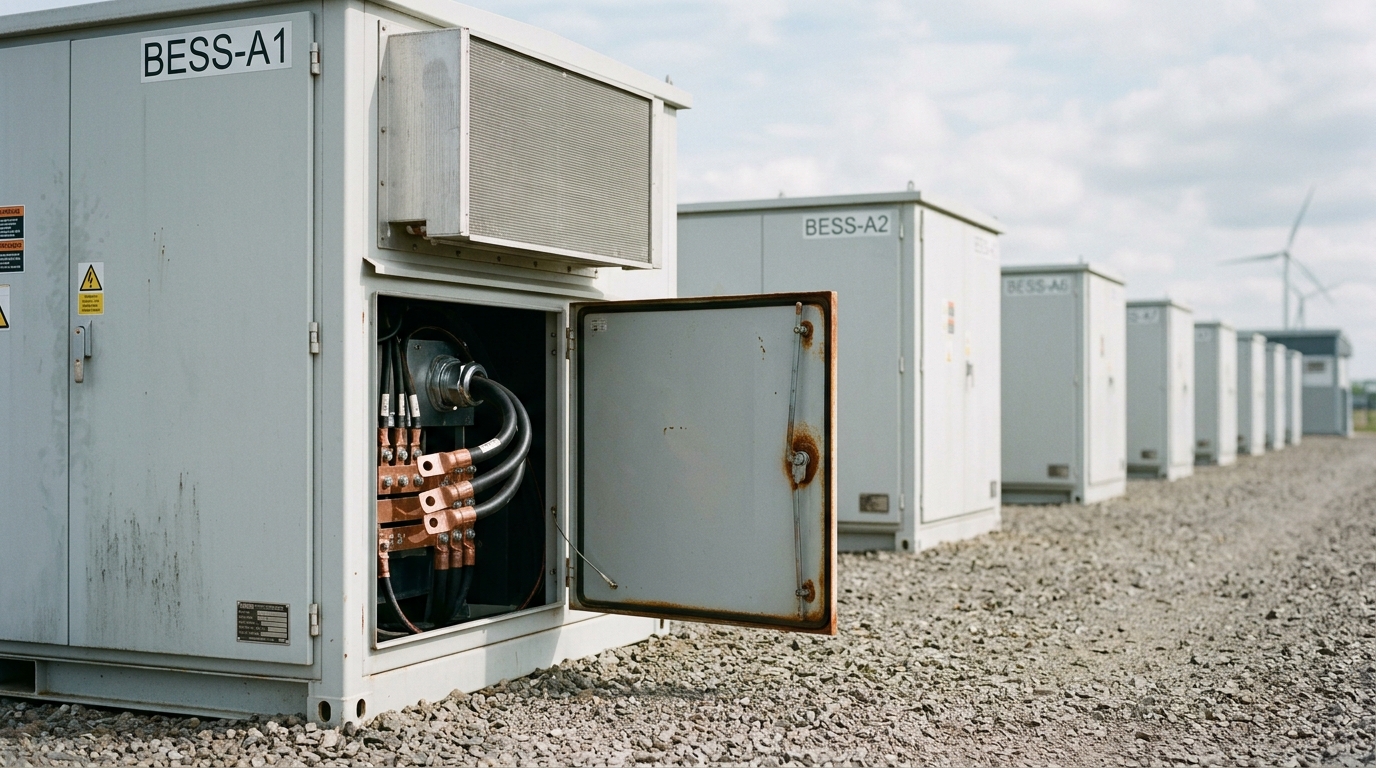
That 150-megawatt allocation became physical roughly six months later: a Greater Memphis Chamber press release states that, as of May 1, 2025, xAI “reached full operational capability for Phase I” at a newly built electric substation designated Substation #63, delivering the full 150 megawatts of grid power from MLGW and TVA, alongside a stated 150 megawatts of Tesla Megapack battery capacity for stored backup power, with a second substation, #22, under construction for a planned fall 2025 connection [11]. A separate, independent count from around the same period puts a specific number of battery units on the ground — 208 Tesla Megapacks — a figure describing unit count rather than the Chamber release’s power-rating figure, and the two are not necessarily in tension [9].
The grid connection kept growing after that. On February 11, 2026, the TVA board voted unanimously to approve a further 150-megawatt allocation to the site, doubling xAI’s total approved grid draw to 300 megawatts — a vote reported to have followed roughly nine months of board gridlock through 2025 tied to personnel turnover on the TVA board itself [14]. Read end to end, the permitted grid path is a clean, publicly documented escalation: 8 megawatts, then 50, then a board-approved 150 delivered through a purpose-built substation, then a second board-approved 150 on top of that. None of it is contested in the way the interim generation below is; the dispute over the grid path is about whether TVA studied community impact adequately before approving it, not about whether the megawatt figures themselves are accurate.
The interim generators, and the litigation over them
The contested power story runs in parallel to the grid one, and it exists because grid interconnection — as the steady, board-vote-gated escalation above shows — takes far longer to build than a GPU hall does. xAI’s own answer to that gap was on-site gas-fired generation, and that answer became the subject of two separate, ongoing pieces of environmental litigation.
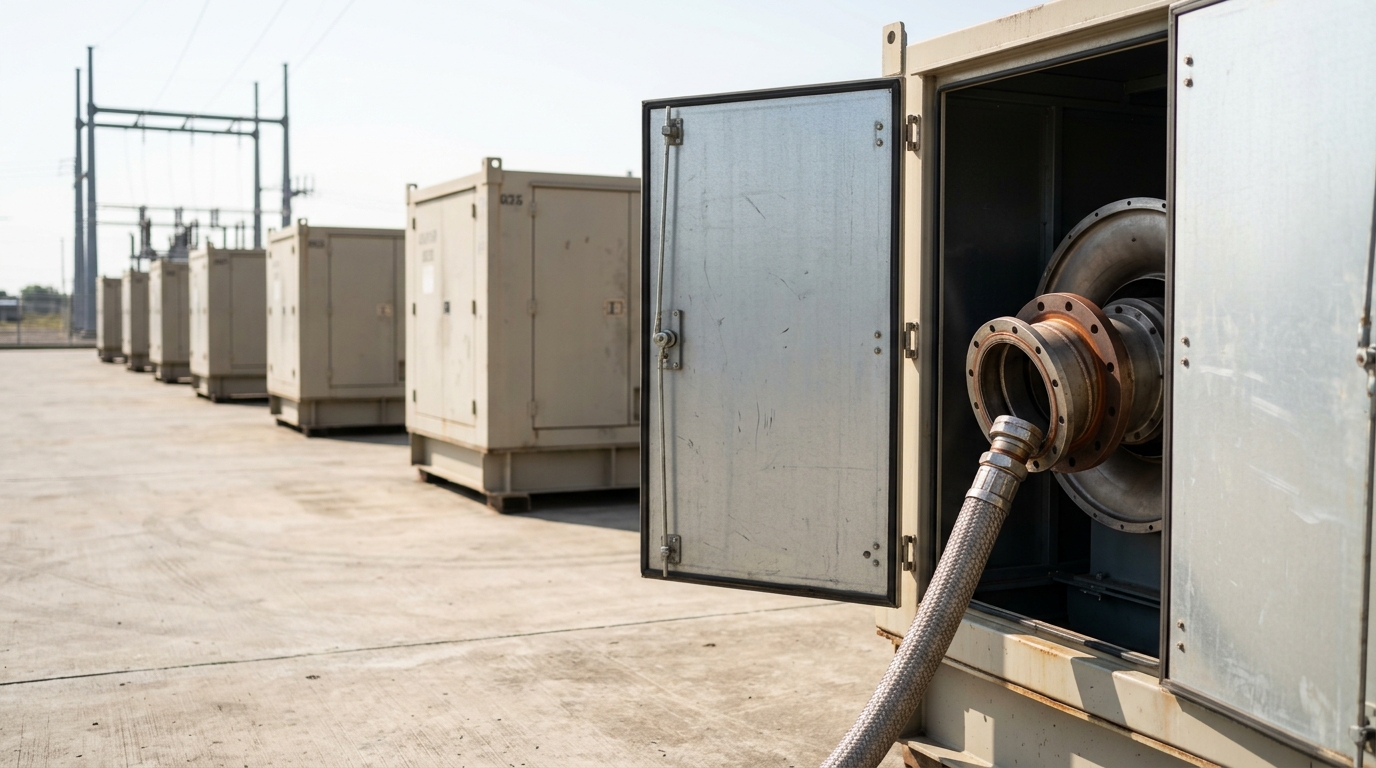
The first concerns the original South Memphis site. The Southern Environmental Law Center, acting on behalf of the NAACP, filed a formal notice of intent to sue in mid-June 2025, alleging that xAI had “installed and operated at least 35 combustion turbines” at Colossus over the preceding year — a fleet SELC said reached a peak generating capacity of roughly 421 megawatts, with an aerial survey on June 15, 2025 documenting around 407 megawatts of turbine capacity still in place — all of it, the notice alleged, “without ever obtaining the necessary preconstruction or operating air permits” required under the Clean Air Act, with the potential to emit more than 2,000 tons of nitrogen oxides annually [6]. That is a substantially larger generation footprint than the 150-megawatt grid connection running in parallel to it at the time, and it is the gap the turbines were apparently bridging.
The city of Memphis subsequently commissioned third-party air-quality testing at monitoring sites on June 13 and 16, 2025. The results, as reported, found that the ten pollutants tested were “not dangerous” — but the same reporting noted that ozone, a pollutant of particular concern in a region already out of compliance with national smog standards, was not among the ten, and that SELC separately raised concerns about monitor placement, noting some sensors had been mounted directly against buildings rather than at the roughly six-foot, obstruction-clear height recommended in EPA siting guidance [7]. The result is a genuinely disputed record rather than a resolved one: a city-commissioned test found no danger in what it measured, while the group pursuing litigation disputed both what was measured and how.
A second, separate power complex complicates the picture further. Colossus 2 draws additional power from a gas-turbine plant across the state line in Southaven, Mississippi, operated through an xAI subsidiary identified in court filings as MZX Tech. Earthjustice, representing the same coalition of community and environmental groups, filed suit in the federal district court for the Northern District of Mississippi in April 2026 over that facility specifically, alleging 27 unpermitted methane gas turbines operating without a required Clean Air Act permit, with potential annual emissions estimated at more than 1,700 tons of nitrogen oxides, up to 180 tons of fine particulate matter, 500 tons of carbon monoxide, and 19 tons of formaldehyde — a facility the filing places roughly half a mile from the nearest homes and about a mile from an elementary school [8]. As of this writing, that case and the underlying Memphis dispute both remain in litigation rather than resolved; nothing in the public record reviewed here establishes a final outcome for either.
Three columns, not one
Laid out this way, the record sorts cleanly into three kinds of claim, and the practical rule for reading anything else written about Grok or Colossus is to ask which column a given number belongs in before repeating it.
xAI’s own disclosures are narrow but genuine: two context-window figures, a documented two-mode reasoning design, a described (not quantified) training pipeline, relative compute-scaling claims stated as multiples rather than absolutes, and a real set of disclosed safety-evaluation scores in the Grok 4 model card. Vendor claims of this kind should be read as exactly that — a company’s own characterization of its own system, useful and citable, but not independently verified.
Independently documented facts are the strongest material in this piece precisely because they come from parties with no interest in flattering xAI: TVA board votes with recorded dates and megawatt totals, a Chamber of Commerce press release naming a specific substation, federal court filings with specific turbine counts and emissions estimates, and a hands-on hardware teardown describing the actual rack architecture. These are the numbers this article leans on hardest, and they are also the numbers most exposed to becoming stale — TVA’s allocation has already grown twice in fifteen months, and both lawsuits are unresolved.
Unattributed rumor is its own category, and Grok’s parameter counts sit almost entirely inside it. Circulating figures for the next-generation models range from 1.5 trillion to 2 trillion to 2.1 trillion parameters for near-term Grok releases, and from 6 trillion to 15 trillion for Grok 5, variously attributed to Musk’s own informal remarks, unnamed leakers, and outlet-to-outlet republication — and at least one outlet tracking these figures states plainly that “the wide range of figures reflects the unofficial nature of all Grok 5 details” and that specifications “remain rumors” pending an official xAI disclosure [15]. None of those figures appears in the Grok 4 model card, on any Grok launch page, or in any other primary xAI document reviewed for this piece [3] [2] [4]. Until xAI publishes one, a parameter count for any current or forthcoming Grok model is not a fact available to be reported — it is a number someone is guessing, sometimes precisely.
A short, bounded forecast follows from the buildout pattern documented above rather than from any of the disputed figures. Prediction, horizon end of 2027: the TVA grid allocation to the Memphis-Southaven complex will continue to grow in discrete, board-approved increments rather than in one large award, because that is the pattern in every vote on the public record so far (8 to 50 to 150 to 300 megawatts across roughly eighteen months). The assumption behind it is that TVA’s 100-megawatt board-approval threshold continues to apply and that xAI continues to seek grid capacity rather than shifting the site’s power mix decisively toward permitted on-site generation. This is disconfirmed if a single future TVA filing requests and receives an allocation larger than the cumulative growth of all prior increments combined, or if xAI announces a shift away from grid dependence at this site entirely.
What to take away
Two clean, well-documented buildout stories run alongside a much murkier model-capability story, and the honest description of Grok and Colossus keeps them apart rather than blending them into one impression of scale. The compute cluster’s growth — 100,000 GPUs in 122 days, doubled in 92 more, expanded again toward a stated 555,000-GPU, 2-gigawatt target — is unusually well attested by both the company and outside observers. The power story splits further still, into a steadily growing, publicly voted grid connection on one hand and a litigated, disputed turbine fleet on the other, with the two Memphis-area lawsuits still open as of this writing. Grok’s own technical record, by contrast, is thin by design: two context-window numbers, a documented reasoning mode, and a safety report that discloses dual-use capability scores while saying nothing at all about how large the model actually is. Every trillion-parameter figure attached to a Grok model in circulation right now traces back to something other than xAI — which is precisely why none of them appears as a fact anywhere in this piece.