A Wire No Engineer Would Have Drawn
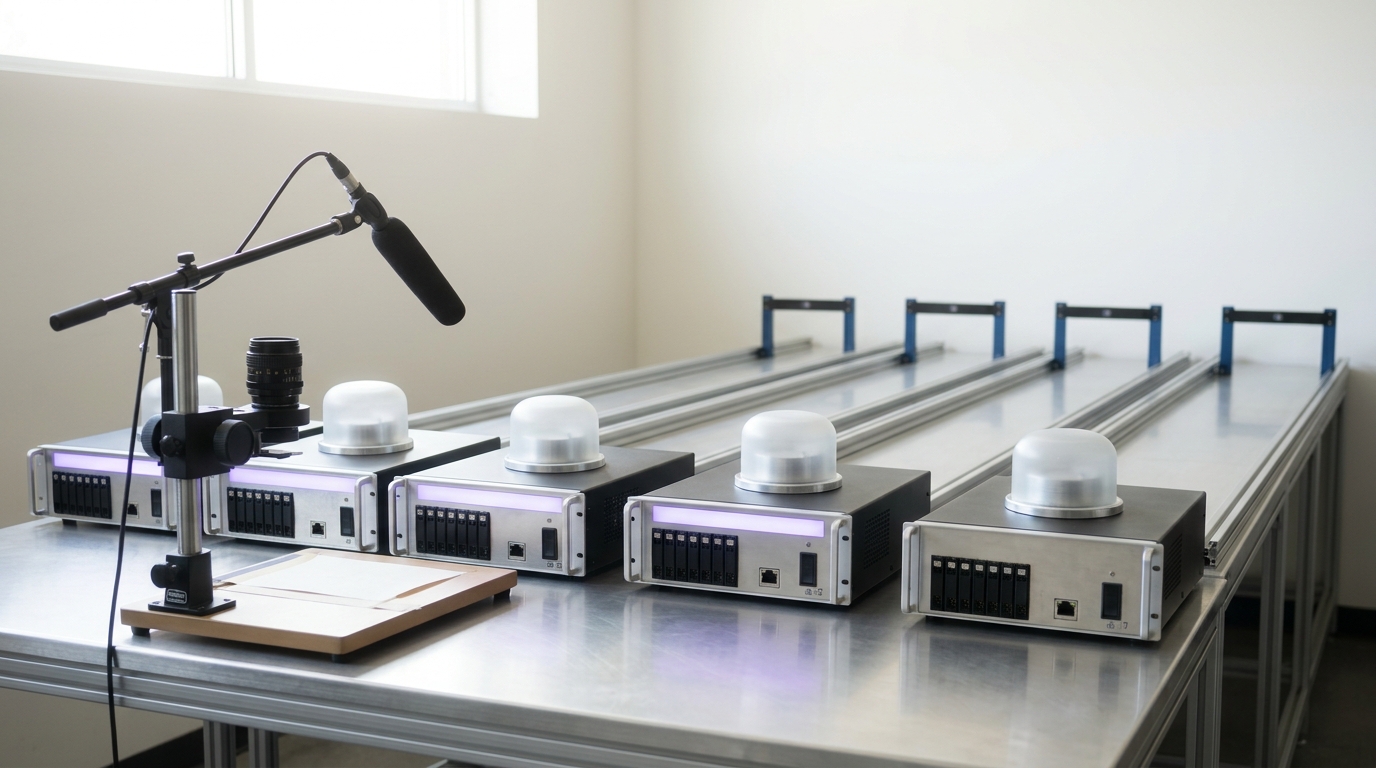
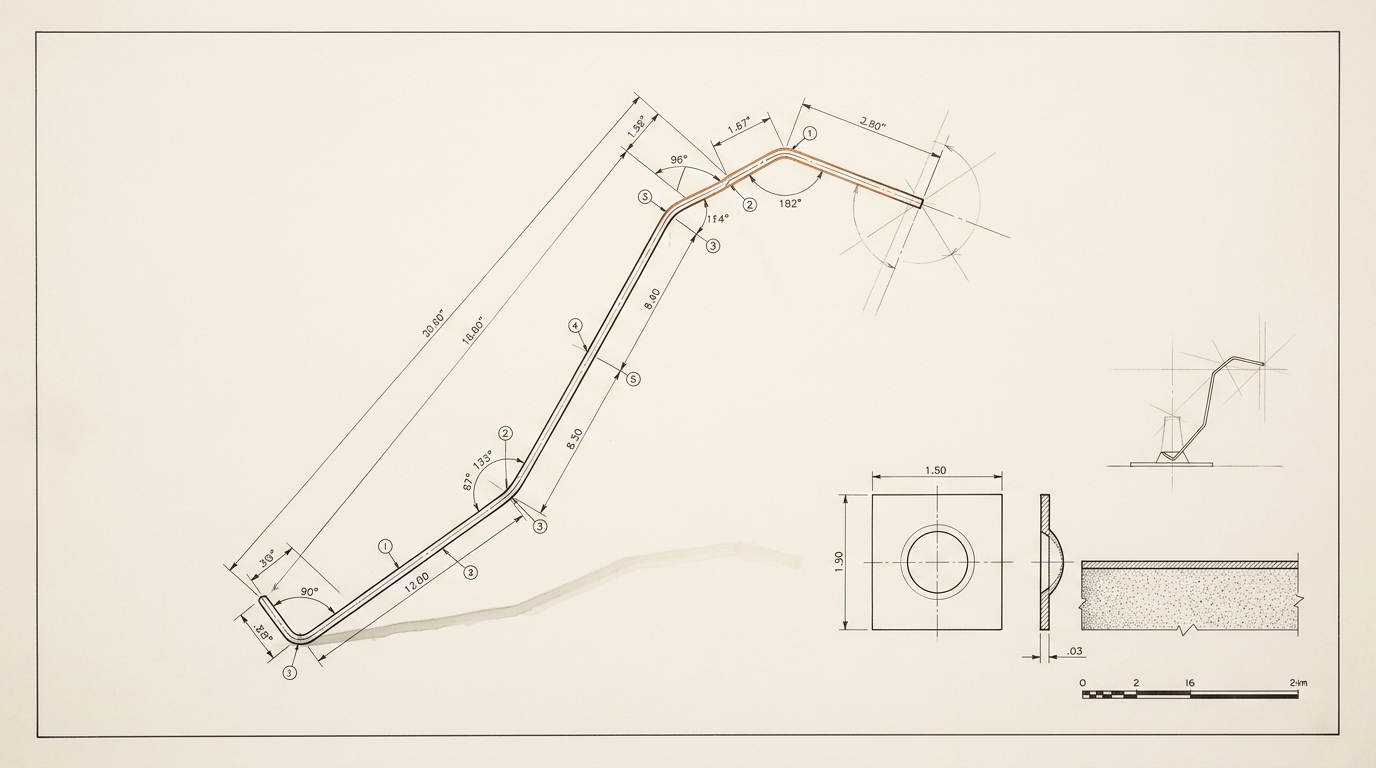
On 22 March 2006, a Pegasus XL rocket put three small NASA satellites into orbit as part of the Space Technology 5 (ST5) mission, a 90-day technology-validation flight run under the agency’s New Millennium Program [6]. Bolted to each spacecraft was an X-band communications antenna that no person had drawn. Its geometry — four short, identical, kinked wire arms radiating from a small circular ground plane, each arm bending at a handful of irregular angles with no obvious pattern — had been produced by a genetic algorithm running at NASA Ames Research Center, under a project that began as a 2003 NASA/DoD Conference on Evolvable Hardware study [3] and was led by Jason Lohn, Gregory Hornby, and Derek Linden [2]. It is generally described as the first computer-evolved hardware to fly in space [1].
The temptation is to read this as a fable: software out-designed the engineers, evolution beat human ingenuity, nature knows best. Neither claim survives contact with the record, and the actual story is more useful than either. The evolved antenna’s real achievement was not that it beat a human design on a fixed target — by the design team’s own account, its gain was merely comparable to the conventional antenna built for the same mission, “human-competitive” rather than superior [2]. What it did better was survive a moving target: when the mission’s requirements changed after the original design work was already underway, the evolutionary process produced a new compliant design in weeks, a turnaround no human redesign cycle could match.
What the Algorithm Actually Searched
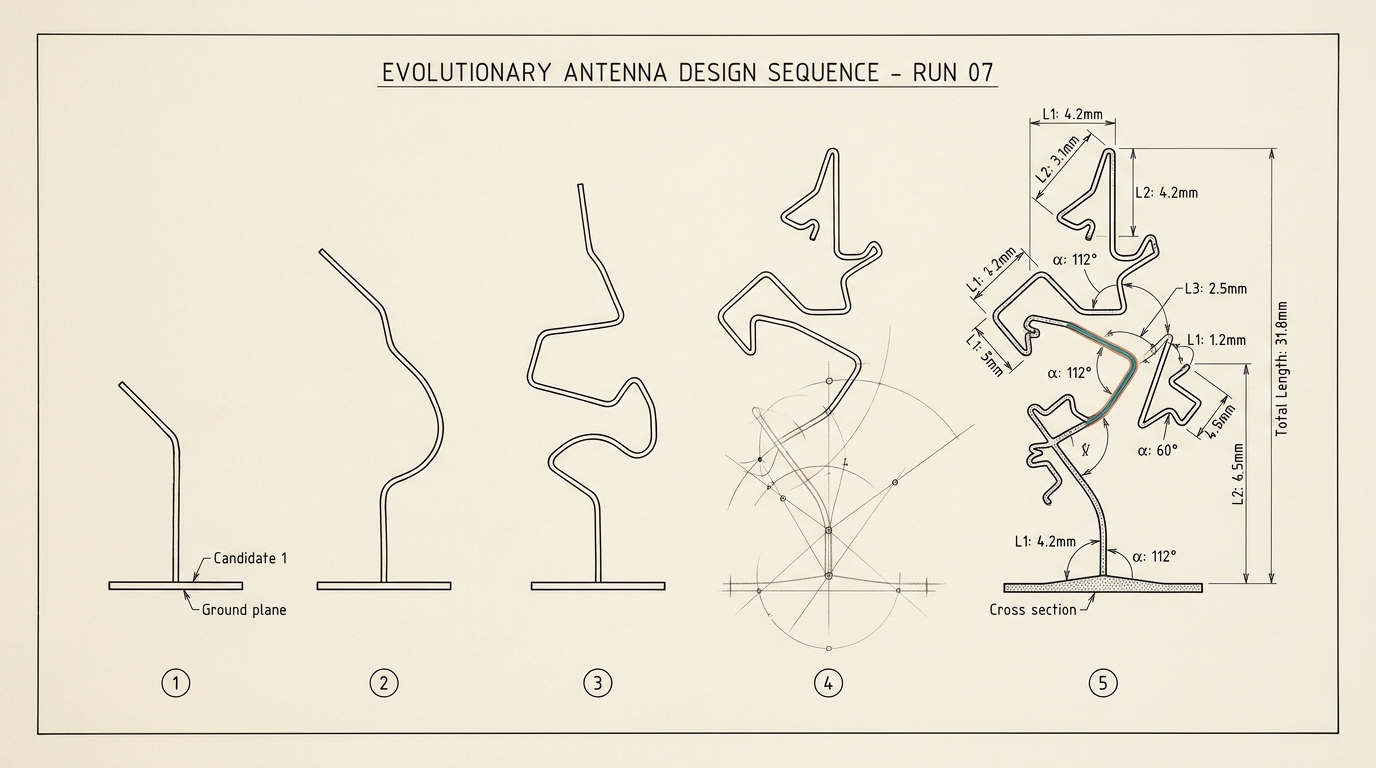
ST5’s antenna requirement was unusually harsh for a structure that small: a roughly 15-centimetre wire assembly under 165 grams had to deliver near-hemispherical, circularly polarized gain across a wide bandwidth while holding a clean 50-ohm match at both the 8,470 MHz uplink and the 7,209.175 MHz downlink [2]. The Ames team constrained their search to a monopole built from four identical wire arms, each rotated 90 degrees from its neighbor, and let two different evolutionary algorithms — one a fixed-length real-valued parameter vector, the other a branching, tree-structured genetic-programming representation — search only the geometry of a single arm [2, 1]. Thousands of candidate wire shapes were built and scored in electromagnetic simulation, generation after generation, each candidate’s fitness set by how closely its modeled radiation pattern matched the mission’s gain, polarization, and impedance targets.
A human antenna engineer does not start from nothing. Practice hands a designer a library of known, analytically tractable families — helices, patches, horns, biconicals — each with published design equations relating turn count, pitch, or aperture to gain and bandwidth. That library is why a contractor can propose a workable quadrifilar helix in a matter of weeks: its behavior is derivable before a prototype exists. An evolutionary search carries no such library. It does not know that antennas are “supposed” to be helices or patches; it only knows the fitness function. That absence of a prior is exactly what let the search wander into a region of the design space — short, asymmetric, irregularly bent wire — that decades of antenna-engineering convention had no reason to visit, because “automatically finding effective solutions that would ordinarily not be found” was the explicit point of using evolutionary design in the first place [2].
Two Antennas, One Requirement
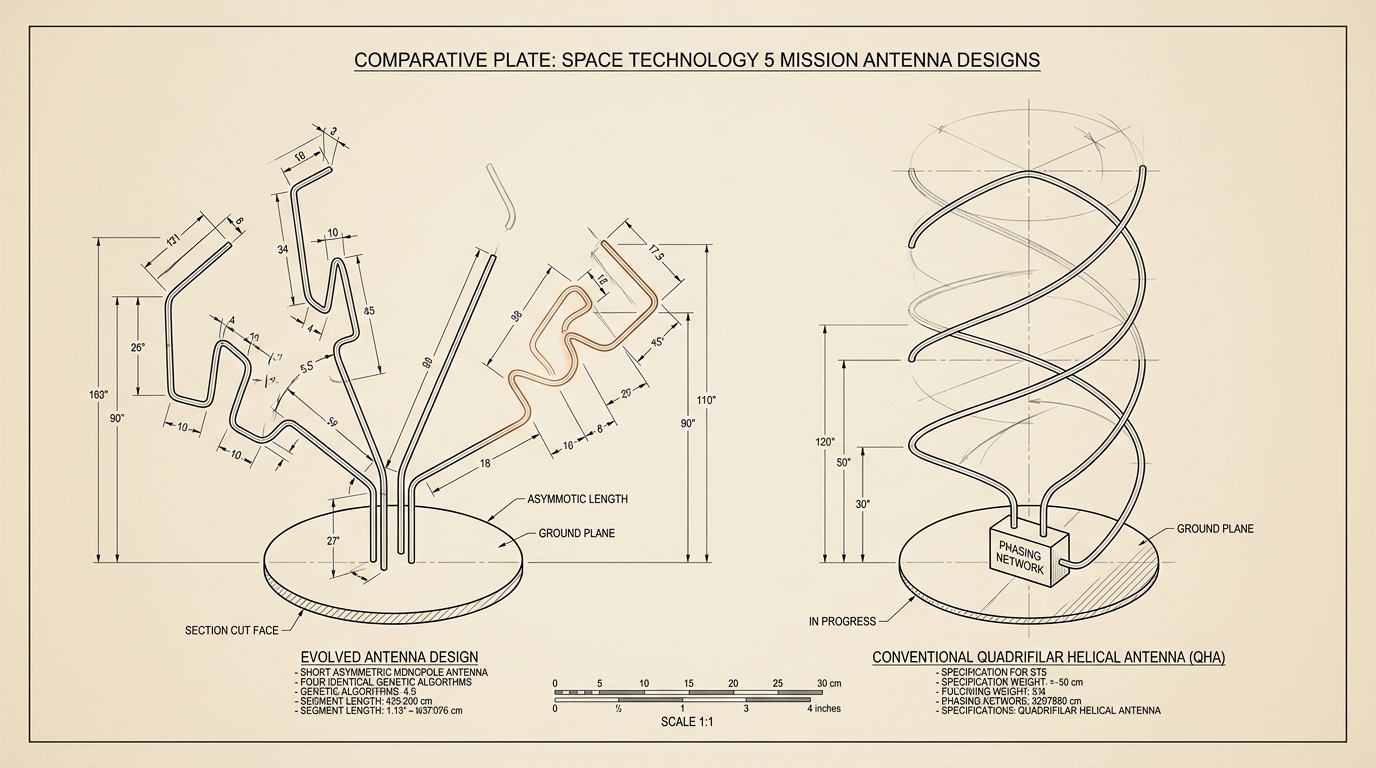
| Property | Evolved antenna (ST5-33-142-7) | Quadrifilar helical antenna (contractor design) |
|---|---|---|
| Gain vs. requirement | Met the mission’s gain pattern; judged comparable to, not decisively better than, the contractor design — “human-competitive performance” [2] | Met the same gain pattern using conventional design practice [2] |
| Feed complexity | Single-point-fed monopole; circular polarization comes from the arms’ evolved geometry alone | Four helical arms require a separate phasing/power-divider network to set relative feed phase for circular polarization |
| First-prototype turnaround | Reported at roughly three person-months [5] | Reported at roughly five person-months [5] |
| Turnaround after the orbit changed | New compliant design re-evolved in under a month by editing the fitness function [4, 5] | No comparable rapid-redesign path was attempted; a human redesign would repeat the original multi-month cycle |
| Analytic tractability | No closed-form derivation; the bend sequence’s performance is established only by simulation and range measurement | Behavior follows from established helical-antenna theory before a prototype is built |
The Value Was the Deadline, Not the Shape
That moving target is the part of the story worth taking seriously. ST5 was originally planned to fly in a highly elliptical geosynchronous transfer orbit reaching roughly 35,000 km [2], and the antenna’s gain requirement was written for that geometry. The mission ultimately flew in a far lower elliptical orbit, on the order of 300 by 4,500 km [6], which changed how the ground station saw each spacecraft and pushed the wanted gain toward angles closer to the antenna’s boresight rather than out toward the horizon — a materially different antenna problem, arriving after most of the original design work was already done.
A conventional redesign under that kind of change means returning to the library: re-deriving turn geometry, re-cutting a phasing network, re-building and re-testing a prototype, the same multi-month cycle the quadrifilar helix took the first time. The Ames team instead edited the evolutionary system’s fitness function to score candidates against the new pattern and re-ran the search. Two new antennas meeting the revised specification came out of that run in under a month [4]. That is the actual case for evolutionary hardware design: not that it draws a cleverer shape than a person would, but that the same search machinery generalizes to a changed requirement almost for free, because no step of the process depended on a human re-deriving anything by hand.
What Search Finds, and What It Costs
The general point extends past antennas. Undirected variation-and-selection processes — whether run by a genetic algorithm over weeks or by natural selection over millions of years — are not smarter than deliberate design; they are simply unconstrained by the priors that make deliberate design efficient. A human designer’s library of tractable forms is also a set of blinders: it excludes anything that cannot be reasoned about in closed form, which is most of the space of things that could physically work. Search carries no such exclusion, so it occasionally lands on a solution that satisfies a requirement precisely because it was never built from a recognizable family to begin with.
That advantage has a cost, and the ST5 project did not hide it. The evolved antenna has no simple story explaining why its particular sequence of bends radiates the way it does; nobody can look at the wire and derive its gain pattern the way a helix’s turn count predicts its own. Its performance had to be established the way any unfamiliar artifact’s performance is established — by building it and measuring it, in simulation and then on an antenna range, not by calculation [2]. Modifying it afterward by hand is close to impractical: change one bend and the whole arm’s interdependent currents shift with it, in ways the original search explored across thousands of trials but a human editor cannot cheaply predict. The antenna that took under a month to re-evolve would take considerably longer to knowingly redesign with a pencil.
That trade is the honest lesson of ST5: search can reach further than practice precisely because it owes practice nothing, but what it returns is a result to be verified, not a design to be understood.