A species boundary is a measurement, not a definition
Most of what evolutionary biology says about speciation is inferred backward. Two lineages are found already distinct — unable to interbreed, or interbreeding rarely enough that nobody argues about it — and the work is to reconstruct how they got that way from fossils, phylogenies and the residue left in their genomes. The inference is usually sound, but it is still an inference: nobody watched the boundary form.
Four cases break that pattern, and they break it in different ways. An apple maggot fly shifted onto a new host plant in the nineteenth century and has been sampled at intervals ever since, so the growth of a partial reproductive barrier between its old and new host races is a measured time series, not a reconstruction. A pair of wildflower species in the genus Tragopogon were caught being born: their parent plants arrived in eastern Washington as documented weeds early in the twentieth century, and a botanist found the new hybrid species already growing where the parents overlapped by 1950, with a paper trail attached [5]. A warbler population that rings the Tibetan Plateau has been sampled at dozens of points around its loop, turning geographic distance into a proxy for evolutionary time and letting biologists watch, in space, what a single history of divergence would have looked like unfolding in time [10]. And a mosquito’s genome has recently been used to check a textbook origin story against the population history it actually left behind, with the striking result that the story was wrong.
What ties these cases together is not a shared mechanism — they do not share one — but a shared evidentiary structure: each has a dated starting point, a body of measurement taken while the process was still running, and a claim precise enough to be wrong. That last property matters more than it sounds. A species concept vague enough to never be falsified is not doing any work. Ernst Mayr, writing about the very case this article uses to illustrate the geography of speciation, called ring species “disturbing to the orderly mind of the cataloguing systematist, but… welcome to the student of speciation” [10], precisely because they force a decision about where a boundary sits rather than letting the question be postponed. Every case below has, at some point since its original description, produced a finding that revised the original claim rather than merely repeating it. That is not a weakness in the evidence. Repeated, public correction is what distinguishes an active research programme from a settled fact recycled in textbooks, and each of these four programmes is still active.
An apple orchard split a fly population within a documented span of years
The apple maggot fly, Rhagoletis pomonella, is native to eastern North America, where it develops inside the fruit of hawthorns (Crataegus species, especially the downy hawthorn Crataegus mollis). Apple trees are not native; they were brought from Europe and cultivated across the same region for roughly two centuries before anyone recorded flies breeding in them. Then, in the middle of the nineteenth century, orchardists in the Hudson Valley of New York began finding maggots in their apples, and the entomologist Benjamin Walsh — a correspondent of Darwin’s — proposed in 1867 that this was a new host being colonized in real time, an event he thought might illustrate how natural selection on “phytophagic varieties” could found new species without any geographic separation at all [4].
A century later, Guy Bush turned Walsh’s observation into a testable hypothesis. Bush argued that because Rhagoletis larvae are specialists that can only develop in one host’s fruit, and because adults court and mate directly on or near the fruit of the host they emerged from, a shift onto a new host plant creates an immediate, if partial, mating barrier: flies that prefer apples mostly meet other apple-preferring flies, and flies that prefer hawthorns mostly meet other hawthorn-preferring flies, even though both are flying through the same orchards and hedgerows [4]. This is sympatric speciation in its narrowest sense — divergence without a mountain range or a strait of water to do the separating — and it was controversial for exactly that reason: most speciation theory through the middle of the twentieth century treated geographic isolation as close to a precondition.
The empirical case did not stay theoretical for long. Feder, Chilcote and Bush sampled allozyme frequencies from flies collected on hawthorn and on apple at sites where both hosts grew side by side, and found the two host-associated samples were genetically distinguishable at several loci — not fixed differences, but frequency differences consistent enough, and consistent enough with the flies’ known host-choice behavior, that the authors described apple and hawthorn flies as “partially reproductively isolated host races” rather than as one undifferentiated population that happened to eat two different fruits [2]. The word “partially” is doing real work in that sentence: this was not a report of two finished species, it was a report of divergence caught while it was still occurring, in populations whose separation from a common ancestor could be dated almost to the decade.
The mechanism behind that partial isolation was pinned down in two further stages. First, Feder and colleagues used mark-and-recapture experiments in the field to measure how often flies that emerged from one host were later recaptured on the other: host fidelity, they found, restricts movement between the apple and hawthorn races to roughly six percent per generation, low enough on its own to let genetic differences accumulate and be maintained against the homogenizing effect of the remaining gene flow [3]. Host fidelity is a premating barrier, but it is a leaky one, and a barrier leaking at six percent per generation would not obviously be enough by itself.
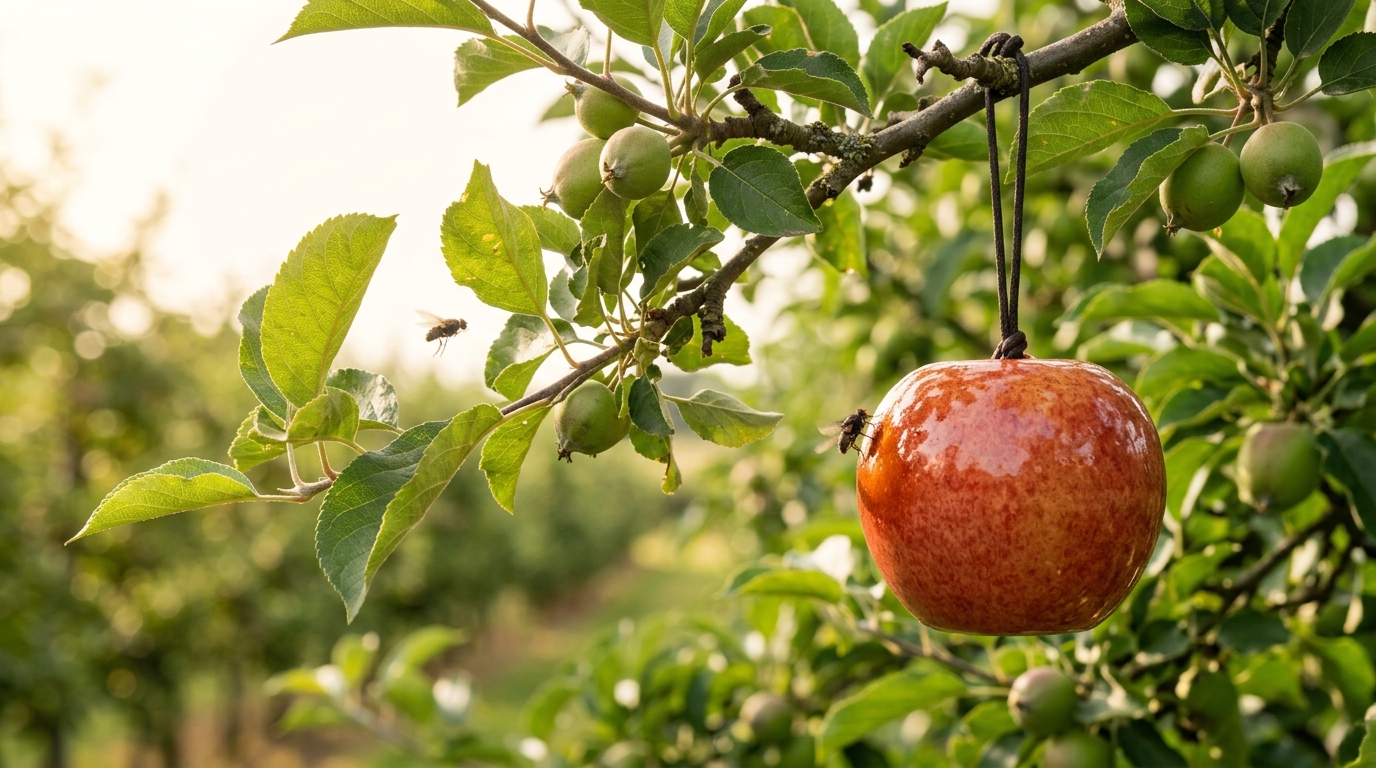
The second mechanism supplies what host fidelity alone does not. Apple fruit ripens and drops several weeks earlier in the season than hawthorn fruit does at the same sites, and Rhagoletis larvae must enter diapause — a dormant, overwintering stage — timed to when their particular host’s fruit is available. Filchak, Roethele and Feder showed that natural selection has shifted the diapause-related life history of the two races to track their hosts’ different phenologies, with a real fitness trade-off attached: genotypes suited to the shorter interval between pupation and winter that apple’s earlier fruiting imposes suffer if they end up developing on the later-fruiting hawthorn, and the reverse holds for hawthorn-adapted genotypes forced onto apple’s schedule [1]. Because adult emergence timing follows directly from diapause timing, this selection pressure produces allochronic isolation on top of the host-fidelity barrier: apple flies tend to emerge as adults somewhat earlier in the season than hawthorn flies at the same site, which further reduces the chance that a fly from one race even encounters a potential mate from the other, independent of which fruit either one prefers.
The two mechanisms reinforce rather than merely add to each other, because they operate at different points in the life cycle: host fidelity sorts which fruit an adult fly chooses to court and lay eggs on, while diapause timing sorts when an adult emerges at all, so a fly that leaked across the host-fidelity barrier in one generation can still find its window of potential mates from the other host narrowed by a mismatched emergence date. Roughly a century and a half separates Walsh’s first published notice of maggots in Hudson Valley apples from Filchak, Roethele and Feder’s measurement of the diapause trade-off, which is itself a useful check on how fast partial isolation of this kind can accumulate: not instantaneously, but well within a span short enough that written records span the whole event.
Put the two findings together and the apple maggot case supports something more specific than “sympatric speciation is possible.” It supports a documented, partially quantified account of how a single, dateable ecological event — a host shift first noticed within a couple of human generations of its occurrence — has produced measurable, converging premating and allochronic barriers in a population still connected by a low but nonzero rate of gene flow. Nobody has yet shown the apple and hawthorn races of Rhagoletis pomonella to be fully reproductively isolated, and the six percent figure is itself a snapshot rather than a constant; whether that number is rising, falling or stable under continued selection is an open empirical question the same mark-recapture methods could in principle answer again. What the case demonstrates is not a finished species but a boundary in the process of being drawn, with dates attached to both ends of the process so far.
A doubled genome gave two new wildflowers a birth certificate
Where the apple maggot fly shows speciation as an ongoing, gradual accumulation of partial barriers, the genus Tragopogon — the goatsbeards, a group of thistle-like composite wildflowers — shows nearly the opposite: reproductive isolation appearing in a single generation, complete and essentially unbridgeable from the moment it occurs, because of a change in chromosome number rather than in gene frequency.
Three diploid Tragopogon species were introduced from Europe to North America in the early twentieth century as weeds of disturbed ground: T. dubius, T. porrifolius and T. pratensis. All three eventually established populations in the Palouse region of eastern Washington and adjacent Idaho, close enough together that their ranges overlapped and occasional hybrids between pairs of them could form. A diploid hybrid between two different species is usually a genetic dead end — its chromosomes come from two different lineages that cannot pair correctly during meiosis, so most such hybrids are sterile. But a hybrid whose chromosome number then doubles, through a well-documented error in cell division that produces unreduced gametes, ends up with two complete matched sets of chromosomes rather than one incompatible mixed set. Each chromosome now has a partner to pair with during its own meiosis, fertility is restored, and — critically for the question of when a new species exists — the doubled hybrid can no longer produce fertile offspring by mating back to either of its diploid parents, because a cross between it and a parent produces a triploid with an unbalanced, largely unpairable chromosome set. The reproductive isolation is not a barrier that accumulates over generations of selection, the way it does in Rhagoletis; it is a structural fact about chromosome pairing that exists from the moment the doubling event occurs.
By 1950, the botanist Marion Ownbey had found exactly this happening twice over in the Palouse. He documented two new allotetraploid species growing at the sites where their diploid parents overlapped: Tragopogon mirus, combining the chromosome sets of T. dubius and T. porrifolius, and Tragopogon miscellus, combining those of T. dubius and T. pratensis. The populations he found were small — Ownbey described them as few and precarious, with fewer than a hundred individuals at some sites — but they were self-sustaining, morphologically intermediate between their parents in the expected ways, and reproductively separate from all three diploids [5]. Because the diploid parents had only been introduced a few decades earlier, and Ownbey could establish that the polyploids postdated that introduction, this was speciation with something close to a birth certificate: an approximate date of origin, a known pair of parent species, and a geographic location narrow enough to visit.
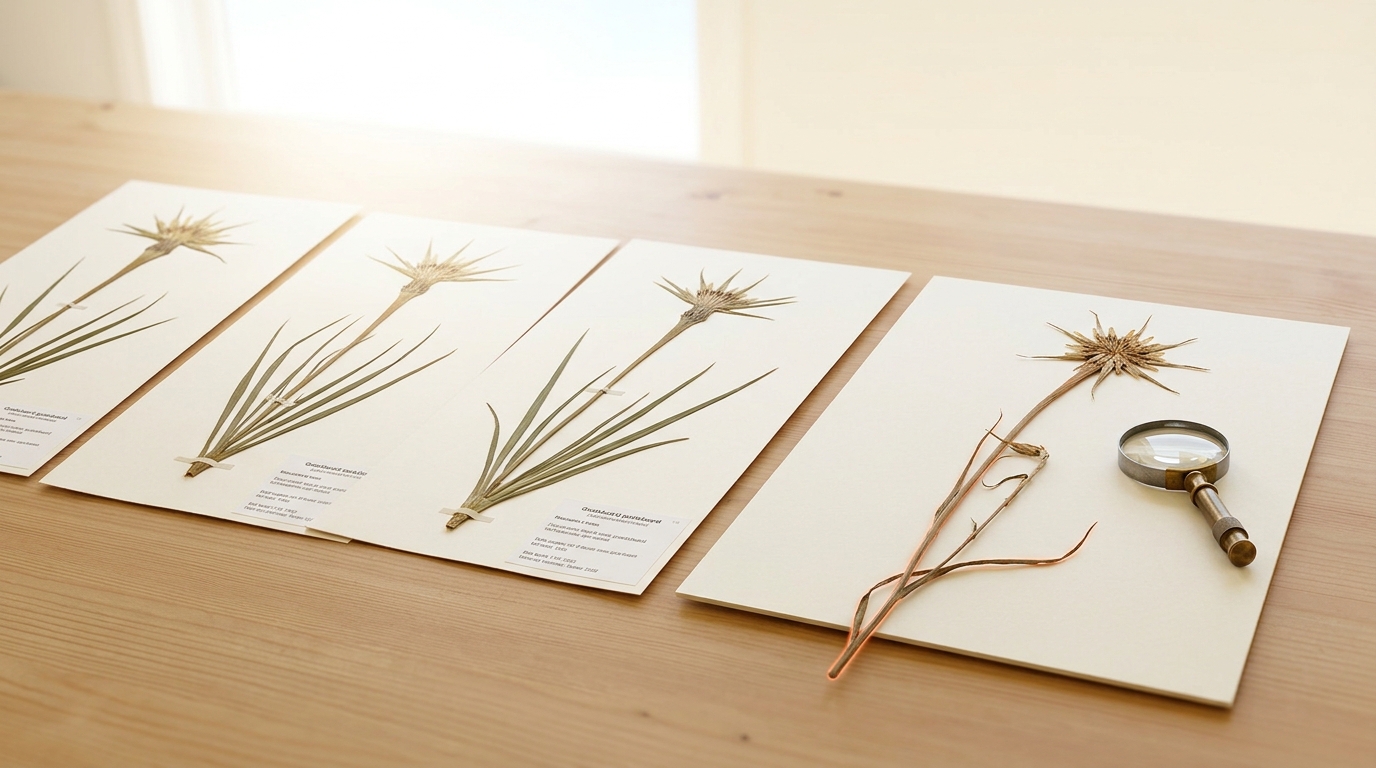
What subsequent genomic work by the Soltis laboratory and its collaborators has added is not a confirmation that this happened once, but evidence that it kept happening, independently, many times over. Citing the foundational molecular surveys, a 2020 study of gene expression in T. miscellus reports that T. miscellus and T. mirus have each formed independently at least twenty-one and eleven times respectively in the decades since their parent diploids first grew close enough together to hybridize [7]. That is a striking number for what most people picture as a rare, singular event: rather than one lucky cross that then spread, the same combination of parent species has recombined into the same new allopolyploid species dozens of times independently, essentially every time local ecological conditions bring the right pair of diploids into sufficiently close contact under the right pollination conditions.

The geographic reach of that recurrence turned out to be wider than the original Palouse discovery suggested. Soltis and coauthors later identified T. mirus populations in Arizona and in Oregon, hundreds of kilometers from the original Washington-Idaho sites, and showed through molecular markers that these distant populations combine distinctive parental genotypes not shared with the Palouse plants — meaning they are separate, independent formations rather than long-distance dispersal of the original lineage, with plastid DNA confirming T. porrifolius as the maternal parent in each case examined [6]. Each of these separate formation events is, individually, an instance of instantaneous postzygotic isolation of the kind the chromosome-pairing mechanism predicts; together, they show that the process is repeatable and predictable given the right ecological setup, which is a stronger claim than a single fortunate origin would support. The genomic follow-up work has also found that the two parental genomes inside these new allopolyploids do not sit at peaceful parity: repeated sequence from one parent, most consistently T. dubius, tends to be lost or silenced disproportionately as the young polyploid genome stabilizes, a phenomenon the field calls genomic dominance, and one that is itself now measured across independently formed populations of the same species rather than assumed from a single lineage [7].
A ring of warblers around Tibet shows divergence with gene flow, and its own genomics complicate it
The greenish warbler, Phylloscopus trochiloides, is a small Old World leaf warbler whose range forms an almost complete loop around the high, uninhabitable interior of the Tibetan Plateau. In 1938 the ornithologist Claude Ticehurst described the pattern that later made this species famous: a chain of six subspecies runs from the Himalayas north and east through China to eastern Siberia, and separately from the Himalayas north and west through central Asia to western Siberia, and the two chains meet in central Siberia, where the terminal forms — viridanus to the west, plumbeitarsus to the east — co-occur without interbreeding, distinguished by visibly different wing-bar patterns [10]. Ticehurst’s proposal was that an ancestral population had expanded outward from the Himalayas along both routes simultaneously, diverging gradually as it went, until the two expanding fronts met again on the far side of the plateau as two forms too different to interbreed — geographic distance standing in for the passage of time.
Darren Irwin, Staffan Bensch and Trevor Price tested that eighty-year-old description directly, sampling greenish warbler populations at points around the entire ring and measuring song, morphology and genetic markers at each one. Song proved to be the clearest signal: greenish warbler song is simple, short and repetitive in the Himalayan south, and becomes progressively longer and more complex moving north along either arm of the ring, but the particular form that complexity takes diverged so much between the two northward routes that the resulting songs of viridanus and plumbeitarsus are, by the time they meet in Siberia, different enough that playback experiments showed neither form responds to the other’s song as it would to its own — a textbook signature of a completed premating isolation barrier operating through sexual selection on a learned signal, arising via gradual, geographically continuous divergence rather than a sudden split [8]. Genetic markers sampled at the same points showed the same broad pattern: gradual or stepwise change tracking geography around most of the ring, with the two Siberian endpoints as the most differentiated pair.
For over a decade this stood as one of the cleanest empirical demonstrations that reproductive isolation between two forms could arise through pure geographic divergence, without any period of complete separation — Irwin, Bensch and a further coauthor even titled a 2005 follow-up paper on the topic “Speciation by distance in a ring species,” built on isolation-by-distance patterns detected in a marker set available at the time [10]. That is the version of the story that made it into textbooks, and it is the version most popular accounts of ring species still repeat.

The correction came from Irwin’s own laboratory, using tools the 2001 study did not have. Alcaide, Scordato, Price and Irwin resampled the ring with thousands of genome-wide single nucleotide markers rather than the handful of loci available a decade earlier, and the finer resolution changed the picture in a specific, falsifiable way: rather than one smooth gradient of divergence running continuously around the ring, the genomic data show a zone of unusually steep genetic transition in the western Himalayas, near the border between Kashmir and Himachal Pradesh, in a region where song and plumage barely change at all [9]. That steep transition is best explained not by continuous gradual divergence but by secondary contact — two lineages that spent a period geographically separated, diverging in isolation, before re-expanding and meeting again within what Ticehurst had classified as a single transitional subspecies. The clean story of speciation-by-distance, uninterrupted by any complete separation, does not survive this finding intact: the history behind the ring includes at least one episode of the more conventional allopatric divergence the ring species concept was originally meant to be an alternative to.
The same genomic dataset complicated the other end of the ring too, in the opposite direction. Where the classic account treated viridanus and plumbeitarsus as cleanly and completely reproductively isolated where they meet in central Siberia, the genome-wide markers detected a small amount of hybridization and introgression between them — real gene flow, not zero — and yet the two forms remain genetically and phenotypically distinct rather than blending together, which points to ongoing selection actively removing introgressed genetic material from each population rather than a hard, impermeable barrier preventing its entry in the first place [9]. Complete reproductive isolation, in other words, turned out not to be quite complete, while the isolation-by-distance history turned out not to be quite continuous. Irwin and Wake’s own retrospective judgment, published after both findings, is candid about what survives: the greenish warblers still display the essential character of a ring species — two divergent, coexisting, largely non-interbreeding forms joined by a long chain of intermediate populations — but they are “not a clear example of speciation by distance,” contrary to the earlier interpretation built on sparser data [10]. The ring is real. The clean mechanism originally proposed for how it formed was not, and the same research group that proposed it published the data that overturned it.
The London Underground mosquito is a thousand years older than its own legend
Culex pipiens is a widespread mosquito with two recognized forms that differ sharply in behavior: the nominate form, pipiens, feeds mainly on birds, needs a blood meal before it can lay eggs, mates in open swarms, and enters winter dormancy; the form called molestus feeds readily on humans, can produce a first clutch of eggs without any blood meal at all, mates in confined spaces, and stays active through winter if kept somewhere warm enough. During the Blitz, Londoners sheltering in Underground railway tunnels were bitten by mosquitoes breeding in standing water within the tunnel system, and the story that took hold afterward was a clean one: a population of surface-dwelling Culex pipiens had colonized the tunnels sometime after they were built in the late nineteenth century, and in the roughly hundred years since had evolved, underground and in isolation, into the human-biting, blood-meal-independent molestus form — a textbook case of speciation observed on a human timescale, entirely within living historical memory.
Byrne and Nichols supplied the genetic evidence that made this story credible rather than merely anecdotal. Sampling Culex pipiens from the London Underground and from surface sites nearby, they found the two forms were genetically distinct populations with essentially no detectable gene flow between them despite occupying the same city, and the Underground molestus populations carried substantially less genetic diversity than the surface pipiens populations — roughly a quarter of the heterozygosity — consistent with a single founding colonization event rather than repeated mixing [11]. Laboratory crosses reinforced the genetic picture with a direct reproductive test: crosses between Underground males and surface females produced no viable offspring at all, while crosses within either form produced normal, fertile broods across two generations [11]. That is about as clean a demonstration of reproductive isolation as fieldwork on a wild population can produce, and it is real; nothing in the subsequent literature has overturned the finding that London’s Underground and surface Culex pipiens are genetically distinct, reproductively incompatible populations.

What has been overturned is the origin story built on top of that finding — specifically, the claim that the differentiation is recent and that it happened in London. A large 2025 genomic study led by Yuki Haba, with Carolyn S. McBride as senior author, sequenced roughly 800 genomes drawn from around 12,000 Culex pipiens mosquitoes collected worldwide and used the resulting population history to date the human-adapted molestus lineage directly, rather than inferring its age from a single city’s tunnel system [12]. The genomic dating places the origin of the human-associated molestus form at more than a thousand years ago, in the Mediterranean basin or the Middle East, plausibly tied to the spread of early agricultural settlements that offered mosquitoes a reliable year-round source of standing water and human blood close together — millennia before the London Underground existed to be colonized at all [12].
That finding forces a specific reinterpretation of the traits Byrne and Nichols measured. The behaviors that let molestus thrive underground — biting humans instead of birds, laying a first clutch without a blood meal, mating in confined dark spaces, staying active through cold months — are not, on the genomic dating, adaptations that evolved rapidly inside London’s tunnels over the past century or two. They are far older adaptations to human dwellings and agricultural settlements that already existed in the lineage before it ever reached London, carried along as the human-associated form dispersed with human trade and settlement and later found the Underground’s tunnels to be one more enclosed, human-adjacent habitat it was already equipped to exploit — what biologists call an exaptation, a trait retained or repurposed for a new context rather than freshly built for it. The genetic differentiation and reproductive incompatibility Byrne and Nichols documented between London’s Underground and surface populations is not in question; what changed is when that lineage split occurred and where its defining adaptations originated, and both turn out to predate the London Underground by roughly a millennium.
What the 2025 study leaves open is narrower and worth stating precisely: it does not fully resolve the specific timeline or route by which the already-adapted molestus lineage reached London and established the particular tunnel population Byrne and Nichols sampled, and the study’s authors flag continuing uncertainty about how often molestus and pipiens hybridize in modern cities generally, a question with direct relevance to how West Nile virus — which pipiens picks up from birds and molestus can pass on to humans — moves between the two forms in urban environments today. The correction replaced a clean but wrong origin story with a better-supported but less tidy one, and left a live research question standing where the old textbook version had offered a satisfying, closed narrative instead.
Observed speciation is a method, not one mechanism
Set side by side, these four cases do not converge on a single recipe for how new species form, and that is closer to the point than any single mechanism would be. Rhagoletis shows reproductive isolation accumulating gradually and only partially, through the combined, leaky effects of host preference and shifted seasonal timing, still measurable as an ongoing process with a nonzero rate of gene exchange between the diverging races. Tragopogon shows the opposite extreme: isolation arriving essentially complete in a single generation, as a direct structural consequence of doubled chromosome number, then recurring independently dozens of times across a landscape rather than radiating from one lucky founder. The greenish warbler ring shows divergence spread continuously across geography standing in for divergence spread across time, complicated by genomic evidence of at least one episode of the more conventional allopatric separation the ring concept was supposed to be an alternative to, plus a small, selection-resisted trickle of gene flow between forms otherwise treated as fully separate. And Culex pipiens shows that genetic differentiation and reproductive incompatibility, once well established, can still have their age and geography completely wrong in the story told about them, correctable only once a broad enough genomic sample became available to check the story against.
The pattern connecting them is not mechanistic; it is methodological, and it is the same pattern that runs through most fields that study processes rather than only their finished products: an initial, careful measurement establishes that something real is happening, a textbook-friendly narrative crystallizes around that measurement faster than the evidence justifies, and a later, better-resourced study — often, as with the warblers, from the very group that made the original claim — goes back with sharper tools and finds the narrative was too clean. In every one of these four cases, the correction did not soften into “actually, no new species is forming here.” Rhagoletis’s host races are still diverging, unevenly and leakily. Tragopogon’s new species still keep arising, independently and repeatedly, exactly where and how the chromosome mechanism predicts. The greenish warbler ring is still a functioning demonstration that two coexisting, non-interbreeding forms can be joined by a chain of intermediates, even though the mechanism connecting them is now known to include a period of separation the original account did not require. And molestus is still a genetically distinct, reproductively isolated urban mosquito population — it is simply a much older one than its most famous origin story claimed.
What makes these four cases worth more than their individual results is that each one has already survived being checked, in public, by people with an incentive to get the checking right. A species boundary is not a fact found already finished and filed. It is a measurement taken while the filing is still underway, and in each of these four drawers, someone has since gone back and corrected the label without ever having to close the drawer.