The one company in this cohort with no customers
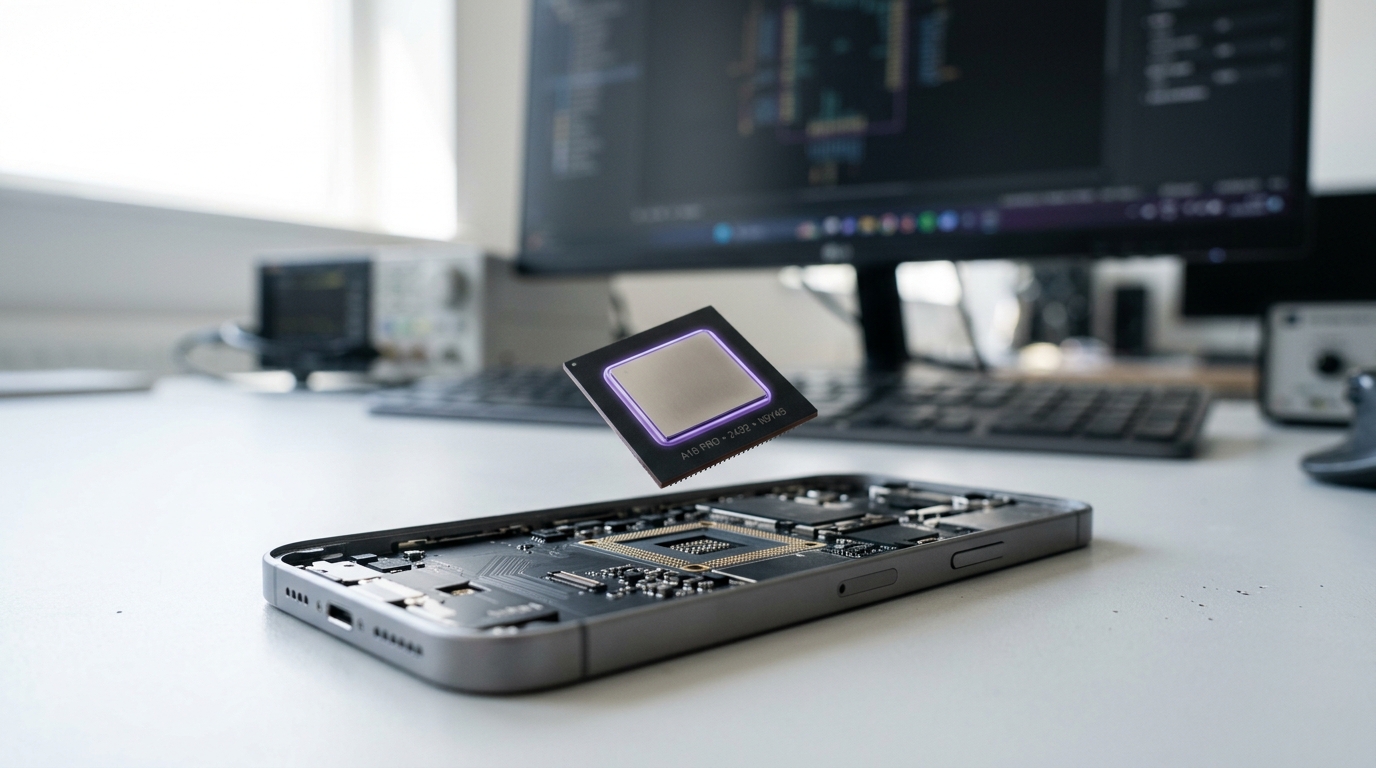
Every company profiled elsewhere in this cohort sells something to somebody: Nvidia sells GPUs broadly, Broadcom and Marvell design chips for named hyperscaler customers, TSMC manufactures for dozens of fabless design houses. Apple’s silicon organization does none of this. It designs some of the most advanced chips in the consumer electronics industry, and every single one of them exists exclusively inside Apple’s own products — never sold as a standalone component, never licensed to a device maker, never offered to a cloud provider. That is a genuinely unusual strategic choice, and this briefing treats it as the outlier it actually is rather than one more entry in an otherwise-uniform list of chip companies.

Why full vertical integration is rare
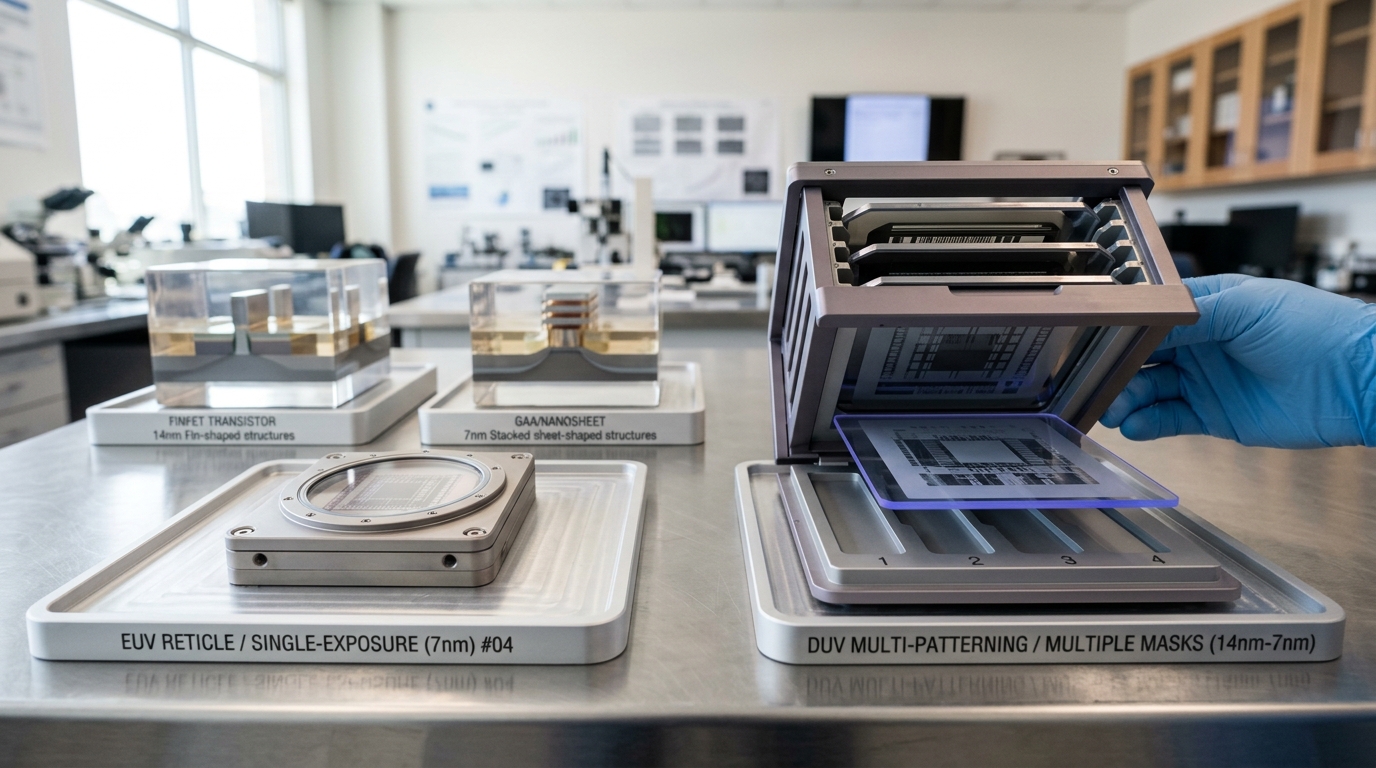
This cohort’s foundry-track briefings explain why TSMC’s 1987 pure-play foundry model — designing nothing, manufacturing for everyone — became the industry’s dominant structure: it let chip design and chip manufacturing scale independently, each optimizing for its own economics [1]. Apple’s strategy runs directly against that trend in the design layer while still depending on it completely in manufacturing — Apple designs its own chips end to end, but still relies entirely on TSMC to actually build them, making Apple simultaneously the industry’s most vertically integrated designer and a customer as dependent on the foundry model as anyone else in this cohort.
Apple’s actual position in the TSMC relationship
Apple is reported to be among TSMC’s largest and most demanding customers, frequently securing early access to TSMC’s newest process nodes ahead of other customers — a privileged position built on volume and a long, exclusive relationship rather than on any different kind of foundry arrangement than other TSMC customers use [2]. That early-access pattern is itself a form of market power: Apple’s chip designs frequently define what a new TSMC node’s real-world yield and performance look like well before other customers’ chips reach volume production on the same node.
Why Apple sits outside the custom-ASIC growth story
This cohort documents accelerator vendors increasingly building custom silicon for cloud AI workloads, growing far faster than merchant GPU sales [3]. Apple’s silicon strategy touches this trend only tangentially: Apple’s own chips include AI-specific compute blocks (the Neural Engine and related on-device AI acceleration in Apple’s mobile and desktop silicon), but Apple has, as of this briefing, not entered the cloud AI-accelerator market the way Amazon, Microsoft, or Google have with Trainium, Maia, and TPU. Apple’s AI silicon strategy remains oriented toward on-device inference inside Apple’s own products, a structurally different market than the datacenter-accelerator competition covered throughout the rest of this cohort.
Why this matters for how a reader should think about “the chip industry”
Apple’s position is a useful corrective to any framing that treats “the semiconductor industry” as one undifferentiated competitive field. Apple competes in exactly one layer — chip design — and deliberately abstains from every other layer covered in this cohort: it does not manufacture, does not sell components to other companies, does not license its designs, and does not currently compete in the cloud AI-accelerator market at all. That makes Apple simultaneously one of the industry’s most consequential chip designers, measured by design sophistication and shipped volume, and one of the least comparable companies in this entire cohort to any other single profile — a useful reminder, in a market projected at $1.3 trillion in 2026 across many overlapping business models, that “chip company” describes several genuinely different kinds of business, not one [4].
The risk this strategy accepts in exchange for control
Full vertical integration is not free of trade-offs, even for a company as large as Apple. By never selling or licensing its silicon, Apple forgoes an entire category of revenue that companies like Broadcom, Marvell, and Qualcomm actively pursue, and it accepts complete dependence on its own product sales volume to justify each generation’s enormous design cost — there is no external customer to help amortize a design that underperforms in Apple’s own product line. This is a meaningfully different risk profile than a merchant chip vendor carries, where a design that underwhelms one customer can potentially still find another. Apple’s strategy only works because Apple’s own product volumes are large enough to justify leading-edge design costs on their own, a scale advantage few other companies in this cohort could actually replicate even if they wanted to copy the strategy.
Why almost nobody else attempts this model
The reason full vertical integration remains rare beyond Apple is precisely this scale requirement: a company needs product volumes large enough to fully absorb a leading-edge chip design’s fixed costs without any outside customer’s revenue to help. Most companies covered in this cohort’s other tracks reach that scale only by selling into a broad market or by designing for a specific large customer rather than only for their own products. Apple’s combination of enormous consumer product volume and a willingness to forgo semiconductor licensing revenue entirely is, on the evidence collected across this whole cohort, closer to unique in the industry than to a strategy other large technology companies are seriously attempting to replicate at the same scale.