Comparing the Main Approaches to Planetary Science and Exploration
Telescopic spectroscopy, orbiters, landers, and sample return answer different questions at different costs; none of them substitutes for the others.
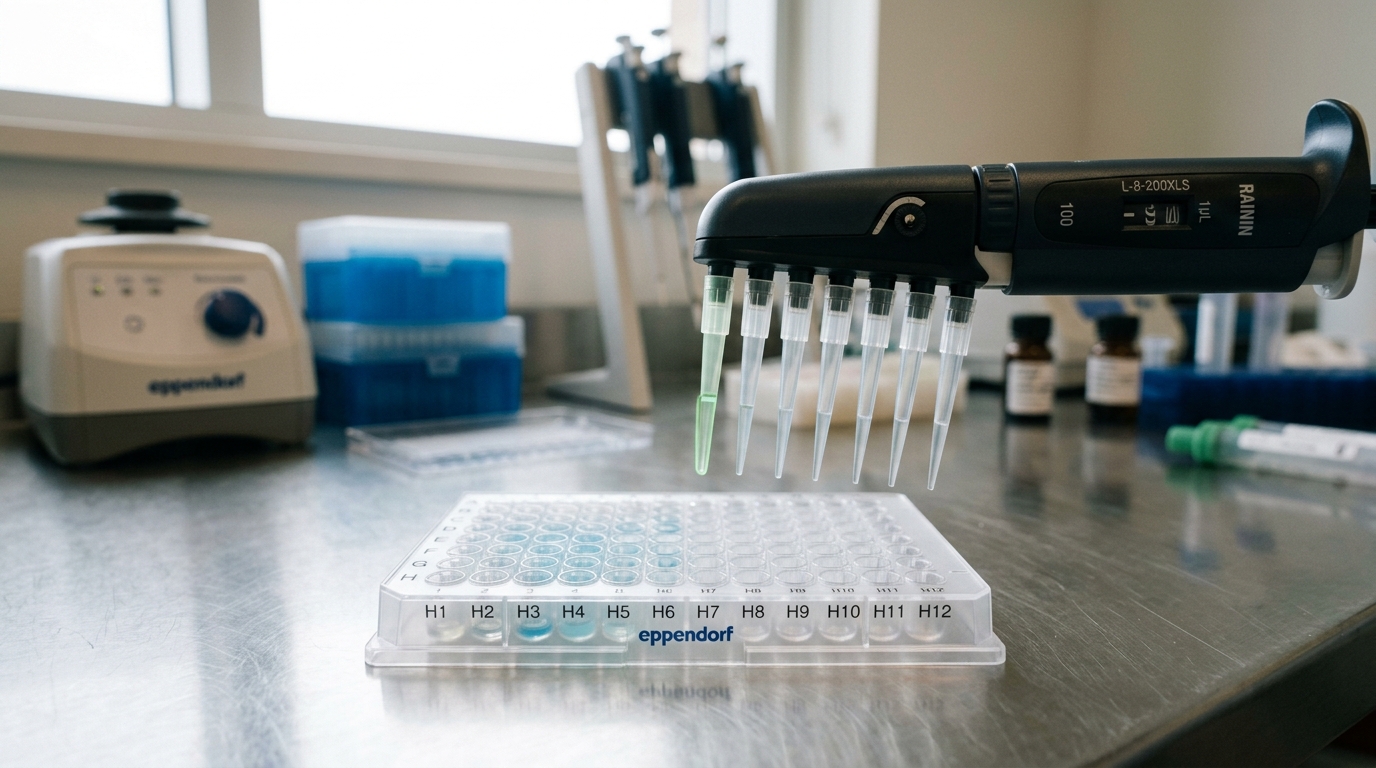
Four structurally different methods — remote spectroscopy, orbiter remote sensing, in-situ measurement, and sample return — form one working pipeline rather than a competition. — Image prompt and art direction by Brecht Corbeel; generation pending.
Abstract
Planetary science studies bodies it cannot touch by combining four structurally different methods: telescopic and spectroscopic observation from afar, orbiter and flyby remote sensing up close, in-situ lander and rover measurement on the surface, and laboratory analysis of returned samples. This article compares the four on resolution, cost, latency, and ground-truth value using real missions — JWST transmission spectroscopy, Mars orbiters, InSight's seismometer, Perseverance's PIXL and SHERLOC instruments, and the OSIRIS-REx and Hayabusa2 sample returns — and argues that the methods are complementary layers in an inference chain rather than competitors, each correcting error the others cannot see.
Four ways to study a world you cannot walk on
Planetary science has no laboratory access to most of its subject matter. A geologist can hike to an outcrop; a planetary scientist studying Europa’s ice shell or Mercury’s core cannot. The field has instead built four structurally different ways of extracting information about a body from a distance, and each one trades away something the others keep. Telescopic and spacecraft spectroscopy reads light across the solar system or across interstellar distances without ever approaching the object. Orbiters and flybys close that distance to thousands or tens of thousands of kilometres and stay, or pass, for years. Landers and rovers place an instrument directly against a surface, at the cost of visiting only one place. Sample return brings a physical fragment of the body back to Earth, where its analysis is limited only by what terrestrial laboratories can build, not by what can survive launch and cruise.
This article compares those four approaches on a small number of concrete dimensions — spatial and spectral resolution, cost and schedule, latency between measurement and answer, and ground-truth value, meaning how much a result constrains or corrects the others. The comparison uses real missions and real instruments: JWST’s transmission spectroscopy of exoplanet atmospheres [7] [8], Mars orbiter and rover payloads including Perseverance’s PIXL and SHERLOC [1] [2], InSight’s seismometer probing Mars’ deep interior [5] [6], and the OSIRIS-REx and Hayabusa2 sample returns from asteroids Bennu and Ryugu [3] [4]. None of these missions is presented as superior to the others. The argument of this piece is the opposite: each approach answers a question the others structurally cannot, and the strongest results in planetary science over the last two decades have come from using several of them on the same object in sequence.
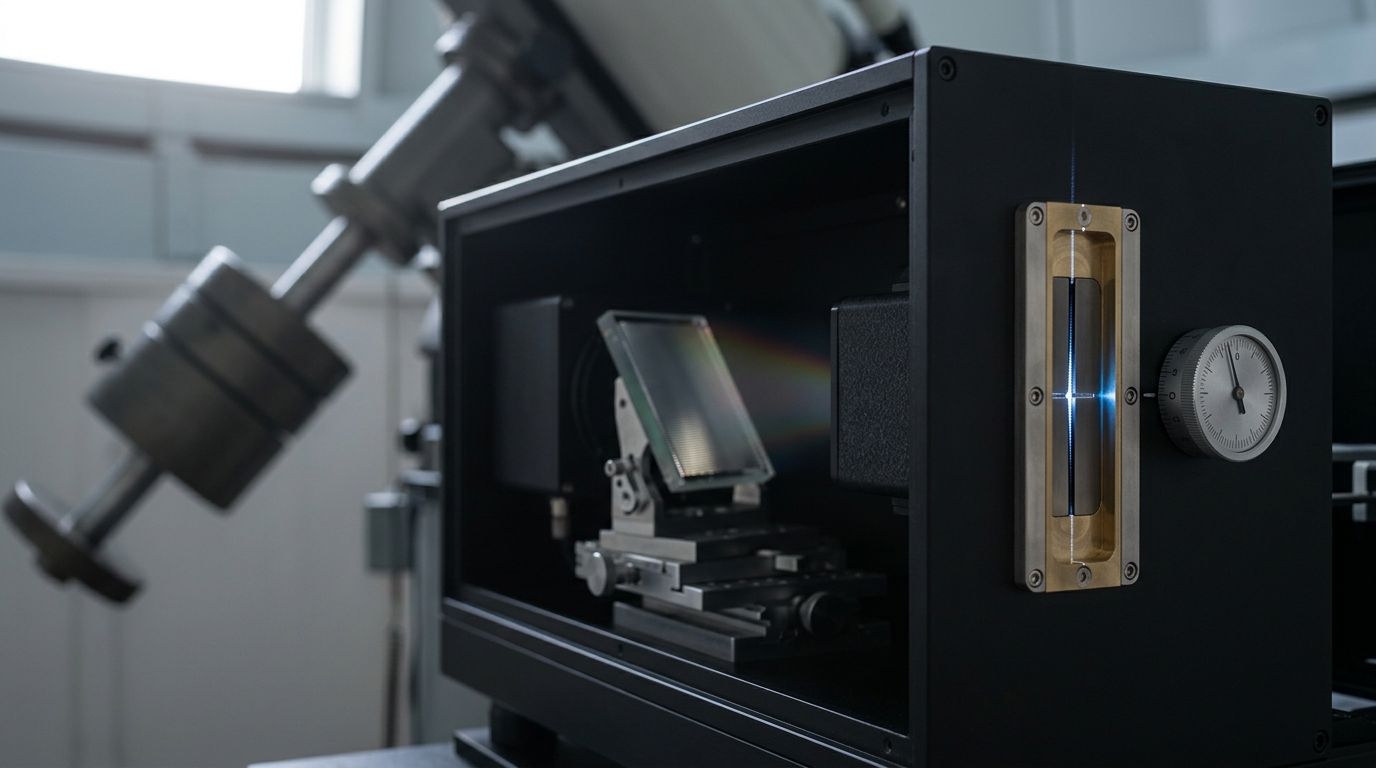
Figure 1. Telescopic and spacecraft spectroscopy reads a planet's atmosphere by light alone, from millions to billions of kilometres away, without ever approaching the object. — Image prompt and art direction by Brecht Corbeel; generation pending.
Remote spectroscopy: distance in exchange for reach
Telescopic and spacecraft-borne spectroscopy is the only one of the four approaches that can study a world without ever sending anything to it. A telescope splits incoming light by wavelength and reads absorption and emission features that identify the molecules present in an atmosphere, whether that atmosphere belongs to a planet orbiting another star or a body within the solar system. NASA describes this capability for the James Webb Space Telescope directly: Webb can look at the light from small, distant planets orbiting other stars and determine what their atmospheres are made of, along with aspects of climate, while also examining objects within the solar system itself, from gas giants to the smallest bodies [7].
The clearest recent demonstration is the JWST Transiting Exoplanet Community Early Release Science Team’s detection of carbon dioxide in the atmosphere of WASP-39b, a hot gas-giant exoplanet roughly 700 light-years away. Using transmission spectroscopy — measuring how starlight filtering through the planet’s atmosphere during a transit is absorbed at different wavelengths — the team reported a robust CO2 feature detected at high statistical significance [8]. No spacecraft has been to WASP-39b, will go to WASP-39b within any foreseeable mission-planning horizon, or could plausibly return a sample from it. Every fact known about its atmosphere comes from light alone.
This reach is the approach’s defining strength and its defining limitation is spatial resolution, which is fixed by the physics of diffraction rather than by mission budget. For a telescope with aperture diameter D observing light of wavelength \lambda, the smallest angular separation it can resolve is approximately
\theta \approx 1.22\,\frac{\lambda}{D}.
This relation is why an exoplanet studied by transmission spectroscopy is a single point of light with no visible surface at all — the target subtends an angle far smaller than \theta for any existing telescope, so every observation is necessarily a disk-integrated average over the whole illuminated hemisphere. Even for solar-system bodies, where \theta is far less limiting because the object is millions rather than trillions of kilometres away, ground- and space-based telescopic resolution still translates into surface features tens to hundreds of kilometres across at best — enough to map a hemisphere’s broad geology or atmospheric bands, not enough to identify an individual boulder or a stratigraphic contact. Remote spectroscopy therefore answers global and atmospheric questions extremely well and answers local, geological questions not at all. It is also, mission for mission, the cheapest of the four approaches per object studied, since one telescope can observe an effectively unlimited number of targets across its operational lifetime rather than being committed to a single destination.
Orbiters and flybys: closing the distance without landing
Orbiters and flyby spacecraft give up the telescope’s ability to observe many targets in exchange for detailed, repeated coverage of one body. An orbiter inserted around a planet, moon, or asteroid can carry cameras and spectrometers far closer to the surface than any telescope, building global maps at resolutions from meters to a few kilometers per pixel depending on orbital altitude and instrument design, and can revisit the same terrain repeatedly to track seasonal or geological change over years. A flyby trades that persistence for a single close pass, useful for reconnaissance of a body no orbiter has yet visited or for objects, such as some small bodies and outer planets’ distant moons, where orbital insertion is currently impractical.
The cost of this proximity is schedule and irreplaceability. Reaching Mars orbit from Earth takes roughly seven months of cruise; reaching the outer planets takes years to over a decade. Once a spacecraft is built, launched, and en route, its instrument suite is fixed — there is no returning to a clean room to add a sensor a new result suggests is needed, the way there is with a second telescope observation. Every orbiter or flyby is therefore a bet, made years in advance of arrival, on which instruments will answer the questions that matter once data starts coming back. In-situ operations planning must also work around a communications lag: a signal to or from Mars takes on the order of minutes each way, and much more at Jupiter or Saturn, so orbiters and rovers alike run largely on pre-loaded command sequences and autonomous fault protection rather than real-time control.
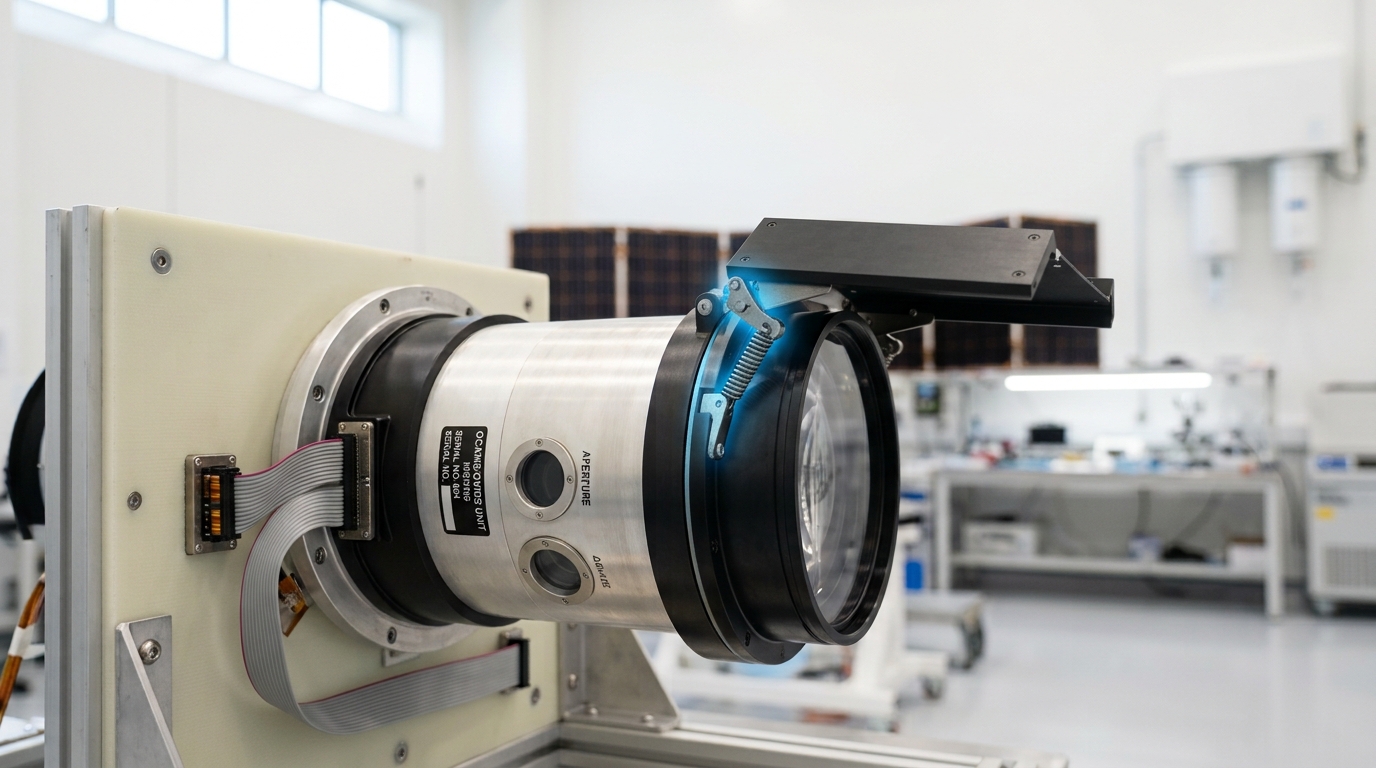
Figure 2. Orbiters and flybys trade the distance of telescopic work for close, repeated coverage of one body, at the cost of a years-long cruise and a single irreplaceable spacecraft. — Image prompt and art direction by Brecht Corbeel; generation pending.
Orbital remote sensing occupies the middle ground on every dimension in this comparison: closer and higher-resolution than telescopic spectroscopy, but still incapable of touching, weighing, or chemically assaying a single grain of material. It is also, notably, the layer that makes the other three approaches possible at all — landing-site selection for every successful Mars rover has depended on orbital imagery and mineralogical mapping obtained years before the lander’s own instruments touched the ground.
In-situ measurement: contact with a single, chosen spot
Landers and rovers give up global coverage entirely in exchange for direct contact. Where a telescope or orbiter measures reflected or emitted light and infers composition indirectly, an in-situ instrument places a sensor against or very near the actual material being studied. Perseverance carries two instruments built for exactly this purpose. PIXL, the Planetary Instrument for X-ray Lithochemistry, is a micro-focus X-ray fluorescence spectrometer mounted on the rover’s robotic arm that maps elemental chemistry at sub-millimeter spatial resolution directly on a rock’s surface [2]. SHERLOC uses ultraviolet Raman and luminescence spectroscopy alongside PIXL to search for organic and mineral signatures relevant to past habitability, with both instruments used together to decide, on the spot, which rock targets are worth caching for eventual sample return [1].
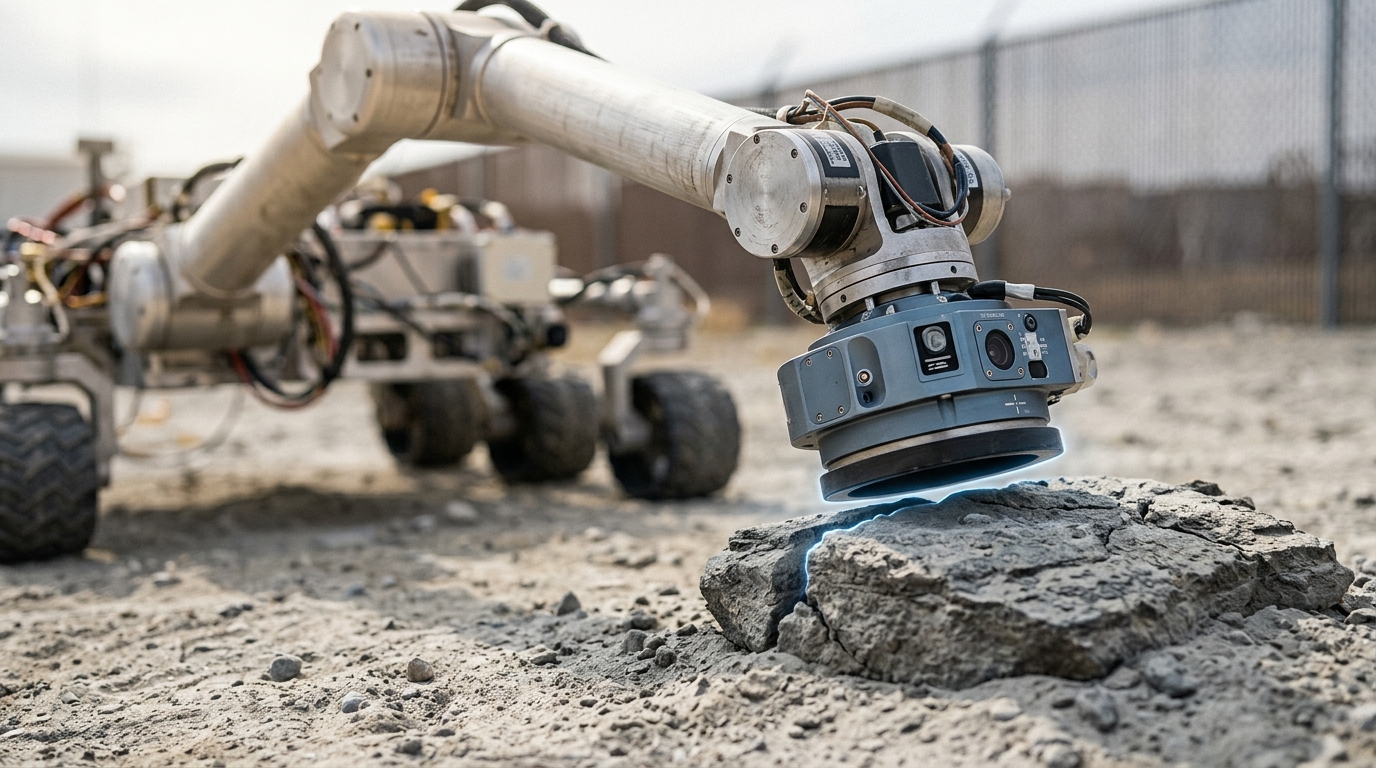
Figure 3. In-situ lander and rover instruments place a sensor against the target itself, trading the reach of orbital coverage for direct contact measurement at a single, chosen spot. — Image prompt and art direction by Brecht Corbeel; generation pending.
This contact buys spatial and chemical resolution far beyond anything remote sensing can achieve — PIXL resolves chemical variation at the scale of individual mineral grains, a resolution meaningless to compare against an orbiter’s per-pixel footprint of meters to kilometers. It also buys something remote sensing cannot supply at all: ground truth. A mineral identification made from orbit is a hypothesis about what a spectral signature implies; the same identification made by an instrument in contact with the rock is a direct measurement, and it is precisely this kind of direct measurement that is used after the fact to check whether the orbital interpretation was correct.
The cost is that a rover visits, over the course of an entire multi-year mission, an area that a single orbital image frame can cover in an instant. Perseverance’s traverse since landing in 2021 covers tens of kilometers; Mars’ surface area is roughly 145 million square kilometers. In-situ measurement is not a substitute for global mapping — it is a small number of exceptionally deep, exceptionally reliable readings dropped into a landscape mapped, at coarser resolution, by other means.
Landers built for geophysics rather than geochemistry make a related trade along a different axis: depth rather than area. InSight placed a single seismometer, SEIS, on the Martian surface to record the seismic waves generated by marsquakes, meteorite impacts, and atmospheric activity, using those waves the way seismologists on Earth use earthquakes — as probes of interior structure invisible to any surface or orbital instrument [5]. Within its first seven months of operation, InSight recorded more than 150 marsquakes, and the resulting analysis constrained the depth and structure of the Martian crust and, later, the size of the core — information no remote or orbital instrument can obtain even in principle, since seismic travel times are the only currently practical way to sound a rocky planet’s deep interior at range from a single surface station [6].
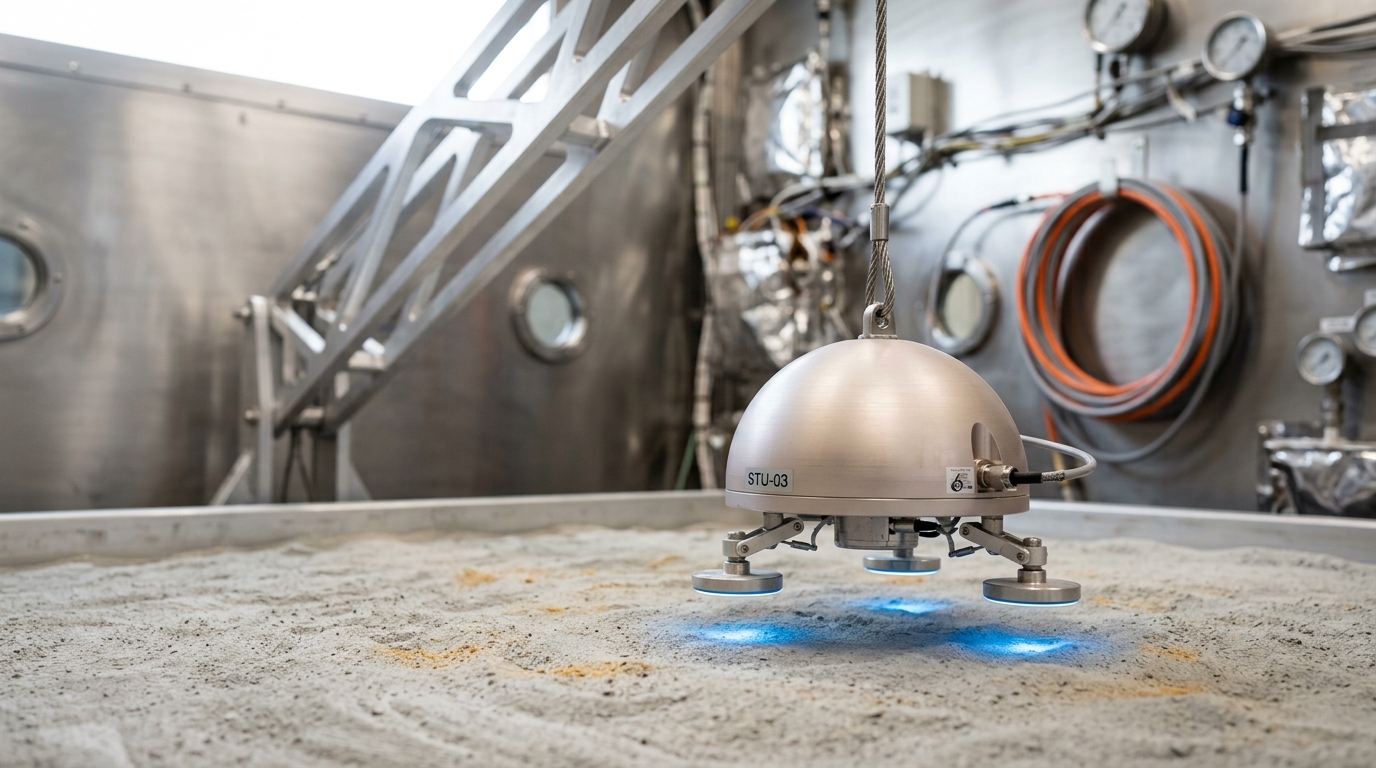
Figure 5. A single well-placed instrument, like a seismometer, can outperform years of remote mapping for one specific question: what a planet's deep interior is actually made of. — Image prompt and art direction by Brecht Corbeel; generation pending.
Sample return: the laboratory comes to the sample by bringing the sample to the laboratory
Sample return inverts the whole logic of remote study: instead of sending an instrument to the object, it brings a physical piece of the object back to Earth, where the full range of terrestrial laboratory instrumentation — mass spectrometers, electron microscopes, isotope-ratio analyzers, none of which are flight-qualifiable at their full laboratory precision — can be applied without the mass, power, and radiation constraints that limit any flown instrument.
OSIRIS-REx collected material from the near-Earth asteroid Bennu and returned it to Earth in September 2023, with the stated scientific goal of testing whether asteroid impacts billions of years ago could have delivered water and organic compounds to the early Earth [3]. Japan’s Hayabusa2 mission returned roughly 5 grams of material from the carbonaceous asteroid Ryugu in December 2020; NASA received a 540-milligram allocation of that material in December 2021 for curation and distributed study at Johnson Space Center, explicitly to investigate the origins and histories of primitive, organic-rich asteroids and the process of planet formation [4].
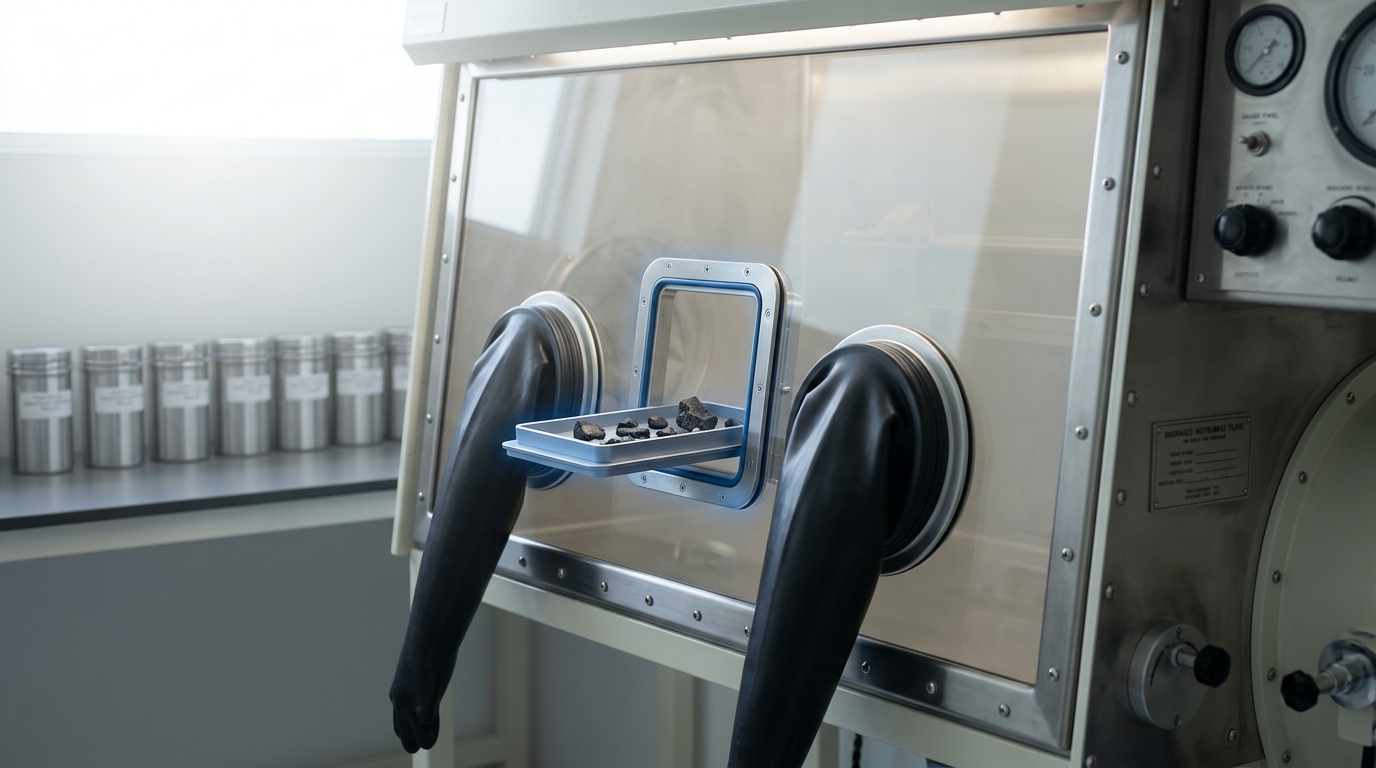
Figure 4. Sample return closes the loop by bringing material into terrestrial laboratories, where instruments too large, too slow, or too destructive to fly can be used without limit. — Image prompt and art direction by Brecht Corbeel; generation pending.
The value of returned material is that it removes essentially every constraint sample return’s competitors operate under. A returned grain can be measured with an instrument the size of a room, re-measured a decade later with an instrument that did not exist when the sample arrived, split among dozens of independent laboratories for cross-validation, and archived so that a question no one thought to ask at the time of collection can still be answered from the same physical material in the future — this is precisely why NASA curates and re-allocates small increments of Apollo lunar material to new investigators more than fifty years after collection, and why Hayabusa2 and OSIRIS-REx material is being managed the same way. No orbital or in-situ instrument, however sophisticated, offers this kind of indefinite, expandable re-examination, because once the spacecraft’s data downlink ends, the physical object is gone from human reach forever.
The cost is severe selectivity and expense. A sample-return mission can typically bring back only grams to at most a few kilograms of material, collected from one or a small number of sites chosen years in advance, after a round trip that for an asteroid mission spans most of a decade from launch to curation. Every choice about where to sample is made with the imperfect information available before or during a brief encounter, and a poor site choice cannot be corrected once the spacecraft has left. Sample return is, in cost and schedule, the most expensive and slowest of the four approaches per unit of surface area studied, and by a wide margin the least scalable — it will never map a planet’s atmosphere or a hemisphere’s mineralogy the way remote spectroscopy and orbital imaging do.
Comparing the dimensions directly
Laid side by side, the four approaches do not rank against one another so much as occupy different corners of a resolution-versus-reach trade space, and treating any one of them as simply “better” mischaracterizes what each is for.
On spatial resolution at the target, sample-return laboratory analysis is unmatched — it can resolve structure at the atomic scale, something no flown instrument attempts. In-situ contact instruments like PIXL follow at sub-millimeter to millimeter resolution. Orbital remote sensing follows at meters to kilometers per pixel. Telescopic spectroscopy, limited by the diffraction relation above, is often unable to resolve a solar-system target’s surface at all and treats an exoplanet as a single point of light.
On areal or volumetric coverage, the ranking inverts almost exactly. Telescopic spectroscopy can survey an unlimited number of targets across a telescope’s operating lifetime. Orbiters map entire planetary surfaces over a mission’s duration. Rovers cover tens of kilometers over years. Sample return brings back grams from one or a few sites.
On cost and schedule per unit of new understanding gained, no single ranking holds, because the three quantities — money, time, and understanding — do not trade off the same way for every scientific question. Confirming that an exoplanet’s atmosphere contains carbon dioxide required only telescope time on an already-built observatory [8]. Confirming that Mars’ crust has a particular layered structure required a lander, a multi-year surface mission, and a purpose-built seismometer, because no remote method can substitute for a physical seismic wave traveling through the material in question [6]. Confirming the precise isotopic composition of primordial solar-system water required physically returning asteroid material to Earth, because the precision needed exceeds what any flight instrument, however capable, can deliver under flight power and mass limits [4].
On ground-truth value — how much a result from one method corrects or constrains the others — in-situ measurement and sample return sit clearly above remote sensing, precisely because they are direct rather than inferential. This is also why mission sequences in practice are almost always layered rather than single-method: orbital mapping selects a landing site, in-situ rover measurement characterizes it in detail and selects specific samples, and sample return, where flown, brings a subset of those specific, already-characterized samples back for laboratory-grade confirmation. Removing any one layer from that sequence degrades the others; an unmapped landing site is a blind gamble, and a returned sample collected without prior orbital and in-situ context arrives without the story of where it came from or why it matters.
What each approach cannot tell you, stated as a limit rather than a flaw
It is worth stating explicitly, and separately from any claim about results, what each method structurally cannot do, because these are analysis-level limits rather than engineering shortfalls that better instruments will eventually erase.
Remote spectroscopy cannot resolve small-scale surface structure on any target close enough that diffraction matters, and it cannot directly sample or weigh anything — every compositional claim from spectroscopy is an inference from how light interacted with material, not a direct assay of that material. Orbital remote sensing cannot achieve laboratory-grade chemical precision and cannot confirm what lies beneath a surface without an independent geophysical or in-situ measurement. In-situ instruments, however precise at their single contact point, cannot characterize an entire planet from one or a few landing sites, and their results depend on how representative those sites happen to be. Sample return cannot address any question about a target’s present-day, large-scale state — an atmosphere, a magnetic field, a global seismic structure — because what comes back is a static fragment of solid or, occasionally, gas or dust, frozen at the moment of collection.
A near-term test case: Mars Sample Return
Perseverance has been caching rock and regolith samples on Mars since 2021 specifically so that a future mission can retrieve and return them to Earth, closing the loop between in-situ characterization and laboratory-grade analysis for the same specific, already-studied targets [1]. As of this writing, the architecture, schedule, and funding for the return leg of that campaign remain unsettled and have been repeatedly revised by NASA; treat any specific return date as a scenario rather than a scheduled fact. The analytical claim that can be stated with more confidence is a conditional one: if the cached samples are eventually returned, laboratory analysis should be able to either confirm or overturn specific biosignature-relevant interpretations that PIXL and SHERLOC data alone could only argue for as a hypothesis, because Raman and X-ray fluorescence spectroscopy in the field can detect a chemically or texturally suggestive signal without being able to rule out every abiotic process that could produce the same signal — a discrimination that requires the isotopic and microstructural precision only a terrestrial laboratory currently provides. The disconfirming observation would be straightforward: if returned samples, examined at full laboratory resolution, show the candidate signatures to have mundane geochemical origins, that outcome would not indicate anything wrong with the in-situ instruments — it would demonstrate exactly the kind of correction that returned samples exist to make possible, and that no amount of additional orbital or in-situ measurement could have supplied on its own.
The comparison is about complementarity, not a winner
None of the four approaches compared here is displacing the others, and none should be read as more scientifically valuable in the abstract. A telescope will never place an instrument against a rock; a rover will never survey a planet’s whole atmosphere in an afternoon; a returned sample will never report what a magnetic field is doing today. What has changed over the past two decades is not which method wins, but how deliberately mission planners now design sequences that hand results from one method to the next — orbital reconnaissance selecting where a rover goes, in-situ measurement selecting what a sample-return mission caches, and returned material eventually testing what in-situ instruments could only propose. The strongest claims in planetary science are not the ones made by any single method operating alone; they are the ones that survive being checked by a method built to see what the first one structurally could not.
Sources
- NASA Jet Propulsion Laboratory. Mars 2020: Perseverance Rover. NASA/JPL (2024).
- Abigail C. Allwood, Joel A. Hurowitz, Benton C. Clark, and 35 co-authors. The PIXL Instrument on the Mars 2020 Perseverance Rover. Space Science Reviews (arXiv preprint) (2021).
- NASA Science Mission Directorate. OSIRIS-REx: Sample Return Mission Overview. NASA (2024).
- NASA Astromaterials Curation Office. Hayabusa2 Sample Curation at Johnson Space Center. NASA Johnson Space Center (2022).
- NASA Science Mission Directorate. InSight: Science Instruments. NASA (2023).
- Brigitte Knapmeyer-Endrun and Taichi Kawamura. NASA's InSight mission on Mars—first glimpses of the planet's interior from seismology. Nature Communications (2020). DOI: 10.1038/s41467-020-15251-7.
- NASA Science Mission Directorate. James Webb Space Telescope: Science Overview. NASA (2024).
- JWST Transiting Exoplanet Community Early Release Science Team. Identification of carbon dioxide in an exoplanet atmosphere. Nature (2023). DOI: 10.1038/s41586-022-05269-w.
Originally published at https://absolutedigitalpublishers.com/articles/comparing-the-main-approaches-to-planetary-science-and-exploration.