Comparing the Main Approaches to Origins of Life and Astrobiology
Flask chemistry, rover geochemistry, and exoplanet spectroscopy all study whether life happens twice, but they trade directness for reach in different amounts and none of them can stand in for the others.
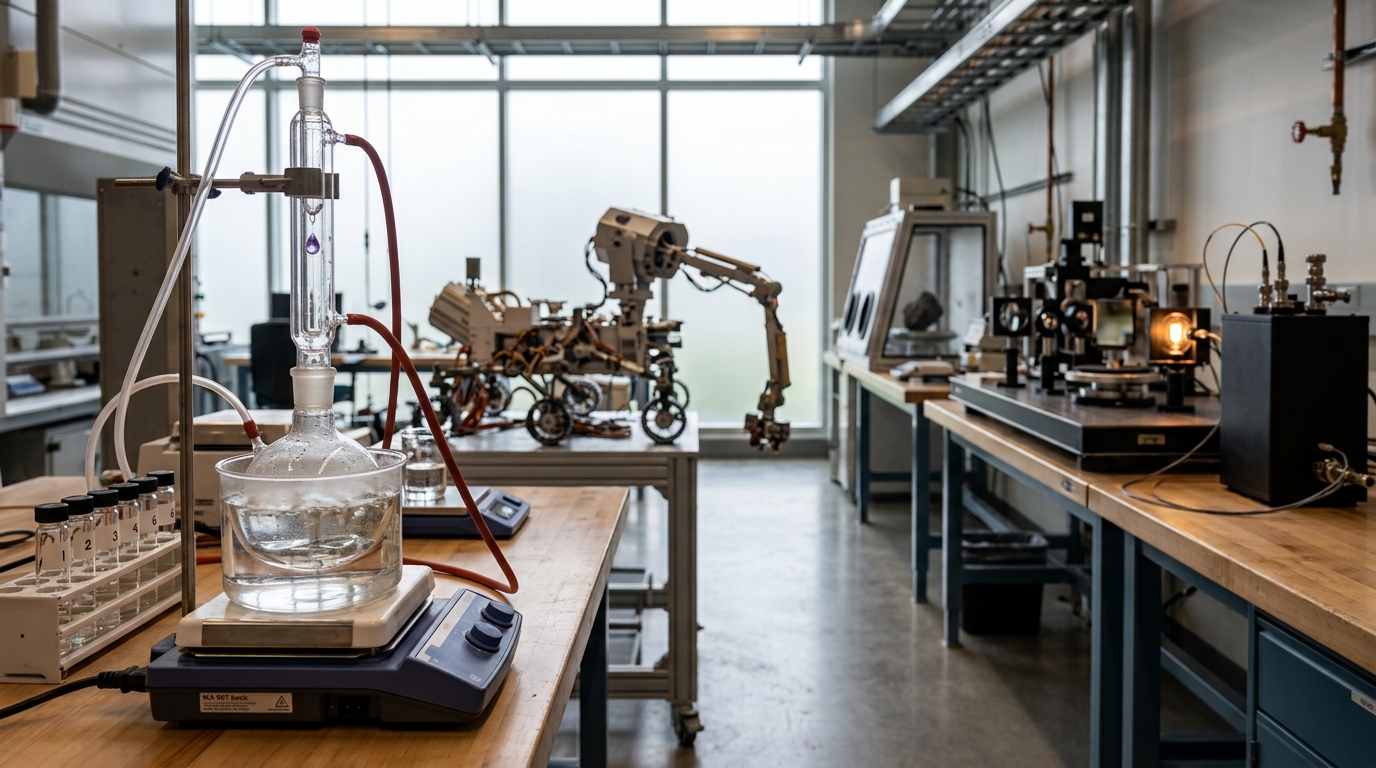
Three rigs, three kinds of evidence: bench chemistry, in-situ planetary sampling, and remote spectroscopy do not compete for the same answer, they supply different pieces of it. — Image prompt and art direction by Brecht Corbeel; generation pending.
Abstract
Three research programs currently carry the question of whether life originates more than once: laboratory prebiotic chemistry that tries to synthesize life's chemical precursors under plausible early-planet conditions, in-situ planetary geochemistry that drives instruments across a real rock surface, and remote spectroscopy that reads the atmospheric composition of planets light-years away. This article compares the three on the dimensions that actually differ between them: how direct their evidence is, how large and how well-characterized their false-positive space is, what a claim costs to generate and to falsify, and what each one is structurally incapable of showing regardless of budget. It works through the 1953 spark-discharge synthesis and its cyanosulfidic successors, protocell self-assembly, the organic detections returned by Curiosity and Perseverance at Gale and Jezero craters, and the contested dimethyl sulfide signal at K2-18 b, using a Bayesian framework for biosignature confidence to show why none of the three approaches out-competes the others — they close different parts of the same evidential gap.
Three rigs, one question, no shared instrument
Ask what it would take to know whether life has originated more than once, and the honest answer is that no single experiment or observation can carry that claim. Instead, three distinct research programs each carry a piece of it, and each piece is evidentially incommensurable with the others in a specific, describable way. Laboratory prebiotic chemists synthesize candidate precursor molecules and self-assembling structures under conditions meant to resemble the early Earth or other rocky worlds. Planetary scientists drive real instruments across real rock on Mars, reading mineralogy and organic chemistry in situ. Astronomers point space telescopes at planets they will never visit and infer atmospheric composition from the small dimming and reddening of starlight that passes through or reflects off an exoplanet’s air. All three answer to the same underlying question — does chemistry cross into biology more than once, and can we tell? — and none of them can substitute for either of the others. This article compares them on the dimensions that actually differ: directness of evidence, the size and character of their false-positive space, and what each one costs in money, time and interpretive labor to produce a claim worth taking seriously.
None of what follows is a ranking. Astrobiology’s own historical lesson, drawn from the Viking biology experiments of the 1970s through the Allan Hills 84001 meteorite controversy of the 1990s to the dimethyl sulfide debate now running on K2-18 b, is that mistaking a striking signal for a settled answer is the field’s characteristic failure mode, and it happens in every one of these three programs, not just one of them.
Approach one: rebuilding the chemistry from scratch
The oldest of the three approaches, and the only one that can run a controlled experiment rather than merely observe, is laboratory prebiotic chemistry. Stanley Miller’s 1953 spark-discharge experiment sealed a mixture of methane, ammonia, hydrogen and water vapor in a glass apparatus, subjected it to an electrical discharge meant to simulate lightning, and recovered several amino acids condensing in a trap below [1]. The result was not a claim that life had been created; it was a narrower and more useful claim, that a class of biologically relevant small molecules can form from simple precursors under plausible energy input, without any living system doing the work. That distinction — building blocks, not organisms — has held for seventy years and still frames what this approach can and cannot show.
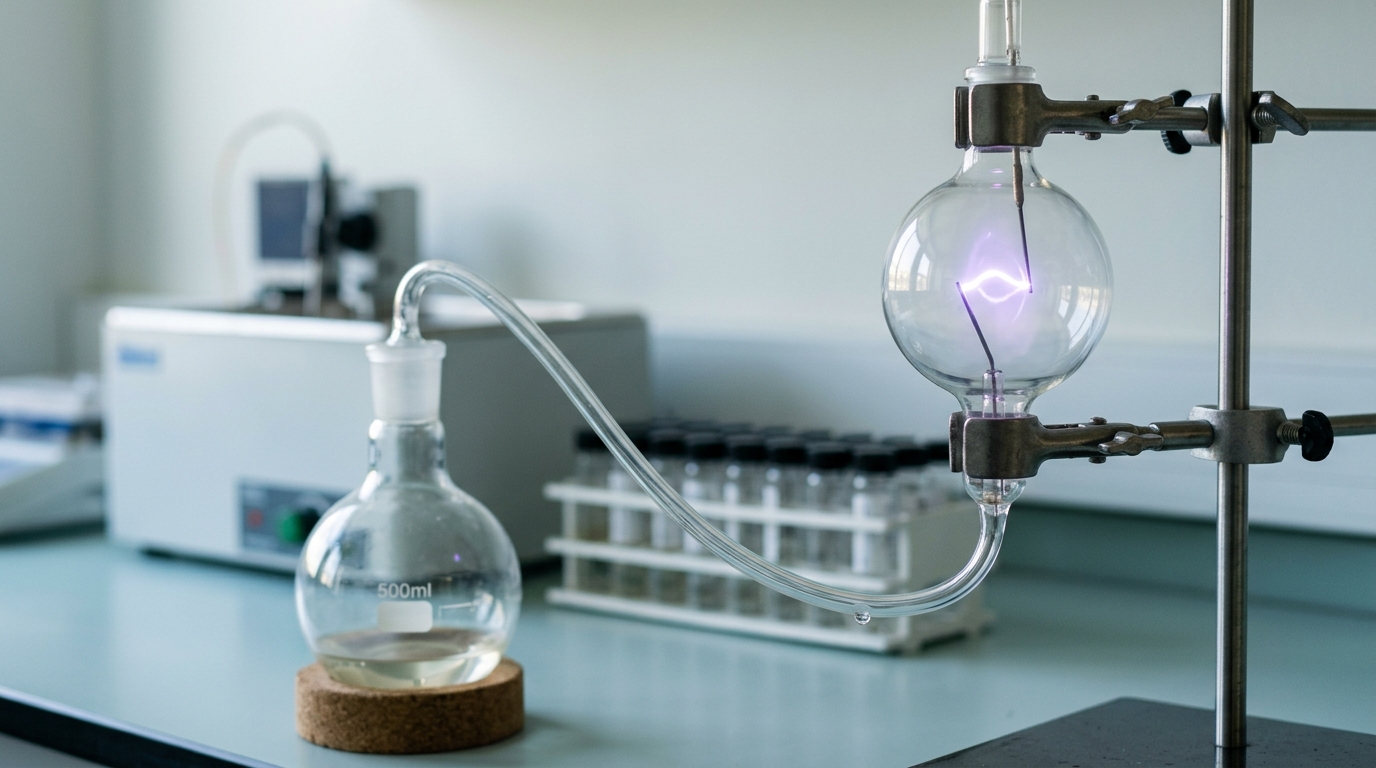
Figure 1. Bench synthesis rebuilds candidate early-Earth chemistry from scratch under controlled atmospheres; the yield is a real molecule, but the atmosphere is always an assumption. — Image prompt and art direction by Brecht Corbeel; generation pending.
Modern versions of this program are considerably more ambitious about coverage than Miller’s single reaction. John Sutherland’s group has pursued what it calls cyanosulfidic chemistry: starting from hydrogen cyanide and its derivatives under ultraviolet light with hydrogen sulfide as a reductant, the same feedstock and reaction network can be pushed toward precursors of nucleotides, amino acids and lipids, the three chemical classes that make up nucleic acids, proteins and membranes respectively [2]. The significance claimed for this result is methodological rather than triumphal: it is evidence that one plausible early-Earth geochemical setting could have supplied precursors for multiple, otherwise separately-synthesized subsystems of a cell, rather than requiring three unrelated chemistries to coincide. That is a real and useful narrowing of the problem. It is not evidence that this is the pathway life actually took, because no laboratory result can establish which of several chemically plausible routes a four-billion-year-old planet actually used — the geological record of that period is too eroded and metamorphosed to preserve the reaction in progress.
A second branch of bench chemistry works on the container rather than the contents. Jack Szostak’s laboratory has built and studied protocells — fatty-acid vesicles that can grow, divide under physical stress, and in some configurations support template-directed copying of a genetic polymer without any protein enzyme, using magnesium-tolerant conditions stabilized by citrate to protect both the membrane and the RNA template from magnesium-catalyzed degradation [3]. This is the closest bench chemistry comes to demonstrating a bounded, self-propagating chemical system, and it is a genuine engineering and chemistry achievement. It is still not a cell in any full sense: it lacks a coded metabolism, has no genetic apparatus capable of open-ended evolution, and depends on a chemist supplying activated nucleotides from outside the vesicle rather than the vesicle synthesizing its own building blocks.
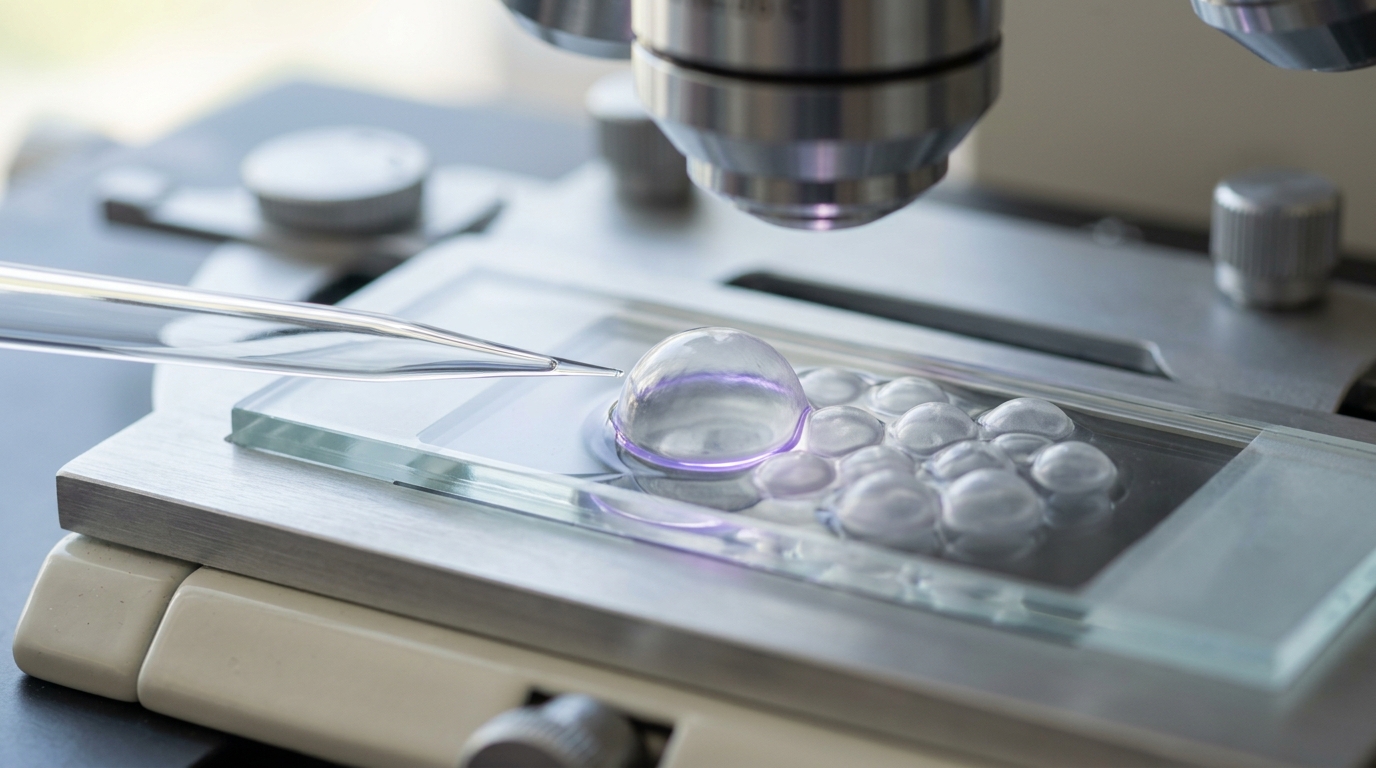
Figure 2. Protocell chemistry closes the gap between molecules and a bounded, dividing system, but a lipid vesicle that copies a template is still not a cell with a genome and a metabolism. — Image prompt and art direction by Brecht Corbeel; generation pending.
What this approach is strong at: direct causal control. A chemist can vary temperature, pH, mineral catalysts, atmosphere and light source one at a time and observe exactly what changes, which is the gold standard for demonstrating that a proposed pathway is chemically possible. What it cannot do: establish that early Earth (or any other planet) actually took that pathway, since the experiment tests plausibility under assumed starting conditions, not historical fact. The false-positive risk here is arguably the lowest of the three approaches in one specific sense — a molecule detected in a sealed flask under known reagents cannot be contaminated by an unmodeled external source — but the risk shifts entirely into the assumptions built into the experimental design: an unrealistic assumed atmosphere or mineral surface produces a real result that is simply irrelevant to any actual planet.
A third strand of bench work sits between the other two and is worth naming separately: mineral catalysis studies that test whether clay surfaces, iron-sulfur minerals, or borate deposits can concentrate and organize prebiotic molecules that would otherwise stay too dilute in open water to react at any useful rate. This work matters for comparing across approaches because it is the direct link between bench chemistry’s controlled flasks and the actual mineralogy that rovers later encounter on Mars — a shared borate or clay chemistry proposed in a laboratory paper becomes a specific, checkable prediction about what a rover should or should not find in a given rock formation, which is one of the few places where two of these three approaches can be made to constrain each other directly rather than running in parallel.
Approach two: driving an instrument across real rock
The second approach trades the chemist’s total control for a real planetary surface, at the cost of driving the experiment through a robotic proxy hundreds of millions of kilometers away. NASA’s Curiosity rover, using its Sample Analysis at Mars instrument suite, detected diverse organic molecules — thiophenic, aromatic and aliphatic compounds released by pyrolysis at 500 to 820 degrees Celsius — preserved in roughly 3.5-billion-year-old lacustrine mudstone at Gale crater’s Pahrump Hills locality, with sulfurization proposed as the preservation mechanism that let organic carbon survive that long [4]. The Perseverance rover’s SHERLOC instrument, using deep ultraviolet Raman and fluorescence spectroscopy, subsequently mapped diverse organic-mineral associations across all ten targets it examined in the Máaz and Séítah formations of Jezero crater, with the pattern of associations differing between formations in a way the team read as evidence of different chemical histories for the carbon in each [5].
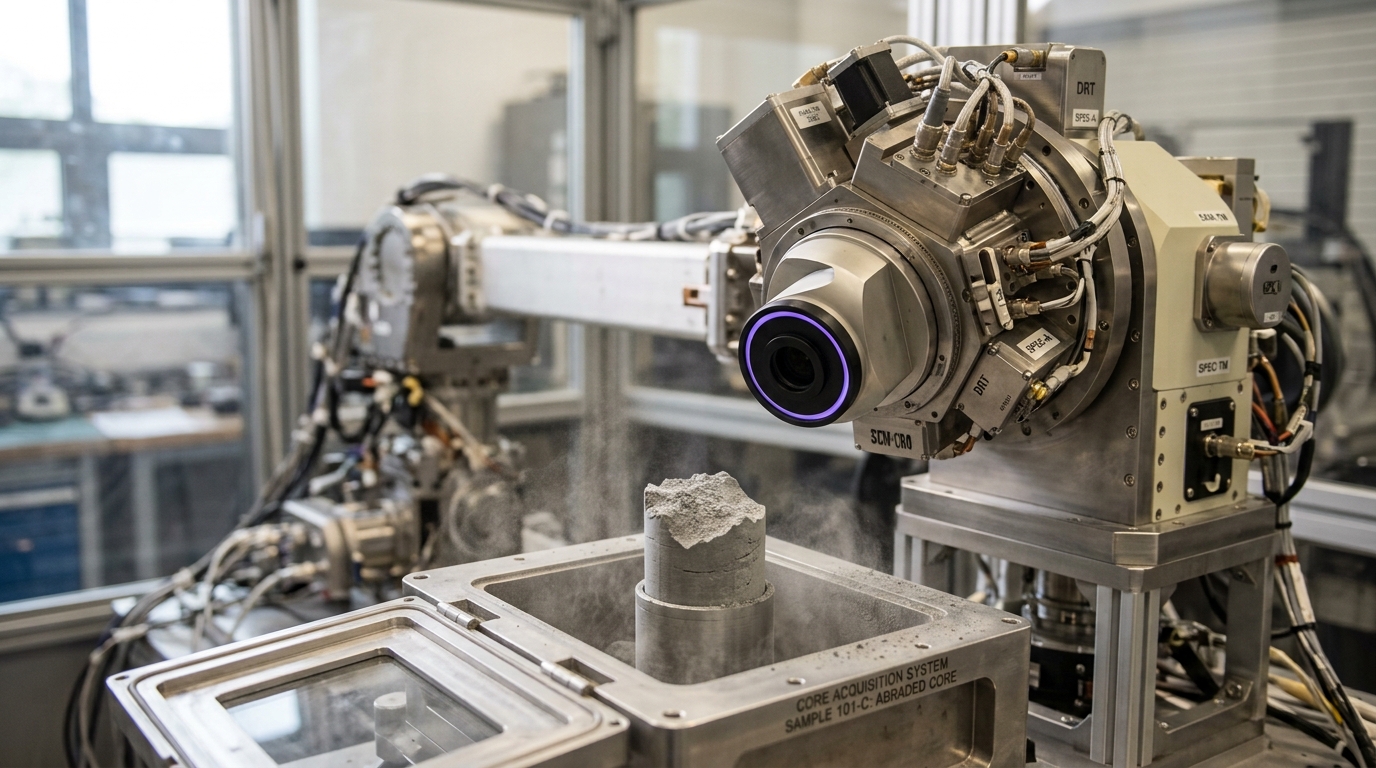
Figure 3. In-situ sampling puts a real instrument on real rock, which is the most direct evidence available off Earth, but the readout is still a spectrum that must be interpreted, not a photograph of a microbe. — Image prompt and art direction by Brecht Corbeel; generation pending.
These are real, instrument-confirmed detections of organic chemistry preserved in ancient Martian rock, and that gives this approach a form of directness the other two cannot match: the sample is not statistically inferred from a light curve, and it is not synthesized under conditions the experimenter chose — it is whatever four billion years of Martian geochemistry actually left behind. But “organic molecules present” is a much weaker claim than “biology present,” and both rover teams have been explicit that abiotic sources — meteoritic infall, volcanic outgassing, Fischer-Tropsch-type mineral-catalyzed synthesis, and radiation-driven reactions in the regolith — remain live explanations for everything detected so far. Distinguishing a biological origin from these abiotic pathways requires either a level of molecular complexity or a pattern of chirality and isotopic fractionation that current in-situ instruments were not built to resolve at the needed precision, which is why sample return to Earth-based laboratories remains the community’s stated next step rather than a settled matter of better data reduction.
The false-positive space for in-situ planetary geochemistry is large and partially characterized: mission teams maintain lists of known abiotic organic-synthesis pathways and design instruments and sampling sites specifically to constrain them, but the list is not guaranteed complete, and a genuinely novel abiotic pathway specific to Martian mineralogy cannot be ruled out by an instrument that was designed around Earth-based analog chemistry. Cost sits at the opposite end of the spectrum from bench chemistry: the Mars 2020 mission that carries Perseverance and Ingenuity totaled roughly two point seven billion dollars across development, launch and its first two years of operations, a figure that reflects the cost of any single, non-repeatable robotic field campaign on another planet, where a failed landing or a broken drill bit cannot be swapped out the way a cracked flask can [9].
Approach three: reading an atmosphere from light-years away
The third approach never touches its subject at all. Remote biosignature spectroscopy infers the chemical composition of an exoplanet’s atmosphere from how starlight is absorbed as it passes through that atmosphere during a transit, or from the planet’s own thermal emission, resolved into a spectrum by an instrument like the James Webb Space Telescope. This is by construction the least direct of the three approaches — nothing is sampled, nothing is synthesized, only light is measured — but it is also the only one that can currently reach beyond the Solar System at all, and it does so at a cost per target that is a rounding error next to a dedicated interstellar mission, because one telescope campaign can observe many planetary systems.
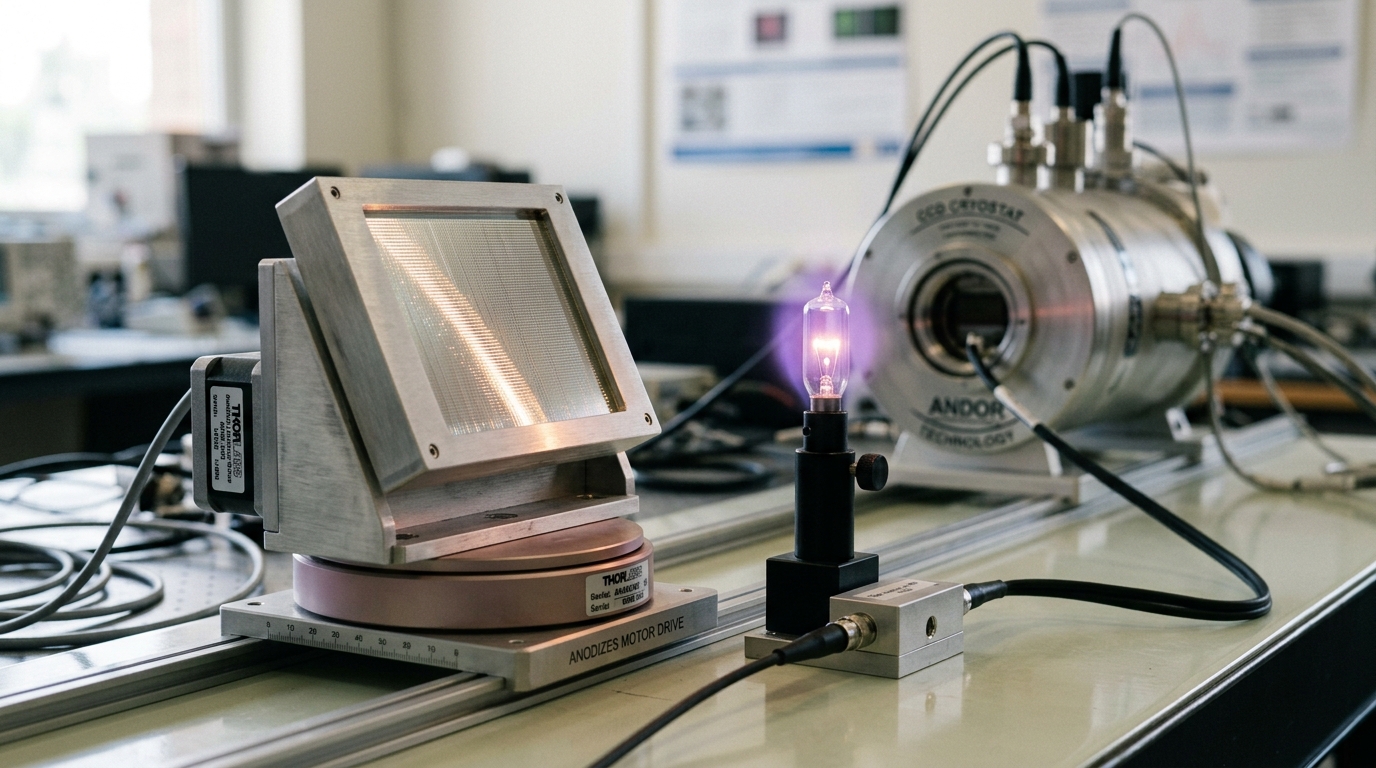
Figure 4. Remote spectroscopy reads a planet's atmosphere from starlight alone across light-years, the widest reach of the three approaches and also the approach most dependent on modelling to separate a candidate gas from its abiotic look-alikes. — Image prompt and art direction by Brecht Corbeel; generation pending.
The clearest recent illustration of both the promise and the risk of this approach is K2-18 b, a sub-Neptune orbiting a red dwarf 124 light-years away. A team led by Nikku Madhusudhan reported tentative evidence of dimethyl sulfide (DMS) and dimethyl disulfide in its atmosphere alongside methane and carbon dioxide, framing the combination as consistent with — though not proof of — a “Hycean” scenario: a hydrogen-rich atmosphere over a global liquid-water ocean, with DMS notable because on Earth it is produced almost exclusively by marine microbial life. The claim drew immediate scrutiny specifically on the false-positive question. Nicholas Wogan and colleagues modeled K2-18 b’s photochemistry and climate and argued that the observed methane abundance — around one percent of the atmosphere — is difficult to reconcile with a lifeless Hycean ocean world, where photochemistry alone should suppress methane to well under one part per million; their preferred alternative is a gas-rich mini-Neptune with no habitable surface at all, a planet type for which the same spectral features arise through ordinary planetary chemistry with no biology required [6]. Subsequent independent reanalyses of the same James Webb data have continued to disagree about whether DMS is present in the spectrum at any statistically robust level, let alone whether its source, if present, is biological — the dispute is live at the level of the raw retrieval, not only at the level of interpretation.
That dispute is the approach’s defining vulnerability laid bare: a spectroscopic biosignature candidate is inferred through a chain of radiative-transfer models, chemical-equilibrium assumptions and instrument-noise statistics, and every link in that chain is a place a false positive can enter without anyone touching a sample or running a control experiment on the actual planet. DMS itself is known to form abiotically in comets and the interstellar medium through ultraviolet photochemistry of simpler sulfur compounds, which is precisely the kind of abiotic pathway a confidence framework has to price in before a detection counts as evidence of life.
Planetary habitability assessment sits upstream of any individual spectroscopic claim and shapes which targets are worth the telescope time in the first place. K2-18 b was selected for intensive follow-up partly because its size, mass and orbital distance from its red-dwarf host place it near the boundary of the classically defined habitable zone, the range of orbital distances at which a rocky or ocean-bearing planet could sustain liquid water at its surface given a plausible atmosphere. That selection criterion is itself an inference chain with its own assumptions — about atmospheric composition, cloud cover, and internal heat — layered on top of the orbital mechanics, and a planet can sit inside the nominal habitable zone while still being, on closer atmospheric inspection, an ordinary gas-rich mini-Neptune with no surface at all, which is exactly the alternative Wogan and colleagues have proposed. Habitability, in other words, is necessary but a long way from sufficient, in exactly the same sense that a rover’s organic detection is necessary but not sufficient, and a bench synthesis’s chemical plausibility is necessary but not sufficient.
A shared vocabulary for the risk: false positives and confidence
What lets these three very different kinds of evidence be compared at all is a shared logical structure that the Astrobiology community has tried to formalize explicitly rather than leave implicit. David Catling and coauthors proposed treating a biosignature detection as a Bayesian inference problem: a prior probability that a given planet or sample harbors life, updated by the likelihood of the observed data under a “life” hypothesis versus under one or more specific abiotic alternative hypotheses, yields a posterior probability rather than a binary yes-or-no verdict [7]. Written compactly, for a single candidate abiotic alternative H_{ab} competing with a life hypothesis H_{bio} given data D:
P(H_{bio} \mid D) = \frac{P(D \mid H_{bio})\, P(H_{bio})}{P(D \mid H_{bio})\, P(H_{bio}) + P(D \mid H_{ab})\, P(H_{ab})}
The formula is not a calculator anyone runs to get a number; the value of stating it is that it forces every claim to name its competing abiotic hypothesis explicitly rather than treating the absence of an alternative explanation as evidence that none exists. A biosignature claim is exactly as strong as the list of abiotic pathways it has priced into P(D \mid H_{ab}) and no stronger — a point equally true of a rover’s organic detection, a spectroscopic retrieval, and a bench synthesis claiming relevance to a real planet.
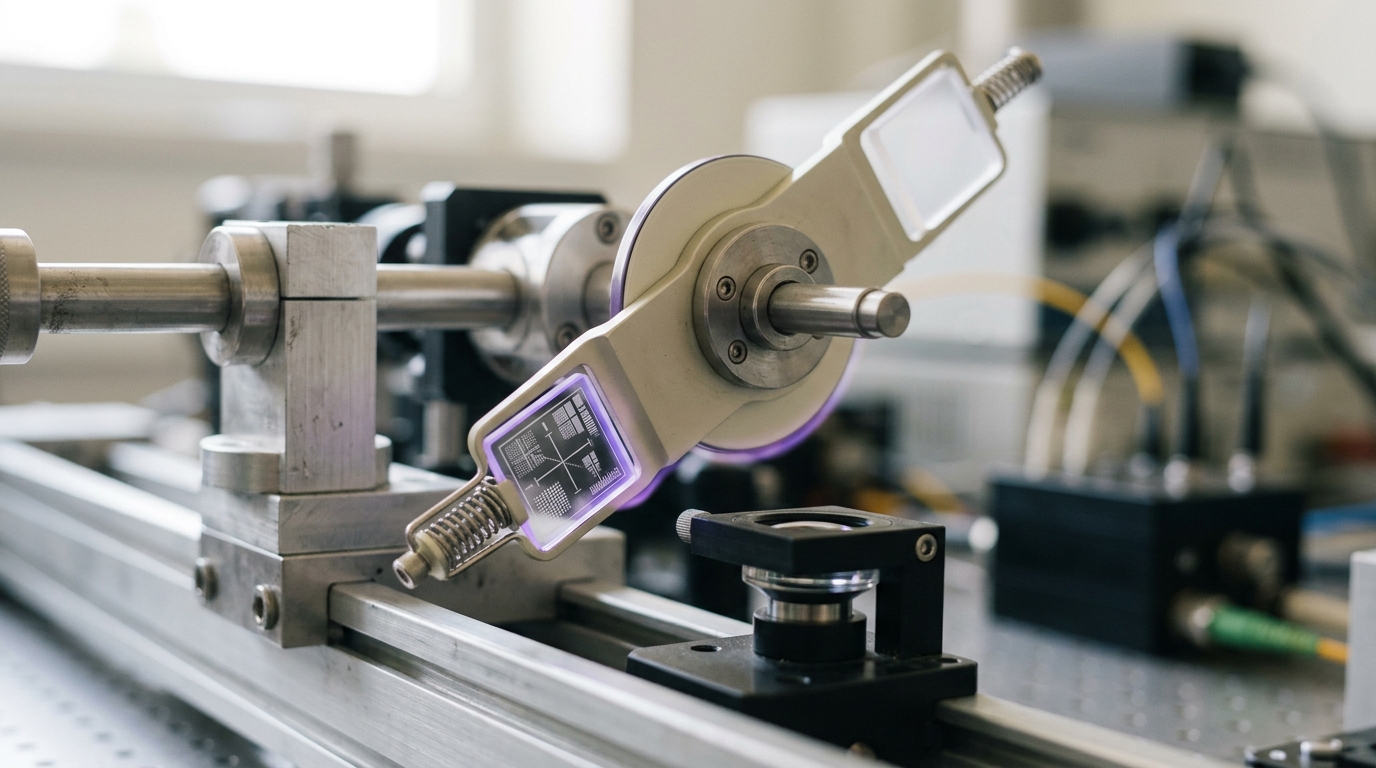
Figure 5. Every one of the three approaches is only as good as its abiotic controls; a claim's strength is measured by which false explanations were actually ruled out, not by the size of the signal. — Image prompt and art direction by Brecht Corbeel; generation pending.
Underneath all three approaches sits a harder, mostly unacknowledged problem: there is still no agreed operational definition of life against which any of these results could be checked. Steven Benner has argued that definitions of life are inseparable from the theories they are meant to support, and that astrobiology routinely proceeds with a working, admittedly incomplete definition — commonly, a self-sustaining chemical system capable of Darwinian evolution — because insisting on a fully general definition first would stall every mission and every experiment indefinitely [8]. That is a pragmatic choice, not a solved problem, and it means every comparison in this article is implicitly a comparison of evidence for chemical systems that look like the one working definition currently in use, not evidence against every conceivable alternative form of biology.
Comparing the three on the dimensions that matter
Laid side by side, the three approaches trade off in ways that are specific rather than generic.
Directness of evidence. Bench chemistry offers total causal control but zero direct connection to any actual planetary history — the chemist knows exactly what produced the result but not whether any planet ever ran that reaction. In-situ Mars geochemistry offers a real sample from a real planet but only partial resolving power on the biological-versus-abiotic question, because the instruments carried to Mars are constrained by mass, power and radiation budgets that a terrestrial laboratory instrument is not. Remote spectroscopy offers no physical sample at all — only a light curve run through a chain of models — which makes it the least direct in principle, even where the statistical signal is strong.
False-positive risk. Bench chemistry’s false-positive risk is quarantined inside its assumed starting conditions, which is a genuine limitation but a bounded and known one. In-situ planetary geochemistry’s false-positive risk lives in the possibly-incomplete list of abiotic synthesis pathways specific to a given planet’s mineralogy, which mission teams work to characterize but cannot claim to have exhausted. Remote spectroscopy’s false-positive risk is compounded across an entire modeling pipeline — atmospheric chemistry, radiative transfer, instrument systematics — as K2-18 b’s unresolved DMS dispute demonstrates in real time.
Cost and pace. Bench chemistry is by far the cheapest and fastest to iterate: a failed experiment costs a few reagents and a day, and hypotheses can be tested and discarded in a single lab’s ordinary working week. In-situ planetary missions cost billions of dollars and years of transit time each, with essentially no ability to repeat a failed measurement on the same target. Remote spectroscopy occupies a middle position on cost per result — a single space telescope campaign can observe many targets — but each observation still competes for scarce, oversubscribed telescope time measured in hours, and the interpretive labor after the data arrives can run for years, as it has for K2-18 b.
Reading disagreement as method, not failure
None of this should be read as a case for picking a winner. The three approaches answer different questions that only look like the same question from a distance: whether a chemistry is possible, whether a specific rock actually preserved it, and whether a specific distant atmosphere is consistent with it. A claim from any one of them that outruns what its method can actually support — treating a plausible synthesis as proof of an actual pathway, treating an organic detection as proof of biology, treating a statistically marginal spectral feature as proof of an ocean world — is the same error each time, regardless of which instrument produced it. The corrective, in every case documented here, has been the same: state the competing abiotic hypothesis explicitly, price its plausibility, and let the posterior move only as far as the evidence actually earns.
Prediction, stated with its own disconfirmation condition: within the next five to seven years, expect the K2-18 b dispute to resolve toward “insufficient evidence for a biological interpretation” rather than toward confirmation, on the basis that every prior spectroscopically-inferred biosignature claim in the field’s history has required additional independent observation before gaining consensus, and multiple abiotic pathways to the same spectral features remain unfalsified. This prediction would be disconfirmed by an independent instrument, ideally on a different telescope with different systematics, reproducing the DMS detection at high statistical significance while simultaneously ruling out the specific mini-Neptune and photochemical-production scenarios Wogan and colleagues proposed — a combination that has not yet been achieved for any exoplanet biosignature claim to date.
Sources
- Stanley L. Miller. A Production of Amino Acids Under Possible Primitive Earth Conditions. Science (1953). DOI: 10.1126/science.117.3046.528.
- Bhavesh H. Patel, Claudia Percivalle, Dougal J. Ritson, Colm D. Duffy, John D. Sutherland. Common origins of RNA, protein and lipid precursors in a cyanosulfidic protometabolism. Nature Chemistry (2015). DOI: 10.1038/nchem.2202.
- Katarzyna Adamala and Jack W. Szostak. Nonenzymatic Template-Directed RNA Synthesis Inside Model Protocells. Science (2013). DOI: 10.1126/science.1241888.
- Jennifer L. Eigenbrode, Roger E. Summons, Andrew Steele, Caroline Freissinet, et al.. Organic matter preserved in 3-billion-year-old mudstones at Gale crater, Mars. Science (2018). DOI: 10.1126/science.aas9185.
- Sunanda Sharma, et al. (SHERLOC team). Diverse organic-mineral associations in Jezero crater, Mars. Nature (2023). DOI: 10.1038/s41586-023-06143-z.
- Nicholas F. Wogan, et al.. JWST Observations of K2-18b Can Be Explained by a Gas-Rich Mini-Neptune with No Habitable Surface. The Astrophysical Journal Letters (2024). DOI: 10.3847/2041-8213/ad2616.
- David C. Catling, Joshua Krissansen-Totton, Nancy Y. Kiang, David Crisp, et al.. Exoplanet Biosignatures: A Framework for Their Assessment. Astrobiology (2018). DOI: 10.1089/ast.2017.1737.
- Steven A. Benner. Defining Life. Astrobiology (2010). DOI: 10.1089/ast.2010.0524.
- The Planetary Society. The Cost of Perseverance, in Context. The Planetary Society (2021).
Originally published at https://absolutedigitalpublishers.com/articles/comparing-the-main-approaches-to-origins-of-life-and-astrobiology.