AI for Science and Medicine: A First-Principles Introduction
Consumer AI trains on data the internet made nearly free. Scientific and medical AI does not: its ground truth is scarce and expensive, and its validation bar is slower and more adversarial. This opening piece sets the frame the rest of the series works from.
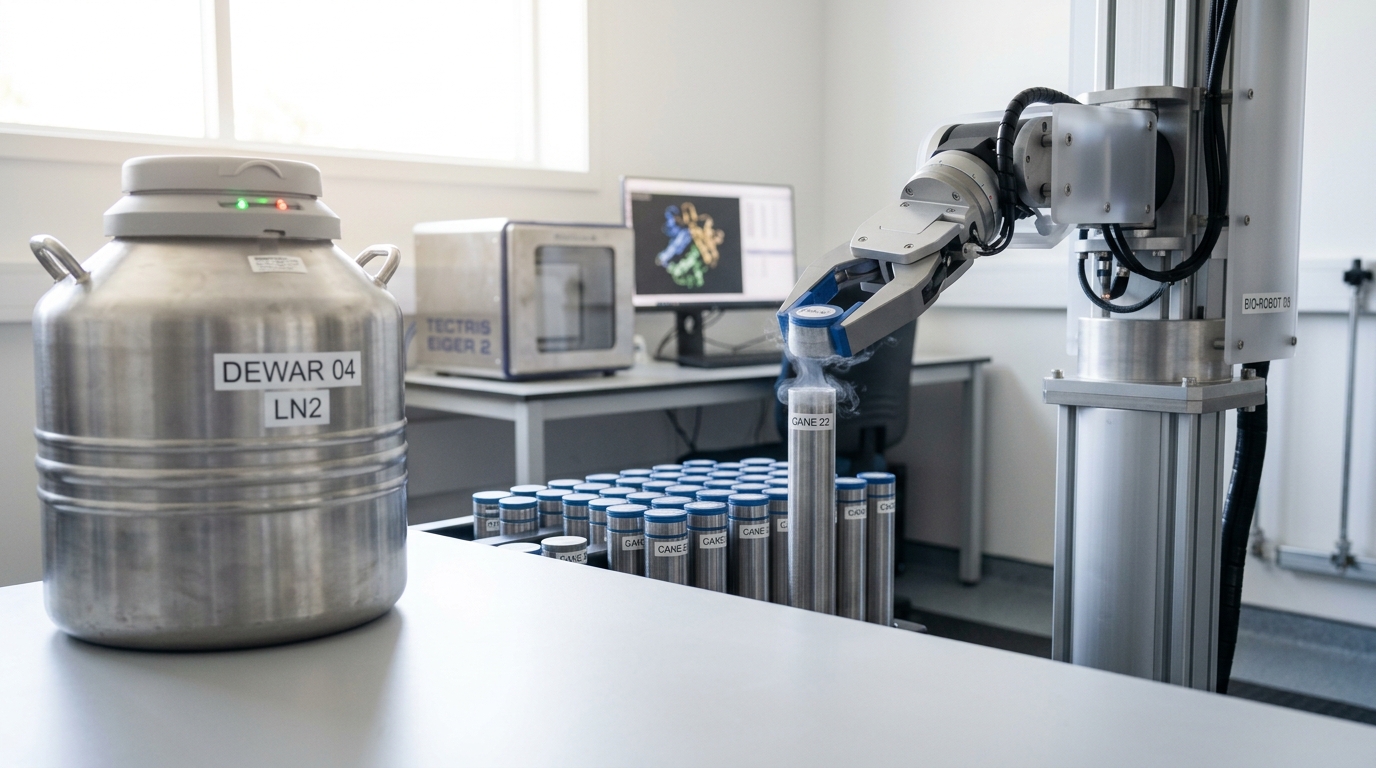
A single experimentally solved structure like this one can take months and tens of thousands of dollars; the training data an AI model calls a dataset was, for its human authors, one puck at a time. — Image prompt and art direction by Brecht Corbeel; generation pending.
Abstract
Applying machine learning to science and medicine looks, from a distance, like applying it to anything else: a model, a benchmark, a leaderboard. This article argues that the resemblance is superficial. Scientific and medical problems are built on ground truth that is scarce and expensive to generate rather than abundant and free, and they are checked against validation standards — peer review, clinical trials, regulatory approval, blind community assessment — that are slower and more adversarial than typical software deployment by design. It surveys the field's major application categories at a first-principles level, from protein structure prediction through weather forecasting to clinical drug validation, explains why the decades-old replication crisis in science is a hazard AI can both worsen and help, and proposes concrete tests for telling a genuine scientific result from a benchmark-beating demonstration. It closes with the framing the rest of this series builds on.
A different kind of training data
Every argument in this series rests on one observation, so it is worth stating plainly before anything else: applying machine learning to science and medicine is not the same activity, wearing different clothes, as applying it to text, images, or code. It resembles that activity closely enough to borrow its vocabulary — models, benchmarks, training runs, leaderboards — and that resemblance is exactly what makes the difference easy to miss.
Consumer and enterprise AI systems are trained on data the internet made nearly free: trillions of tokens of text that people wrote for other reasons, billions of images uploaded for other purposes, code committed to public repositories for other projects. The labelling, where it exists at all, is often a byproduct of ordinary human activity rather than a deliberate, funded act. Scale is the binding constraint, and scale is comparatively cheap to buy.
Scientific and medical ground truth does not work this way. A protein’s three-dimensional structure, solved to the resolution a model can learn from, typically comes from X-ray crystallography, cryo-electron microscopy, or nuclear magnetic resonance spectroscopy — techniques that can take a graduate student months per structure and consume expensive instrument time regardless of outcome. A newly synthesized material has to be made in a real vessel, at a real temperature, and then physically confirmed to be the phase the calculation predicted, not a related but different phase, an amorphous mess, or nothing at all. A clinical outcome — did this drug help this patient more than a placebo would have — cannot be observed at all outside a trial designed, in advance, to make the comparison fair. In each case the “label” is not sitting on a server waiting to be scraped. It is the output of a slow, funded, physical or clinical process that cannot be sped up by adding compute.
This is the first structural fact this series will return to repeatedly: in scientific and medical AI, compute and ground truth scale at different rates, and the gap between them is the central engineering and ethical problem of the field. A model can generate a million candidate hypotheses overnight. Almost nothing about the physical world can be confirmed at that speed. Every one of the application areas surveyed below is, underneath its specific science, a variation on how a research group has chosen to manage that gap.
Why the validation bar is higher, and slower, by design
The second structural fact follows from the first, but it is worth separating because it is often mistaken for mere institutional conservatism rather than a considered response to the stakes involved. Ordinary software is validated by shipping it and watching what happens: an A/B test, a canary deployment, a rollback if metrics move the wrong way. Scientific and medical claims are validated by mechanisms explicitly built to be slow, adversarial, and resistant to being gamed by the person making the claim.
Peer review asks independent experts, with no stake in the outcome, to find the flaw before publication rather than after. Clinical trials are staged deliberately — Phase 1 for safety in a small cohort, Phase 2 for a preliminary efficacy signal, Phase 3 for confirmation at scale — specifically so that a drug’s failure becomes visible before it reaches the general population, at the cost of years rather than days. Regulatory review adds an external authority with no financial interest in the sponsor’s success. The clearest illustration in the AI era is the field’s own most decorated benchmark: the Critical Assessment of protein Structure Prediction, or CASP, has run every two years since 1994 by giving every participating group the amino-acid sequence of a protein whose structure is already known to the organizers but not yet published, and scoring predictions blind against that withheld structure once submissions close [3]. No amount of skill at the benchmark can substitute for the model actually working, because the target was never available to optimize against in the first place. When CASP14’s independent assessors reported that one group’s predictions were, for the first time, close enough to experimental accuracy to represent a practical solution to the folding problem for single proteins, that judgment carried weight precisely because the assessors had no reason to be generous [3].
Regulatory pathways for medical AI show the same design principle operating more slowly and more publicly. As of the most recent published tally, the United States Food and Drug Administration had authorized 1,016 distinct AI- or machine-learning-enabled medical device submissions, corresponding to 736 unique devices once repeat authorizations for the same underlying product are collapsed, with the great majority — 76% — concentrated in radiology [8]. That volume can read as evidence that regulatory AI approval has become routine. What it actually reflects is that most of those authorizations proceed through the 510(k) pathway, which requires a sponsor to demonstrate substantial equivalence to an already-cleared predicate device rather than proving safety and efficacy from first principles — a faster route, but one still built around an external, documented, publicly traceable comparison, not a benchmark score a vendor reports about itself.
Six application areas, at a first-principles level
The rest of this series will go deep on individual techniques, benchmarks, failure modes, and economics within each of the areas below. This section exists to place them on one shared map before that specialization begins, because each area is answering the ground-truth-versus-compute problem above in a different way, and the difference matters more than any of them individually.
Protein and biomolecule structure prediction. This is the field’s most-cited success and the clearest case study in what rigorous validation looks like when it works. AlphaFold’s 2021 model, assessed blind at CASP14, achieved a median backbone accuracy of 0.96 Å against experimental structures, compared with 2.8 Å for the next-best method — roughly the width of two carbon atoms of difference against a competitor several times less precise [1]. Its 2024 successor extended the same architecture to predict complexes of proteins, nucleic acids, small-molecule ligands, ions, and chemically modified residues within one unified model, substantially outperforming specialized docking software on protein–ligand interactions and improving accuracy on antibody–antigen complexes over its own predecessor [2]. What makes this area instructive for the rest of the series is not the accuracy number by itself; it is that the number was earned inside a validation regime — CASP’s blind, withheld-answer format — that no participant controlled.
Materials discovery. Here the gap between computational proposal and physical confirmation is starkest, and the field’s own internal debate about it is the sharpest illustration in this article of the difference between a benchmark-beating demonstration and a validated discovery. Google DeepMind’s GNoME system used graph neural networks combined with active learning across high-throughput density-functional-theory calculations to identify 2.2 million candidate crystal structures computed as stable relative to prior knowledge, with 381,000 of those representing genuinely new entries on the field’s stability frontier; of the total, 736 structures had been independently experimentally verified at time of publication [4]. That last number — 736 confirmed out of 2.2 million proposed — is not a footnote; it is the entire point. A subsequent peer-reviewed critique by two experienced solid-state chemists examined a randomized sample of the newly claimed compounds directly and reported finding little evidence that many of them satisfy, simultaneously, the three properties that make a computational prediction a real materials-science discovery: genuine novelty relative to known compounds, thermodynamic credibility beyond the calculation that produced them, and practical utility for any application [5]. Both papers can be true at once. A model can expand the computationally explored space of stable-looking structures by an order of magnitude and still leave the harder, slower, more expensive work — synthesizing, characterizing, and finding a use for any individual compound — almost entirely undone.
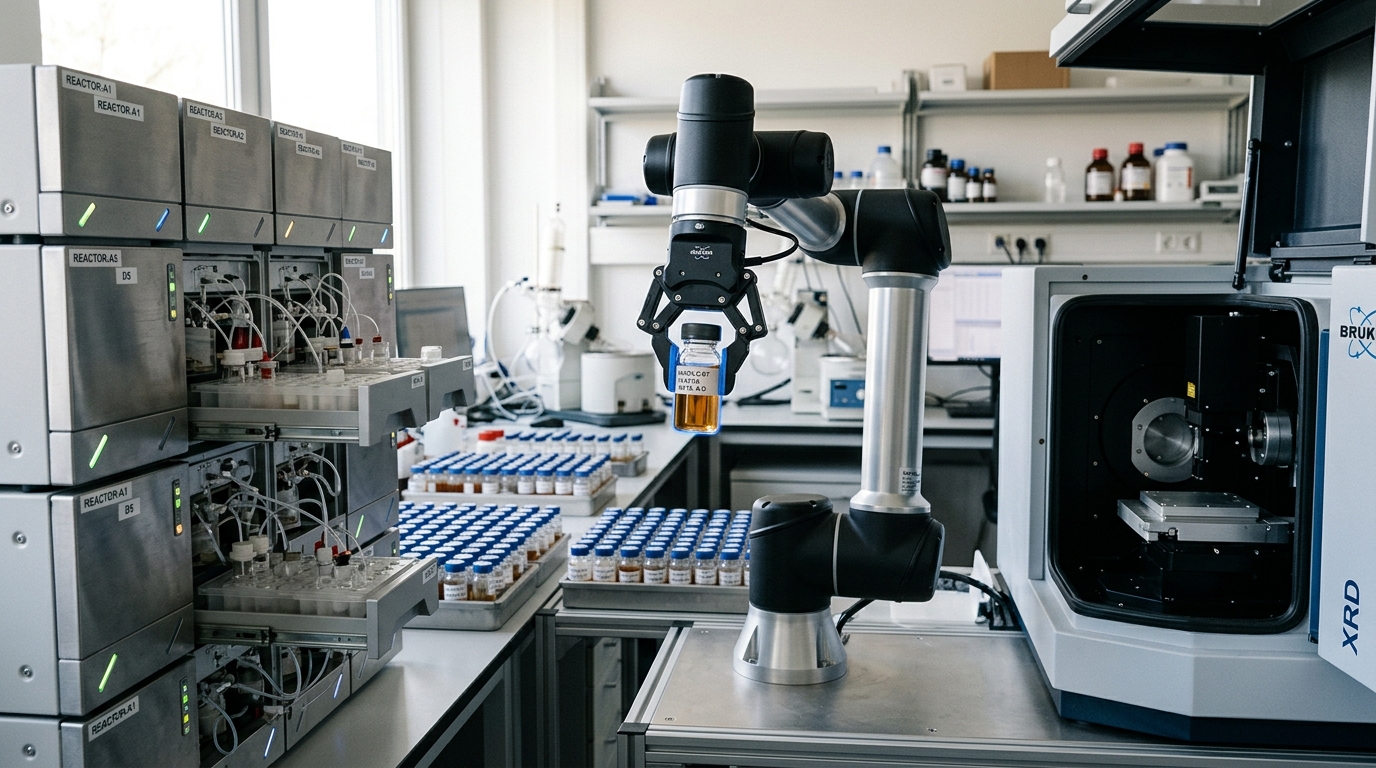
Figure 1. Computation can propose millions of candidate materials in an afternoon; turning even a handful into confirmed, useful compounds still requires physically making and measuring them one vial at a time. — Image prompt and art direction by Brecht Corbeel; generation pending.
Weather and climate forecasting. This is the instructive exception to this article’s opening claim, and naming it as an exception is part of establishing an honest frame. Unlike protein structures or novel materials, atmospheric ground truth is comparatively abundant: satellites, radiosondes, ships, and surface stations have been generating physical observations continuously for decades, assimilated into long, dense reanalysis records that were built for operational forecasting long before anyone trained a neural network on them. That pre-existing abundance is a large part of why data-driven weather models became credible so quickly. Google DeepMind’s GraphCast, trained on such reanalysis data, produced 10-day global forecasts of hundreds of atmospheric variables at 0.25-degree resolution in under a minute and outperformed the world’s leading physics-based operational forecasting system on 90% of 1,380 verification targets tested [6]. The lesson for the rest of this series is not that weather AI is easy; it is that where ground truth happens to be genuinely abundant, AI methods can mature far faster than the general pattern this article describes would predict — which is itself evidence for how much the ground-truth constraint, rather than modeling difficulty alone, governs the pace of progress elsewhere.

Figure 2. A modern forecast model is trained and run on machines like this one; the reanalysis record it learns from is one of the few genuinely abundant ground-truth archives in science, built from decades of routine observation rather than purpose-built for AI. — Image prompt and art direction by Brecht Corbeel; generation pending.
Medical imaging and diagnostics. This area shows most clearly why a validated benchmark score and a validated clinical tool are not the same claim. A landmark human-centered study followed a deep-learning diabetic-retinopathy screening system, already validated on curated research datasets, into eleven real clinics in Thailand and found that ordinary clinical conditions introduced failure modes the laboratory validation had not surfaced: the system rejected 21% of nearly 1,840 images nurses captured in practice as too low-quality to grade, overwhelmingly because of clinic lighting conditions the training data had not represented, disrupting workflows and patient experience in ways a benchmark accuracy figure said nothing about [7]. This is one instance of a general pattern the rest of this series will keep encountering: a model’s reported accuracy describes its performance against a specific validation set, not its performance against the world the set was meant to stand in for, and the two can diverge sharply the moment deployment conditions differ from curation conditions.
Drug discovery. Generative and predictive AI models can now propose candidate molecules and prioritize biological targets far faster than traditional medicinal chemistry, but the bottleneck this article has already named — physical, clinical confirmation — reasserts itself in full downstream of the model. Insilico Medicine’s ISM001-055 (also called INS018_055), a small-molecule candidate for idiopathic pulmonary fibrosis with a target identified by the company’s PandaOmics platform and a structure designed by its Chemistry42 generative-chemistry engine, reported positive topline Phase IIa results in November 2024: at its highest tested dose, treated patients showed roughly a 98.4 mL improvement in forced vital capacity over twelve weeks against a 62.3 mL decline on placebo [9]. That is a genuinely notable milestone — one of the first AI-originated drug candidates to clear a controlled human efficacy trial — and it is also, explicitly, a company’s own announcement of its own asset’s performance in a mid-stage trial, not yet a completed pivotal trial or a regulatory approval. Both things are true simultaneously, and this series will try to hold them apart consistently rather than collapsing “cleared Phase IIa” into “proven.”
Scientific literature and hypothesis-generation agents. The newest category folds the ground-truth problem in on itself: an AI system that reads the scientific literature and proposes new hypotheses is, in effect, manufacturing candidate claims for the rest of the pipeline to validate. Google DeepMind’s AI co-scientist system, built as a multi-agent architecture with a “generate, debate, and evolve” tournament process for refining hypotheses, was evaluated across 203 research goals and, in two cases, had its proposals carried into physical wet-lab experiments: candidate drug-repurposing options for acute myeloid leukemia and candidate epigenetic targets for liver fibrosis, both subsequently confirmed by laboratory testing [10]. Two independently wet-lab-confirmed hypotheses is a genuinely meaningful result and, at the same time, a vanishingly small fraction of the total hypothesis space such a system can generate in an afternoon. This is the clearest instance in the whole survey of the pattern the next section makes precise: generation has gotten fast; confirmation has not.
Reproducibility: a problem AI inherited, not one it invented
It is tempting, watching AI systems accelerate hypothesis generation, materials proposals, and even drafts of scientific papers, to treat reproducibility as a new risk that AI has introduced into science. It is not new. Science’s replication crisis is decades old, well documented, and rooted in incentives that have nothing to do with machine learning.
John Ioannidis’s widely cited 2005 analysis formalized why this happens using positive predictive value: the probability that a statistically significant finding reflects a real effect rather than chance. Writing R for the pre-study odds that a tested relationship is genuinely true (the ratio of true to false relationships among everything a field is currently testing), \beta for the false-negative rate, and \alpha for the false-positive threshold, the positive predictive value of a significant finding is
PPV = \frac{R(1-\beta)}{R(1-\beta) + \alpha}
The term worth sitting with is R. Even with a well-powered study and a conventional significance threshold, PPV collapses toward zero as R falls — that is, in fields or moments where most of the hypotheses being tested are, a priori, unlikely to be true, most of the “significant” results those tests produce will be false regardless of how carefully any individual test was run [11]. This is a statement about the ecosystem generating hypotheses, not about any single experiment’s rigor.
Two landmark empirical studies, both predating deep learning’s current wave entirely, showed how severe the resulting failure rate can be in practice. Amgen scientists attempting to reproduce 53 landmark preclinical cancer studies — using original materials, original reagents, and in some cases the original investigators’ own laboratories — confirmed the published findings in only 6 cases, an 11% reproduction rate, with a comparable effort at Bayer HealthCare validating roughly 25% of the preclinical studies it attempted [12]. The Open Science Collaboration’s coordinated replication of 100 studies from three major psychology journals found that while 97% of the original studies had reported statistically significant effects, only 36% of the replications did, with replicated effect sizes averaging roughly half the magnitude of the originals [13]. Neither study mentions AI. Both describe exactly the mechanism Ioannidis’s equation predicts: a field generating far more plausible-sounding claims than its validation capacity could actually confirm.

Figure 3. Most FDA-authorized AI medical devices read images like the ones this camera captures; a model validated on a curated dataset still has to prove itself against ordinary clinic lighting and an ordinary day's workflow before it is genuinely deployed. — Image prompt and art direction by Brecht Corbeel; generation pending.
This is where AI’s relationship to reproducibility becomes genuinely two-sided rather than simply alarming. AI can worsen the underlying dynamic by expanding the numerator in Ioannidis’s framework without expanding the denominator: a hypothesis-generation agent that proposes thousands of biologically plausible mechanisms overnight lowers the effective R of the claims entering a field’s pipeline unless wet-lab or clinical capacity to check them grows to match, and a materials-discovery model that reports millions of computationally stable candidates can create exactly the appearance of abundance that the Cheetham and Seshadri critique found reason to doubt once examined compound by compound [5]. But AI can also help, and the field’s own best example is the discipline CASP already enforces: a genuinely blind, withheld-answer evaluation that a model cannot have seen or been tuned against, judged by assessors with no stake in any participant’s success [3]. Structure prediction earned trust not by posting a leaderboard score but by submitting to exactly the adversarial, pre-registered-style test the replication-crisis literature says most fields lack. Self-driving laboratories that pair a proposing model directly with automated physical synthesis and characterization — the world this article’s materials-discovery figure depicts — point toward the same discipline generalized: hypotheses that cannot be separated from their own confirmation step.

Figure 4. An AI-discovered drug candidate still has to clear the same phased trials and regulatory review as any other; that process, not a preprint, is what converts a promising molecule into a validated one. — Image prompt and art direction by Brecht Corbeel; generation pending.
What separates a discovery from a demo
Given everything above, this series needs a working test, stated once here so later entries can invoke it rather than re-argue it. Four questions distinguish a genuine scientific or medical AI result from a benchmark-beating demonstration, and none of them can be answered by the model’s own reported score.
Was the evaluation blind and adversarial, or did the claimant control the test? CASP’s withheld structures are the gold standard here precisely because no participant could have seen the answer in advance [3]. A benchmark a vendor selected, tuned against, or reports internally deserves substantially less weight than one an external party with no stake in the outcome administered.
Was the claim confirmed physically, or does it remain computational? GNoME’s headline number is 2.2 million candidate structures; its experimentally confirmed number, at time of publication, was 736 — a ratio worth remembering every time a “discovered N new materials” or “identified N new drug targets” claim appears without a parallel physical-confirmation figure attached [4].
Did the claim go through the field’s own standard validation pathway, or did it stop at a press release? Insilico’s Phase IIa readout is a real result precisely because it passed through a controlled, randomized, placebo-comparison trial design — and it is still, honestly, a mid-stage result, because pivotal trials and regulatory review remain ahead of it [9]. A preprint claiming a discovery is a hypothesis with good production values until it clears the review the rest of the field would apply to any other claim.
Does the result hold up outside the conditions it was validated under? The Thailand retinopathy deployment is the sharpest illustration in this article: a system already validated on curated data still met a 21% real-world image-rejection rate the validation set had not predicted, for reasons — ordinary clinic lighting — that only became visible on contact with actual use [7]. A result that has only ever been measured under the conditions that produced it has not yet been tested against the conditions it claims to serve.
None of these four tests is unique to AI. They are the tests science and medicine already apply to any claim. What AI changes is throughput: models can generate candidate structures, candidate materials, candidate hypotheses, and candidate diagnoses at a rate the underlying validation infrastructure was never built to match, which means the discipline of asking these four questions matters more, not less, as generation gets cheaper.
The frame the rest of this series uses
The nine pieces that follow this one go deep on pieces of the picture sketched above: how these systems are actually built and trained, where today’s benchmarks mislead rather than inform, how leading approaches compare on their own terms, what specifically fails when these systems meet the real world, what the economics of running them actually look like, how a working scientist or clinician should evaluate a tool before trusting it, how this field’s history explains its current shape, and what a reasonable range of outcomes looks like a decade out. None of those pieces needs to re-derive the argument made here. They can assume it: that scientific and medical ground truth is scarce and expensive in a way web-scale data is not; that the validation standards this domain applies are slower and more adversarial by design, not by bureaucratic accident; that the field’s real application areas are each answering the resulting gap between cheap generation and expensive confirmation in their own way; that the replication crisis this domain already had is a risk AI can inflame or help repair depending entirely on whether generation capacity is matched with confirmation capacity; and that a benchmark score, by itself, answers none of the four questions that actually separate a discovery from a demonstration.
Predictions, with the observations that would falsify them
These are forecasts, clearly separated from the sourced analysis above, with a horizon of 2032.
One. The ratio of AI-proposed candidates to physically or clinically confirmed results will widen further in materials discovery and drug discovery before it narrows, because model throughput is scaling faster than synthesis and trial capacity. Disconfirmed if published confirmation rates (confirmed results as a share of AI-proposed candidates) rise industry-wide over the period rather than fall or hold flat.
Two. Regulatory pathways for AI-enabled medical devices will increasingly require post-market real-world performance monitoring rather than relying solely on pre-market validation-set accuracy, in direct response to deployment gaps of the kind the Thailand retinopathy study documented. Disconfirmed if major regulators’ clearance requirements in 2032 remain limited to pre-market accuracy claims with no mandated real-world monitoring component.
Three. At least one high-profile AI-driven scientific claim (a materials discovery, a drug target, or a diagnostic tool) will be publicly retracted or substantially downgraded after independent replication attempts fail, following the same pattern Begley and Ellis documented in preclinical cancer research before AI was involved. Disconfirmed if no such retraction or substantial downgrade of a high-profile AI-originated scientific claim occurs by the horizon date.
Four. Blind, withheld-answer evaluation formats modeled explicitly on CASP will spread to at least one additional major application area in this survey — materials discovery or scientific hypothesis generation are the most likely candidates — as a response to benchmark-gaming concerns. Disconfirmed if no comparable blind, third-party-administered evaluation format achieves adoption in either field by 2032.
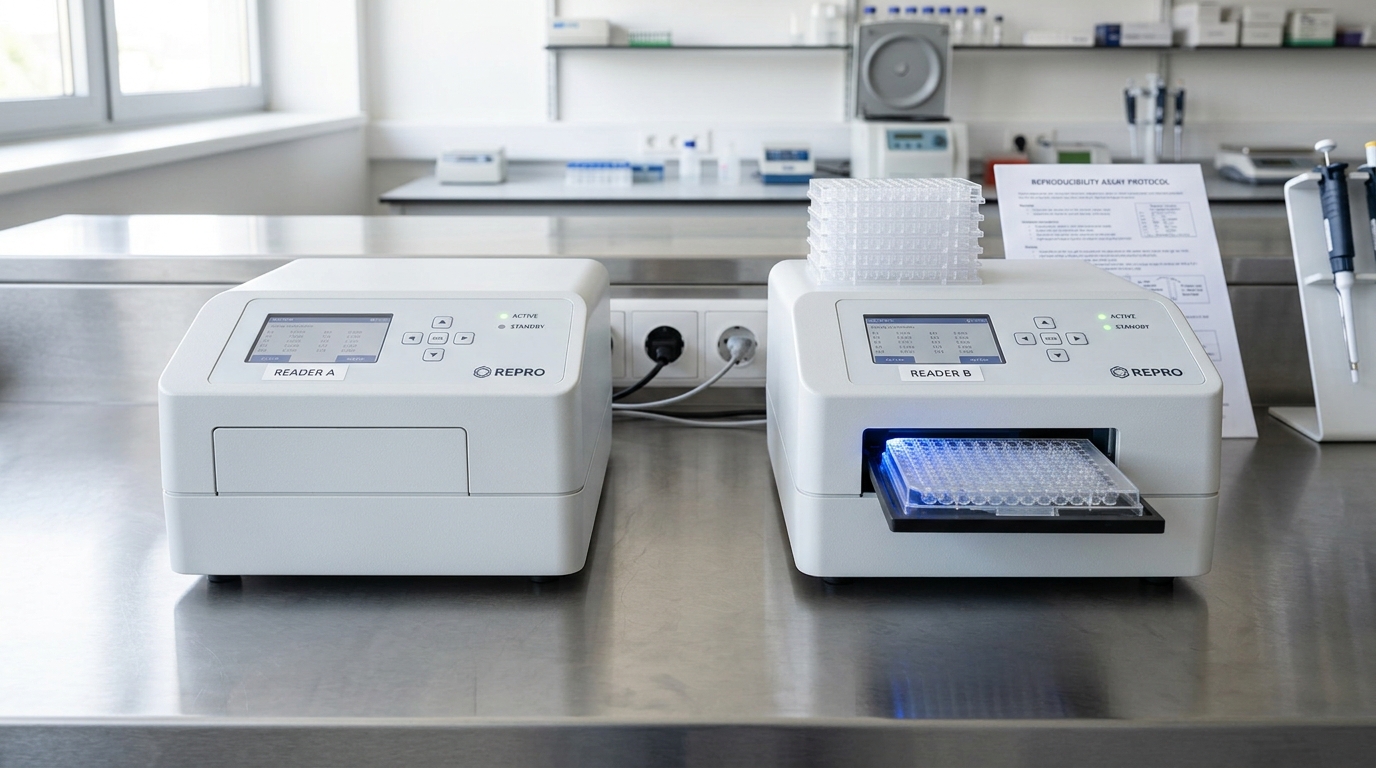
Figure 5. The replication crisis predates AI by decades; the discipline of running the same protocol twice, independently, is the oldest and still the most reliable defence against a result that looks real but is not. — Image prompt and art direction by Brecht Corbeel; generation pending.

Figure 6. A hypothesis-generation agent can propose candidate mechanisms far faster than any lab can test them; the queue tray, not the model, is where the field's actual bottleneck now sits. — Image prompt and art direction by Brecht Corbeel; generation pending.
What to take away
Treat “AI for science” as a category, not a single claim. It spans a system whose training data comes from decades of dense, physically abundant atmospheric observation and a system whose every training example cost a graduate student months of crystallography time, and those two systems mature at genuinely different rates for exactly that reason. It spans a materials-discovery pipeline that can propose millions of candidates and confirm hundreds, and a structure-prediction model that submitted itself to a blind test it could not have gamed. What holds the category together is not a shared technique but a shared constraint: ground truth in this domain is scarce and expensive in a way it simply is not for web-scale AI, and the validation standards the domain applies — peer review, phased trials, regulatory review, blind community assessment — exist specifically to slow claims down until that scarcity has been honestly reckoned with. Every article that follows this one in the series is, underneath its particular subject, an examination of one more place where that reckoning either happened or has not happened yet.
Sources
- John Jumper et al.. Highly Accurate Protein Structure Prediction with AlphaFold. Nature (2021). DOI: 10.1038/s41586-021-03819-2.
- Josh Abramson et al.. Accurate Structure Prediction of Biomolecular Interactions with AlphaFold3. Nature (2024). DOI: 10.1038/s41586-024-07487-w.
- Andriy Kryshtafovych, Torsten Schwede, Maya Topf, Krzysztof Fidelis, and John Moult. Critical Assessment of Methods of Protein Structure Prediction (CASP)—Round XIV. Proteins (2021). DOI: 10.1002/prot.26237.
- Amil Merchant, Simon Batzner, Samuel S. Schoenholz, Muratahan Aykol, Gowoon Cheon, and Ekin Dogus Cubuk. Scaling Deep Learning for Materials Discovery. Nature (2023). DOI: 10.1038/s41586-023-06735-9.
- Anthony K. Cheetham and Ram Seshadri. Artificial Intelligence Driving Materials Discovery? Perspective on the Article: Scaling Deep Learning for Materials Discovery. Chemistry of Materials (2024). DOI: 10.1021/acs.chemmater.4c00643.
- Remi Lam, Alvaro Sanchez-Gonzalez, Matthew Willson, Peter Wirnsberger, et al.. Learning Skillful Medium-Range Global Weather Forecasting. Science (2023). DOI: 10.1126/science.adi2336.
- Emma Beede, Elizabeth Baylor, Fred Hersch, Anna Iurchenko, Lauren Wilcox, Paisan Ruamviboonsuk, and Laura Vardoulakis. A Human-Centered Evaluation of a Deep Learning System Deployed in Clinics for the Detection of Diabetic Retinopathy. ACM CHI Conference on Human Factors in Computing Systems (2020). DOI: 10.1145/3313831.3376718.
- Rohan Singh, Monika Bapna, Abdul Rahman Diab, Emily S. Ruiz, and William Lotter. How AI Is Used in FDA-Authorized Medical Devices: A Taxonomy Across 1,016 Authorizations. npj Digital Medicine (2025). DOI: 10.1038/s41746-025-01800-1.
- Insilico Medicine. Insilico Medicine Announces Positive Topline Results of ISM001-055 for the Treatment of Idiopathic Pulmonary Fibrosis (IPF) Developed Using Generative AI. Insilico Medicine (2024).
- Juraj Gottweis, Wei-Hung Weng, et al.. Towards an AI Co-Scientist. arXiv / Google DeepMind (2025). DOI: 10.48550/arXiv.2502.18864.
- John P. A. Ioannidis. Why Most Published Research Findings Are False. PLOS Medicine (2005). DOI: 10.1371/journal.pmed.0020124.
- C. Glenn Begley and Lee M. Ellis. Raise Standards for Preclinical Cancer Research. Nature (2012). DOI: 10.1038/483531a.
- Open Science Collaboration. Estimating the Reproducibility of Psychological Science. Science (2015). DOI: 10.1126/science.aac4716.
Originally published at https://absolutedigitalpublishers.com/articles/ai-for-science-and-medicine-a-first-principles-introduction.